
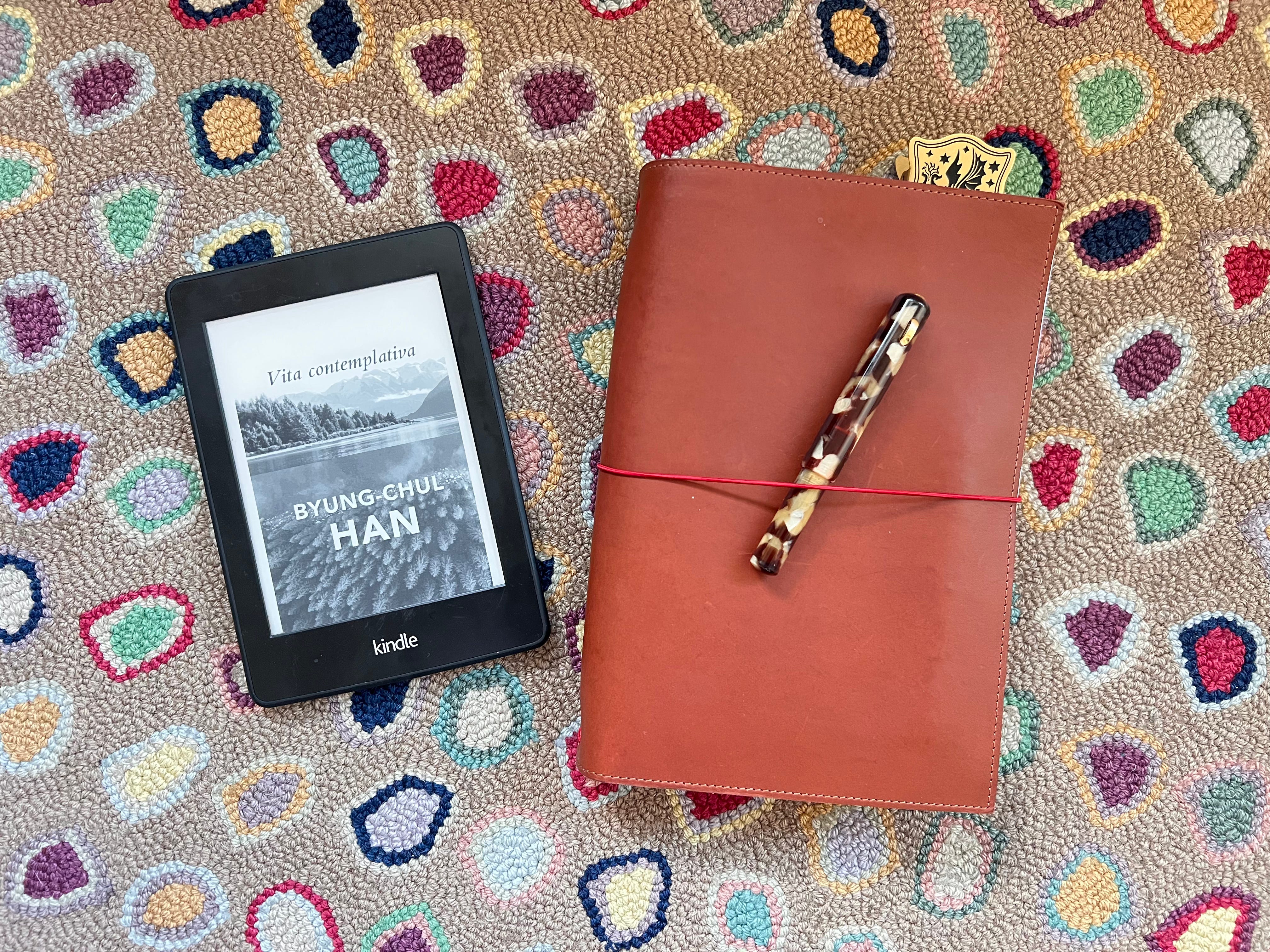
I’ve set myself a little intention to try to read and engage with more philosophy. No strict goals or task-lists, just a general sense that I would like to become more comfortable reflecting on philosophical ideas. It’s been fun to create a reading list, sprinkling in books and essays that get mentioned in other readings, picking them up here and there.
I am three-quarters of the way through Byung-chul Han’s Vita Contemplativa: In Praise of Inactivity, and it is completely blowing my mind. I would like to say that is a good thing — and in many ways it is — but it’s also making me so anxious at parts that I can barely breath. What do you mean without inactivity we are just machines made to simply function? “The ultimate purpose of all human endeavor is inactivity?!” Shit.
This all began when I picked up an ebook of Cal Newport’s Slow Productivity, and before getting too far in I thought I would tandem read Vita Contemplativa, which has been on my reading list for awhile. Big mistake. Huge. I’ve abandoned Slow Productivity, cast it aside because what do you mean inactivity in capitalism becomes an “encapsulated outside,” and leisure time is a functional element of production?! Han’s words wouldn’t stop ringing in my ears as I tried to read Newport’s tips on how to stop drowning in Teams notifications and the best ways to delegate small tasks so that you free up your time for larger ones.
There is no free time in capitalism, apparently (deep wail!).
“We owe true happiness to the useless and purposeless, to what is intentionally convoluted, what is unproductive, indirect, exuberant, superfluous, to beautiful forms and gestures that have no use and serve no purpose.”
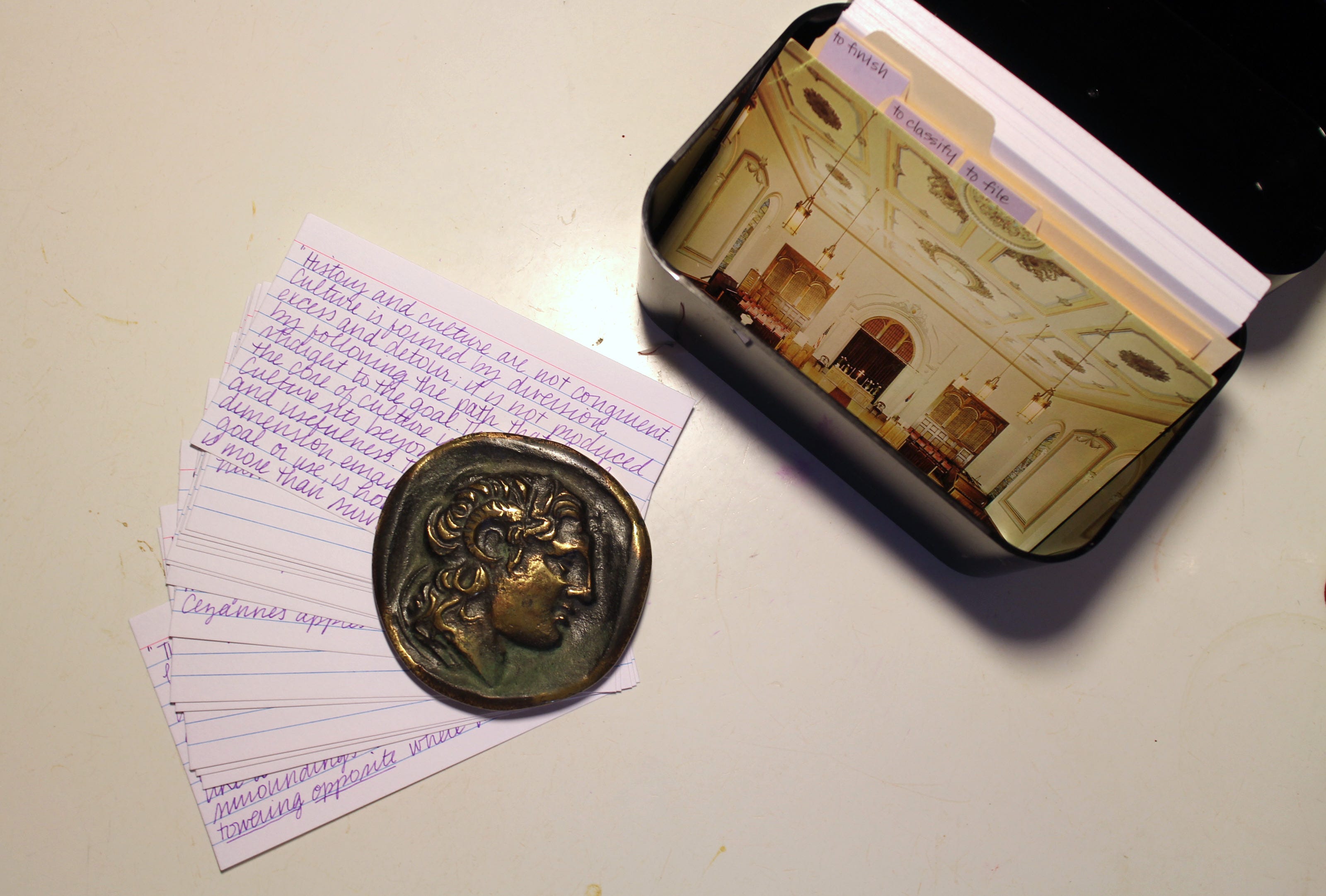
I’ve never been much of a fan of the typical productivity content. Maybe because I’ve been lucky enough to avoid Corporate America, and I generally have no problem turning off my computer at the end of the workday and leaving everything at my desk until I return. Sure, I didn’t have an abundance of what I would call free time, but that’s mostly because I’m a parent and a homeowner and just a typical adult living village-less in modern society. Books and blogs and YouTube videos about time-blocking, GTD, and productivity-hacks never appealed much. I’ll read all day about knowledge management systems and processes, but time and productivity management just isn’t my bag. I’m not sure why I checked out Slow Productivity, other than the fact that the title has the word “slow” in it. I’m all for slowing down, in all aspects of my life.
I didn’t quite realize how reading Vita Contemplativa alongside it would make me want to slow down so much that I’m basically glacial. Han argues that we are at our most pure, most purposeful state when we are inactive. But! Only if that inactivity has no real purpose, no real end-goal, and no ties to our own productivity and labor. What we consider free time or leisure time is really just a respite from work, and therefore it remains tied to work — “a derivative of work” — and a functional element of production. In capitalism, there is no free time.
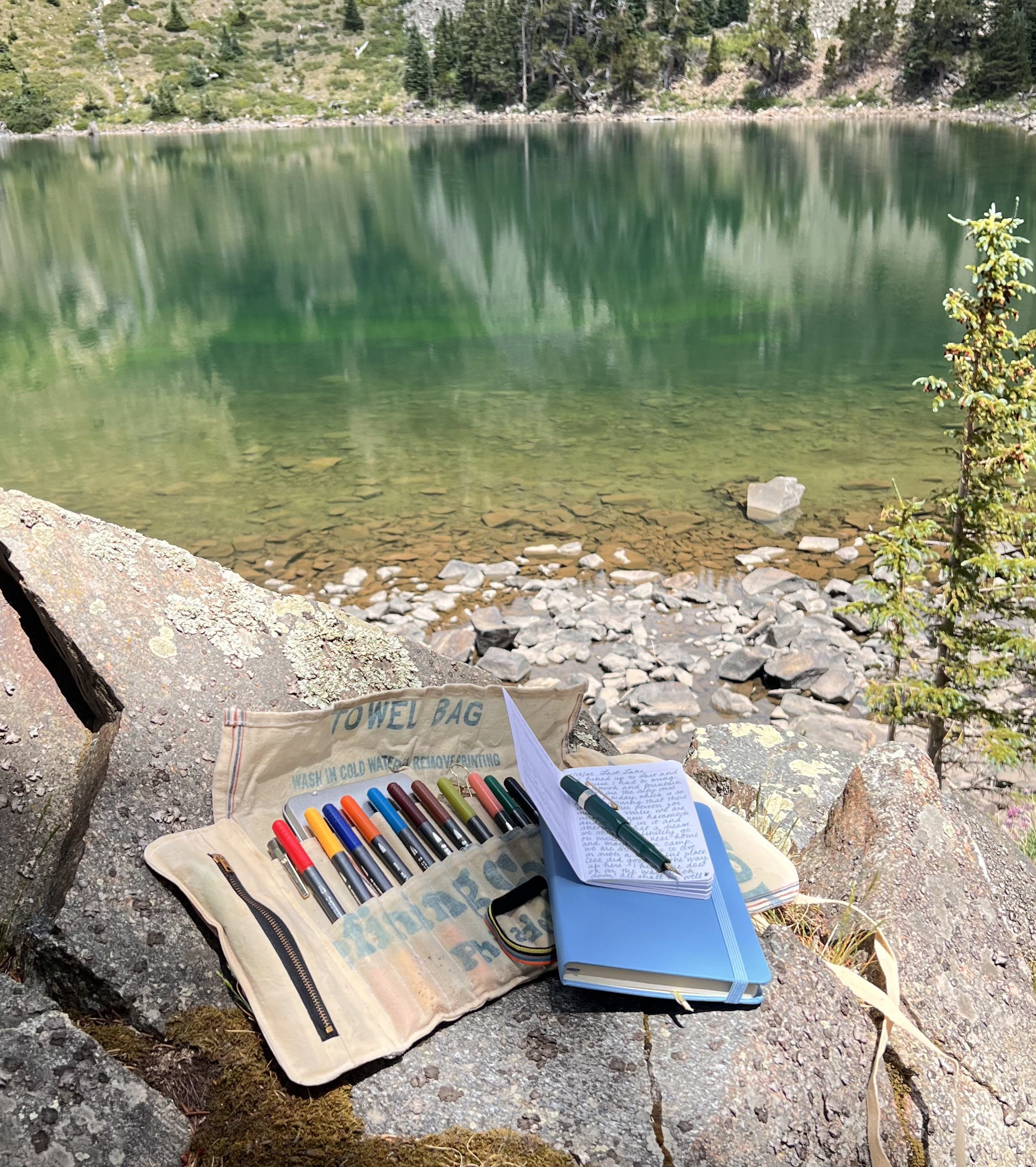
I was not prepared for how much this would rock my world. The idea that our time is forever a derivative of labor has thrown me for a loop — how do we divorce our leisure time from capitalism? Is it even possible?
If it was possible, imagine those empty moments where we are allowed to fully expand — moments in which we can create and dream, with no goal and no purpose. Han calls these moments ceremonious inactivity, when we do something but to no end.
“The freedom from purpose and usefulness is the essential core of inactivity and the basic formula for happiness.”
Inactivity is described as a threshold space, a liminal zone where we can create and experiment in wholly new ways. Those people lucky enough to experience true inactivity are those who “feel their way rather than walking just in the old paths.”1
We are all held in thrall by the compulsion of activity, the push to produce and produce and produce until we are wrung completely dry. Every bit of our modern life is centered around production, everything has a goal or an end. We have lost the “open spaces of inactivity.” We have lost the ability to create and dream and experiment in true freedom.
Perhaps the most chilling quote I wrote down from Vita Contemplativa is this:
“If revolution is inconceivable today, that may be because we do not have time to think.”

But Han argues that contemplative inactivity may be the thing that saves us, in the end. Because even though we have lost our way, at least we have the capacity to seek it. Artificial intelligence is neither capable of thinking or true inactivity. It exists in only two states, on and off. Deactivating a machine does not plunge it into a contemplative state of inactivity.
“A machine is neither active nor inactive. Activity and inactivity relate to one another like light and shadow. The shadow gives the light its form, its contours. Shadow and light condition each other. Similarly, activity and inactivity can be understood as two different states or modes of thinking, even of spirit. Thinking weaves itself out of light and shadow. Machine intelligence, by contrast, knows neither light nor shadow. It is transparent.”
Humans have created this world we now find ourselves in — our action has brought this about. So, perhaps, now it is time to reevaluate human action. Han argues that we should “increase the proportion of action that is contemplative, ensure that action is enriched by reflection.”
“What could save us would therefore be a radical interruption of the now.”
I don’t know how to move forward with this information, other than being suddenly aware of the connections my “leisure time” have to labor. I would love to hear your thoughts:
How can we divorce our inactivity from our labor?
Has anyone successfully disconnected their creative mind from work, and found themselves able to be truly contemplative?
And if not, how are you coping in this hellscape?
Consider upgrading to a paid subscription to support this newsletter.
Or you could buy me a coffee, xoxo.
Find me on the silly app.
Send me an email: anchoressarchives@gmail.com.
Share this post, give it a heart, or comment!
This is an AI-free newsletter and it always will be.
Frederich Nietzsche, Nachgelassene Fragmente 1880-1882, Samtliche Werke, Kritische Studienausgabe, Vol 9, Berline and New York: De Gruyter, 1988. As quoted in Vita Contemplativa.
“Inventive people live altogether differently from active ones; they need time, so that purposeless, unregulated activity occurs, experiments can take place, and new paths can be take; they feel their way, rather than walking just on the old paths, as the usefully active people do.”
No posts
Comments
Nothing yet. Say the first thing.
Sign in to join the conversation.