

Most people in Alaska do not know the name Troy Michael Laky.
They will not think about a 17-year-old babysitter and her 18-year-old friend, alcohol, memory gaps, court delays, dismissed charges, and the way a criminal case can shrink once it moves in Alaska’s legal system, when they hear his name.
They will not trace the case from a February night in 2019 to an arrest in 2020 in Homer, Alaska.
But I will, and I want to tell you about Troy Laky and this case.
The state alleged Laky furnished alcohol to underage girls and then sexually assaulted them, and the prosecution seems to have focused on incapacitation/lack of consent, not statutory age. Alaska law makes it illegal to furnish alcohol to anyone under 21, which is why both a 17-year-old and an 18-year-old can be “minors” for the alcohol charge.
Troy Laky, 37, was charged with three counts of Sexual Assault 1 - Penetrate without consent, five counts of Sexual Assault 2 - Penetrate Incapacitated Victim, three counts of Sexual Assault 3 - Conact with Mental Incapable and two counts of Furnishing Alcohol to Under 21, but was only convicted of a single felony charge, and not even one he had been originally charged with.
Coercion. Instill Fear of Injury
Court records list Troy Laky’s conviction as coercion under AS 11.41.530(a)(1), described as “instill fear of injury.” The judgment labels it a Class B felony, but when I looked up what coercion was, I was confused because Alaska’s statute lists coercion as a Class C felony.
Weird.
Moving on to what that charge means is easier than figuring out why it is listed as a Class B when it is a Class C. Simply, Laky was convicted of coercing someone by making them fear that, if they did not comply, he or someone else might inflict physical injury or commit another crime.
Many will hear “charges dismissed” and assume that means the story ended clean.
I am here to tell you, it did not.
Let's start at the beginning.
This case began in Homer Superior Court as State of Alaska v. Troy Michael Laky, case number 3HO-20-00154CR. The alleged incident happened on February 16, 2019. According to court filings, Laky was 37 years old. His two victims, listed by initials, were 18 and under.
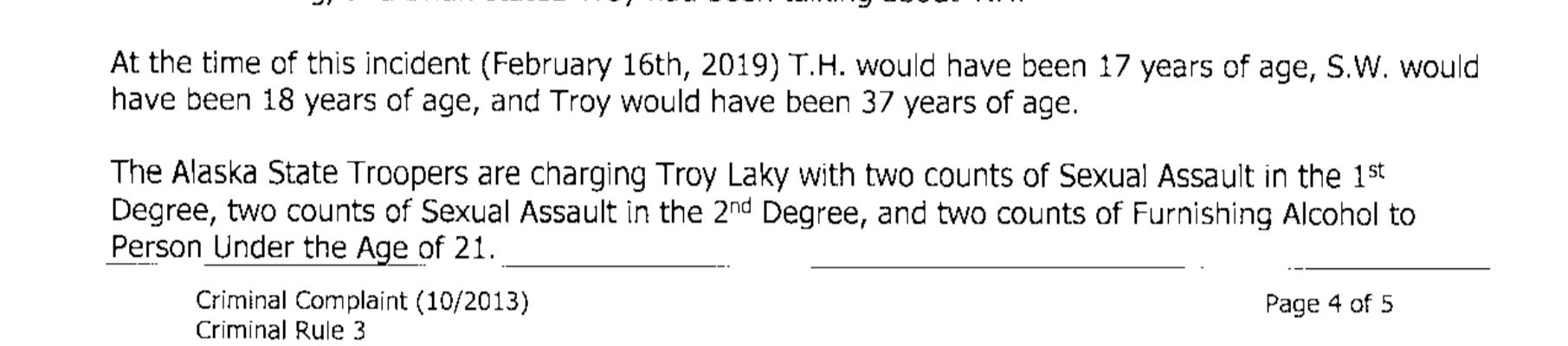
T.H. was 17, and S.W. was 18. T.H. was at Laky’s home to babysit his children. S.W. was there as her friend.
The State alleged that Laky gave the girls alcohol, and that Laky recklessly disregarded their lack of consent, and engaged in sexual conduct when he knew they were incapacitated while a sexual act was happening.
Court language always sounds cleaner than real life. It takes a night that someone has to live with forever and puts it into a paragraph that sounds like it was written by a machine. I know all too well the feelings dry sentences and initials leave on a young girl. I know the aftermath and damage.
Underneath those words are two young girls describing a night that came back in broken pieces.
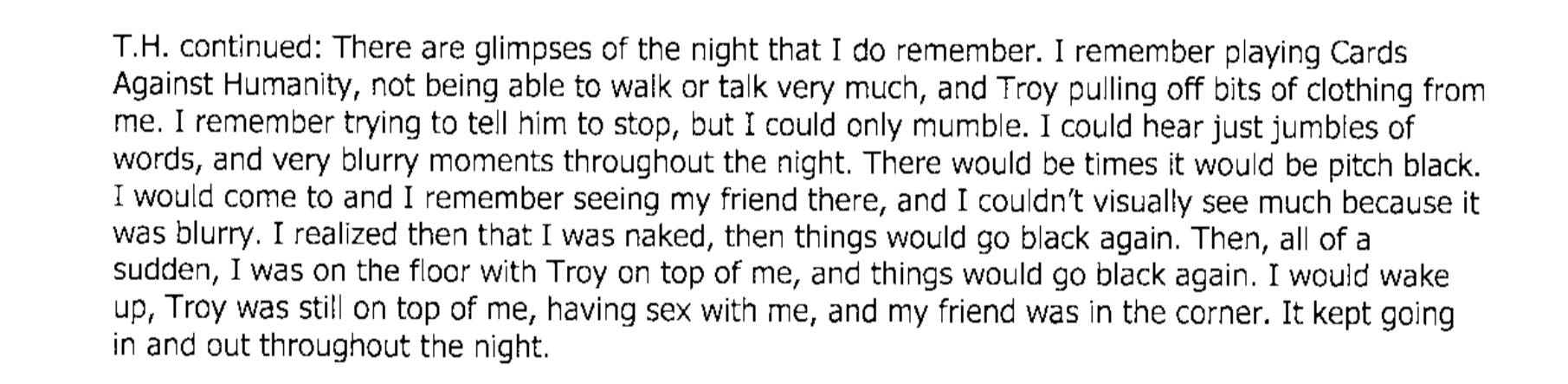
One described playing Cards Against Humanity, being unable to walk or talk much, trying to tell him to stop but only being able to mumble. She described blurry moments, blackouts, realizing she was naked, and waking up with Laky on top of her.
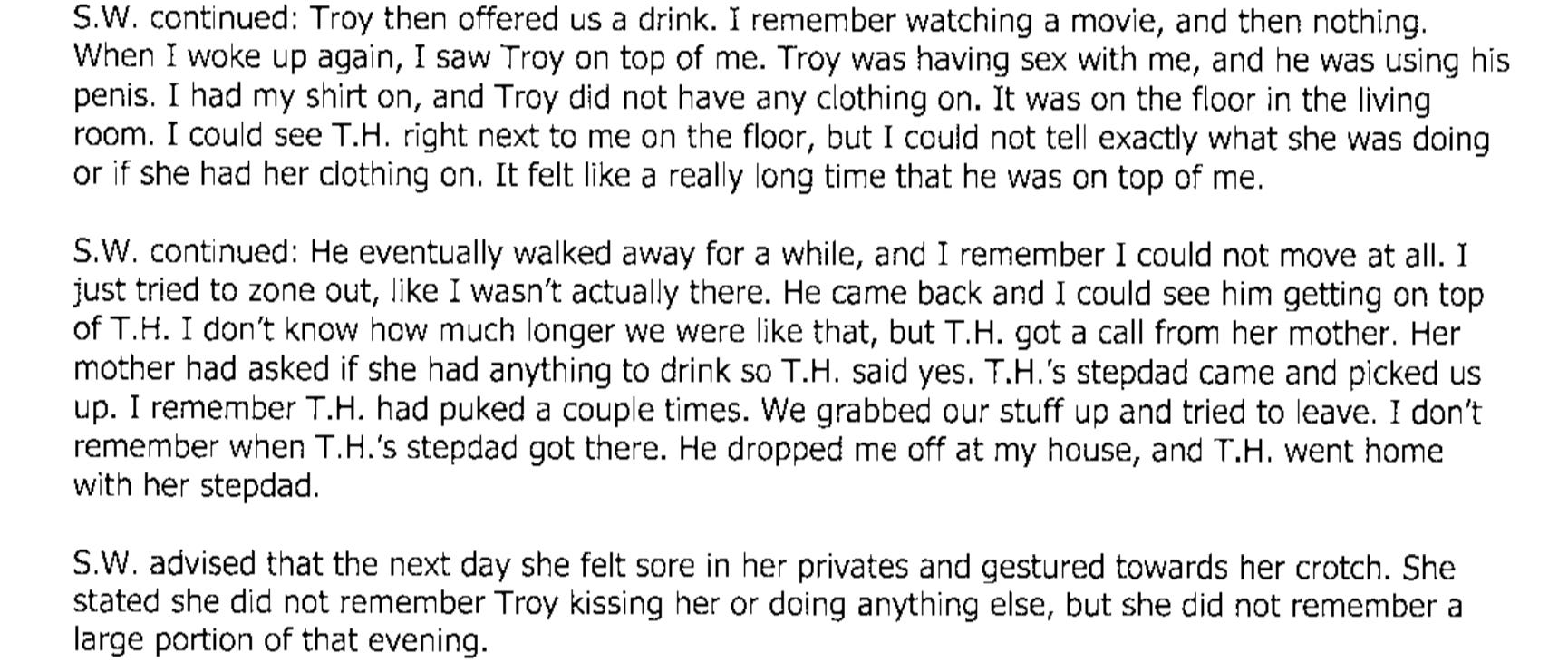
The other described being offered a drink, watching a movie, and then nothing. She said she woke up and saw Laky on top of her. She described being unable to move. She described seeing him later get on top of T.H. She said the next day she felt sore and did not remember a large portion of the evening.
I am not sharing these details for shock value. I am repeating them because this is what sexual assault cases often look like before the courtroom and a powerful private attorney gets hold of them.
Alcohol. Memory gaps. Fear. Power. An older, usually “respectable” man. A teenage babysitter.
A full year went by before there was an investigation. In March 2020, Alaska State Troopers received a report of a possible sexual assault involving two underage girls.
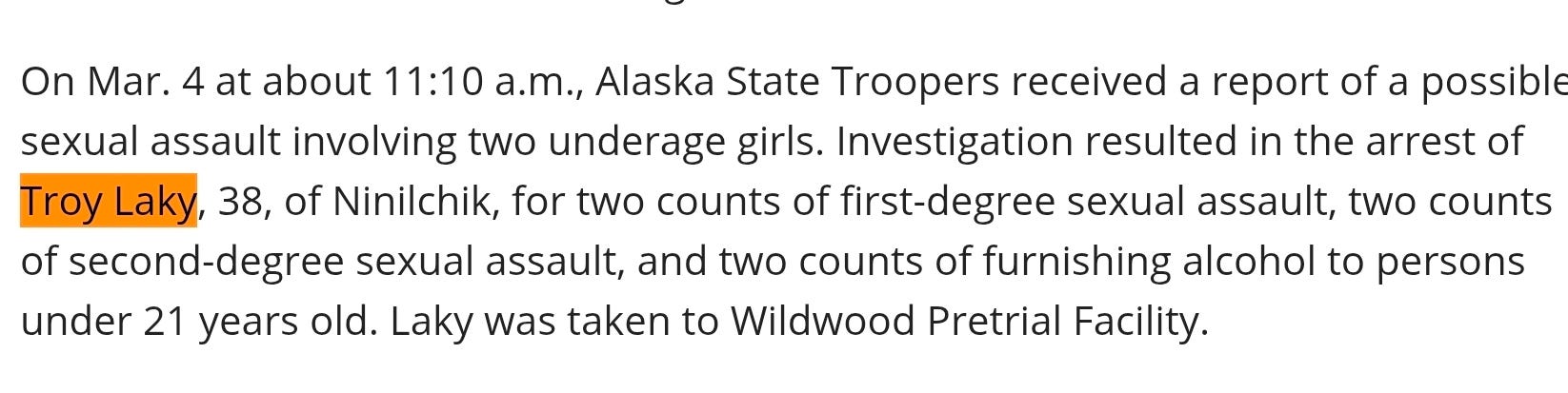
A public notice says the investigation led to Laky’s arrest, and he was taken to Wildwood Pretrial Facility on 17 charges.
Let’s break those charges down:
Sexual assault 1 usually means sexual penetration without consent, including by force/threat or by causing the person to become incapacitated.
Sexual assault 2 can include sexual contact without consent, sexual penetration with someone who is incapacitated, mentally incapable, or unaware a sexual act is happening, or other non-consensual penetration not covered by sexual assault 1.
Here is the link that explains those terms.
Alaska law can call a 17-year-old a minor when someone gives her alcohol, but not automatically call her a minor when someone sexually assaults her.
Troy Laky could be charged with furnishing alcohol to minors and sexual assault, but not necessarily sexual abuse of a minor.
The state’s theory was likely not “she was underage.” The theory was “she could not consent.”
Why wasn’t he charged with Sexual Assault of a Minor for at least the sexual assault of the 17-year-old? He was in a position of authority, by definition he was her employer.
From there, the case moved through Homer Superior Court.
And it kept moving like molasses, while years passed.
By the time the case resolved in April 2024, the public record looked very different from where the case began.
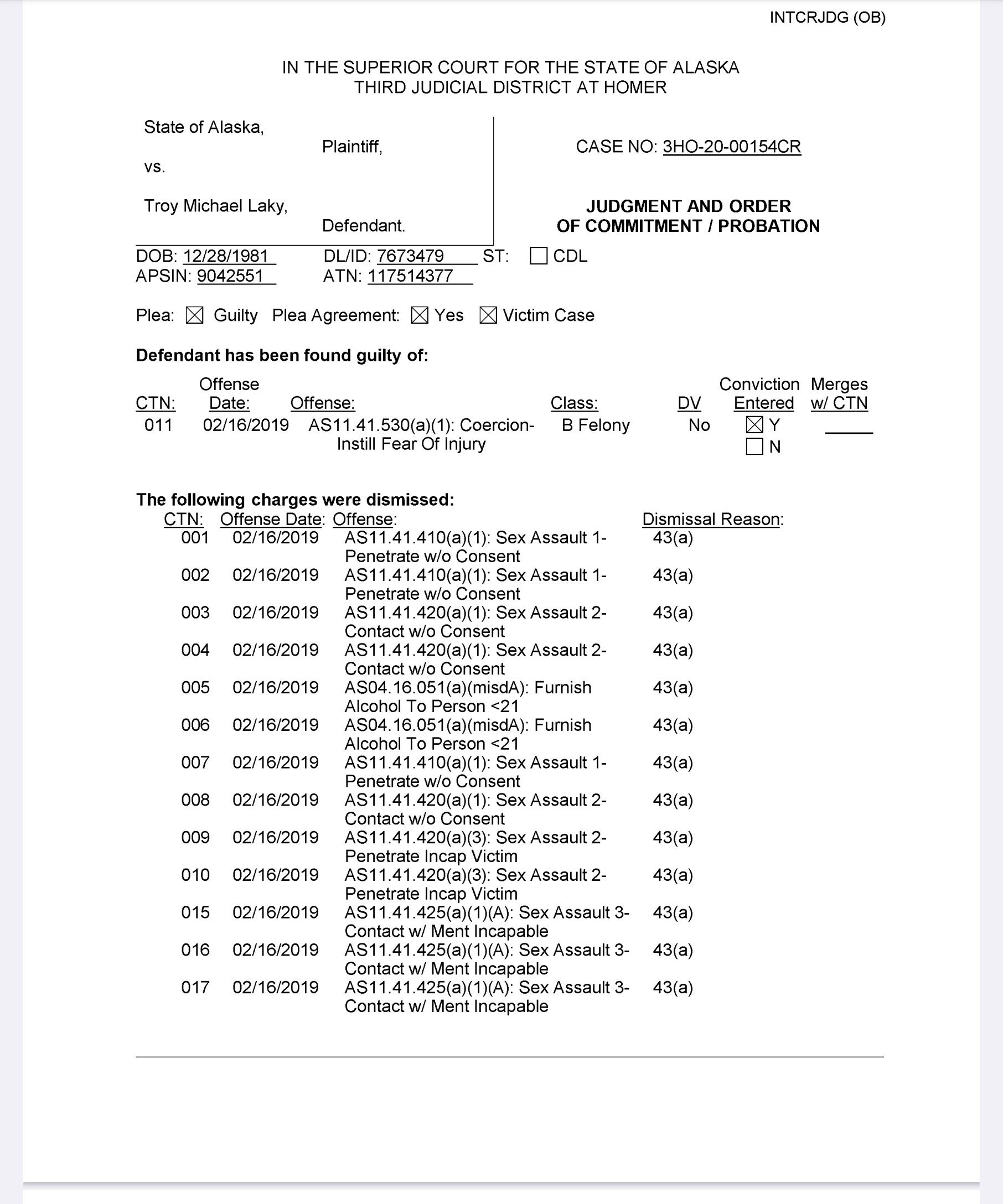
The charges were dismissed by the prosecution under Criminal Rule 43(a).
Criminal Rule 43(a) is the rule governing the dismissal of criminal charges by the prosecuting attorney. It states that the prosecution may file a dismissal of an indictment, information, or complaint, which formally terminates the prosecution of those charges.
Laky was convicted by guilty plea of one felony count: Coercion. Instill fear of injury.
This case, which began with serious sexual assault allegations involving a 17-year-old and an 18-year-old, ended with one felony coercion conviction.
But wait. There's more.
There was also a defense motion in 2024 asking the court to allow evidence of a prior sexual relationship between Laky and T.H. The defense argued that history was relevant to consent and credibility.
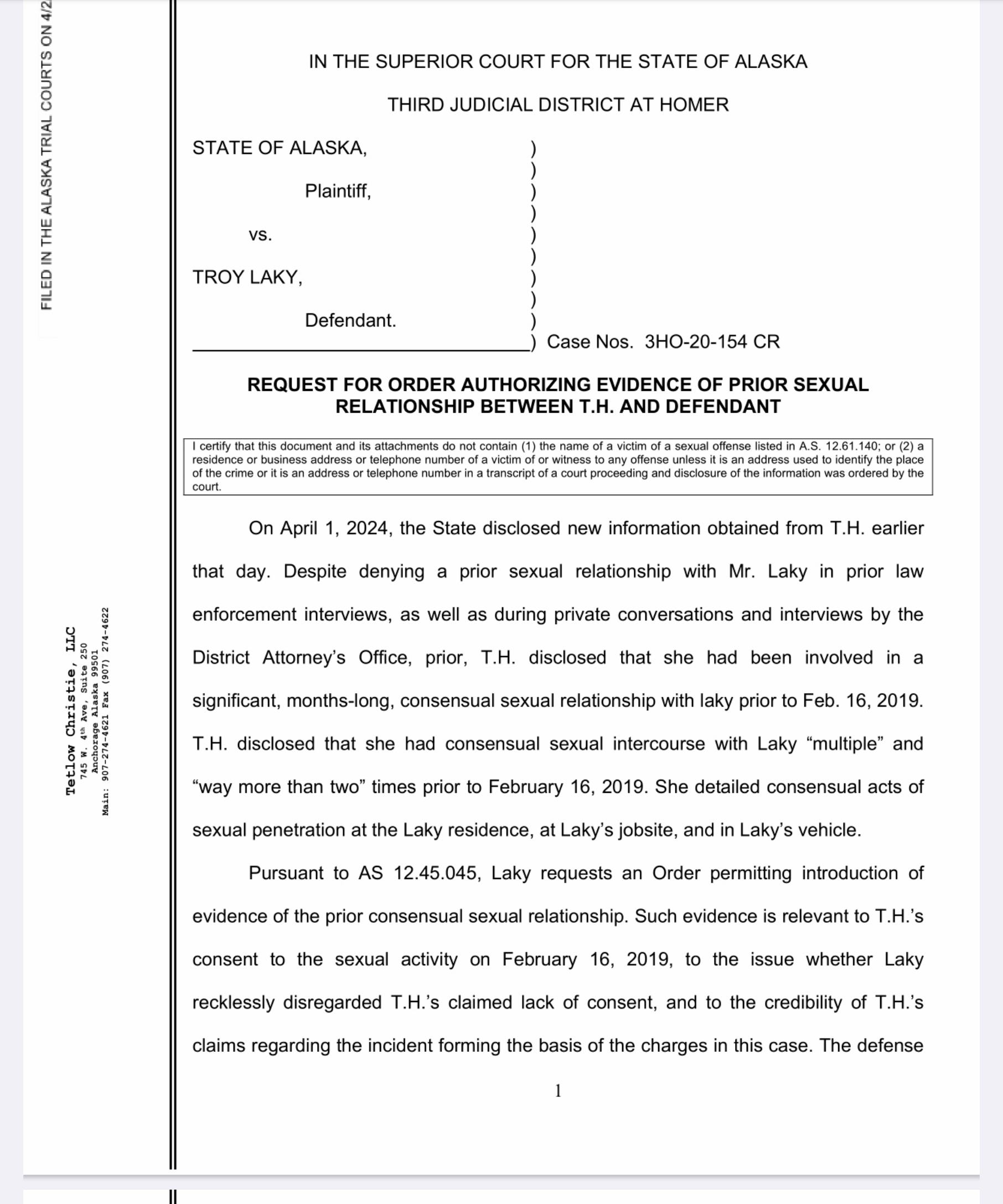
Remember, a prior history means that T.H. would have been younger than 17 years old at the time.
This is where Laky’s private attorney, Wally Tetlow, starts doing what they always do in a trial, they make statements and poke holes into the allegations. It is Tetlow’s job, and he does it well. The defense even requests her medical records and essentially calls her mentally unstable.
This is how cases get turned inside out. The original allegations get buried under questions about whether the victim was the right kind of girl.
A prior relationship does not create permanent consent. I'll repeat this: If it had happened before 2019, then she was younger than 17.
In April 2025, the Alaska Office of Victims’ Rights withdrew its limited entry of appearance on behalf of crime victim S.W. in the same case.
Laky was not convicted of the sexual assault charges. Those charges were dismissed. He was convicted of felony coercion.
But the documents of the case still matter. They show how a case can begin with a long list of sexual assault charges and end with something much narrower.
Alaska tells survivors to report. Then its own numbers show what happens next, nearly half of sex-offense referrals are declined, resolved cases are more likely to be dismissed or pled than tried, and trials are almost nonexistent.
In the Department of Law’s own report, “Sex Offense Cases Referred to the State of Alaska, Department of Law Between July 1, 2020, and June 30, 2021,” only five sex-offense prosecutions had gone to trial.
Four ended in acquittal.
One ended in conviction.
Troy Laky’s case did not happen in a system where sex offense cases reliably move to trial and accountability. It happened in a system where nearly half of sex-offense referrals are declined, resolved cases are more likely to be dismissed or pled down than tried, and trial convictions are rare.
Alaska lawmakers passed House Bill 239, a sweeping crime bill that raises Alaska’s age of sexual consent to 18.
Rep. Andrew Gray, who had repeatedly pushed to raise the age of consent to 18, said the change would make it easier to prosecute people who sexually assault minors. After the bill passed the Senate, he said there was nothing his office would ever do that was as important as what happened that day.
That is the bridge I see between this Homer case and the new law.
The Laky case cannot be retried under a law passed years later. That is not how the law works. But cases like Laky’s are exactly why laws change.
When a 37-year-old man is accused in a case involving a 17-year-old and an 18-year-old, alcohol, blackout memories, and sexual assault allegations, the public should not have to study the fine print to figure out whether the law was strong enough to hold a perpetrator accountable. If the law can not clearly protect victims under sex offense laws, that is not a technicality, that is the gap victims fall through.
Thanks for reading The Alaska Record by Amber Batts ! This post is public so feel free to share it.
Comments
Nothing yet. Say the first thing.
Sign in to join the conversation.