
You’ve dialed in your prompts. You’ve generated a cinematic masterpiece. You’re ready to take it to market.
But who actually owns the film?
Working in traditional media as a showrunner and executive at Lionsgate, the rules were clear: a writer wrote something, a studio bought it, and an army of lawyers made sure the chain of title was airtight.
But Generative AI has thrown a massive wrench into the gears of Hollywood’s legal machine. If you want to move beyond making YouTube videos for 1,000 views and actually start monetizing your AI-assisted work, you need to understand the new rules of the game.
To help us navigate this, I recently sat down for a conversation with two of my former Lionsgate colleagues: attorneys Brent Owens and Charlie Kelsey. They have since left the studio to found Evos Law, a firm specializing in the wild intersection of traditional entertainment and artificial intelligence.
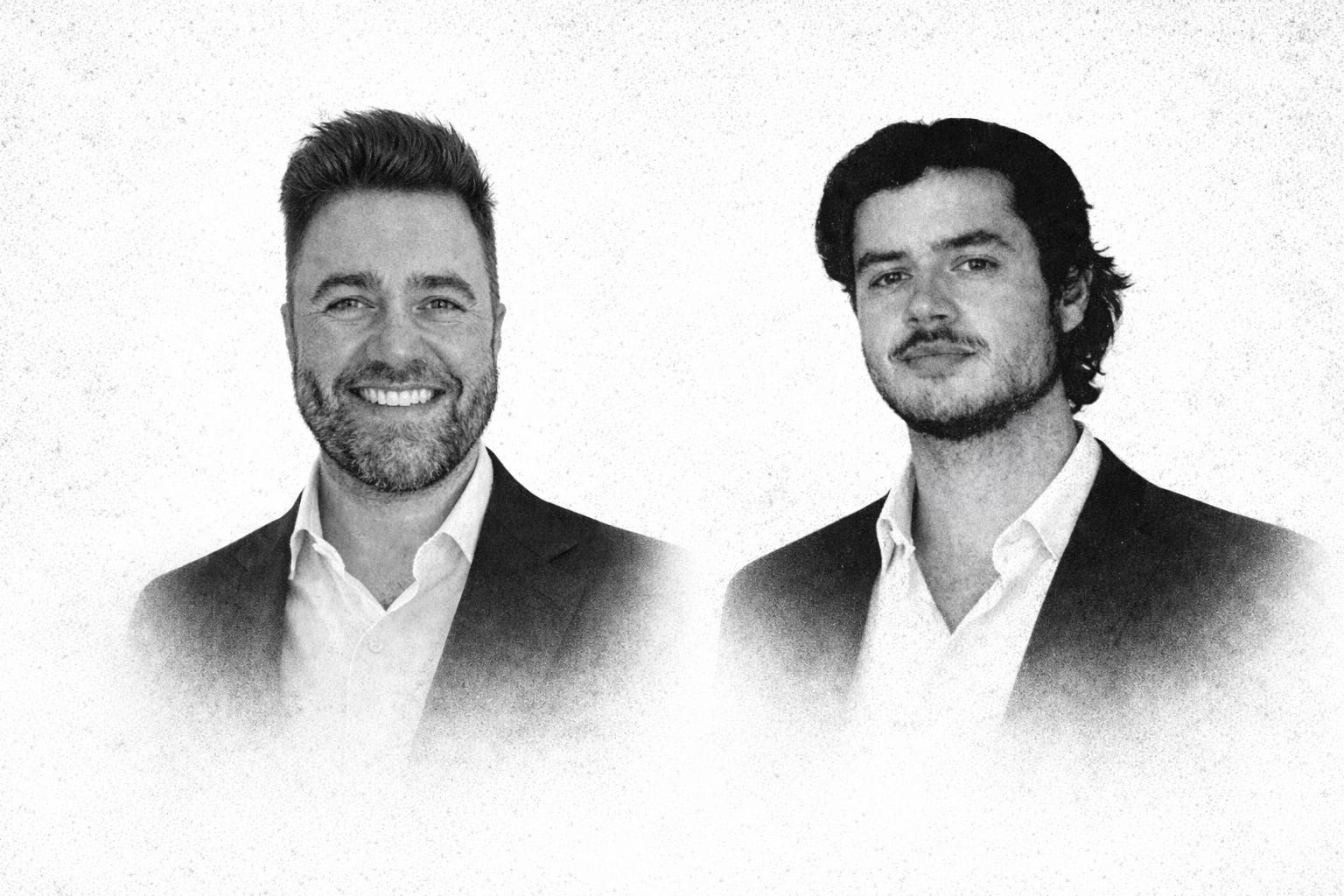
In Part One of our conversation, we dive into the murky waters of copyright, the threshold for “material alteration,” and what happens when your AI protagonist accidentally looks exactly like Ryan Gosling.
Let’s dig in.
First off, give us the quick origin story. How did you both get to where you are, and what is the vision for your new firm?
BRENT: I started my career at WME, then spent nearly a decade at Pilgrim Media Group and Lionsgate negotiating entertainment deals from the production company side. By the time I left as VP of Business and Legal Affairs, I’d closed hundreds of deals across talent, producers, distribution, and IP. Charlie’s path was through scripted television, where he started as a manager for writers and directors before law school. He later joined the Los Angeles office of Simpson Thacher & Bartlett, where he worked on M&A deals in a rapidly consolidating media industry, before joining me at Lionsgate.
We started Evos Law because we kept seeing the same problem: the entertainment business is evolving faster than most of its lawyers. AI and emerging technology are creating entirely new categories of content, new ownership questions, and new deal structures. What excites us most is that for the first time in decades, the fundamental rules of who owns what, who gets paid, and how content gets made are all being renegotiated at once.
Let’s get into those fundamental rules. In the traditional model, we know exactly who holds the copyright. In the AI ecosystem the waters are far murkier.
The traditional system is fairly straight-forward: a human creates something, that human owns it (or assigns it to the entity that paid them). The entire chain of title flows from that simple principle.
AI presents new challenges in three primary ways:
First is Authorship: Copyright requires a human author. The Supreme Court just confirmed this when they refused to hear an appeal in Thaler v. Perlmutter on March 2nd – AI cannot be an author under current U.S. copyright law. So if a machine generates an image, a song, or a script with no meaningful human creative input, nobody owns it.
NOBODY owns it?
That’s right: it immediately becomes public domain.
Next up is Training: Every major AI model was trained on copyrighted works. Whether that training is legal under fair use is the biggest copyright fight in a generation.
And finally, Outputs: Even when AI generates something “new,” it may contain elements recognizably derived from copyrighted works. That creates infringement risk that didn’t exist in the old model, because a human writer or artist knew what they were referencing. An AI model doesn’t inherently know.
Let’s talk about what you can do to actually copyright images created with AI. The other day you told me a story about a macaque monkey…
This is one of our favorite cases to bring up because it sounds absurd, but it established a principle that turned out to be incredibly important.
In 2011, a wildlife photographer named David Slater was in Indonesia and a crested macaque named Naruto grabbed his camera and took a series of selfies. The images went viral. PETA then sued on the monkey’s behalf, arguing that Naruto was the author of the photographs and owned the copyright.
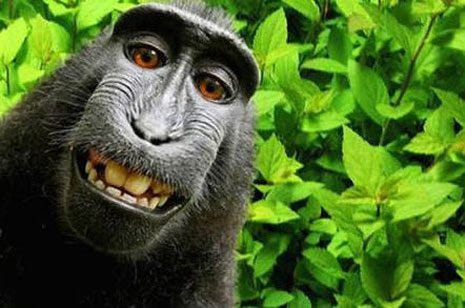
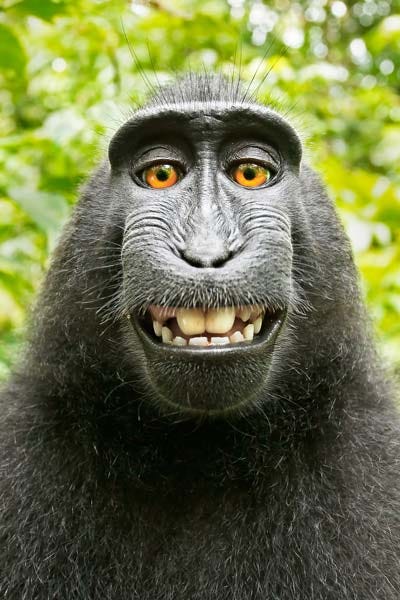
The Ninth Circuit said no. The Copyright Act requires a human author. Naruto took the photo, but Naruto can’t own the photo.
Fast forward to AI, and the principle maps directly. In the Thaler case we mentioned earlier, Stephen Thaler tried to register a copyright for an image created entirely by his AI system, DABUS, naming the AI as the author. The Copyright Office refused. Thaler sued. He lost at the district court, lost on appeal, and two weeks ago, the Supreme Court declined to hear his case
The reason this matters for creators is that it establishes the baseline rule: if you want to own what an AI produces, you need to show that a human made the creative decisions that drove the output. The machine is the camera. You need to be the photographer, not the monkey.
So, pure prompt-to-output with no human intervention is unprotectable. But in my understanding, if a human artist uses AI as one tool among many, making creative decisions that “materially alter” the AI images, that’s potentially a different story. What actually qualifies as a material alteration? Does anyone know or is it like that old line from a Supreme Court Justice about pornography: “I know it when I see it”?
The honest answer is that nobody knows exactly where the line is yet. The Copyright Office hasn’t published a bright-line test, and the courts haven’t given us one either.
What the courts will be looking for is whether your creative decisions drove the expressive content of the work. Selection, arrangement, and creative judgment matter more than volume of changes. Did you composite multiple AI-generated elements together in a way that reflects your artistic vision? Did you use the AI-generated image as a starting point for significant human creative work? Those choices start to build a case for authorship.
One more thing to keep in mind: owning copyright in the new work does not automatically give you ownership of the underlying work. If you edit a Midjourney scene into something copyrightable, anyone can still use the raw Midjourney output. Your copyright covers what you added, not the AI-generated base.
Wow, ok. Let’s try to make a potential case for ownership. I may be biased, but as a former editor, my feeling is that editing is authorship. If I take raw AI-generated clips and cut them together – adding music, dialogue, pacing – does that final compiled sequence cross the threshold to claim full ownership of the work?
This is where the argument gets strongest, and your instinct as a filmmaker is exactly right: editing is authorship.
Copyright law has a well-established concept called “compilation copyright.” The selection, coordination, and arrangement of elements (even elements you don’t individually own) can be protectable authorship. Think of a mixtape, a curated anthology, or a documentary assembled from archival footage. You don’t own the underlying clips, but you own the creative work of assembling them.
If you’re taking raw AI-generated clips and making the editorial decisions – what stays, what goes, the sequence, the pacing, the juxtaposition, the emotional arc – and then layering in human-created elements like original music, recorded dialogue, sound design, and visual effects, that compiled sequence has a much stronger copyright claim than any individual AI-generated clip.
Let’s talk about the Ryan Gosling problem that I’ve written about before. Sometimes I’ll prompt a tool, and the output is a screamingly clear infringement – like an astronaut that looks exactly like Mr. Gosling, or a copyrighted character. Clearly all the major models are trained on real people and real protected work. And sadly the “copyright safe” models kind of suck. How can you protect yourself when using the major models?
This is actually two separate legal problems stacked on top of each other.
The first is federal law: potential copyright and/or trademark infringement. If your AI-generated astronaut is clearly derived from a specific copyrighted film, that’s a potential copyright claim by the studio. If the output looks like a real person, you’re also in Lanham Act territory: § 43(a) covers false endorsement, meaning if consumers could reasonably believe the person authorized or sponsored the content, you have a federal claim on top of the state right-of-publicity.
The second problem is state law: right of publicity, the legal right every person has to control commercial use of their name, image, and likeness. If your AI output looks recognizably like Ryan Gosling, you have a right-of-publicity issue regardless of whether any specific movie was copied.
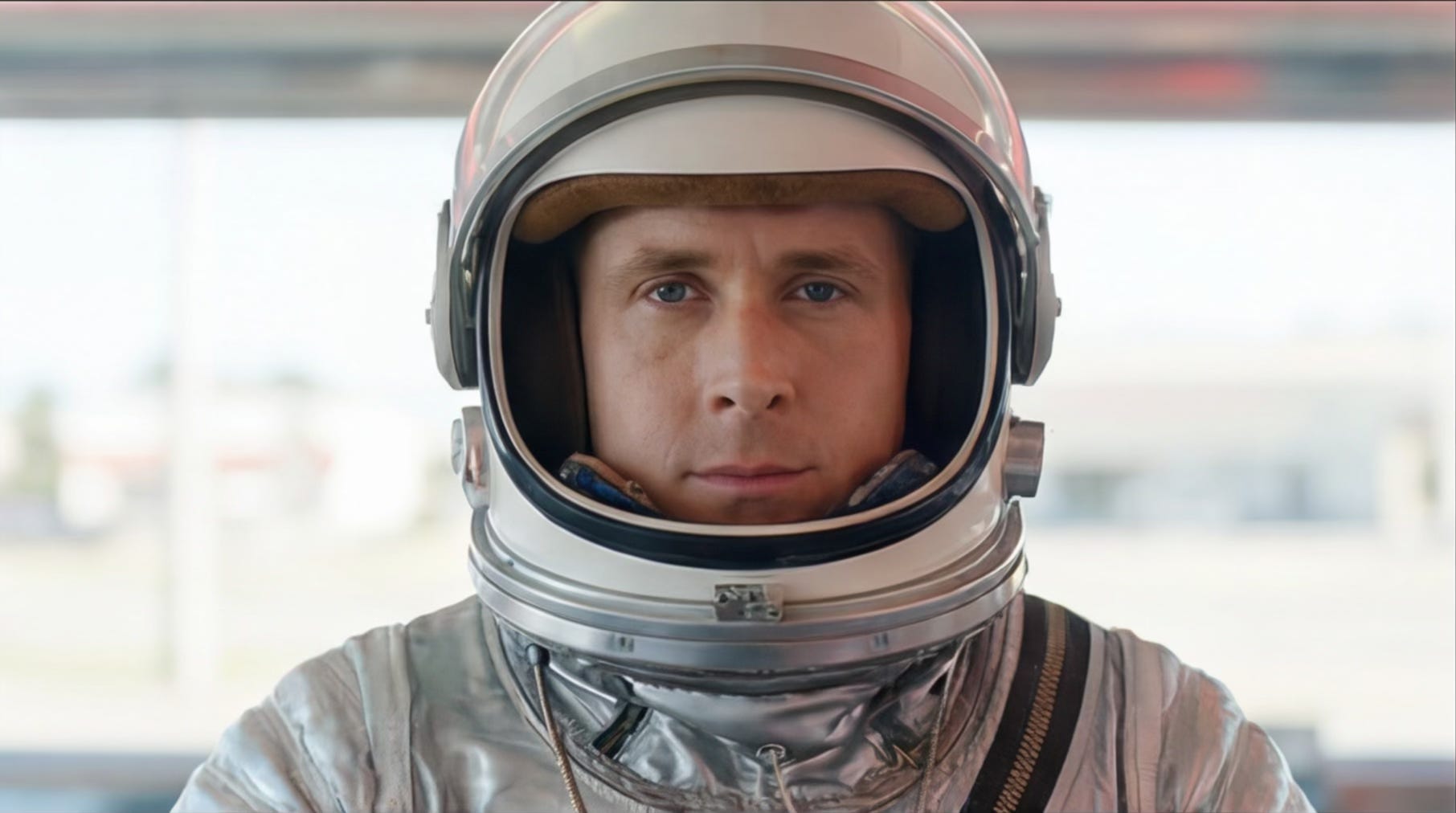
Best practice for creators who want to monetize: treat AI output exactly like any other content that needs clearance. If it looks like someone, clear it. If it echoes a copyrighted work, clear it. If you can’t clear it, don’t monetize it. And know that E&O insurance carriers are now specifically asking about AI-generated content at renewal. If you can’t demonstrate clearances, you may not be able to insure your project. And if you can’t insure it, you can’t distribute it.
I’m starting to really appreciate why you guys are putting AI issues front and center at your new firm. Let’s talk about risk as it applies to an indie creator making AI YouTube videos that only get a thousand views. That’s a totally different risk factor than if you’re talking about a prod co. delivering a $20M feature. What’s the real risk of inadvertent infringement for an indie creator hoping to scale?
Let’s be honest about the risk spectrum. If you’re making a YouTube video that gets 1,000 views, the practical risk of enforcement is low. Studios aren’t sending legal teams after small creators for incidental AI-generated content.
But here’s the trap: if you’re building a library of content that you hope to eventually sell, license, or scale into something bigger, you’re building on a foundation you may not be able to defend. The risk isn’t getting sued today. The risk is that when your project gets real attention – when a distributor wants to pick it up, when a streamer makes an offer, when you need E&O insurance for a commercial release – you can’t prove you own what you made.
Every legitimate distributor, every platform, every insurance carrier is going to ask about your chain of title. “Was AI used in the creation of this content?” is now a standard question. If you can’t answer that question, the deal falls apart. Not because someone sued you, but because the buyer can’t take the legal risk.
Our guidance for indie creators is practical: use AI aggressively in development (concepting, brainstorming, reference material). That’s where the tools shine and the risk is lowest. But for the content you actually want to monetize and scale, make sure human-created elements are the backbone. Document your creative process. Build your chain of title from the ground up. The creators who do this now will be the ones who can actually capitalize when their projects take off.
Next week in Part 2: We dive into the impending clash between AI, the Hollywood Studios, and the Guilds. Are the unions protecting the working class, or just the A-list? And is a secondary, highly profitable, non-union entertainment ecosystem about to disrupt the entire industry?
Subscribe so you don’t miss it…
No posts
Comments
Nothing yet. Say the first thing.
Sign in to join the conversation.