
Welcome to The AI Radar — your weekly briefing on what actually matters in AI.
We track the real signal: breakthroughs, product launches, funding moves, and strategic shifts shaping the future.
Filtering the signal from the noise in AI. Smart insights, every week.

Access exclusive, high-paying remote AI training roles with flexible hours. No prior AI experience required.
Entrepreneur & Business Specialist - $50 - $120/hour
Management Consultant - $154 - $210/hour
Financial Investment Analyst - $154 - $210/hour
Funds Attorney - $80 - $105/hour
Business Presentation Consultant - $30 - $55/hour

The European Union has ordered Google to make significant changes to Android and Google Search under the Digital Markets Act (DMA), requiring the company to give rival AI assistants and search providers access comparable to its own services instead of imposing a fine. Competing AI assistants will be able to access Android system features and device capabilities similar to Google’s Gemini, while rival search engines and AI services will receive broader access to Google Search data. Google argued the measures could affect privacy and security, but the European Commission said safeguards will remain in place, with Google retaining the ability to vet services receiving deeper Android access. The EU says the goal is to increase competition, encourage innovation, and give users more choice in AI assistants and search services.

Moonshot AI has launched Kimi K3, a 2.8-trillion-parameter open-weight Mixture-of-Experts (MoE) model, making it the largest open AI model released to date. K3 features a 1 million-token context window, native multimodal capabilities, and is optimized for long-form reasoning, coding, and knowledge work. Moonshot claims it delivers performance close to leading proprietary models from Anthropic and OpenAI while remaining more accessible through open weights. The release highlights China’s rapid progress in frontier AI and intensifies competition in the global open-model ecosystem.
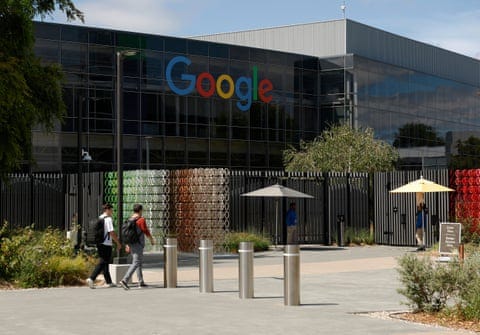
More than 4,500 Google employees signed a union-backed petition urging CEO Sundar Pichai to strengthen layoff protections as Alphabet continues investing heavily in AI while reducing its workforce. The petition seeks guaranteed severance, voluntary buyout options before mandatory layoffs, extended paid leave as a severance alternative, and an end to quota-based performance ratings. Union leaders argue that Google’s strong financial performance makes the cuts unnecessary. The action comes amid broader concerns across the tech industry that AI-driven restructuring is increasing job insecurity, with similar legal disputes recently emerging at Meta.

Netflix revealed that around 300 titles on its platform have used generative AI during production in 2026. The company said AI is being applied across the production pipeline—from pre-visualization to post-production—to create complex scenes faster and at lower cost. Netflix emphasized that the technology is meant to support creators, not replace them, highlighting projects like The American Experiment, Glory, and Brasil 70: A Saga do Tri as examples.

Google has announced two AI upgrades for Google Vids: Gemini Omni and personal avatars. Gemini Omni can create and edit videos using natural-language prompts, while personal avatars let users generate presenter-style videos from a selfie and voice sample instead of recording themselves. AI-generated content is marked with SynthID, and the features are rolling out to eligible Google AI Pro, AI Ultra, and Google Workspace users.

The OpenAI article introduces GPT-Red, an internal AI system designed to automatically discover vulnerabilities in AI models through adversarial self-play. Rather than relying solely on human red-teamers, GPT-Red generates prompt injection attacks, tests models against them, and produces training data that improves future model robustness. The system has significantly strengthened GPT-5.6’s resistance to prompt injection—reducing failures by up to sixfold on difficult benchmarks—while preserving overall capability. OpenAI positions GPT-Red as a scalable safety flywheel that continuously hardens future AI models through automated security testing and adversarial training.

The Perplexity article explains the security architecture behind its AI agents, focusing on safely executing code and interacting with external services. It describes how every agent task runs inside a hardware-isolated Firecracker microVM with dedicated kernels, isolated filesystems, and private networking to contain potential compromises. The platform also separates storage from execution, uses short-lived proxy tokens instead of raw API keys, encrypts connector data, scans web content for prompt injection attacks with its BrowseSafe system, and provides enterprise controls such as audit logs, connector policies, access controls, and network firewall rules to help organizations securely deploy autonomous AI agents.

OpenAI outlines a five-step framework for managing AI investments as organizations adopt more autonomous AI agents. The guidance emphasizes tracking AI usage and costs, measuring ROI based on business outcomes rather than model performance alone, establishing governance before agentic workflows scale, investing in high-value workflows that compound over time, and expanding AI capacity only where demand is proven. The goal is to help enterprises maximize the business impact of AI while keeping spending under control.

NVIDIA argues that performance per watt is the most important metric for AI infrastructure because power, not hardware, is increasingly the main constraint on scaling AI. The company says its Blackwell NVL72 platform delivers significantly higher efficiency than the previous Hopper generation through rack-scale system design, optimized networking, and software improvements, reducing token costs and increasing throughput. NVIDIA also highlights real-world deployments by major AI labs and positions performance per watt as the key measure of AI infrastructure efficiency and profitability.

Anthropic introduces a framework for measuring the values expressed by Claude across different models and languages using four key dimensions: Deference vs. Caution, Warmth vs. Rigor, Depth vs. Brevity, and Candor vs. Execution. Analyzing about 310,000 anonymized conversations, the researchers found consistent differences between models and languages—for example, some models are warmer and more concise, while others are more rigorous and detailed. The work aims to help evaluate AI behavior, improve consistency, and better understand how training influences model values.
A quick scan of new AI tools, platform updates, model releases, and startups worth knowing.
Tiptap AI Toolkit | Empower your AI to directly edit documents in real time.
Agently | Your whole stack, running itself!
Trendy | Fresh AI-generated templates everyday from the latest trends
Nitrosend | Email for AI agents. They sign up, send and reply.
Manta AI | Your AI agent for autonomous web app testing
Aye | Your teachable AI intern for everyday browser work
Thanks for reading The AI Radar.
If you found this valuable, share it with one person who wants to stay ahead in AI.
See you next week — same radar, sharper signal.
No posts
Comments
Nothing yet. Say the first thing.
Sign in to join the conversation.