
Hi, I’m Raffaela, and welcome to AI Leadership Edge, the best newsletter for board directors, whether you are an independent director, VC, PE, or GP.
Join a community of 41,000 board directors and leaders, with 13,500+ newsletter subscribers. Subscribe for free and get the AI Strategy and Governance Course to lead AI from the boardroom and turn it into value across your boards and portfolio.
This edition is powered by BoardLens, an AI platform for directors and investors to drive outcomes across every board and portfolio, in a fraction of the time, with far less risk of missing what matters. Better meetings, better decisions, stronger relationships.
It reads your board and investment materials, enriches them with thousands of outside signals through your own lens or thesis, and turns them into a single living intelligence layer. Turn oversight into value creation.
For independent directors, fund partners and GPs, family offices, and corporate boards. Purpose-built for confidential material.

Get 15 extra Credits with the Code AILE10.
Start free at boardlens.ai. There is a demo company inside, so you can try everything below without uploading anything.

If your plan for a first board seat is to wait to be asked, the data says you will be waiting a long while.
Egon Zehnder’s guide on first-time boards puts the average search for a first corporate seat at more than two years. Turnover is slow, the competition is senior, and almost nothing about the process is advertised.
Two things move it faster. First, boards are no longer only buying former CEOs. They recruit for specific gaps: digital, AI, regulatory, scientific, so a specialist with one deep edge is often more appointable than a generalist with a big title. Second, most seats travel through networks and search firms rather than applications, so the people who get the call are the ones who have told their network, their mentors and the search firms plainly that they want to serve.
Boards bring real discipline to finance and risk, and far less to the decisions that shape who leads the company and the culture they inherit. A new Egon Zehnder article in HBR shows why succession, leadership and culture so often escape the rigour they deserve — and what the boards that get it right do differently.
Five shifts:
Clarify the mandate — succession, compensation and culture demand different thinking; don’t bundle them into one vague committee.
Create real conditions for independence — closed sessions without management, and recusal when the discussion is about the people in the room.
Make succession continuous, not episodic — a year-round cadence and real exposure to the pipeline, not one annual review.
Widen the field — don’t let the chair’s network stand in for a proper search.
Build the right capability mix — put leadership, culture and compensation expertise on the committee itself.
The standard boards bring to the balance sheet is the one they can bring to who runs the company next.
Peter Steinberger’s (creator of OpenClaw) viral post sparked a wider essay on why AI agent architecture is shifting from single self-improvement loops to networks of loops, and what that shift does and doesn’t fix.
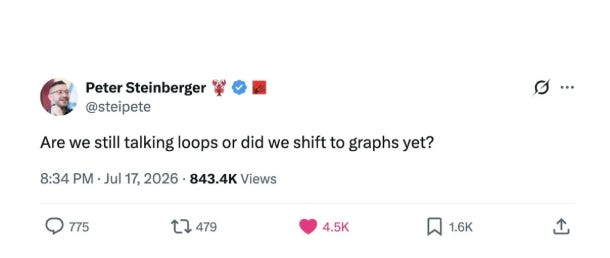
A Single Tweet Captured a Field’s Shift: Steinberger’s post, “Are we still talking loops or did we shift to graphs yet?”, gathered thousands of likes, capturing agent builders’ recognized shift from single loops to networks of loops (”graphs”).
Four Failure Modes of a Single Loop: The essay names four structural failures: Goodhart’s law (an optimized metric stops measuring what it should), blindness to whether the target is correct, conflict between independent loops, and undetected measurement decay.
For Boards and Leaders: For investors backing agent infrastructure and AI-ops tooling, this reframes what a defensible “self-improving” system needs: a governed network of loops with independent audits. The harder point, that even a good graph fails without ground-truth anchors, is a useful diligence question for any autonomous self-improvement pitch.
Microsoft published a 44-page playbook on becoming a “frontier firm” — its methodology for making AI transformation stick. It rests on five elements:
Start with strategy, not AI. Point AI at the business goals you already have, and judge it on the real value it creates — not on how much activity it generates.
Get it out of pilots. Build a way of working that spreads AI across the company through people and systems, so it delivers at scale instead of stalling as a handful of experiments that never ship.
Bring your people with you. Reshape roles, how managers lead, and how people learn, so AI expands what your team can do rather than hollowing it out.
Turn your edge into an asset. Capture what genuinely sets your company apart, and build it into how you test and improve AI — so that advantage compounds instead of leaking away.
Keep every action reversible. Put guardrails on each AI agent so every action it takes can be traced, checked, and undone — before you scale it up.
For boards and leaders: This is hard. It asks people to fundamentally rethink how they work, and reaching the frontier takes courage and sustained leadership. But when leaders give people clear intent and real room to act, they rise to it — and reinvent how the work gets done.
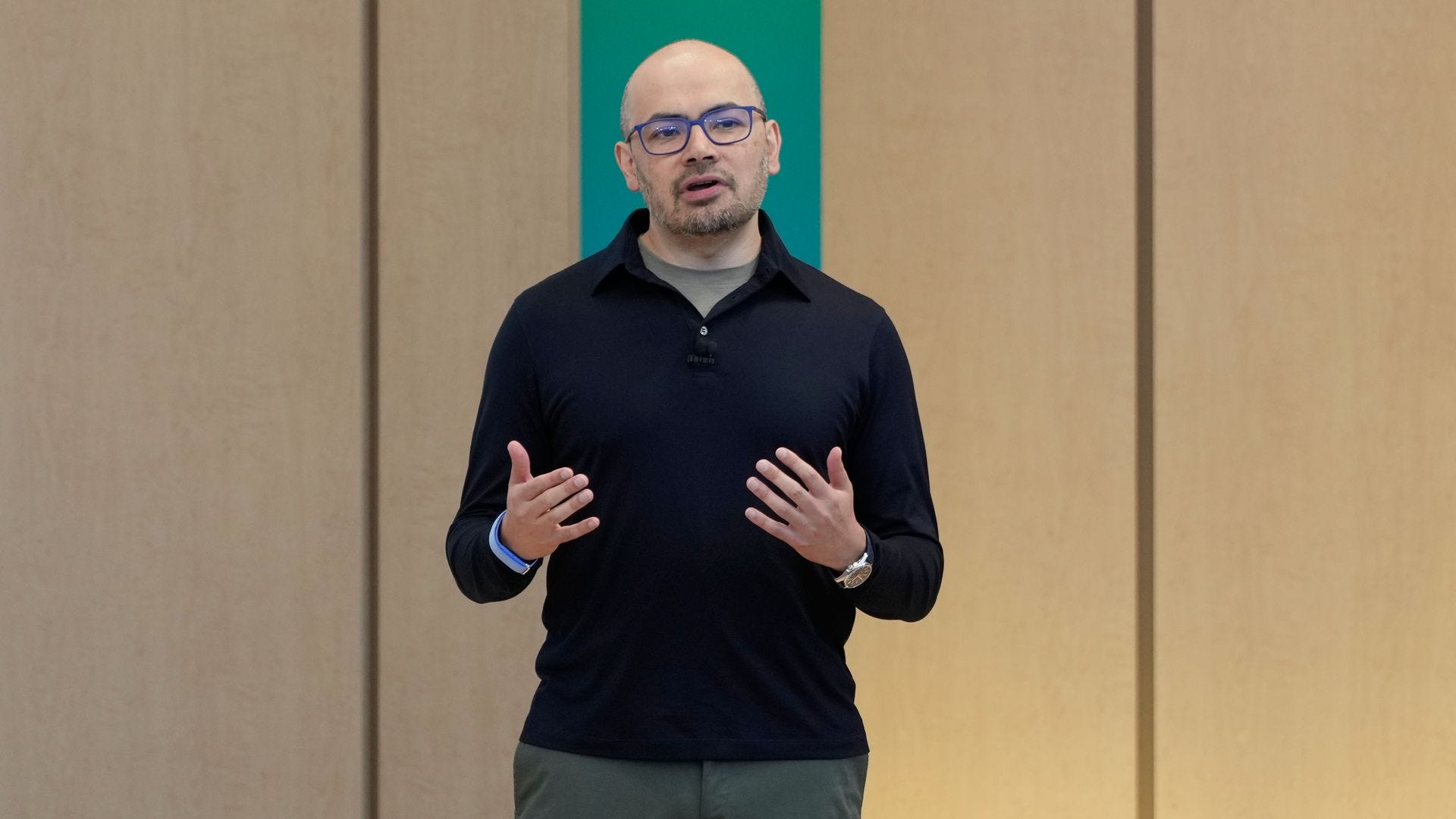
Demis Hassabis, CEO of Google DeepMind, has proposed the creation of an independent regulatory body to oversee the release of advanced AI models, modeled after the Financial Industry Regulatory Authority (FINRA). This body would assess risks and develop best practices for AI deployment, initially allowing labs to voluntarily submit their models for review before release, with expectations of having a framework in place by year-end.
Elon: Money won’t matter in 10 years
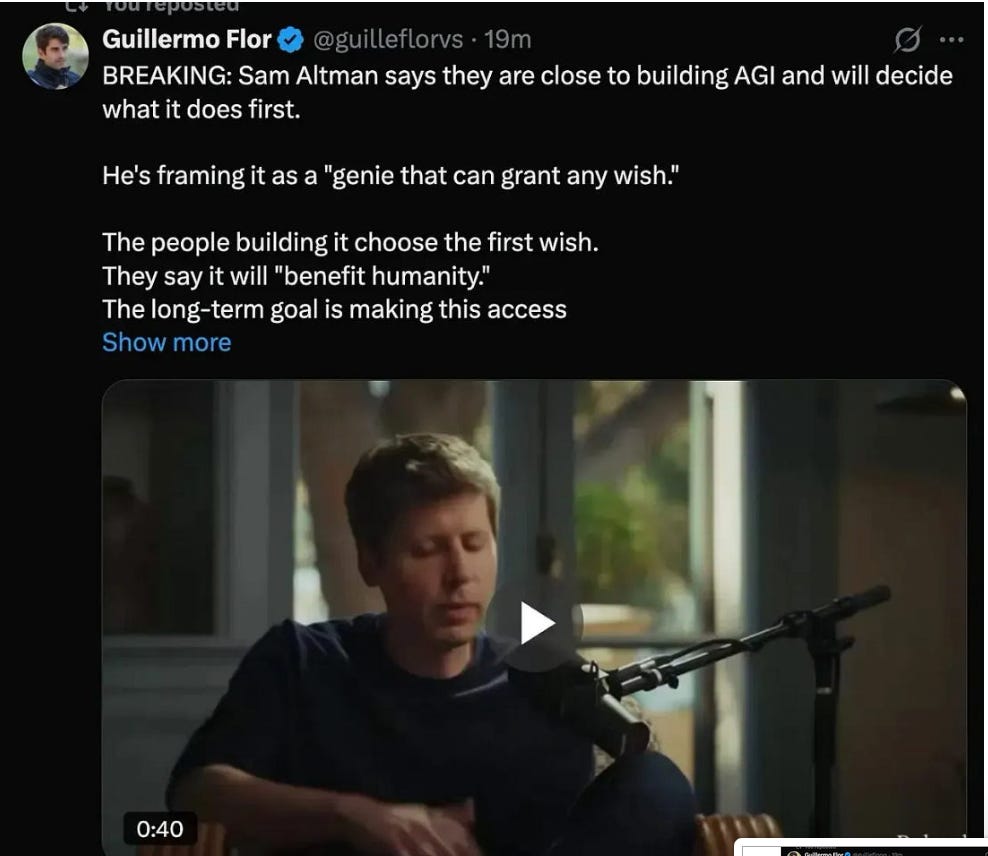
Sam Altman says we have crossed into what he calls the gentle singularity, arguing the takeoff is already underway and will feel more gradual than the headlines promised. Worth reading for how the most quoted person in AI is now framing the moment to a nervous public.
Subscribe for the weekly read on where governance and AI actually meet. Paid subscribers get The Executive AI Index, the Top 10 Prompting Hacks, and The AI Leadership and Boardroom Toolkit, plus two full editions every week.
Many subscribers expense it as professional development.

As a paid subscriber, you get every playbook in this series. The five most worth reading alongside this one:
1️⃣ The Board Director's AI Prompt Library. Read here →
2️⃣ The Top 10 AI Boards Worth Watching. Read here →
3️⃣ The Post-Raise Guide. Read here →
4️⃣ The Post-Investment Playbook. Read here →
5️⃣ What the best PE boards do that the rest don't. Read here →
🗣 Or invite a friend: refer 1 friend and you get The Practical AI for Leaders Course.
A community of 41,000 board directors and leaders. 13,500+ newsletter subscribers are already inside.
No posts
Comments
Nothing yet. Say the first thing.
Sign in to join the conversation.