
I once took a masterclass with Dianne Jacob on how to write a cookbook proposal, and the one fact that astonished me most was this: the average number of recipes a person makes from a cookbook is two. Two, people!
Since it was several years ago and I didn’t want to rely solely on my memory, I asked chatGPT to double check. It says 5 to 15 recipes for an average home cook, which honestly, sounds too high. If I think of all the cookbooks I have at home (and I have quite a few) 2 recipes on average sounds about right.
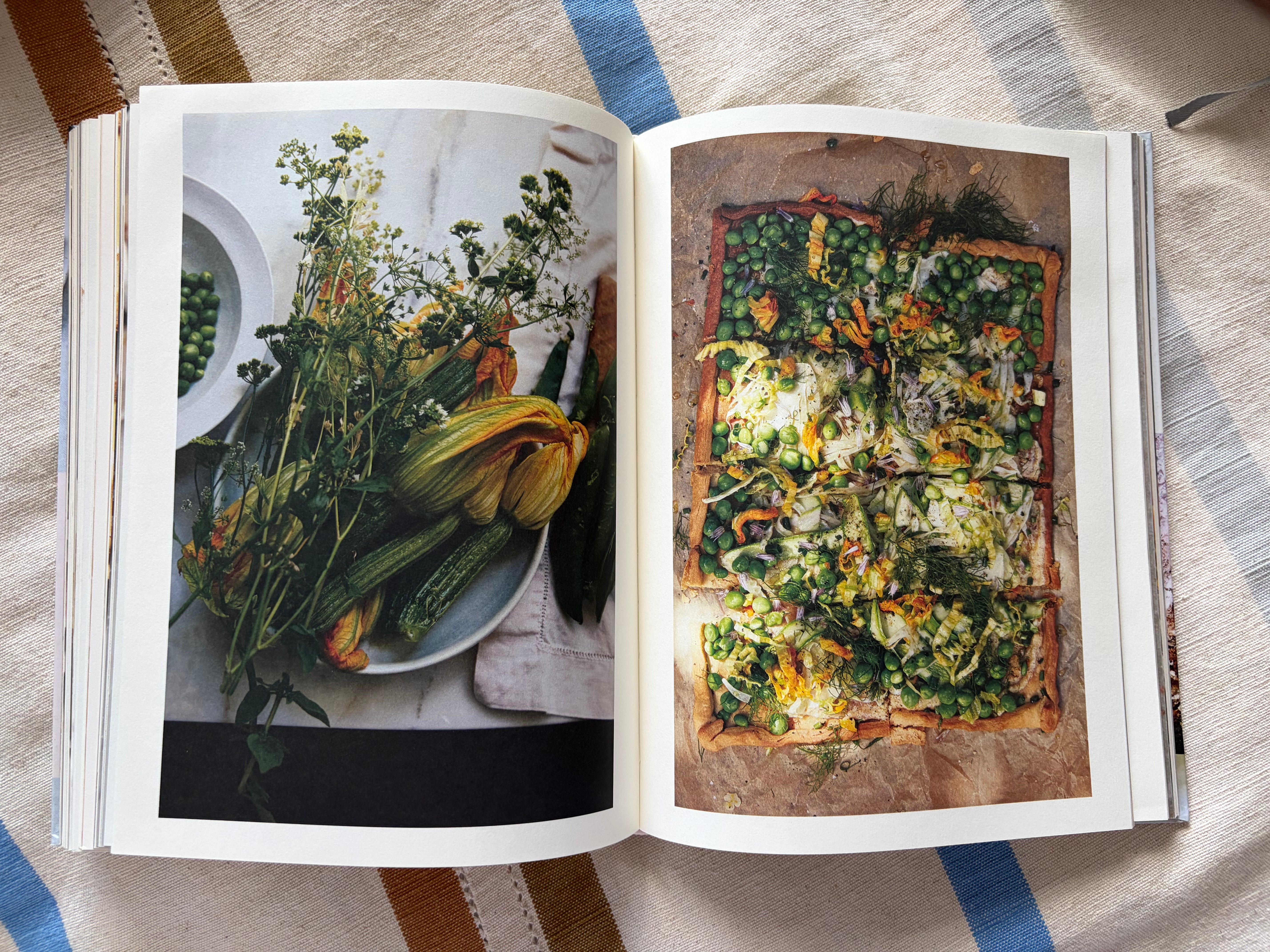
It doesn’t mean I don’t use cookbooks. Sometimes I buy them because they have wonderful photography, sometimes food stories are more compelling to me than the recipes themselves, and on occasion a book is a great souvenir that reminds me of a place I visited.
All in all, a cookbook can be a source of inspiration even if I never make a specific recipe from it. I can find a combination of flavors that never occurred to me, I might come across an ingredient I’d never used before, I might just read a cookbook before going to bed as I would a novel.
But there’s a handful of cookbooks that are not on the shelves of my book cabinet, but on my kitchen windowsill instead. They have stains all over, the pages are crinkled, you can tell they do the heavy lifting when it comes to providing me with dinner ideas. These are the books I will share with you today.
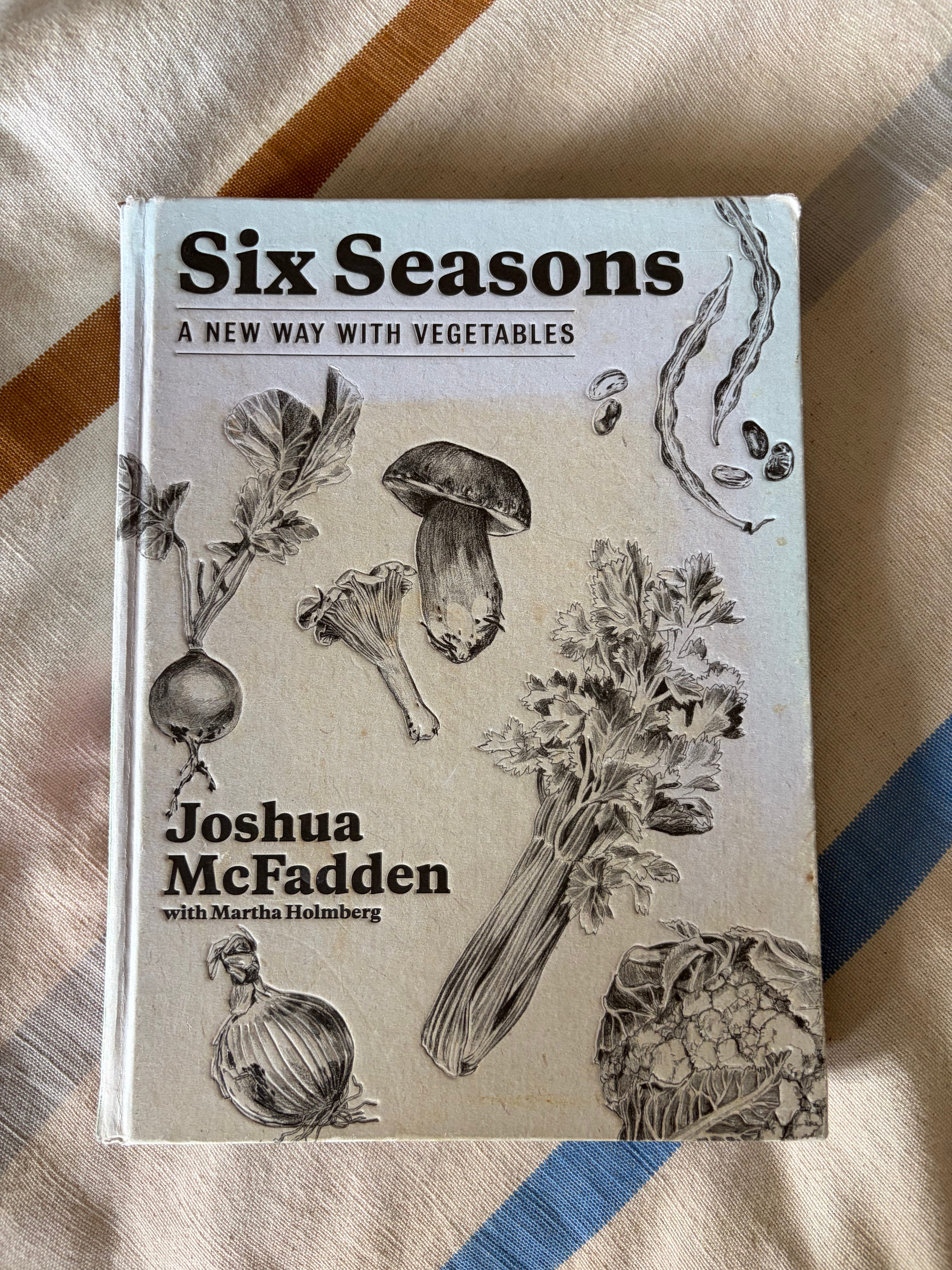
Hands down, the first book I open when I have a vegetable and don’t know what to do with it. The book is divided into seasons, of which there are six, not four, as you would have thought: spring, early summer, mid-summer, late summer, fall, and winter.
Additionally, each season is divided into vegetable chapters and you might find the same vegetable in different seasons. For example, there’s a beet chapter in early summer and in fall, meaning the way to prepare beets will depend on when they were harvested.
As my cooking process starts at the market, I find this organization convenient. As long as you have a seasonal vegetable in hand, the book will always provide at least 5 different ways to cook it.
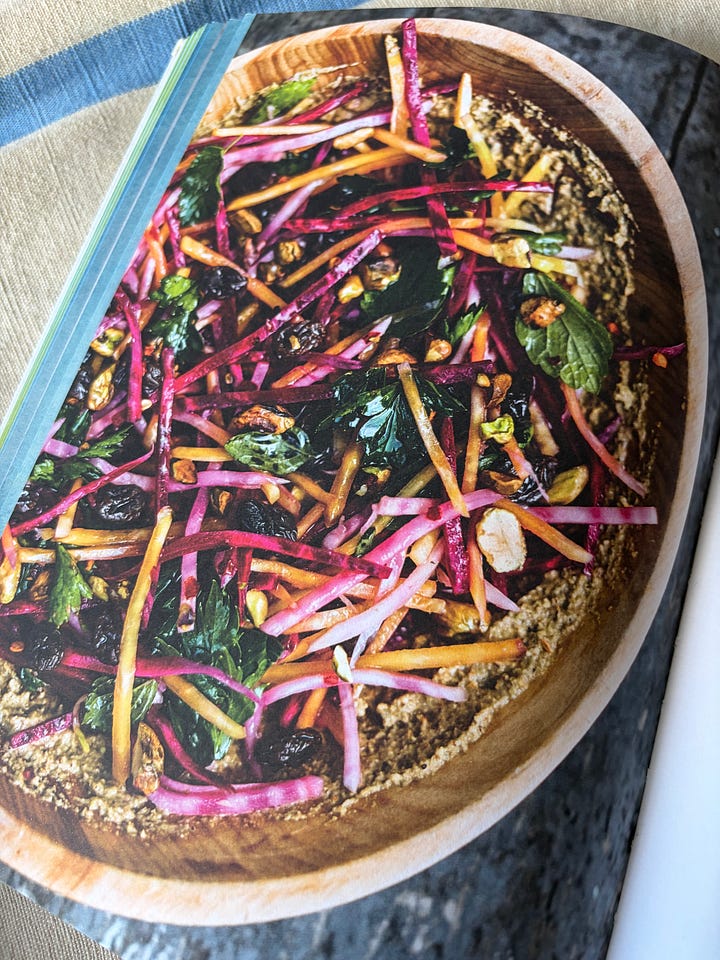
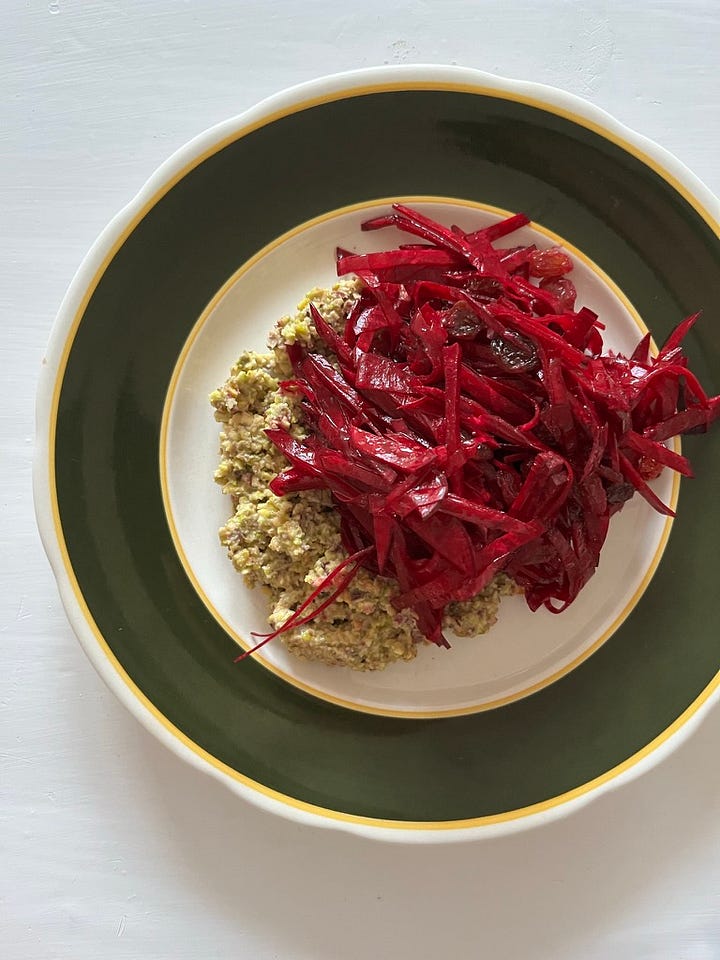
Beet slaw with pistachios and raisins is a perfect recipe for early season beetroot (which is right now). This recipe taught me that I can eat beets raw (what?!) and they taste amazing. The pairing of beets and pistachios is also something I wouldn’t have thought of.
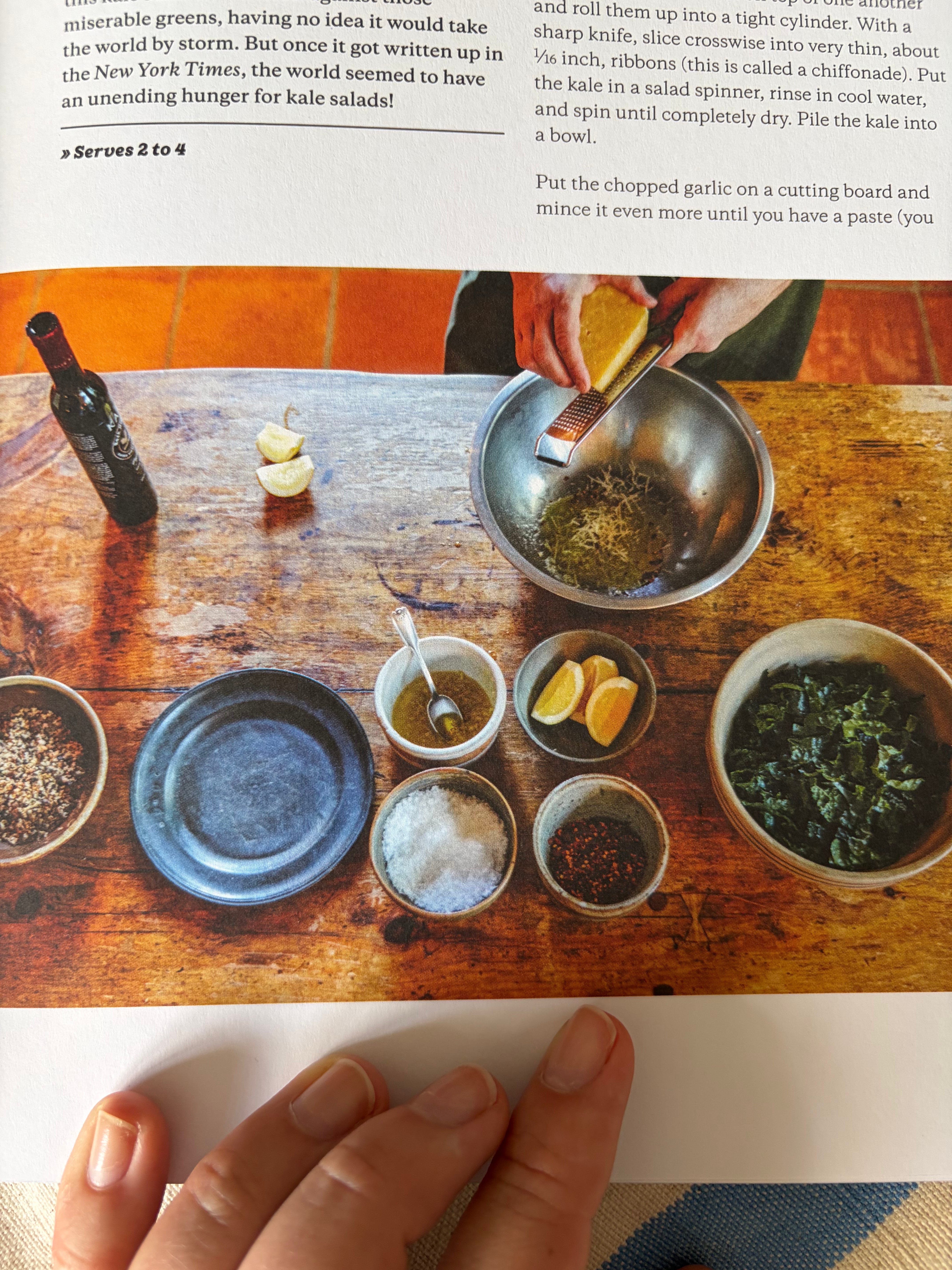
Kale salad. A simple, exquisite, full of flavor green salad. Need I say more? Apparently, at the time of its invention, the salad was something of a celebrity, especially after the New York Times published it. The year was 2007, which is the year when I visited the U.S. for the first time. I remember back then salad meant 3 wilted iceberg leaves on the side drenched in store-bought dressing. No wonder the recipe went viral.
Smashed fava beans, pecorino, and mint on toast is best for those days when I am not in a hurry and the process of shelling fava beans, then boiling them, then shelling them again feels like meditation, not a nuisance.
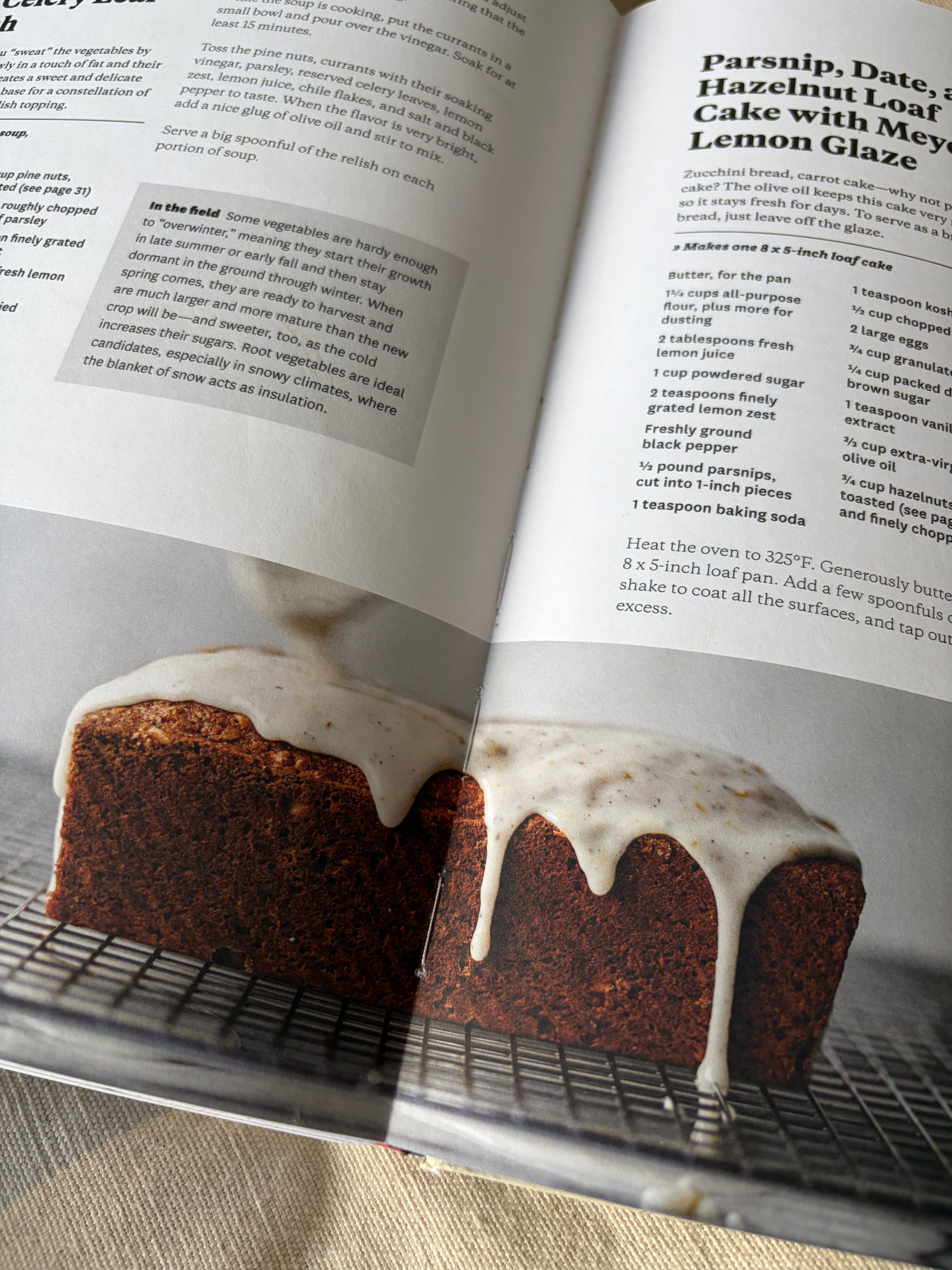
Parsnip, date, and hazelnut loaf cake with lemon glaze. Unlike the recipes above, I’ve only made this cake once, but it deserves a mention because it’s a perfect example of why I love this book. I know carrot cake exists. But parsnip? Who would have thought?
Comments
Nothing yet. Say the first thing.
Sign in to join the conversation.