
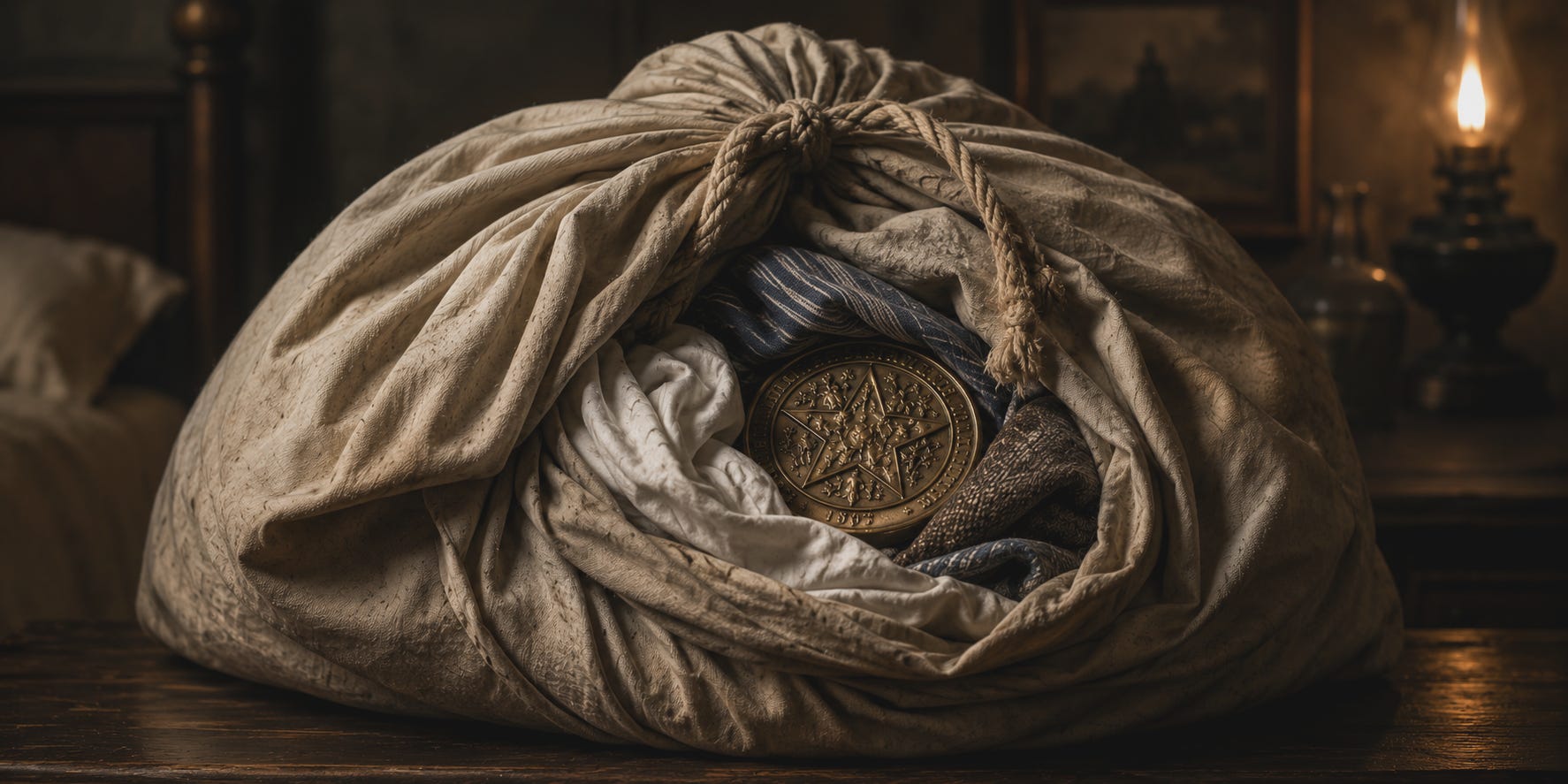
Oklahoma’s first successful citizen-led vote did not begin with a marble dome, a courtroom argument, or even a ballot box. It began, improbably enough, with a bundle of laundry leaving a hotel room in Guthrie on the night of June 11, 1910.
Tucked inside the dirty linen and folded shirts was the Oklahoma state seal.
Earlier that same day, voters across the state had gone to the polls to decide whether the capital of Oklahoma should remain in Guthrie or move elsewhere. By nightfall, Governor Charles N. Haskell had already decided the answer was settled. Before the courts could weigh in, before lawsuits could fully unfold, and before anyone had quite figured out whether the election itself had been conducted properly, the machinery of state government was already on the move to Oklahoma City.
The strange part is that the courts would eventually rule the vote invalid.
The even stranger part is that it did not matter.
When Oklahoma became a state in 1907, it entered the Union with something no other state had placed directly into its original constitution: the initiative and referendum process. Ordinary citizens could gather signatures, place measures on the ballot themselves, and vote on laws without waiting for the legislature to act. It was a deeply populist idea born out of an era when many farmers, laborers, and reformers distrusted concentrated political and corporate power and wanted a more direct hand in government.
The first initiative petition to successfully pass statewide was not about taxes, prohibition, or schools. It was about geography, power, and prestige. It was about where the capital would sit.
Under the federal Enabling Act that paved the way for Oklahoma statehood, Guthrie had been designated the temporary capital until at least 1913. Guthrie’s position, however, had never sat comfortably with many Oklahomans. Oklahoma City was larger, growing faster, and already positioning itself as the economic center of the young state. Shawnee wanted the title too. Before long, supporters of moving the capital gathered signatures and forced the issue onto the ballot.
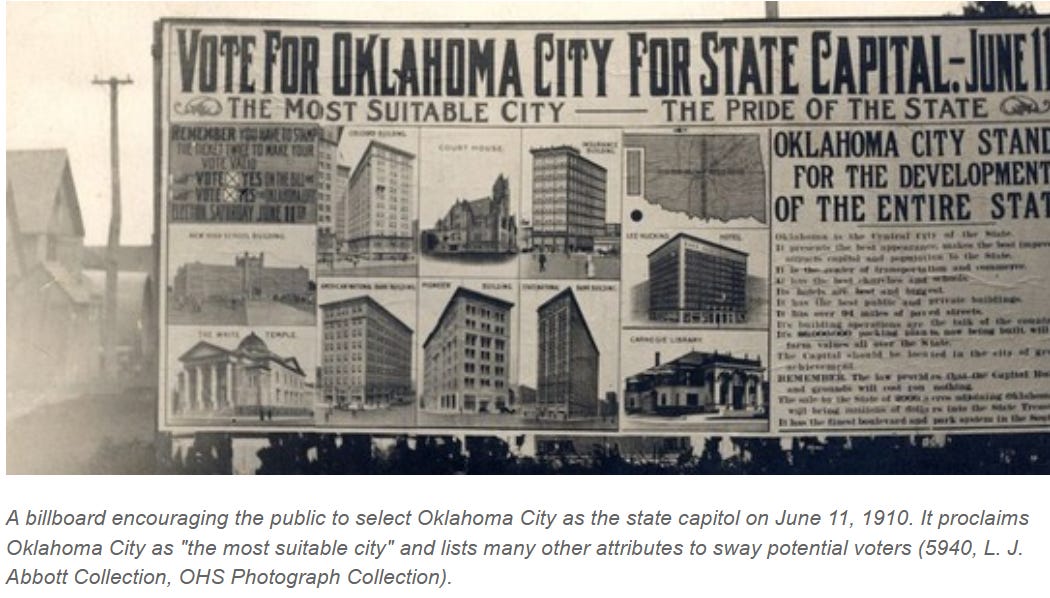
The election held on June 11, 1910 asked voters two questions at once: whether there should be a permanent capital, and where it should be located. Voters could choose between Guthrie, Oklahoma City, and Shawnee. Oklahoma City won decisively, pulling in more votes than Guthrie and Shawnee combined.
Governor Haskell wasted no time.
From Tulsa, where he had spent election day, he instructed his secretary, W. B. Anthony, to retrieve the state seal from Guthrie and bring it south. Anthony rented a room in a Guthrie hotel while associates gathered up laundry and clothing from the governor’s office. Somewhere in that bundle, hidden among the shirts and linens, was the seal itself. By the next morning, Haskell was in Oklahoma City issuing an official proclamation declaring it the new capital.
Guthrie officials and residents were furious. Lawsuits came almost immediately. At one point, state business operated awkwardly out of two cities at once. The secretary of state worked in Oklahoma City while an assistant remained in Guthrie with a duplicate seal. Guards reportedly watched over government records to prevent their removal. The Logan County sheriff attempted to serve papers on Governor Haskell in an Oklahoma City hotel lobby, only for Haskell to reportedly snatch the papers from his hand and throw them to the floor.
Then came the legal problem.
On November 15, 1910, the Oklahoma Supreme Court ruled that State Question 15 had not been validly adopted because it combined two distinct questions into a single initiative petition. Under Oklahoma law, the measure violated what would later become known more commonly as the single-subject principle. The vote itself, the court concluded, was void.
That might have ended the matter, except the court’s opinion contained another conclusion far more important than the first.
The justices also held that Congress could not permanently dictate the location of Oklahoma’s capital after statehood. Even though the Enabling Act had attempted to keep the capital in Guthrie until 1913, Oklahoma entered the Union on equal footing with every other state. Decisions about the seat of government belonged to Oklahoma itself.
That ruling effectively opened the door for the legislature to do directly what the flawed initiative petition had attempted to do through popular vote.
So six weeks later, the legislature met in special session and formally established Oklahoma City as the capital by statute.
Another lawsuit followed.
A Guthrie property owner named W. H. Coyle sued, arguing that the federal Enabling Act still controlled the question. The case eventually reached the United States Supreme Court, which ruled in 1911 in Coyle v. Smith that Congress could not impose permanent restrictions on a state’s sovereign powers after admission to the Union. Oklahoma stood on “equal footing” with the original states, and the capital remained exactly where it had already moved: Oklahoma City.
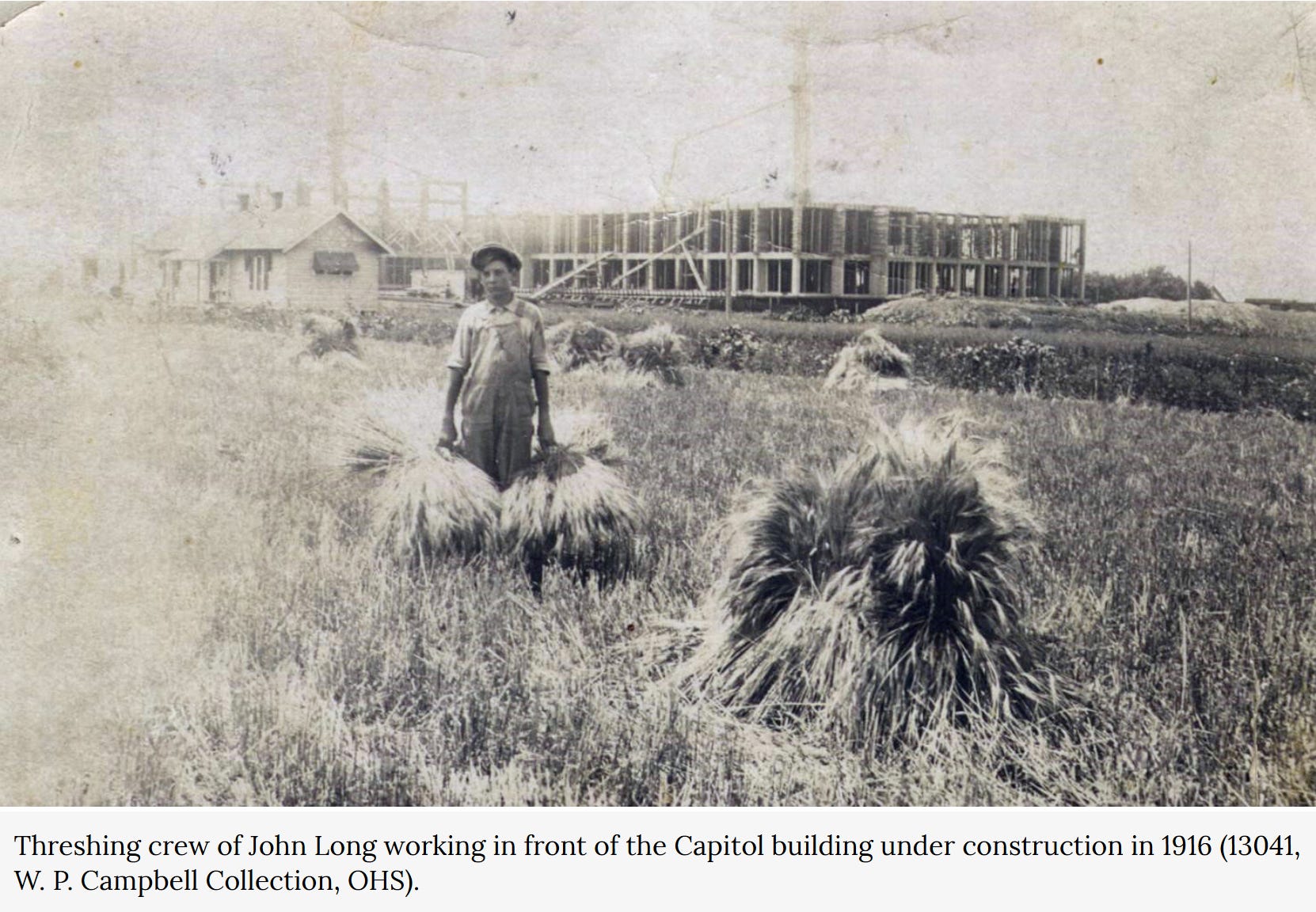
The current Oklahoma State Capitol, built on land selected not long after the move, would open in 1917.
The first successful citizen-led vote in Oklahoma history did not survive the courts in its original form, but that does not make it a failure.
If anything, it proved exactly why the initiative process mattered.
Oklahomans saw a question their leaders had not resolved, gathered the signatures to force a statewide vote, and made their preference unmistakably clear. The court corrected the legal defect. The legislature followed the direction voters had already given. And the capital stayed in Oklahoma City.
More than a century later, that is the part worth remembering. Oklahoma’s initiative process was not born as a polite suggestion box. It was born as a tool for people to push government into motion when government was moving too slowly, or not at all.
The state seal may have traveled by laundry bundle, but the real force behind the move was not hidden at all.
It was the voters.
Now you know.
ThanksForVotingOK is a nonpartisan initiative encouraging voter participation across Oklahoma, because democracy works better when more people show up.
Stay Connected With Thanks For Voting OK
Never miss an article in this series. Follow Thanks For Voting OK so you always know what is coming next.
🌐 Web: thanksforvotingok.com
📸 Instagram: instagram.com/thanksforvotingok
🦋 Bluesky: thanksforvotingok.bsky.social 🎵TikTok: tiktok.com/@thanksforvotingok 🧵 Threads: threads.com/@thanksforvotingok
No posts
Comments
Nothing yet. Say the first thing.
Sign in to join the conversation.