
Do you ever look at photos of professional studios and think, “Well, that’s all very nice, but I’d need to remortgage the house and sell a kidney before I could do any of that”? I think that’s a pretty common feeling. One thing I’ve always enjoyed, and judging by social media, many others do too is looking at photos of other people’s studios. Voyeurism aside, there’s something fascinating about seeing where people work. It is not just the equipment, but the workflow, the organisation, and the little quirks that make a space their own.
Whenever I post photos of old setups, they seem to get a fair bit of attention. I suspect that’s because people aren’t really looking at the gear; they’re looking for clues. How did this person work? What did they make? What did they start with? Well that’s what I do… So, I thought I’d indulge myself this week and take a trip through some of my studios from the 2000s and early 2010s. The interesting thing is that none of them were particularly impressive. At the time, I thought I was heading towards a career as a music engineer and producer, if I was lucky I would one day get to scrub toilets at Abbey Road Studio, but life took me into a different direction into working in audio post production.
I had never heard the term re-recording mixer, and I certainly didn’t know that one day I’d end up supervising sound and mixing television programmes and films for a living. All I knew was that I loved sound and spent an unhealthy amount of time messing about with it.
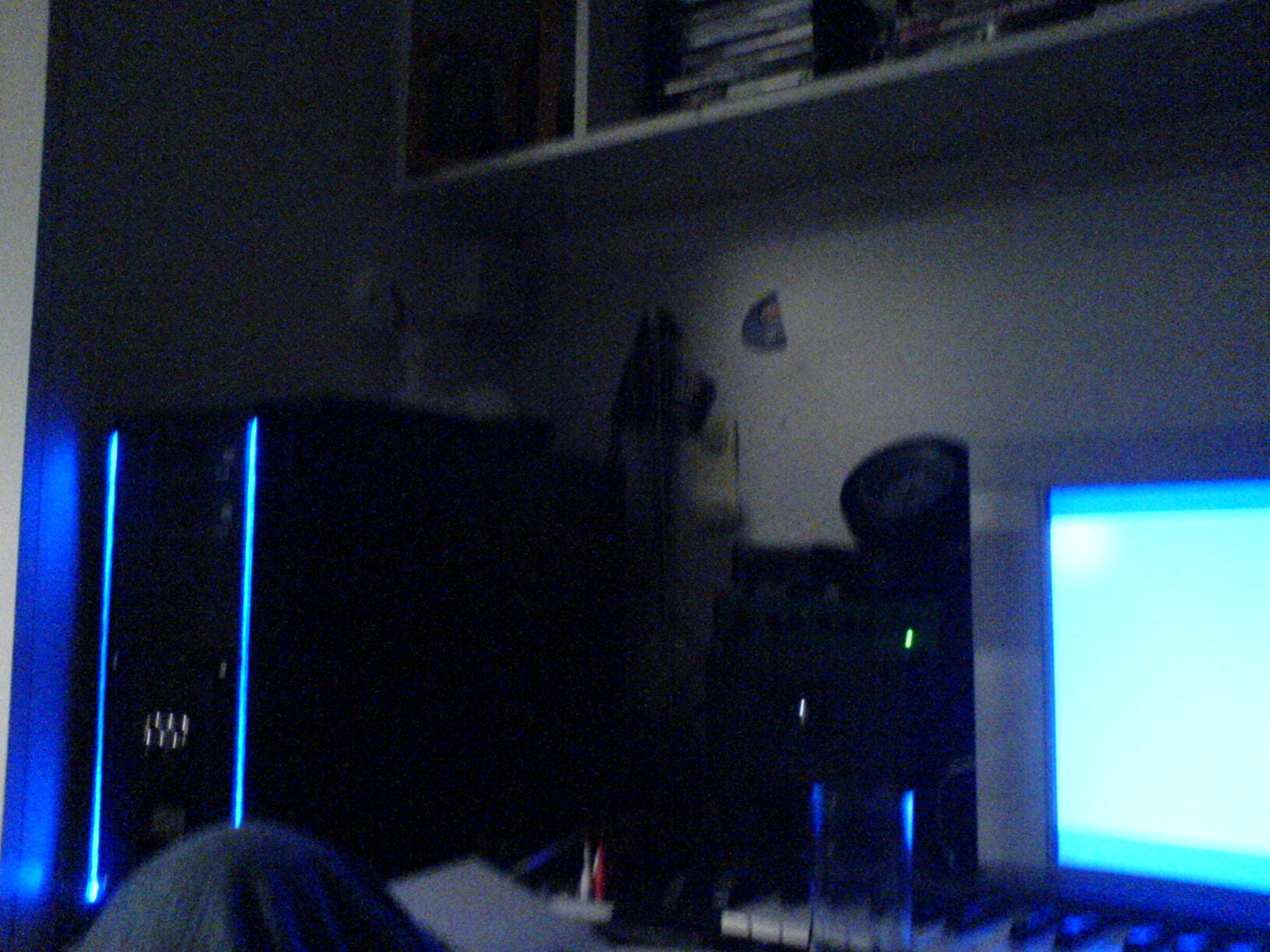
My earliest “studio” was created when I was around seventeen or eighteen, and it lived in my bedroom. This was the first PC I built myself; it was an AMD Thunderbird machine with what I think was about half a gigabyte of RAM. By modern standards, that’s roughly enough processing power to operate an electric toothbrush. I do remember one thing very clearly, though: Windows XP seemed to require reinstalling every few months.
My entrance into the world of proper DAWs came via Cubase. I had a pair of Wharfedale Diamond speakers, a Sound Blaster soundcard, and an Evolution MIDI keyboard. To me, it felt like a million pound studio. In reality, it was a teenager’s bedroom with wires everywhere and enough dust behind the computer to start a small agricultural project.
I made all sorts of rubbish, including terrible dance tracks, terrible rock tracks, and terrible attempts at every other type of music I could think of. The important thing was that I was making things. More importantly, I was learning. Every terrible mix taught me something, every failed recording taught me something, and every evening spent fiddling with compressors instead of speaking to actual human beings taught me something. Those were the foundations.
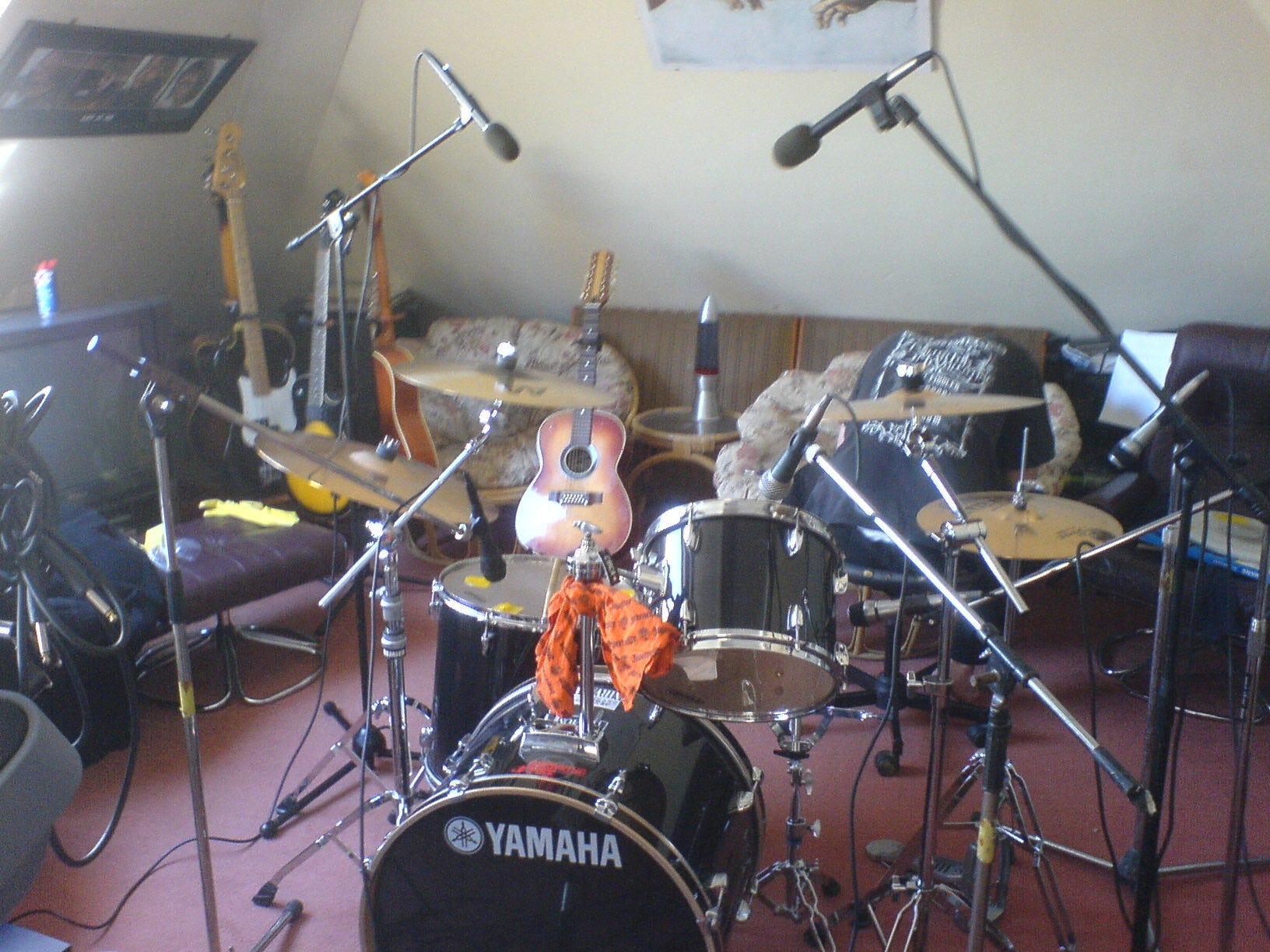
Fortunately for me, my dad had a much better studio. Unfortunately for him, I discovered where it was. His setup revolved around Cubase SX3 and an M-Audio Delta 1010 interface. For those who weren’t around at the time, the Delta 1010 was one of the most popular affordable multitrack interfaces available. It gave you multiple inputs and outputs, making recording proper sessions feel achievable without needing a commercial facility. There was also a Phonic mixer handling channel routing and monitoring duties.
Looking back, this was where I really began learning signal flow. At the time, I didn’t think of it that way; I was mostly plugging things into other things until sound came out. There were racks containing Joe Meek compressors, a Behringer Tube Composer, and various power distribution units. The Joe Meek gear was famous for having a character all of its own. Some people loved it, some people hated it, and most people agreed it looked like something stolen from a Cold War submarine.
There was also a vocal booth, and that vocal booth was absolute gold. The microphone of choice was an Oktava condenser microphone. Oktava microphones were built in Russia and gained a reputation for sounding far more expensive than they actually were. I recorded countless vocals in there, as well as plenty of guitar amplifiers. Friends would turn up with Roland Cubes and whatever guitars they happened to own. One memorable occasion involved a Mesa Boogie valve amp and cabinet. Being young and not possessing what most people would call common sense, we recorded it at full volume at about one in the morning. Thankfully, the vocal booth did a decent job of containing the noise because the neighbours never complained… or perhaps they did and I simply couldn’t hear them over the amplifier.
I recorded drums in the studio too. By this point, I was studying sound at college, and everything I learnt during the day immediately got tested in the studio at night. That combination was invaluable.
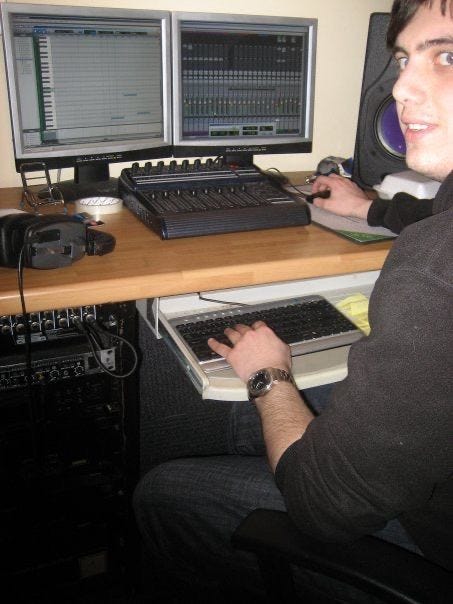
Then something happened that felt genuinely exciting: Pro Tools M-Powered arrived. Up until then, Pro Tools was largely tied to Digidesign hardware. If you wanted the proper experience, you needed expensive HD systems or hardware such as the 002 and 003 interfaces. I spent a lot of time dreaming about those. The Mbox existed, of course, but I needed more inputs than that.
M-Powered changed things because it allowed people using M-Audio interfaces to access Pro Tools. Granted, it was somewhat limited, and my version topped out at a mighty 32 audio tracks. Today, that sounds faintly ridiculous, but at the time, it felt like I’d been handed the keys to the kingdom. More importantly, learning Pro Tools early gave me a head start that would become incredibly useful later. I didn’t know it then, but many of the skills I’d eventually use in television post-production were already beginning to form.
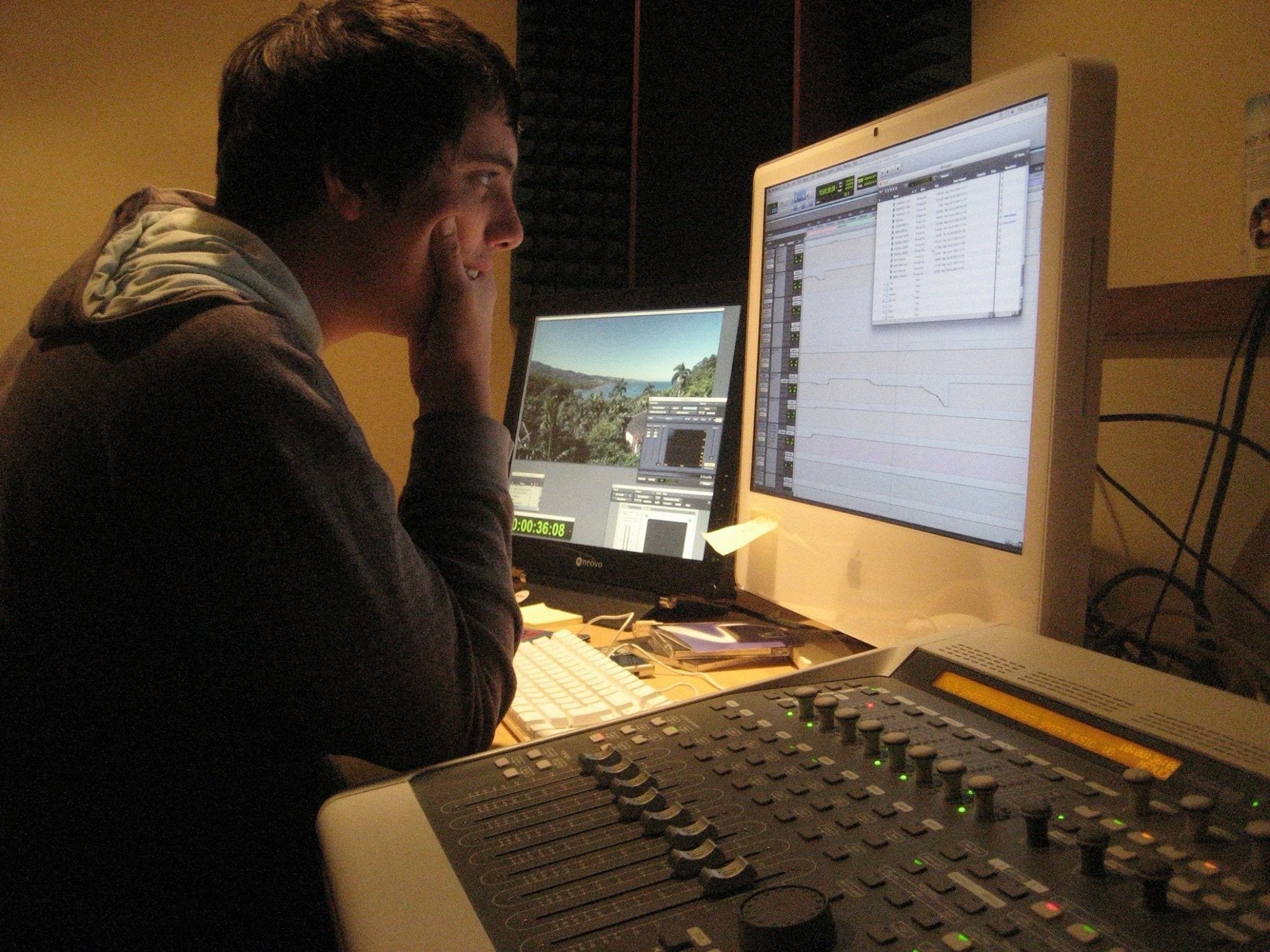
When I started working at a television production company, everything changed. Suddenly, I had access to an iMac setup running a Digidesign 003 controller and interface. For someone coming from budget home studios, this felt incredibly serious. This was where I began learning the craft of audio post-production properly.
I mixed television shows here, learnt how deadlines worked, and learnt how clients worked. I quickly learnt that making something sound good was only part of the job; making it sound good by tomorrow morning was the other part. This was around 2008 or 2009, on the back of all the Apple iphone, ipod and mac euphoria. Eventually, I became a convert myself and bought an iMac with my wages. Naturally, it ended up in my dad’s studio because by this stage I had essentially annexed the building. I also bought a second hand Line 6 POD XT from eBay with the Metal Pack expansion. I was in heaven; suddenly, I could record guitar tones that actually sounded convincing without shaking the foundations of the house.
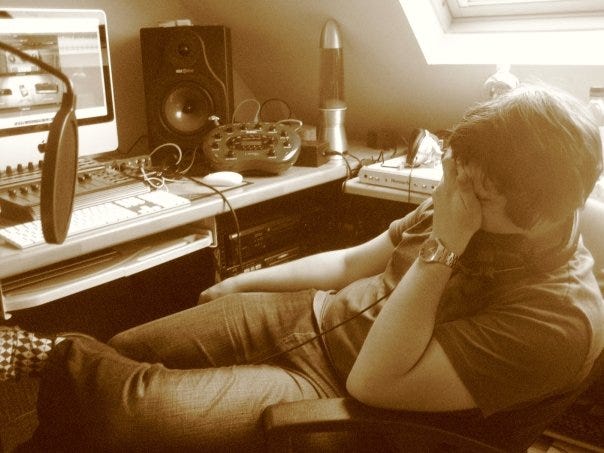
Eventually, I moved into my own house. Naturally, the next step was building a studio in the garage. Several sheets of plasterboard, a lot of insulation, and a considerable amount of help from my godfather later, I finally had my own dedicated workspace. I was absolutely chuffed with it.
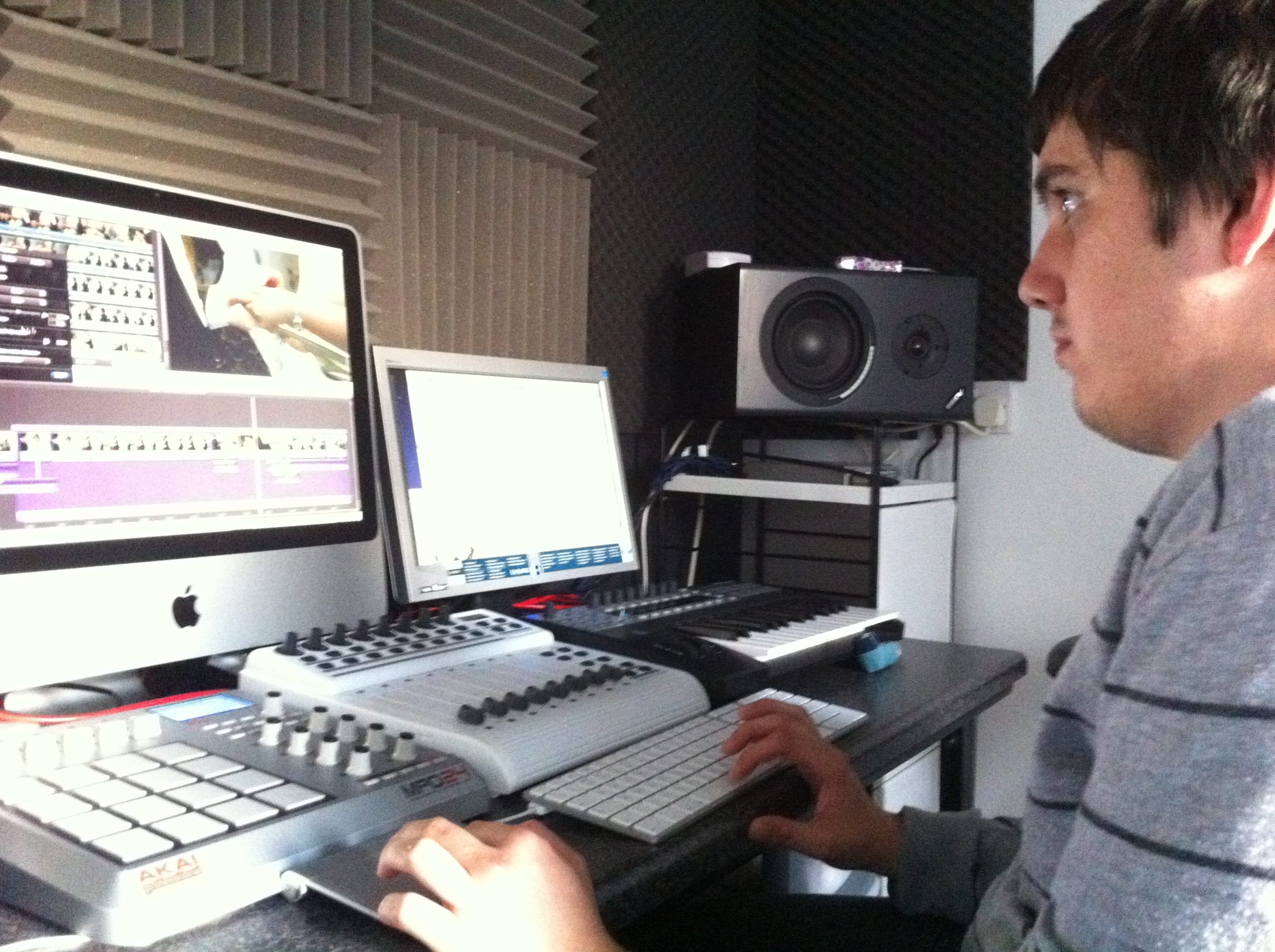
I also had a Mackie Big Knob. For those unfamiliar, the Big Knob is a monitor controller whose primary selling point is that it has an enormous knob on the front. Audio engineers are simple creatures: we see a giant volume control and immediately assume professionalism has arrived. By this point, I’d discovered Reason. My workflow became Reason for creating music and Pro Tools for recording and editing. I had an Akai MPD controller, which allowed me to indulge my fantasy of being some sort of legendary sampler-based producer, despite possessing neither the talent nor the record sales.
I also bought an Mbox so I could run Pro Tools with picture. Unfortunately, I couldn’t afford the DV Toolkit, which meant no timecode support at home. At work I had it; at home I did not. This was one of many occasions where my professional setup and personal setup had very different ideas about what constituted luxury.
Looking back, I do wish I’d invested more effort into acoustic treatment. The room was essentially plasterboard everywhere, and the result was a wonderfully boxy acoustic environment. If I clapped my hands, the room practically answered back. Still, it was mine, and that mattered.
When I look back at these photos now, I don’t really see the equipment. Most of it is obsolete, and some of it is probably considered vintage which is a slightly upsetting realisation because I still think of most of it as modern. What I see instead are the hours. Thousands and thousands of hours. There were hours spent recording, hours spent editing, hours spent mixing, hours spent making mistakes, and hours spent solving problems.
At the start, I thought I was becoming a music engineer; that was the goal. I had no idea that television post-production would eventually become my career, I didn’t know what a re-recording mixer was, and I didn’t know that such a job even existed. What I did know was that I loved working with sound.
That’s probably the biggest lesson from all these old studio photos. You don’t need the perfect room, you don’t need the perfect gear, and you don’t even need a perfectly clear plan. You just need somewhere to work, a willingness to learn, and the persistence to keep showing up. The gear changed, the studios changed, and the career changed, but the hours stayed the same. In the end, those hours were the thing that mattered most.
Get more insights to audio production and the creative industries here
No posts
Comments
Nothing yet. Say the first thing.
Sign in to join the conversation.