
Hi all! A reminder that paid subscriptions make this work sustainable. If you enjoy Terms of Endearment, you can support a year’s worth of essays for $30. Thank you!
On Friday, Elena flew from LAX to Oakland, California, to visit her best friend. It was her first ever solo flight. She was giddy; I was…nervous.
“Whatever you do, do NOT lose your passport,” I intoned as a mantra every 3.2 seconds.
“Mom! Stop it!”
Seeing your kid board a plane by themselves without even looking back up the jetway is a real wake-up call that, as the Buddhists say, everything changes. And oftentimes those changes take place while you’re plodding along, not paying much attention, finding socks and dumping sand out of backpacks. Then, all of a sudden, what feels so intractable and long is over.
Of course, Elena is only twelve, and we have a ton of parenting (teenage parenting 😬😭🙏) ahead of us. But still, I was hit with a wave of prescience.
Jorge and I got back to the studio and sat around confused for ten minutes before he asked, “Do you want to take a hike?”
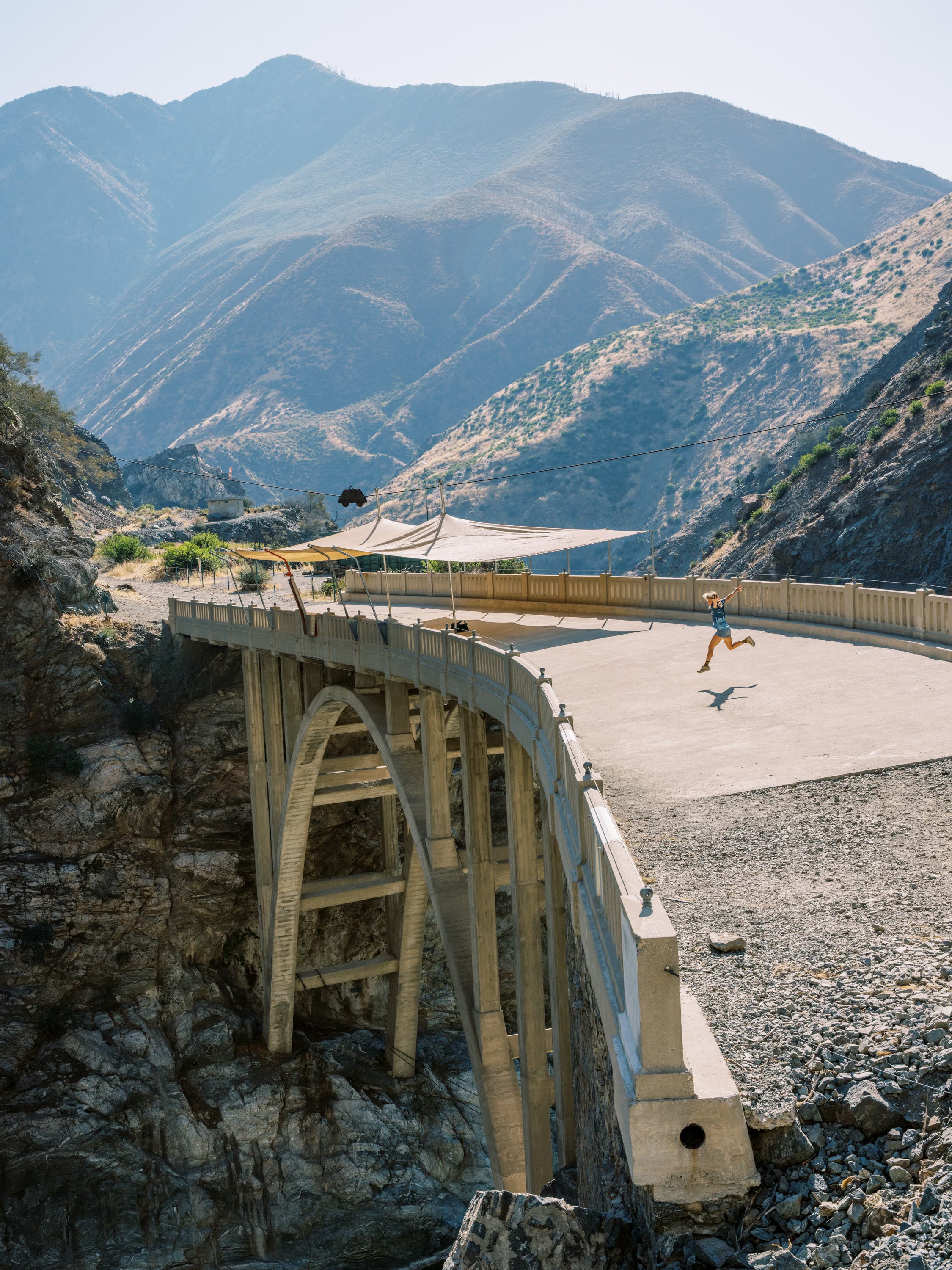
We drove an hour and a half to the Sheep Wilderness in the San Gabriel Mountains because Jorge wanted to hike to the “bridge to nowhere,” a concrete bridge built in the 1930s as part of a road construction project that was abandoned due to flooding. The bridge now sits deep in this wilderness, spanning the San Gabriel River with architectural flourish and connecting nothing but mountains and dusty trail, uncanny as a designer sandal drifting in the middle of the ocean.
The latter third of the drive was on a remote road, no stores, no houses, no sign of life other than the stark yuccas like frozen explosions, and one dead-silent RV park where we stopped to try and find water and I scrambled back in the car, sure I was going to be devoured by zombies. It’s startling here how one can go from endless megapolis to wilderness in the span of twenty minutes.
We got to the trailhead around 1 pm and it was hot. By hot I mean a scorching ninety-seven degrees reflecting off rock face and black sand hot; desert hot; can’t breathe hot. We were each carrying backpacks with several liters of water; date balls from the co-op (when in California); Trader Joe’s buffalo chicken wraps; and, because I am John Menkedick’s daughter, fleeces and extra clothes in case we got lost deep in the canyon and had to survive for several days.
Ten minutes into the walk we ran into a British family covered head-to-toe in sweat and dust. They looked like they’d survived some kind of caravan.
I did what one should never do in labor or in hiking and asked how long they thought it might take to reach our destination.
“Ohh boy,” the dad said, grimacing.
Jorge, who has been walking 30,000 steps a day with a camera backpack that weighs about fifty pounds and is on a kind of fitness high, was extremely annoying from the get-go, pepping up, “C’mon. Are we doing this or not? This is nothing. Who are you, anyway? Have you gotten weak?”
For context here, I should say that I have a long and checkered history of dragging my family on excessively strenuous hikes and chirping up, “Everybody okay?” as they’re heaving and cursing me. Many people in my family have stories that start “that time Sarah took us up the mountain in France,” which are recounted like the tales of 16th-century sailors shipwrecked at sea.
So this was a kind of karmic payback. The hike was gorgeous, striking, white rock faces and red canyon walls rising from the rushing turquoise river, chamomile bushes wafting sun-baked fragrance, but it was so hot I felt like I was being smothered by a puffy blanket. We talked, and then we didn’t talk; we crossed and re-crossed the river; and sometime about two hours and twenty minutes in I started to say, “Where is the bridge, Jorge,” which intensified as we rounded an eternal bend towards the final canyon to “WHERE IS THE F*CKING BRIDGE JORGE” until there it was, the bridge.
I marched onto it beneath a flimsy tarp hung for shade and collapsed. I spread-eagled on the steaming concrete and closed my eyes. There I stayed for a good twenty minutes.
It’s been a long time since I’ve done what my mom calls a “misogi” – a Japanese term for a kind of ritual purification, which writer Michael Easter has redefined as an extreme fitness challenge meant to test one’s physical and mental limits.
A misogi, according to Easter, must have at least a 50% chance of failure, but it can’t be so hard one could die. I’d squarely put the last mile of this hike in that category. My clothes were drenched with sweat. My whole body pulsed with soreness. It was so. so. so. hot with no breaks, no shade. But we did it.
It was surreal, lying there, on this art deco bridge in full wilderness, the sound of the river rushing below, a warm breeze on my cheeks. All that work, and then it’s over. Of course, you have to go back, but no need to think about such things at the moment. I ate a date ball.
Before we had Elena, and before we were middle-aged people worried about things like college funds and chimney repair, Jorge and I did a lot of hiking. One of our favorite hikes was in Glacier National Park, where we drove from Pittsburgh in a 1990 Chevy Aveo we called “the skittle.” We camped in Glacier for two weeks, criss-crossed the whole park, and dutifully took the ranger classes on grizzly safety, wondering how on earth one was supposed to test which way the wind was blowing before employing bear spray to stop a charging grizzly.
One day, we did a seventeen-miler across multiple peaks that took us nearly eight hours and left us ecstatic and trembling. Driving back to the campsite in the skittle we spotted a tiny, extremely crowded Mexican restaurant, where we stopped for celebratory enchiladas and beers.
These moments become a kind of lore in a marriage. The foundation of who you are as a couple.
There is so much lately about how marriage is antiquated, miserable, toxic. About divorce as liberation, and marriage as oppression. Some of this is vital and important, and many marriages are deeply unequal and unhealthy and corrosive.
Many women stay in marriages because they believe in “the institution,” which is absurd considering that said institution has a long history of being at best exploitative and at worst outright abusive to women, and no institution is worth your humanity.
There is a lot of slog in marriage. Maybe this isn’t true if you’re a DINK influencer, but for many of us, someone has to take out the dog, vacuum, drop the kid off at soccer, pick the kid up, make dinner, go to the grocery store, and then there is money, and there is your job and their job, and your family and their family, and planning, and the same fights you will have forever that hurt the same or more each time, and losses and wounds and things you cannot unsay and parenting disagreements and character flaws and no one is getting any younger but then you are walking in a canyon under a bright early moon and you think I have a person.
Thank God, I have a person, and I can only do this with them. My body and mind knew something many years ago that saved me from my floundering self. And all of these accumulated errors and heartbreaks and struggles and triumphs have become a body we share.
And sometimes it is simple again, no goals or money or plans or tomorrows, just a bridge to nowhere, what remains through the fires and the floods, where you’ll lie your aching body down to rest.
All essays are free for everyone. Paid subscriptions make this work sustainable. Support artists, support life. 🌝
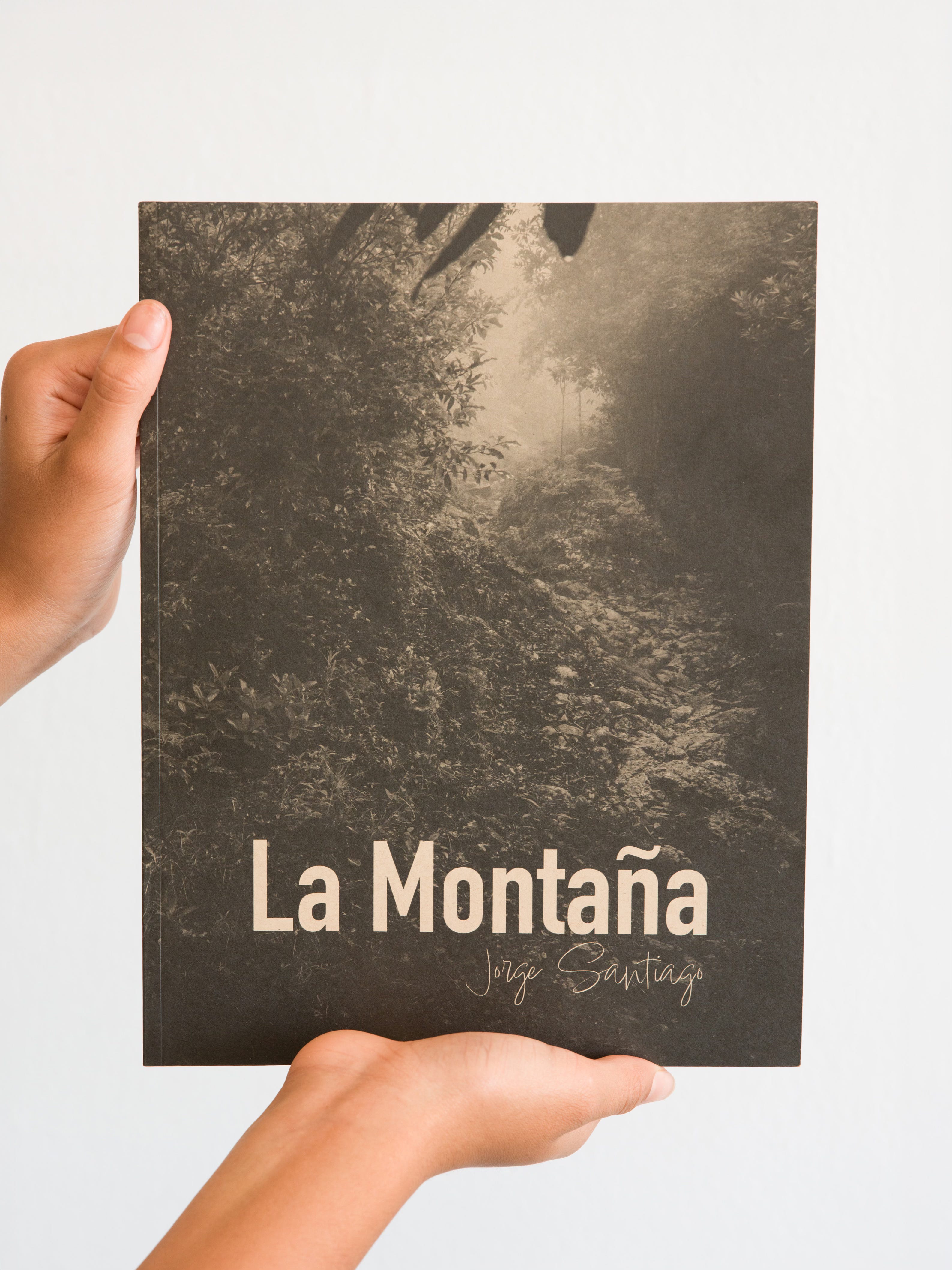
Several years ago, Jorge won an arts fellowship from the Mexican government to make a photo documentary about indigenous basketball in Los Angeles and Oaxaca. During his trips to Oaxaca to photograph, he began visiting a mountain that holds mythical status in the Mixe region of the Sierra Norte. He went at first to document the rituals performed on the mountain, but over time, he discovered that his relationship with this place and its people had become a way for him to understand his grief about the death of his mother.
This year, he was invited to a Latin American documentary photography workshop, and he has just published his first ever limited-edition photo book called The Mountain.
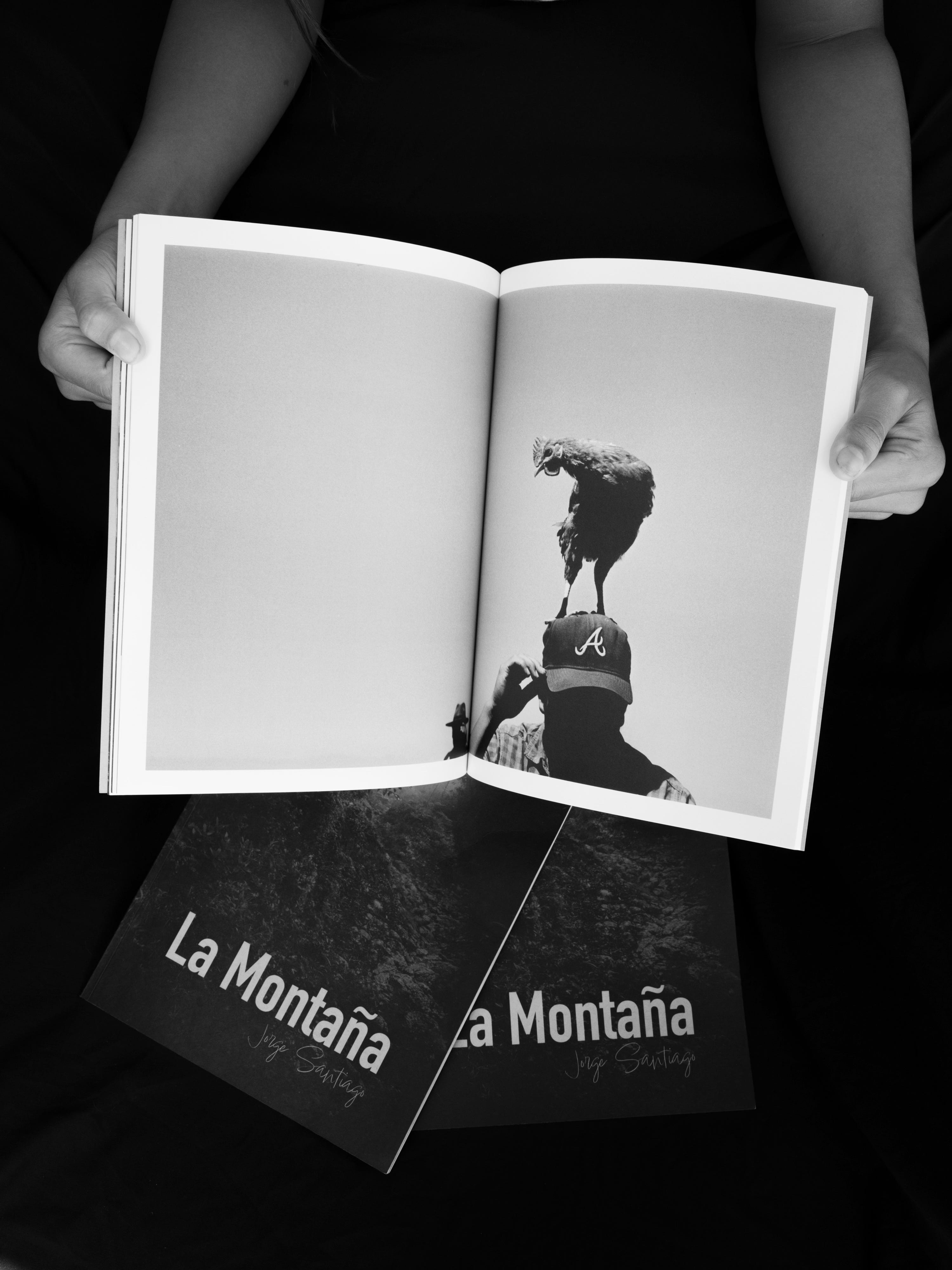
There are only 100 copies out there, folks, and they’re going fast. These are exquisite objects. They depict a profound and ancient human relationship with the natural world, and the quest for healing and belonging on sacred land.
They’re $30, plus shipping. Get your copy here.
Have a wonderful week, friends.
Comments
Nothing yet. Say the first thing.
Sign in to join the conversation.