
At the Target on Broadway in Santa Monica, an electronic voice bleeps from a little speaker every ten seconds, “To enhance your shopping experience this parking lot is under constant surveillance.”
Waymos – self-driving cars, or “robotaxis” – orbit the streets of Santa Monica like cartoon avatars of an optimized humanless future. They are all white and none of them seem to contain any passengers, though some must because a lot of people use them. They are much cheaper than Uber. Jorge took one back from an event on the Oaxacan side of town before realizing they avoid highways, and he was trapped cruising the streets of L.A. for an hour, filming the driverless steering wheel as it jerked this way and that.
It’s deeply unnerving to see one of these suckers come at you at exactly the speed limit, completely empty. That’s why it was so satisfying to see a burly long-haired skateboarder cruise up beside one, locate its camera, and flip it a double bird.
Driving to The Getty the other day we saw a tiny robot the size of an igloo cooler try to cross a massive intersection, nearly killing its(self? machinery?) and about five drivers in the process, all of which honked as if to teach it a lesson. Instead it kept on its merry way until it smashed into the overpass beyond.
We got Elena a scholarship for a surf camp, and after we dropped her off at Venice Beach, I went running. On my way back I overheard two boomer dudes talking beside the fishing pier. Each had a ponytail and was wearing an oversized floppy hat, the kind with a little string beneath the chin. One said to the other, “Yeah, bro, so I called the Samsung customer service and he said, ‘Your photos are in the cloud,’ and I was like, ‘How am I supposed to know where the fucking cloud is?”
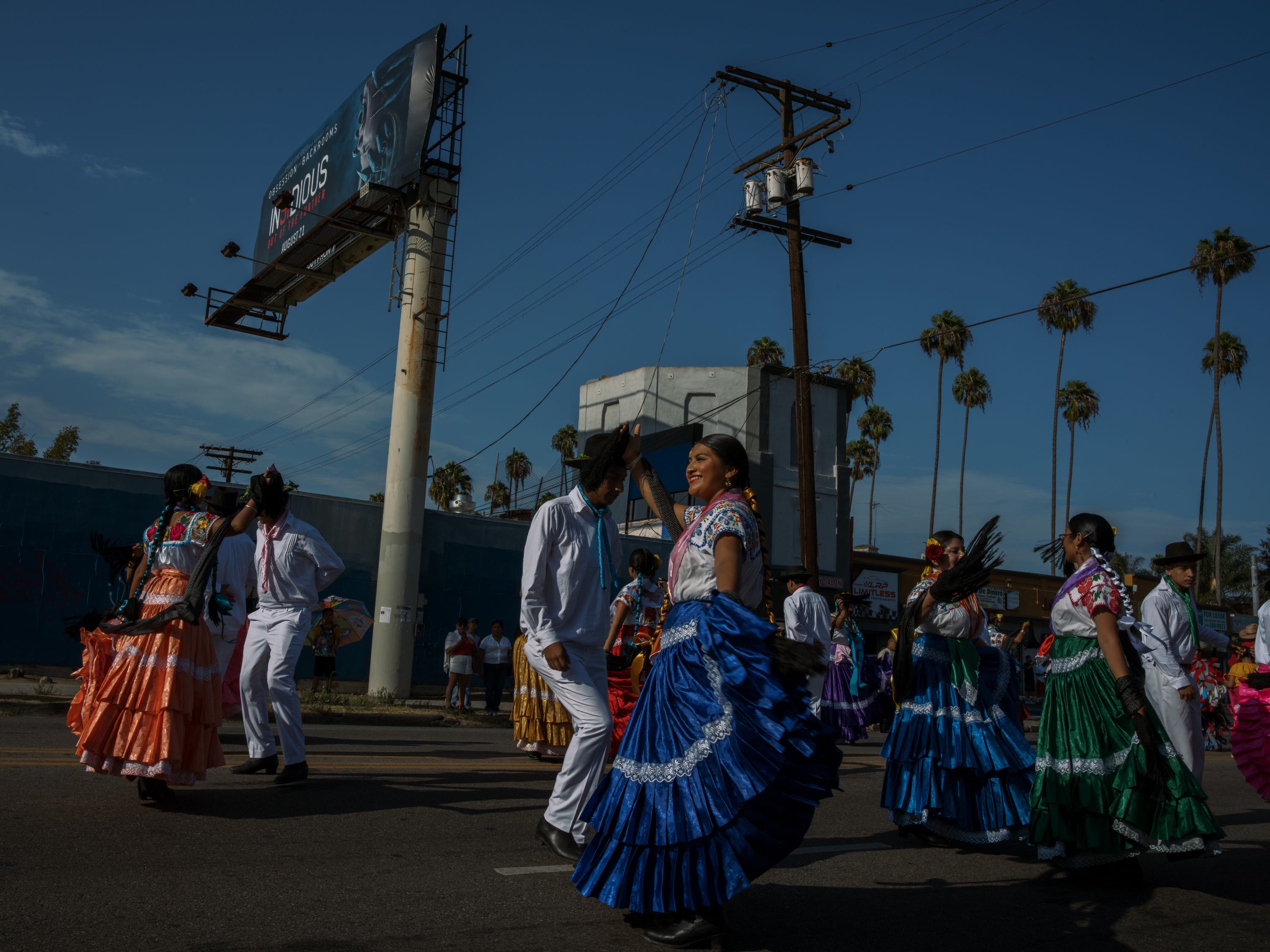
California. It’s so utterly Californian. A gorgeous perfectly tanned blonde girl laughing and running down the beach in a bikini, leading a surf camp. A dude in Meta glasses chatting with his friends by the slack line, “I’m just so over music festivals, dude. People keep asking me to go and I’m like, I’m over it.” The grizzled surfers walking barefoot up the alleyways of Venice Beach. The Oaxacan neighborhood where you can find bacon-wrapped hog dogs at street stands at dusk, and horchata and all manner of agua fresca, and taquitos and tortas and nieves. The Oaxacans in the Guelaguetza parade who sound and look exactly like those you know from similar parades in Atzompa and San Lorenzo Cacaotepec and Etla but who switch suddenly from Spanish into an uncanny, accent-less English: “Don’t park there, bro, they’ll getcha.” The old Korean guy smoking on the stoop in front of his car shop where Koreatown meets the Oaxacan corridor, watching couples in traditional Serrano dress tap dance.
We almost got run over like we often do in crosswalks in Pittsburgh, but instead of the driver speeding up, narrowly avoiding us, and screaming obscenities, the driver screeched to a halt and gave us two thumbs up.
In the co-op parking lot was a beat-up Prius with the bumper sticker VEGANS HAVE GOOD HEARTS. I couldn’t decide if it was pleading, passive aggressive, or matter of fact.
In one of the most disgusting bathrooms I have ever encountered, on the Venice Beach boardwalk, a huge scrawl of graffiti on the wall read “Norovirus 7/20/26.”
The sunset from our studio is a show. First a specific kind of diaphanous beach cloud, present here in the early mornings and evenings, brightens into rose for just a few minutes. Then beneath it the sky goes that classic orange cream and lime, then deep lavender with a peachy fringe, and finally indigo, more and more saturnine except at the very edge, which is a dusky pink, almost imagined.
Last week, Jorge presented his work at the arts center where we’re staying. This is standard procedure for invited artists. The whole community shows up and asks questions, and the events are open to the public as well. There is food, beer, and mingling afterwards. Jorge asked if I could present as well and they said, sure, which is very generous considering they knew little about me or my work and had invited us here on the strength of Jorge’s photos alone.
Jorge gave an incredible presentation; there were a lot of murmured wows and so cools and I was reminded again of how joyful his photos are.
Cue the “in a world” voice here: In a world of such division and hatred, these photos bring joy…but it’s true. Without any sentimentality or romanticizing, they express pure love for a place and its people. They are works of great artistry, but first and foremost they are the expression of a feeling: a kind of primal feeling of longing and belonging that I think many of us lack, and don’t know how or where to find.
Last Sunday we went to a parade on Pico Blvd in East L.A. that served as an invitation to next weekend’s Guelaguetza (yes, a party just to announce an even bigger party!). The Guelaguetza is one of Oaxaca’s biggest cultural traditions in which representatives from all eight regions come to the capital to perform traditional dances. L.A. puts on its own version, though it didn’t take place last year because of ICE raids, and this year’s event will also be much smaller than usual. All along Pico were warning leaflets stapled to telephone pools: La Migra Todavia Está Aqui.
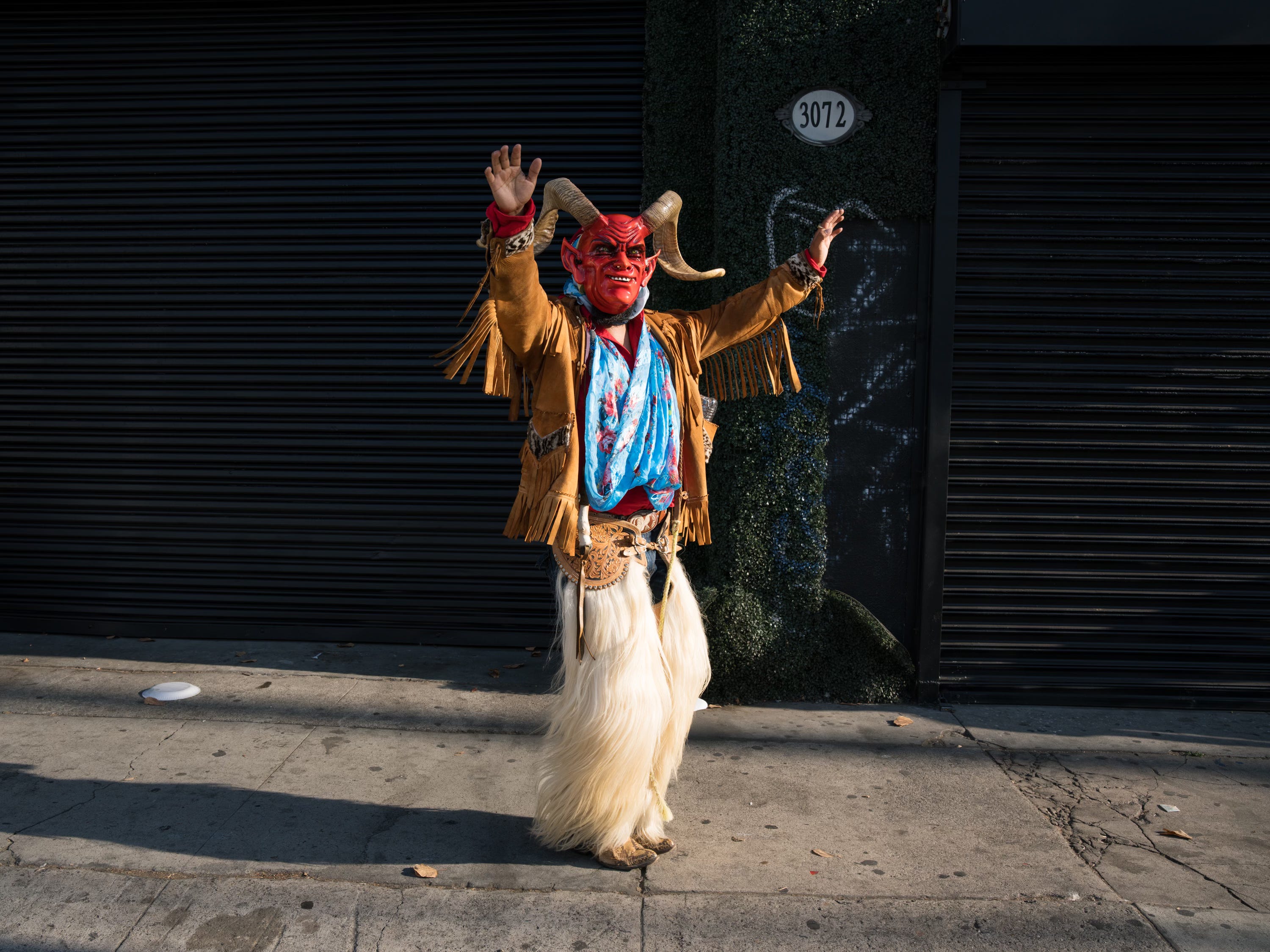
We got there early for Jorge to start photographing, and came across, as one does, a big group of people putting on devil costumes. This is not Party City stuff, my friends. These are goatskin pants imported from Denmark, and handmade masks that cost hundreds of dollars. Craftsmanship, meticulous and detailed. Jorge asked one woman from the Mixteca how much her mask had cost.
“Caro,” she said. Expensive. “But sometimes,” she added, “you don’t care. Because you want your costume.” What she actually said, in Spanish, was “Uno no le importa.” In Mexican Spanish “uno” is used frequently: one, the third person general, the maxim, describing people as one body. One doesn’t care. Because the ritual was so much more important than the cost. Knowing this, being part of this “one” that knows, has been lost to many of us.
Jorge’s photos make this palpable, and I believe that’s part of why they move people so deeply. The girls in traditional dress gently holding one another’s braids as they gaze down at a basketball game. The bull awaiting slaughter in the dark, tied with a thick rope to a fig tree, red bucket at its side.
Friends, it was a tough act to follow. And I was not an invited guest.
I haven’t done a reading in years. But I wasn’t nervous at all. Maybe there was a certain freedom in feeling like an imposter, a complete failure. Oh well, here goes nothing! I had decided to read a birth scene, because there is no masochistic thrill more feminist than approaching a roomful of serious artist men and describing the process of a vernix-covered head opening the birth canal through bloody surges and wails of pain.
This birth scene was particularly vivid and descriptive, and if you’ve ever heard me do one of these you know that’s saying a lot. I gave some context about what I was working on, explained my intention (“we all need more birth in our lives”) and then let loose.
Weirdly, unexpectedly, it was one of the best readings I've ever done. You can feel during a reading whether or not the audience is hooked. This time, because I felt like such an outsider, like nothing I did mattered because my career feels dead, I really gave it my all.
I have been listening to lots of audiobooks and so, like the professional narrators, I did the voices. I slowed wayyyyyyy down. I paused. I looked at people, a lot of them, with lingering eye contact. And when it came time for the crowning head the whole room was kind of leaning forward, and two young guys (new dads, I'd later come to discover) were actually holding onto one another, and then the baby was born and I wound it down and ended with a soft punch and there was actual silence.
That’s why you do it, my friends. That scene may never see the light of day. It may exist forever as a Word doc. But that moment was worth it.
“What just HAPPENED,” one of the young dudes said.
People asked questions for a bit and afterwards one of the senior artists, who has been living here for thirty years since this arts center first opened (!!), came up to me and by way of introduction just grabbed his head.
“Oh my GOD,” he said. “You kept reading and I just kept thinking, oh my God oh my God oh my God,” he gripped his head as if to keep it from blowing up.
I laughed. “That’s the intent.”
He was a fascinating guy, an accomplished performance artist whose mother was interned in Manzanar. He had begun a piece about Manzanar in 2015, as a sort of remembrance of this tragic past, and then in the intervening ten years he had seen history repeat itself. “We’re doing it again,” he said, “I can’t believe we’re actually doing it again.”
His mother raised him and his siblings on her own while eking out a living as an artist. She was a weaver and she refused to give up her art. “We were poor,” he told me. “We were poor Asian hippies. But my mother taught us to love art.”
People kept asking me when my book is coming out. I was truthful and said, “I don’t know,” but what I wanted to say was, “I thought I had a trajectory and now I feel like I’m failing. I don’t know if I’ll ever publish a book again. I don’t know if I’ll ever ‘make it’ in this world. I don’t know if I want to keep trying. I don’t know how to do this without doing it full time. I don’t know how to make money from it anymore. I don’t know anything and I am forty-four years old.”
I think that older artist might have said, so what? And he would have been right. So fucking what? His mom learned to love weaving by weaving camo for the U.S. army in an internment camp.
There is art everywhere here. The statement on the building wall, painted by an artist. The sundial that uses the parking lot light as a gnomon. Poems in the laundry room. It occurs to me that I do know how to live. That I do love life. I love the sky, and I love the beach, and I love the skateboarder flipping off the Waymo, and I love/hate surviving my first three miles on the 405, and I love Korean shaved ice with fruity pebbles, and I love writing, and I love books, and then I think maybe the loving is enough but enough for what, exactly? Money? No. Certainty? No. Joy? Yes. But really something else. Something beyond the question of enough, beyond comparison, beyond safety. That is why people make art.
After my run the other day I walked down the Venice Beach fishing pier. In all the traveling I did in my twenties, I was never particularly drawn to the ocean. I preferred mountains. But now I cannot get enough. I don’t find anything more beautiful than that infinite horizon. That shimmering line that remains when I close my eyes. I get sentimental and find comfort in the trite fact that this same blue I am seeing extends all the way to Asia. I find myself drawn to bigness.
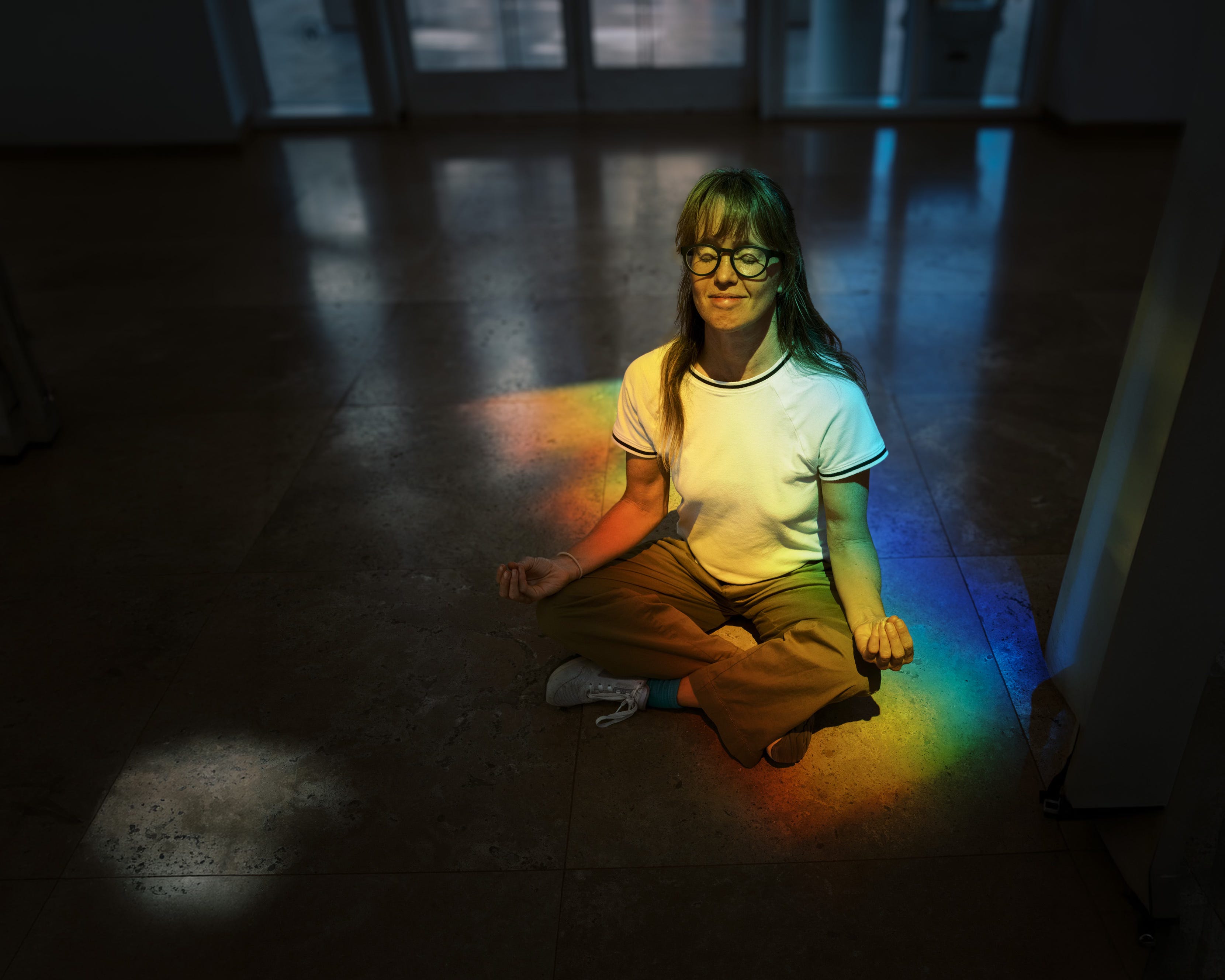
I did an hour-and-a-half long “heart essence” meditation at the art center last Tuesday whose sincerity might have killed an East Coaster, but I enjoyed it. The leader, a French dude who started out by sheepishly admitting I forgot the gong, again! and then made a gong sound with his throat, kept repeating “inside, outside.”
Peace inside, peace outside. This is what art does: the Los Angeles Guelaguetza, the recreation of the baseball field at Manzanar with two Japanese-American teams in 1940s uniforms playing a game, the mural of a breaching humpback whale beneath the highway overpass: they all aim to bridge inside and outside. They try to build a world we can see, hold briefly, grieve, and love. A one.
On the beach in the afternoon I close my eyes, and when I open them there is a startling infinity of light and water. The beauty wallops every time. I close my eyes and the afterimage remains, scintillating, an infinite ocean in my mind.
All essays are free for everyone. Paid subscriptions sustain human art. Thank you!
Comments
Nothing yet. Say the first thing.
Sign in to join the conversation.