
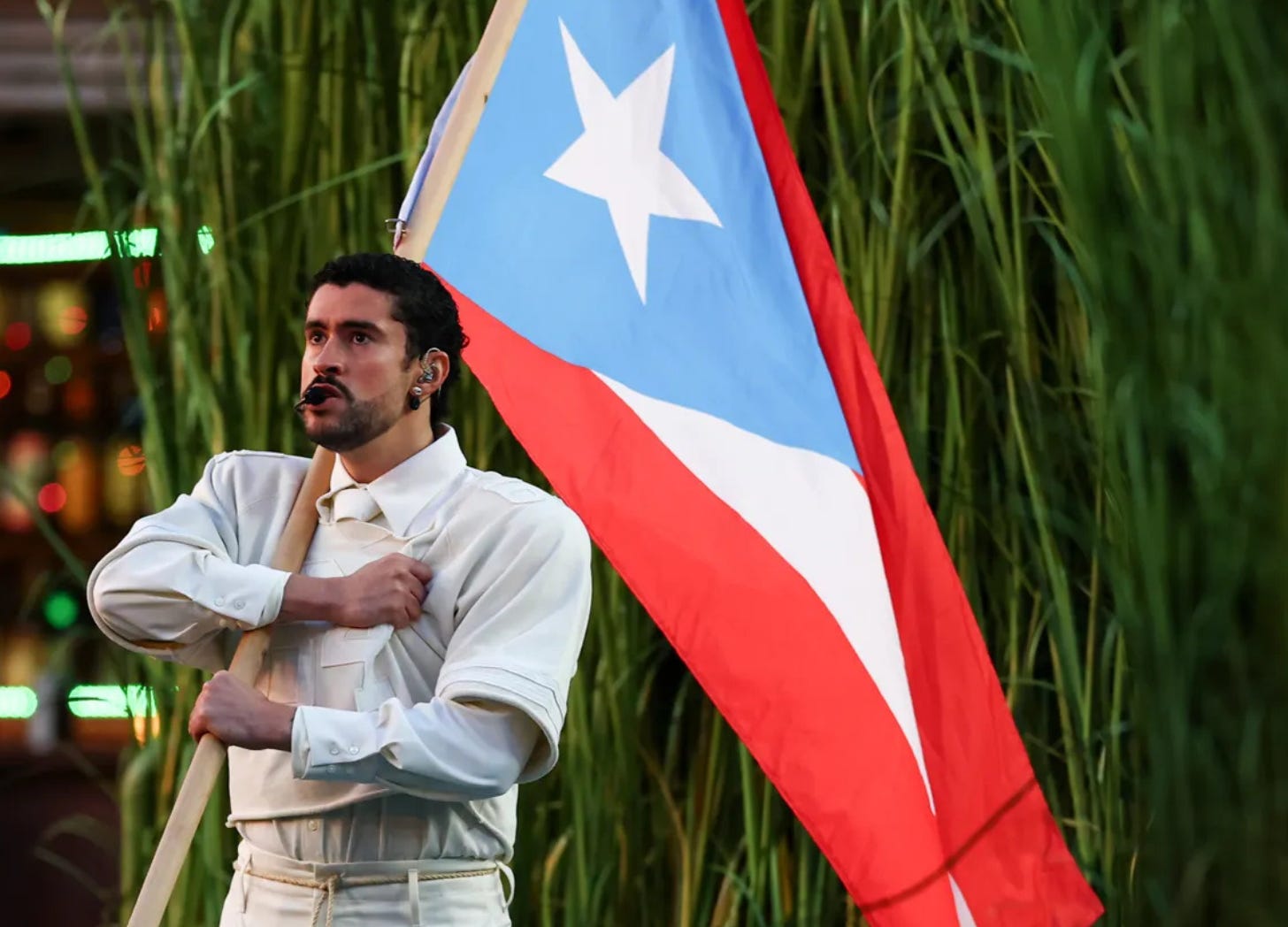
Ok, I had another essay planned for today titled “Exile or Homecoming,” but then Bad Bunny happened. After I picked up all the tissues and wiped away all the tears, I began writing. And wept a few more times through the process.
They weren’t tears of sadness and grief, of which I have shed plenty in the past few months. They were tears of joy and pride. Ones that have been too few in the recent past, and ones I didn’t realize I needed so much until they came, unrestrained and without shame, on Sunday night.
It was also a reminder of the power of art as a practice of resistance.
A reminder of resistance as a practice of joy.
A reminder of the practice of prophecy, when art calls into being a future beyond what we think is possible.
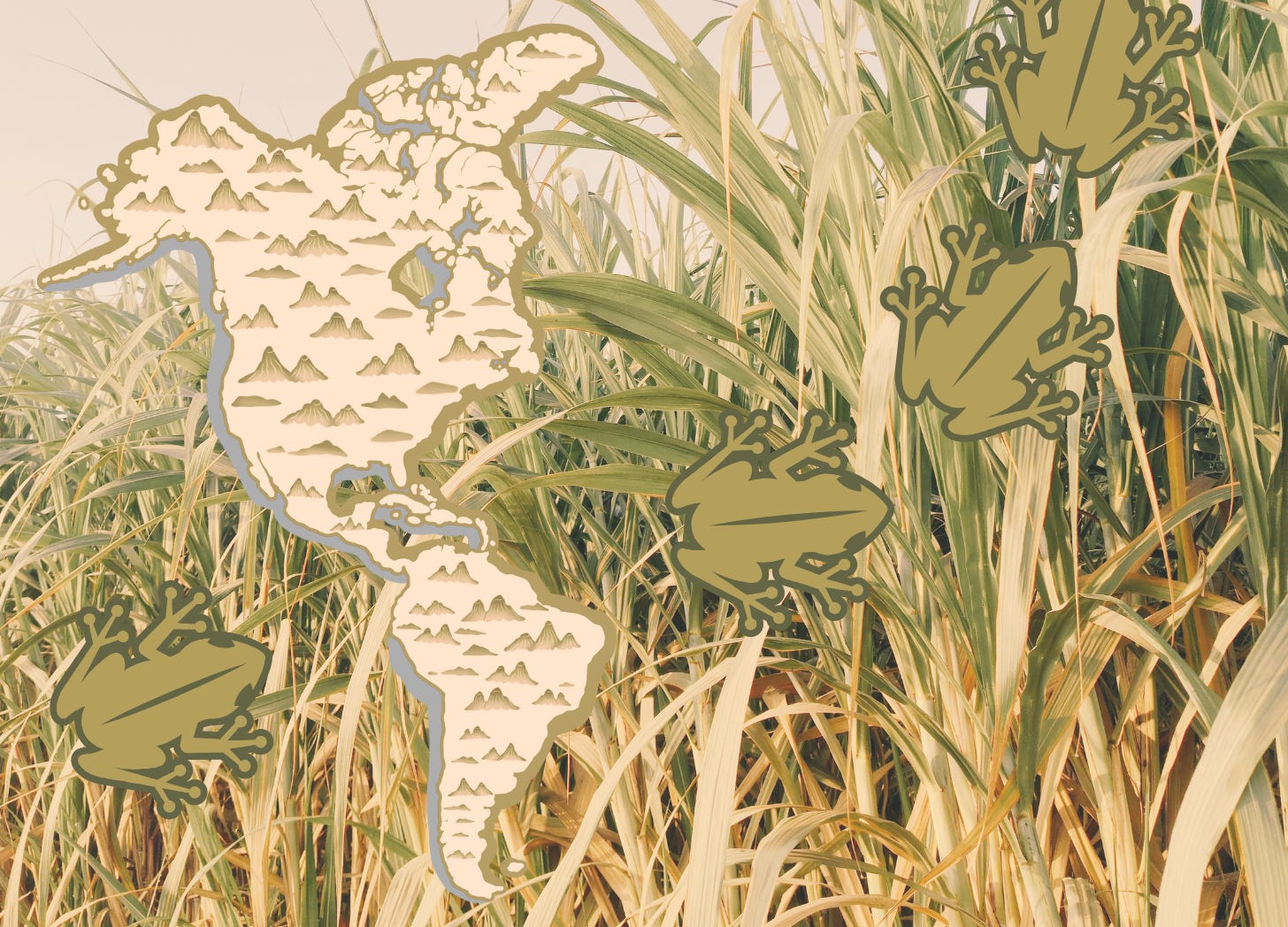
“Todos de los países….Todos somos [América]. Qué bonito,” @josechoatv (Youtube)
Last week, I posted on Instagram about my frustration when people use the term “America” as a synonym for the United States.
America, also called Abya Yala (first by Guna/Kuna of Colombia and Panama), is both wider and deeper than that singular identity and territory.
The Americas, as long known by our neighbors to the North and the South, is more than what exists within the borders of the stolen territory we call the United States. It includes an immense collection of cultures, histories, and ecologies across thousands of miles from the northern-most point of Canada to the southern tip of Chile.
“…Within the decolonial epistemologies of Abya Yala, the land represents a greater ecosystem,” (2023, Calderón Harker, Decolonial: Abya Yala’s Insurgent Epistemologies).
Sunday night, Bad Bunny gave us an embodied, lyrical dissertation on this idea that “America” is a layered and textured landscape of peoples, territories, and cultures far beyond the United States alone.
North to South. Continental and Archipelagic.
All of us are the Americas. All of us are the people of Abya Yala. And by understanding us as unbordered and interconnected communities, we are stronger than we imagine.
We are a multitude.
We are stronger, together.
And our love can beat away the hate.
What does it mean to not accomodate language or context limitations of your audience?
I remember when I first saw a Junot Diaz essay where he discussed his refusal to put Spanish words in his writing in italics. He also writes about it in this Substack post, “The Italic War” from 2023.
Diaz’s approach had me considering my own use of italics for Spanish words, and beyond that, my use of them (or not) as I began integrating the Indigenous languages of Quechua and Chibcha into my writing. Juggling four languages and transterritorial cultures (across different lands) is a complicated task, but how I do it means as much to me as the doing of it.
What are the ethics of being authentic and honoring of these many lineages of linguistics and cultures? What does it mean to move away from over-explaining and live into the experience of something that might be outside of someone else’s experience, to the point of discomfort or confusion?
What does it mean to just give the ceremony and celebration of offering culture to audiences that may not ever understand everything you are writing or speaking?
I explore this a little in my first “Hoja Speaks” piece, which will come out later this week. Gloria Anzaldúa does this beautifully in her work, and I have always been inspired by her unashamed representation of herself and her culture.
On Sunday night, Bad Bunny practiced this in the most joyful way. Amid set pieces that would rival any Broadway musical, the Super Bowl halftime show represented the history, politics, land, and people of Puerto Rico. And through the unapologetic specificity of the Boricua experience represented in the show - in Puerto Rico, New York, Los Angeles, and beyond - it expressed the magic and beauty of the Americas writ large.
Benito’s performance broke down the borders that the current administration has been fostering in and out of the White House for a generation, and dictators and fascists have been feeding into for lifetimes.
Bad Bunny told his story and, through him, the story of Puerto Rico without translation. And across the Americas, people understood and felt seen - from Argentina to Canada.
He proved the thesis that art moves in a land beyond time, place, and language limitations. He reminded all of us (and especially Latinos/Latines) that we don’t need to make ourselves small or palatable.
He reflected that the practice of telling your own specific story with granular detail, and through its truth, transforming it into a piece of art that is relatable to many.
Unbordered storytelling. Untranslated Truth.
He makes me more committed to my own project of literary authenticity, beyond the boundaries of territorial borders and beyond the constraints of italic enforcement.
My God, how Bad Bunny bypassed all the boundaries and limitations of how gender and sexuality are “allowed” to perform themselves. He did something that was both beautifully Queer and vibrantly Masculine with his performance at the Super Bowl.
And if you don’t know, the point of “Ah!” was the car dancing scene where two men began a sensual dance with each other.
The “Oh!” moment was the Lady Gaga crossover, where a Queer icon joins the wedding reception scene, remixing her song Salsa-style. She is also an artist Bad Bunny has admired for years (for those who were confused by her presence in the show).
And the “Hell Yeah!” was when Ricky Martin - an elder to Benito, and someone who was forced be closeted in his language and sexuality for so many years - stood and sang about the colonization and gentrification in Hawaii and Puerto Rico.
This was the point (during his reaction video) where YouTuber @Josechoatv exclaimed jubilantly, “Este show es para los gays!”
A magical element of Bad Bunny’s performance was its ability to be a kaleidoscope of culture, one that wasn’t acting out a placating inclusion, but layered a real Puerto Rican experience where everyone shows up at the party, from a straight couple getting married to two club boys grinding on each other.
And through embracing the queerness of everyday life, Benito also represented a powerful expression of masculinity, one that is so real and full that it doesn’t need to prove itself.
It was everything that the insecure, homophobic, transphobic, and xenophobic male fragility expressed from the White House to I.C.E. “policing” is incapable of embodying.
No matter how many of us they kill, imprison, or torment.
It shames them without even trying. It makes their weakness more visible and their faux strength glaring.
This piece of art that Bad Bunny gave us this Sunday was a gift.
In this season where hopelessness, fear, and rage can become the beasts we feed the most, this halftime show offered us a kintu, an offering we all desperately needed, one filled with…
Joy.
Resistance.
Prophecy.
Gracias a ti, Benito. Urpichay Sonqoy.
The only thing more powerful than hate is love.
Just a note about the NFL, after seeing some folks talking about their invitation to Bad Bunny as an act of bravery. Let’s not rush to clap for the National Football League. Profit is the impetus, and specifically, their campaign to become a global brand.
No one needs to give an ovation to the industry that pushed out Colin Kaepernick and then wrote “End Racism” in the End Zone until it was less advantageous. I am glad they did what they did, but it was for money, not a demonstration of courage.
For more on this subject: Check out Jemele Hill's “Super Bowl Recap - Thoughts on Bad Bunny Performance” (beginning 16:06 in the show run) for a reflection on this aspect of the show. Also, watch Jemele Hill in general for content on the intersection of sports, politics, and culture.
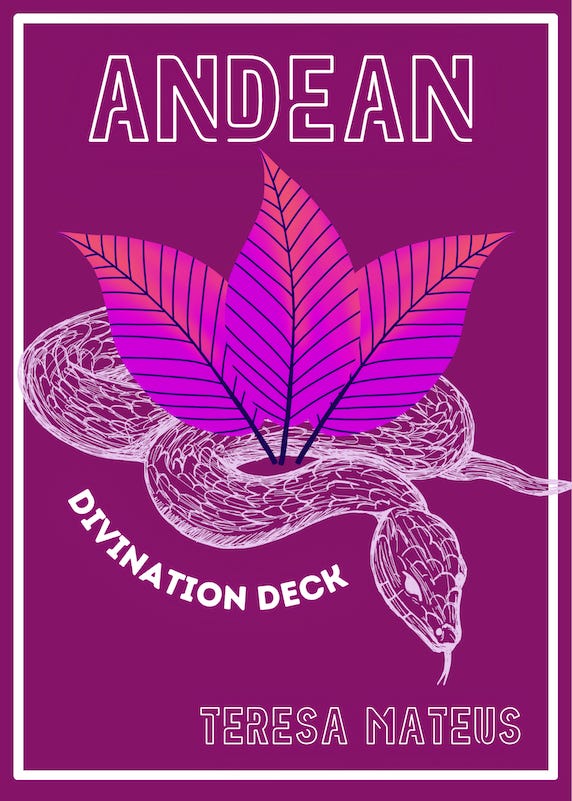
After being introduced to the Mesoamerican Oracle Deck by Erika Buenaflor, a wonderful teacher in the Curanderismo tradition, along with her work teaching the Mesoamerican lineage of wisdom, I began envisioning what an Andean Divination Deck might look like. In the Paqo medicine tradition, we engage in the practice of divination with Coca Leaf Readings, something I will be exploring in the last session of my Rebel Hoja workshop series on February 22 at 4:00 PM ET.
Alongside that primary practice of leaf readings, I have been yearning for a card-based practice of divination. I am a longtime practitioner of tarot card reading and have a hearty collection of tarot and divination decks. Some for everyday practice (although my 30-year favorite has always been the Zen Osho tarot deck) and others just for the beauty of the deck.
This week I began playing around with visioning the deck itself and playing around in my Canva app with design concepts. Ultimately, it might be fun to collaborate with an artist (have some ideas there) to make the design of the cards, but I have begun to map out the animals, gods, and elements that would be core to the deck, including deities from the Peruvian and Colombian Indigenous Andean cosmologies, along with plant medicine relatives and sacred animals.
I thought I would share the initial manifestation of this idea with you all. I would love any thoughts folks have on an Andean Divination Deck!
Comments
Nothing yet. Say the first thing.
Sign in to join the conversation.