
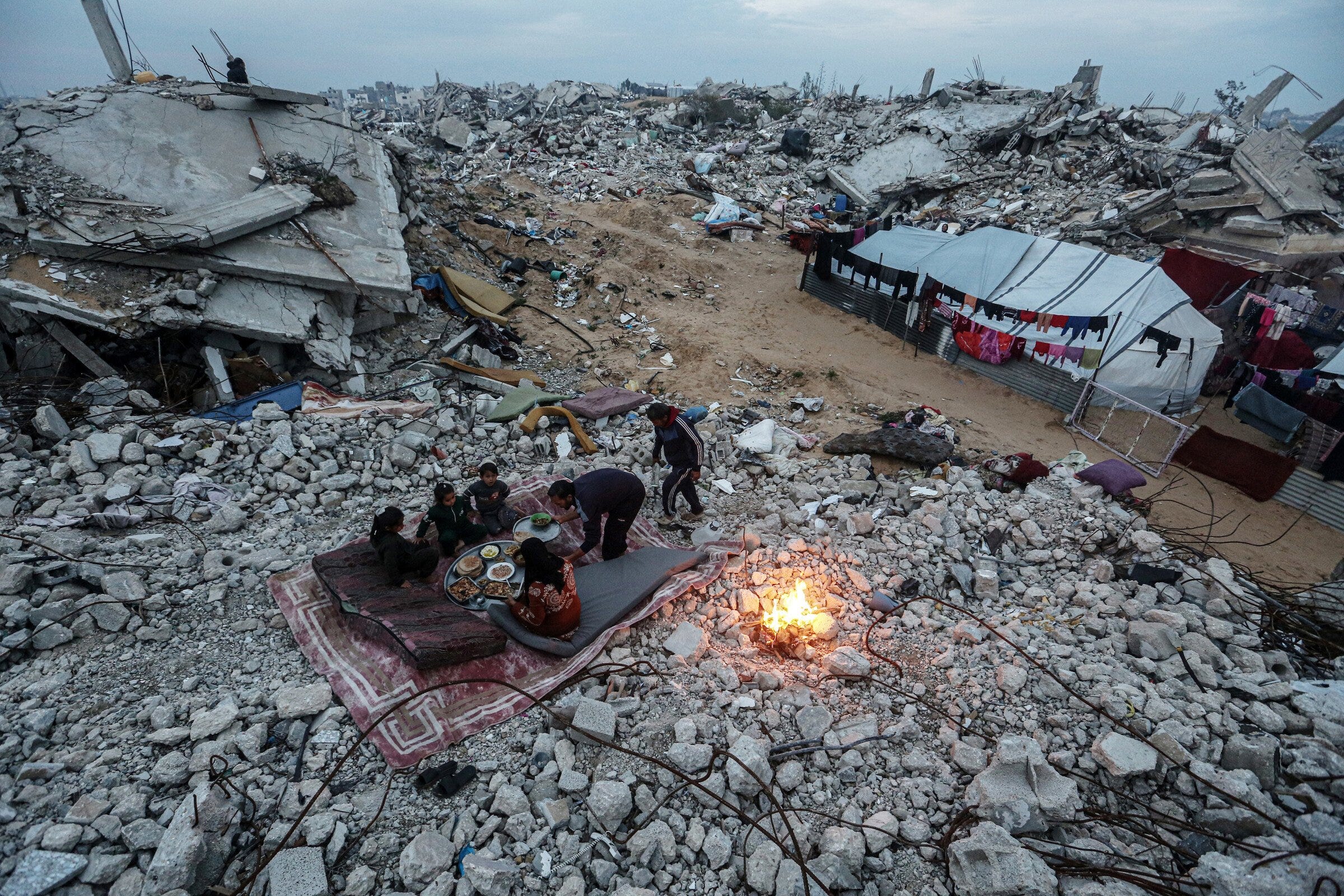
“I wish to talk about love. I wish to talk about abundance. Palestinians are persistent and our endurance is rooted in tenderness, in community… I love us most with our arms linked around each other, our heartbeats in sync, our bodies in movement toward a future that is free.”
—Noor Hindi, Heaven Looks Like Us: Palestinian Poetry
Tomorrow marks two years since October 7th, 2023, the day the world turned its gaze toward the violence in Occupied Palestine. Much of the dominant narrative, the Zionist narrative, places our attention solely on Hamas and their attacks on that day, as if history and the violence magically started in October 2023 (that’s some of the forced forgetting I wrote about in my last essay).
But what unfolded that day cannot be separated from generations of dispossession, starting with the Nakba in 1948, and decades of military occupation: stealing families’ homes, murdering entire lineages, and maintaining an ongoing system of apartheid.1
In 2014, nearly a decade prior to 2023, Noam Chomsky spoke about the severity of Israel’s violence, saying, “In the Occupied Territories, what Israel is doing is much worse than apartheid. To call it apartheid is a gift to Israel… The Israeli relationship to the Palestinians in the Occupied Territories is… They just don’t want them. They want them out, or at least in prison. And they’re acting that way. That’s a very striking difference, which means that the apartheid analogy, South African apartheid, to the Occupied Territories is just a gift to Israeli violence.”2
Given the history of Israel’s occupation and ongoing genocide, condemning Palestinian resistance while ignoring the conditions that made resistance necessary is a form of complicity and violence. Zionist and Imperialist propaganda continually twists itself into knots to justify colonial violence while demanding nonviolence from its victims. Empire loves to insist the oppressed’s grief, if allowed at all, be soft, palatable, and non-threatening.
Laura Chung said, “I believe the West’s obsession with October 7th and their hyperfixation of that particular date is a subconscious fear of the oppressed revolting against the oppressors. Because how do we explain seemingly well educated and intelligent people not fully understanding the violence in the larger context of a violent settler-colonial state. When Black, Brown, and Indigenous people resist for their lives they’re called terrorists, but when the occupation does, it’s their defense.”3
As a teacher who was removed from teaching a grief and loss class for naming the genocide in Palestine, and have been told I have to condemn Hamas, I know too well how Zionists have weaponized Palestinian resistance, while attempting to silence truth, grief, and solidarity.
A few weeks after being removed, I spoke to the head of AWE (the school that fired me), he said they knew it was a genocide happening in Palestine, they just didn’t want me to name that in class. He added that one of their students could have a relative or friend who was harmed on October 7th.4 As far as I know, they never actually asked the students, including the two Zionists who had complained, if that was true. Instead, it was a hypothetical harm worth protecting, all while ignoring that students in the class were in relationship with Palestinian people being displaced, starved, bombed and disappeared under rubble.
Behind the scenes, they tried to withhold payment for the final class they banned me from teaching. When I sent a letter that outlined how they breached the contract, not me, and enacted multiple violations of their teacher agreement and code of ethics, they agreed to pay out my contract. I promptly donated that payment to a Palestinian family one of their students (who has since left the program) is close to.
They also nonchalantly admitted their plan (before I posted publicly) was to remove me from my last class, not tell the students why, and simply have someone else show up to teach the last class. After saying all this, the head of the school praised my teaching and asked me to return to teach another module.5 There was a clear message: the genocide in Palestine can be named in private but silenced in public.
As if I was ever going to be quiet about any genocide, including the one in Palestine. As if grief work can be depoliticized, taken out of the context of collective traumas (all trauma contains grief), or removed from history and Ancestral grief. To this day I am baffled as to why they ever hired me given how clear I am about my stance on what’s happening in Occupied Palestine. Months before, I had co-facilitated a 5-month grief ritual training with the person who invited me to teach for the school, speaking about the genocide in similar ways during that offering.6 Both him and his wife, who hired and fired me, knew my body of work well.
Students later told me the administration called it “colonized behavior” to insist on naming what is happening in Palestine a genocide. Meanwhile, the Native American and Indigenous Studies Association, the International First Nations Conference, and the UN’s Independent International Commission of Inquiry have all affirmed Israel is committing genocide in Gaza. Amnesty International, Médecins Sans Frontières / Doctors Without Borders, and countless human rights organizations agree.
The school uses “disrupt” and “resist” in its tagline. What this reveals is the duplicity, nonsense, and narcissism of liberal Zionism and depoliticized spiritual/soul work. It would almost be funny if it weren’t complicit in a livestreamed genocide. Instead, it’s just cowardly, confusing, and cruel.
When I write or teach so directly about Occupied Palestine, some people call me antisemitic, arguing that Jewish people need their own ethnostate in order to stay safe, using the Nazi Holocaust as proof. I can honor how unsafe many of us feel right now, and I will still center those Empire is actively targeting, the people who are most vulnerable, including Palestinians.
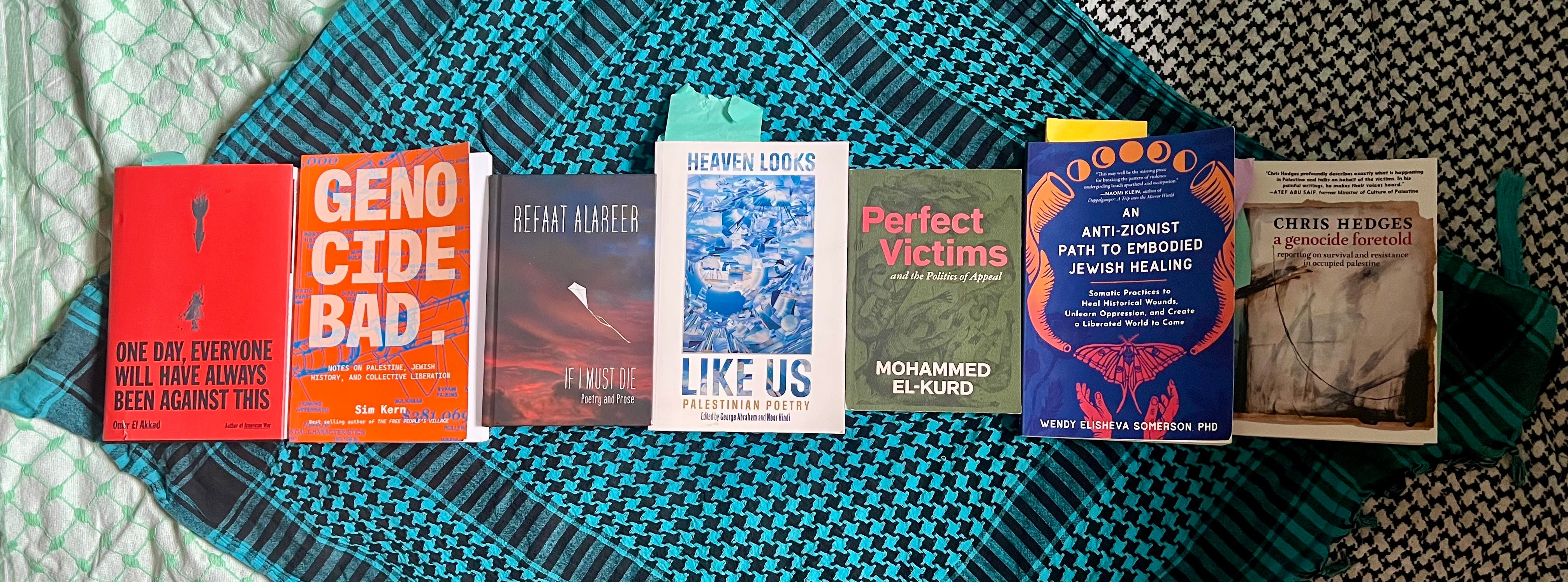
The truth is: there is no safety under Empire, there is no safety under fascism, not for any of us.7 Or, in the words of Jewish author, Sim Kern, “No one gets a theocratic ethnostate… it’s just a-historical to think that Jews have suffered in some unique and special way that makes them entitled to a theocratic ethnostate.”8
As Katherine Wela Bogen writes, “I will never forget how Israel weaponized the trauma of my ancestors to justify their genocide of the Palestinian people. I will never forget how they disrespected the survivors of camps. The resistance fighters in the Warsaw ghetto. The many members of the underground. I will never forget how they scoffed at the empathy of those who, in 1948, were offered the homes of ethnically cleansed Palestinians and said, ‘absolutely not.’ Judaism is so much bigger and older and greater than Israel.”9
While some of this is complex, it is not too nuanced to name, and we can bring clarity to this moment by staying with our grief and fear. As I wrote in a post that initially responded to the removal of my teaching position: Calling genocide too nuanced to name is a tactic of erasure. While the grief of these times is often historical, complex, and layered, there is nothing nuanced about watching a genocide unfold in front of our eyes. Watching people be starved to death. Watching children be burned. Saying this is too nuanced to name is a refusal to witness and grieve.
The underlying truth is, both the victims of the ongoing genocide happening in Palestine and the victims of October 7th, are victims of Empire.10 Empire as a force that separates and dominates. Empire as a force that exploits life, showing us a clear embodiment of predatory death-energy (“the Predator”).
Similarly, the rupture with my former co-facilitator and friend who hasn’t spoken to me since I was fired from AWE, and the rupture between Israeli Zionists and Palestinians, echo the same fracture. While they share a fault line, the impacts are obviously not comparable: one is a fractured friendship, the other is a gaping wound in the living body of a people and their land. Both reveal how colonial, anti-relational forces blow through bodies, relationships, communities, cultures, and the planet.
They’re indicators of the (w)reckoning we’re being called into and none of us are immune. Most people I talk to have experienced more fractures in their personal relationships and lives than ever before, while also watching the collective fissure widen the growing wound of Empire we all live inside of.
A wound many more people are becoming aware of, turning toward, and tending because of Palestinians and what they’re sharing as they fight for survival. Because of anti-Zionist Jews who are speaking out against genocide. Because of Black feminist leadership and Indigenous sovereignty movements who are calling us back to land, lineage, and collective care. Because of Brown folks who are weaving mutual aid and creating rapid response networks. Because of white folks who are betraying white supremacy culture, putting our bodies on the line, and making reparations. Because of every person who is resisting Empire.
In Towards Our Liberation: Palestinian Girls and Young Feminists Weaving Resistance and Hope, they write: “How do we move with the solidarity and clarity that this moment demands of us so that we can get free together? Palestine will be free, Palestine is freeing us.”
Palestine is freeing us. Palestine is showing us what it’s going to take, what we are up against. Palestine is showing us how our fractured hearts can reflect our love for each other, shining a path through the Long Dark, a path toward liberation. We read this in Refaat Alareer’s poetry. We see this as Bisan continues to report to us: “It’s Bisan from Gaza and I’m still alive.” We see this in the solidarity and courage on the Sumud Flotilla. We see this as people continue to donate to Palestinians families. We see this as people in the U.S. stand up against ICE. Our love is everywhere, and it will outlast Empire—all Empires collapse.
When I was being fired by AWE, one of the things the administrator said to me was, “Your love for Palestinians is getting in the way of your teaching.” I do love Palestinians, and it isn’t getting in the way. My love is the way, as is yours. I love all people fighting for collective liberation. I even love the ones who aren’t there yet, but who will one day realize what’s at stake for our souls and join us in the long work of freedom.
May we all root down with Soul, and rise up in solidarity—today, tomorrow, and every day.
In Chris Hedges book A Genocide Foretold, he writes, “There are no surprises in Gaza. Every horrifying act of Israel’s genocide has been telegraphed in advance. It has been for decades. The dispossession of Palestinians of their land is the beating heart of Israel’s settler-colonial project. This dispossession has had dramatic historical moments—1948 and 1967—when huge parts of historic Palestine were seized and hundreds of thousands of Palestinians where ethnically cleansed. Dispossession has also occurred in increments—the slow motion theft of land and steady ethnic cleansing in the West Bank, including East Jerusalem.”
As I told the school and wrote in my open letter: If any student, including those uncomfortable with my naming of the genocide Palestine, had shared grief or discomfort in my class, I would have welcomed it with care. In the circles I facilitate, we practice coming into the commons of the heart when “conflicting” griefs arise in the room. I will continue to witness and hold the deep grief rooted in ancestral trauma, including the Nazi Holocaust, but I will not center Zionist entitlement that demands silence about an ongoing genocide.
If this sounds unreal, I get it. After an administrator yelled at me, made defamatory statements about me to students, and claimed I wasn’t open to feedback (her “feedback” being that I shouldn’t name the genocide in Palestine), the situation was so grossly unrelational that I asked a colleague to join my meeting with the head of school. They witnessed the conversation and can verify everything I share here about that meeting. It’s become clear to me that the topic of Occupied Palestine has so much rupture embedded in it that people say and do wildly incongruent things—mostly to avoid accountability and the depth of grief we’re being asked to tend.
Because I consistently get asked about this, I need to make this clear: this was NOT Francis and he was never involved with AWE.
Most Western trauma methodologies overemphasize “inner safety” and personal “nervous system regulation” because they’re steeped in hyperindividualism and have little capacity to meet the communal and collective traumas we’re living through. This serves Empire by keeping us isolated and unable to change exploitative, violent systems. In other words, depoliticizing and individualizing healing work is f*cking us.
In Wendy Elisheva Somerson’s book An Anti-Zionist Path to Embodied Jewish Healing, she writes, “While paying attention to power differentials and holding firm to a politic of ending Israeli state’s immoral occupation of Palestinian land, we can’t fall into the trap of dehumanizing Israeli citizens. Dehumanization is not a tool of liberation, but a symptom of this legacy of colonization and violence. Dehumanizing anyone is out of alignment with the value of protecting and caring for all of life. We can’t let the Israeli government rob us of our ability to feel sorrow in the face of all human suffering.”
Comments
Nothing yet. Say the first thing.
Sign in to join the conversation.