
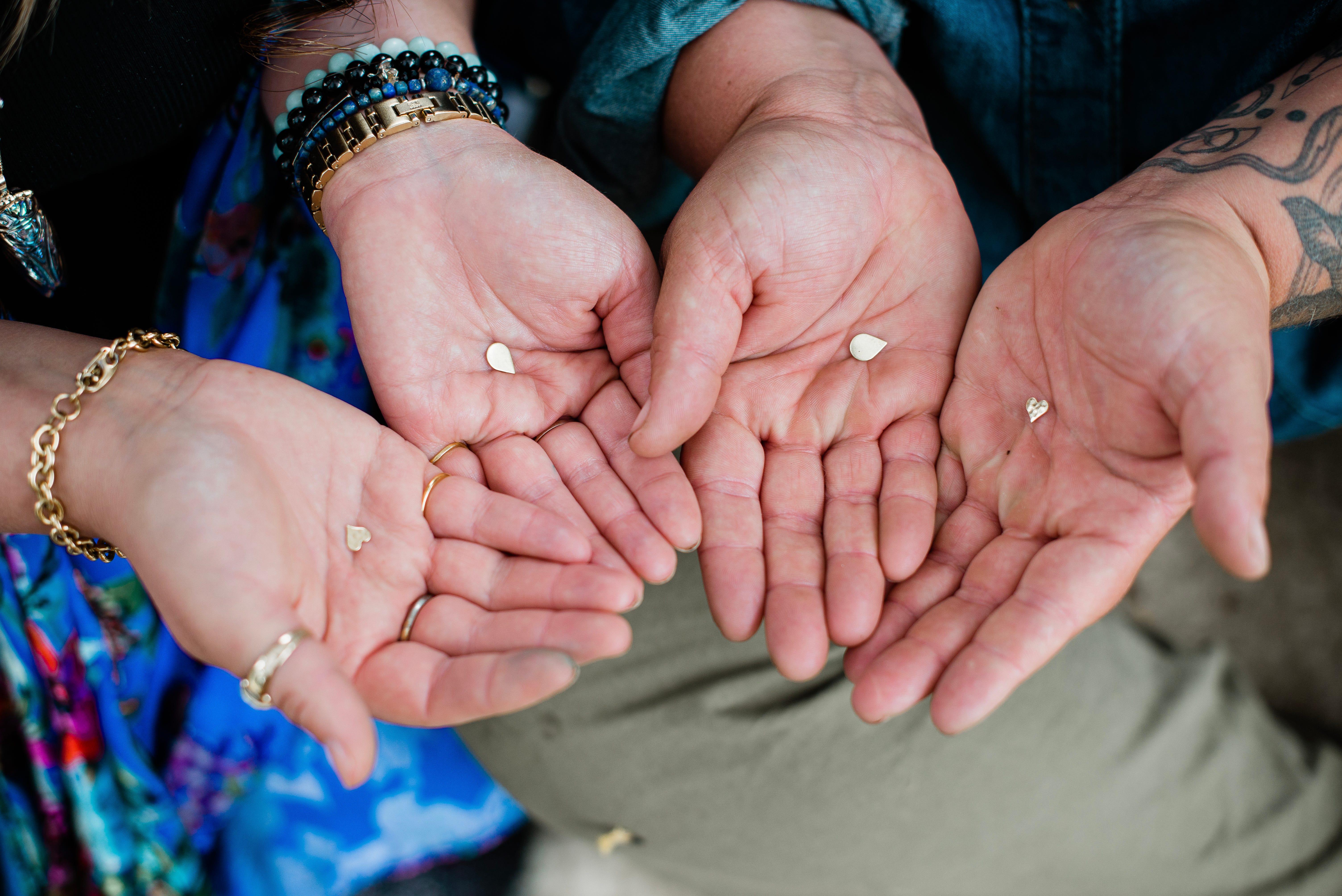
“the heart is a front line and the fight is to feel in a world of distraction...”
—adrienne maree brown, Spell for Grief or Letting Go
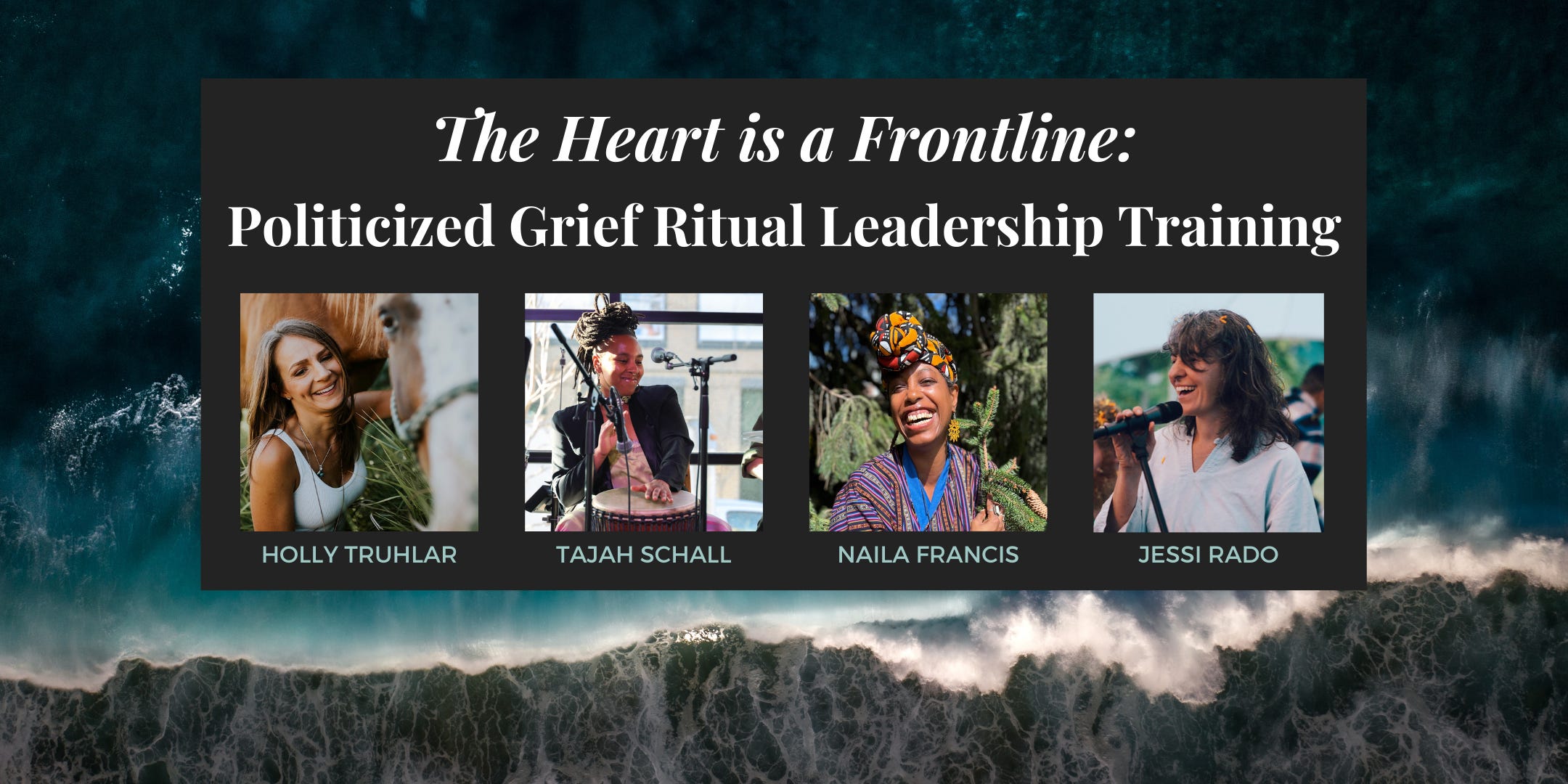
In a few weeks, I’ll begin co-teaching my third grief ritual leadership training. This time, our training, The Heart Is a Frontline, is explicitly centered on politicized grief work. Our team is intentionally weaving depth-oriented soul work with liberatory political praxis.
Because of this a lot of people have been asking me: What is politicized grief work? Why is it so central to these times of collapse and polycrisis? How do we deepen into liberation-centered grief tending? And what is the vision guiding this work?
What is politicized grief work?
Politicized grief tending is layered, and can mean different things to different people. When I speak of politicized grief tending, I mean recognizing that in this time of extreme wealth inequality and accelerating ecological and societal collapse, all our grief lives downstream from systems of supremacy—white supremacy, human supremacy, patriarchy, settler colonialism, extractive capitalism.
These predatory systems and their impacts are not accidental; they are structured to disconnect us from lineage, land, and village. They are meant to sever us from Soul.
They orient us toward domination and accumulation rather than toward protecting what and who is most vulnerable, including the most vulnerable parts of ourselves and the most vulnerable people in our communities. They purposely don’t allow us to slow down and grieve. They are designed to breed trauma, and all trauma carries grief.
Politicized grief work recognizes that grief is never just personal, it’s communal, collective, cultural, spiritual, ancestral, and ecological. It includes planetary grief, the grief of the land, the animals, the disappeared, the displaced, the dominated, and the silenced. It asks us to grieve what we’ve lost, who we’ve lost, and why we’ve lost them.
It means asking: Who is allowed to grieve? Who gets seen as worthy of public mourning? Whose grief is criminalized or erased? What and who matters most to us, personally and as a people? What breaks our hearts open, and calls us to protect Life with our own lives and deaths?
It means we include all the gates of grief, not only the losses that happened to us and our beloveds, but also the harms we’ve caused or been complicit in. We include the Sixth Gate of Grief: The Harms We’ve Done. We make space to grieve our numbness, our disconnection, our inheritance of supremacy, our participation in systems that exploit. And, we trust that we carry the social, cultural, and ancestral memories and technologies needed to do this work skillfully, care-fully, relationally.
It means we create spaces that actively welcome those who are most vulnerable and least resourced, those living closest to the violences of Empire. It means we listen to and learn from Black and Indigenous women whose lives and work are rooted in liberation work, from movement organizers in the global South, from poor and working-class communities, from trans and disabled people who understand how communities keep each other alive. It means we also recognize how isolating and dehumanizing these systems are for all people, all souls, including those who benefit from them. We all belong in the commons of the heart.
Politicized grief work means we don’t look away, and we don’t punish each other for the way we are all broken, tender, hurting, messy, confused. We stay present to the multiple genocides playing out on this planet, to the horrors enacted by the Epstein class. And we do this while nourishing each other well, reading poems that move us, singing songs that steady and strengthen us.
We feel the sorrows of the world not as a burden to carry alone, but as a call to come together and defend what, where, and who we love. A call to repair what we can, to feel our way into more complex possibilities, towards a more just and liberatory world. Towards more generosity, creativity, diversity, and wildness.
Personally, what I’ve come to discover in my own liberatory grief work is this: while many people say “grief is love with nowhere to go,” at this point in my process, my grief is love with everywhere to go. Grief is my love liberated.
My love for my sister, Ivy, now a mighty Ancestor, spills outward. It reaches toward the insects and octopuses she adored, toward all disabled people, toward all my queer siblings. It stretches toward other grievers, toward Palestinians, toward people imprisoned in detention camps. It’s all woven together with my broken-open heart. These losses and aches, both personal and collective, shape who I am and move me to show up fully, just as much as my living loves and dreams.
Why is politicized grief work central to these times of collapse and polycrisis?
The overculture, Empire, makes it nearly impossible to grieve properly because if we truly felt the sorrow of this moment, if we dropped into the heartbreak of ecological collapse, ancestral harm, and disconnection from each other and the sacred, the machine would lose its grip. If we all began to grieve together, the systems of domination wouldn’t be able to keep deadening everything. We’d be too alive, too connected. So, grief is dangerous to Empire.
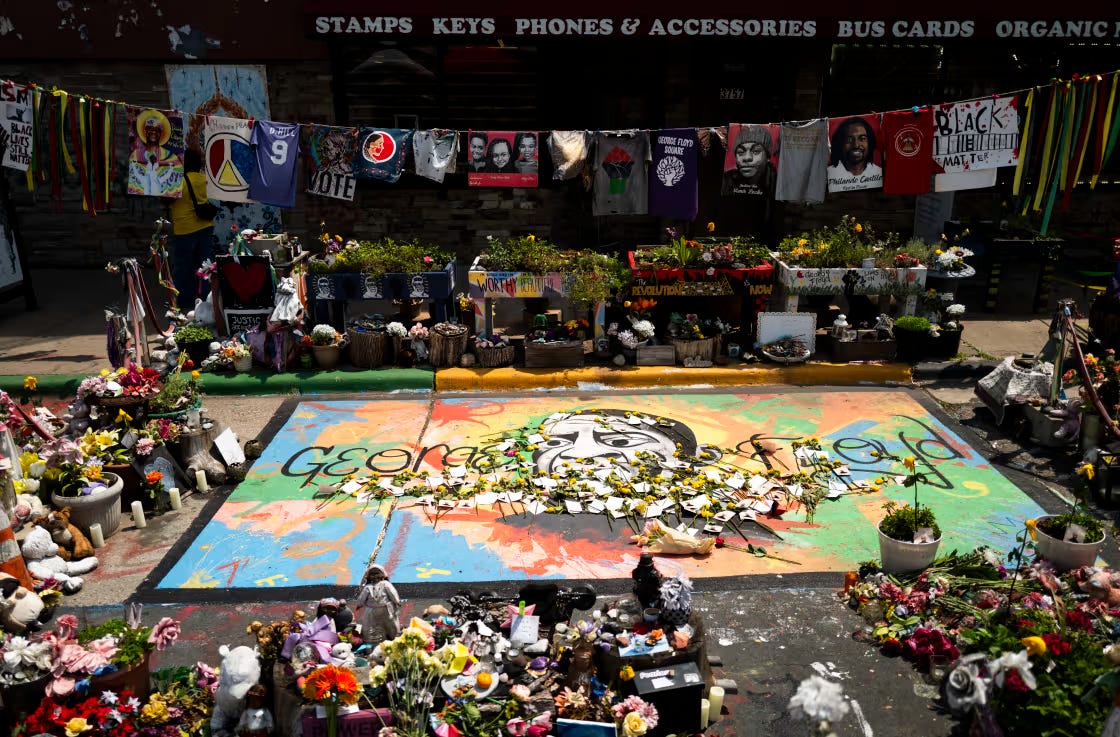
Not only that, public mourning, vigils, and grief shrines, are incredibly effective forms of resistance and protest. Effective because they disrupt with honesty, potency, and heart. Effective because they invite us into soul space, they invite a deepening rather than debating (though there’s nothing wrong with informed, relational debate). They invite us to collaborate with the beyond-human world, with energies and forces far larger than our human-selves. They invite beauty, intimacy, and reconnection.
When we welcome the full expression of our broken hearts, we are not only welcoming sadness and tears, we are also welcoming our gratitude and holy outrage. Righteous anger often offers the clarity and action this moment requires.
This is sacred and revolutionary work. It’s most alive, most impactful, when it is rooted in lineages of resistance, community organizing and gathering, and fierce collective care. We learn how to be with grief, and with the truth of this moment, from movements and people who remained in touch with their humanness, with land, with life, with Soul.
Which is fitting because we work with politicized grief not just for ourselves, but for our Ancestors, to tend our lineages, the harms we’ve endured, the harms we’ve caused. We do this work for our children, the Dreaming Earth, our plant and animal kin, and Future Ones. For a future where human and beyond-human life can flourish, and our communities are centered in care.
How do we deepen into liberation-centered grief tending?
In some ways this is simple: start gathering with your beloveds, neighbors, kin. Create an altar, sit in silence, sing a song. Ask people: how’s your heart today? Encourage organizers and community leaders to make some space, even just a minute or two, for us to feel the impact of all we’re witnessing. Bring your tears and grief-prayers to protests and community events.
In other ways, it’s complex and requires ongoing relational practice. Turning toward losses and wounds without recreating them. Naming systems of supremacy and interrupting harm in real time. Centering people and experiences most often marginalized, while welcoming everyone’s heartbreak. Staying resourced enough to support intense emotional states. Inviting practices that do not overwhelm nervous systems already living under state and imperial violence. Tracking power, rank, and roles in the room. Presencing dignity and belonging for everyone, while also practicing compassionate accountability.
There are skills to learn, resistance movements to study, and practices that bring us closer together in our grief and holy outrage. The more we show up and choose courage together, the more capacity we build to hold the nuance and complexity of these times—honoring nuance not as neutrality but as relational reality and abolitionist care.
At the root of politicized grief tending is relationship. It is our relationships that will get us free—all of us. So we practice liberatory grief work in relationship with ourselves, each other, the Land, the larger web of Life, and the longer arc of time.
Politicized Grief Work as Visionary Practice
Our training team held a grief-in-action gathering last week, focusing on holy outrage as sacred resistance, and at the end I read our vision statement. This vision is a work in progress, as we continue to feel what’s dreaming through us as a team, as a training cohort, and as a collective movement toward liberation.
This vision is seeded with our hopes to get politicized grief work well funded and supported. May it bring you closer to your truth, your heart, your soul medicine, and our liberation.
A Vision for Our Frontlines, Heartlines, and Futurelines
We envision weeping walls across the Dreaming Earth.
Grief gatherings in every community.
Circles of sorrow whenever, wherever they’re needed.
Public places filled with shrines and vigils,
not as decorations but declarations of what matters most.
Spaces, songs, ceremonies that sanctify our sacred rage.
Our grief as protest. Our grief as prayer.
Grief guiding our politics. Grief giving way to abolition.
Our open, broken hearts showing us who and what we love so fiercely,
we refuse to see them sacrificed.
Our broken open hearts telling us what we must sacrifice for a future
centered in care, for a future oriented toward life.
Our grief centering the most vulnerable,
clarifying what and who we’re called to protect.
Us, circling those most harmed by systems of soul severance.
Us, together, healing from Empire.
Rituals of repair everywhere, EVERYWHERE.
Reweaving with land, lineage, and village.
Restoring the commons of the heart,
regenerating toward a liberatory future.
Becoming human again, rejoining the web of Life,
remembering the realms of Soul.
And so it is.
Want to work with me and deepen into politicized grief tending, collapse psychology, and soul activism?
The Heart Is a Frontline: Politicized Grief Ritual Leadership Training, 9-month training and communal container, starting March 6th
Soulful Life ~ Rooted, Resourced, Ready: Resisting with Soul Activism, Wednesdays, 1:30-3:00pm MST
The Heart Is a Frontline: 4-Day In-Person Grief Ritual in Loveland, Colorado, August 13th-16th, 2026, waitlist now open
The Heart Is a Frontline: Scholarship Fund supports people bringing liberatory grief work into movements, neighborhoods, mutual aid networks, classrooms, and frontline spaces.
I’ve recently been approached by a major publisher and am writing my first book. I’ll be sharing more of my process, thoughts, and curiosities on my Subtack. If you’d like to further support my writing, you can become a paid subscriber.
Comments
Nothing yet. Say the first thing.
Sign in to join the conversation.