
Hello, writers and readers! Press Gremlin (Tara) here. Welcome to our first general editors’ AMA! We made posts across our socials to solicit questions from writers and readers, new to the press and old hands, and you delivered! I’ve labeled this Part 1, because the questions were so great—and some of them so unexpected—that I’m convinced we’ll do more of these over time.
Here’s how this little beauty works. I posted the call for questions to our socials and then added the questions to a Google Doc, and made a spot for each editor to answer each question in their own way. The goal was to help readers and writers get to know the editors, get a sense of who we are and how we work together, and learn the different things we look for when we read stories. Since this was my damn-fool idea, you’ll notice I tried to be very fulsome in some of my answers to more serious questions. I’ve submitted to a lot of open anthologies in my day, and I know the process can be nerve-wracking. Taking questions seriously and being sympathetic to authors’ nerves is important to us.
First, a little peek through the keyhole into how the press works. Meet our editors!
Jenna Harte: Founder and owner of the press, romance author, former agent, and ghost writer, Jenna has done nearly everything in publishing, and she has written more than a hundred romance novels across her work.
Rachel Young: General Editor and romance author. Rachel also reps us at events on the east coast, and finds all the great romance events around the country for the zines.
Parrish Baker, writing as Urna Semper: General Editor, romance and speculative fiction author, whose work you can find right here on Substack and in many anthologies and collections.
Tara (me), writing as T.A. Leederman, Social Media and Marketing Manager, Editor (General, Line, Copy), Lore Maven of Starship Valkyrie, and romance and science fiction author.
How the press works: Jenna is Managing Editor and oversees how the collections are moving through the selection and editing process. She manages big things like contracts and Pubshare as well. Parrish and Rachel have been full editors since the anthologies’ inception, and they have each been lead editor for their own zine. I act as all-purpose press gremlin and do things like assistive editing, line and copy editing, guideline checking, cover and asset creation, and a number of other sundry tasks. Jenna generally does layout for the anthologies (though I wished to learn it and did layout for Fireworks and Flirtation), and I do layout for the zines.
All of the editors are romance authors at various points in our careers, and we’re romance readers as well. The things we like and our experiences vary greatly. I would say Rachel and Jenna are better for judging whether something fits the main tendency of the romance genre or not, and they know more about contemporary romance, while Parrish and I have a lot of background in fantasy, history, and science fiction. This makes for a special balance between the editors.
Without further ado, your questions and our answers!
What makes a story stand out when you’re reading submissions to an anthology?
Tara: I like strong prose and a sense of the setting. I like sumptuous descriptions, to know what places and people look like, and to hear the author’s voice. A sense of meaning in the work is quite nice as well, especially something beyond “boy meets girl and they like each other.” I like themes; they’re not just for eighth-grade book reports. Some of my favorite stories have highlighted other issues or had a secondary meaning beyond the love story, like grief, loyalty in adversity, moving forward into new seasons of life, and love transcending time and space.
Parrish: I want to know that I am going to like who I’m with, and that the main characters have their own voice and backstory, even if I don’t always see it all. I want a well-described sense of place. I want to know that all the characters are different people with internal lives and ambitions. I particularly want a story that draws me in right away. I don’t have to be slung into the action, slam-bang, but I do want to be taken by the hand and led into this new world.
Rachel: I like well-developed characters with unique personalities and characteristics. I like to know their history. It doesn’t have to be an info dump; it can be revealed over time through their actions and reactions, perspectives to what’s happening in the story, things like that. I also like witty banter and dialogue. I like to be drawn into the story from the first line.
Jenna: I like to be pulled in from the first line. Characters that are interesting and distinguishable, with strong motivations for the decisions they make, good and bad. I enjoy deep POV, so I can feel all the feels. Unique premises executed well.
What’s a piece of editorial advice/feedback you find yourself giving out over and over again?
Tara: Comma comma comma comma comma chameleon… (IYKYK, lol.) More seriously, though, beyond fixing commas, I find the most common issue is perfunctory completion of the prompt. Whether this is the spice level or the title prompt (Moonlight and Margaritas, Fireworks and Flirtation, etc.) or a required trope for the zines, it’s important that your story feels as though it’s crafted to incorporate those elements well, so that the whole zine or anthology feels like a well-curated whole. I know some authors see the prompt and have a great story for the collection sitting in a file, and in some cases, they’re right! But it’s important that you incorporate the prompt, and it is best (from my perspective) that you craft the story around those requirements, including the moment of intimacy. For instance, the prompt “Fireworks and Flirtation” asks for fireworks and flirtation in the story. The best completions of this prompt had actual fireworks in the story somewhere and two characters flirting. A technical completion would be to only say in your prose “she had fireworks in her belly,” instead of fireworks in the world of the story, going off above the characters’ heads. The same went for our first anthology, Moonlight and Margaritas, in which all the stories had a margarita—which I love! I think it makes the whole anthology feel very fun and cohesive. Takeaway: Lean in.
Parrish: Avoid passive voice; avoid extra words that don’t further the action. Avoid directional words—it’s hard to describe what I mean, but instead of “She went down the hill,” “She descended the hill” is far stronger. Strong verbs can make strong stories; rich, though not overrich, description can involve the reader’s senses. A short story has only so much space! If you have a 10,000-word slot, and you find you are at 10,750 words… I promise you, you can strip 750 words out without noticing a negative effect, and the story will be even stronger for it. Use correct commas. Use semicolons. Use colons. Watch your commas. Use your tools! Involve the reader!
Rachel: Strong verbs and showing instead of telling! Don’t tell us how a place looks, describe it using your senses - what does it smell like, sound like, etc.
Jenna: More use of the senses. Show, don’t tell, in the important parts. What are they doing, and what do they think and feel about it? Reduce dialogue tags, especially combined with action. (E.g, “I’m going to the store,” Sally said, grabbing her keys. Instead: “I’m going to the store.” Sally grabbed her keys.) Reduce use of the to-be verb and adverbs, replacing them with stronger, more descriptive verbs. (E.g, “He was walking quietly,” versus “He tiptoed.”)
Any tips on writing short stories vs novels?
Tara: Short fiction craft and novel-writing craft are not the same, and even if you’ve been writing novels for years, getting used to short stories takes some time and practice. I encourage writers to give themselves grace and keep working at it; I didn’t feel that I had a good handle on writing shorter pieces until I’d done ten of them in quick succession, along with intense rewrites and some very helpful, constructive feedback from mentors and beta readers. On the prose level, I find the big difference is how you create verisimilitude. It’s common in novel-writing to include a large number of details to give readers a sense of space and character. We still need these things in short stories, but you must choose them well and, of course, be sparing. A few well-written moments of beautiful prose description of a place and curated characterization of an MC go a long way. Again, this takes time and practice to get right, but when you bring it back to writing novels, you might find that it helps your craft overall.
Parrish: A short story is a novel in embryo: it has everything a novel needs, just smaller. Another way to look at it is, a short story is a bonsai novel. Trim it down to the stem-tips and roots! Limit excess characters, and limit naming the excess where possible. I don’t need to know much about the bodega-clerk who sells the FMC the cheese, especially if you have 10,000 words, not 60,000. Everything in a short story must have value to the whole. That said, short work is great practice for long work, and if you write as tightly for a novel as you do for a short story, you are on the right path!
Rachel: Every scene, every sentence matters; make the best use of them. Trim what isn’t necessary to make the story whole.
Jenna: Condense the plot structure. Make scenes work harder to do the heavy lifting of character growth, plot movement, and relationship development. Use strong verbs!
Do you have a ratio for subgenres in the anthologies? This many PNRs, that many histroms?
Tara: This is a great question. It’s always important to me that we have a variety in each anthology; if it came down to the last slot featuring another contemporary straight romance versus something else, like a paranormal romance, a sci-fi romance, a historical romance, or (especially) a queer story, my preference would be to include the latter if everything else is equal. This is not to say that I don’t love our contemporary straight romances, since I think they give the anthologies wider appeal, and they’re wonderful. What we’re trying to offer the reader is a variety and a sense of diversity, so they can see the prompt playing out over a diverse array of settings and subgenres, while discovering new and new-to-them authors. We have not received so many submissions yet that we’ve begun instituting any sort of quota on subgenres so far. I’d love to see more historical romance, and especially more queer romance. Queer historical? Yes, please.
Parrish: I don’t have a ratio. We have slots to fill, and we need good stories to fill them. I would like to see a variety, but the primary intent is to provide good stories. Frankly, if anything, I would like to see more good contemporary romance than we do, and more historical. Our submissions lean towards the fantastical, amusingly enough—some of it by me. (Maybe that’s just current trends.) I’d also like to see more LGBTQ+ stories than we receive, and more diverse characters, plots, cultures, etc. All that said, I don’t have checkboxes to mark. I won’t say I’ve seen too many X, now I want a Y, and take the Y over this X just because. Quality counts for 99% of my thinking.
Rachel: I personally don’t have a quota of any subgenre I want. I’m looking for quality stories.
Jenna: Not unless the anthology theme is around a subgenre specifically. Good stories are the priority. I would like to see more diversity of subgenres… steampunk, dark, NA, western, suspense, etc, or a mix, like a steampunk romantasy or a sci-fi western. [Tara salutes.]
What’s one of your favorite genres besides romance?
Tara: Science fiction. Shocking, I know.
Parrish: I used to read a lot of science fiction and fantasy, but I have so little time. I mostly read nonfiction historical books these days, with some mystery tossed in.
Rachel: I’m into suspense and thrillers that lean toward horror. Stephen King and Dean Koontz used to be favorites of mine, but I’ve strayed from them in the last several years.
Jenna: Mysteries. I often pick up books with buzz, which is how I read and loved The House in the Cerulean Sea and Achilles.
Silly question: What’s your favorite punctuation mark?
Tara: The much-maligned em-dash. Come at me, bro. (I also love a properly utilized semi-colon.)
Parrish: Oh!–the em-dash for sure. The more the witch-hunters come out hard, the more I use it, in new and creative ways. I use it for conversation shifts—and when changing whom I’m addressing in dialogue, for instance. I use it in ways that break layout software—Atticus especially. I eat punctuation-hate like it’s—well, like it’s second breakfast.
Rachel: I like to use the ampersand when I’m writing quick notes.
Jenna: Never thought of this. How about the ellipsis… but not the em-dash. Too many keystrokes.
What is your best advice for writers who are totally new to submitting?
Tara: Keep on top of your author email. Read the guidelines. Find a beta reader. If at first you don’t succeed, please try again; you will get better in the attempt.
Parrish: Read the guidelines, read the homework. Read earlier anthologies by that publisher. Read work by other authors in prior anthologies. Have a good match of a story, not just one you can squash into the theme. Submit a lot. Don’t give up.
Rachel: Read the guidelines, submit often, and never give up. You have a voice that needs to be heard.
Jenna: READ THE GUIDELINES. It always shocks me when I receive submissions that aren’t even close to what we asked for. Make sure your story fits what the agent/editor/publisher is looking for. If you get a no, find another home for your story, whether that’s another resource or posting on your website.
Are there any significant mistakes that new writers tend to make that can be easily avoided?
Tara: Proofread your copy and have someone else look at it before you submit. Since I do the final round of edits, I can tell you that I have begged for a story to be removed from consideration because I knew that final edit would take me forever. A few mistakes are completely fine; I make them myself. But do put your best foot forward.
Parrish: Edit hard. Get malpunctuation, typos, and so forth out of the way. Have someone else read it. Beta-reads are important, because someone else can spy plot holes, details that change through the story, etc. Submit it in the format requested. Don’t significantly overshoot or undershoot the requested word count. Have faith in your work, but get honest opinions, and, if it’s a no in the end, don’t hesitate to write a better story and try again next time. Avoid Large Language Models (AI) for composition, no matter how good you are with prompts. Machines may create a tidy block of text, but we know it when we see it. Tender and Tempting Tales is absolutely not the right venue for it. It is not for us or our readers. And lastly… avoid weird, weird, weird, weird stuff. We’ve gotten some odd things. We write odd things; we have stories in strange places with unusual characters, but some things we’ve seen far exceed the call! (Even if it was well-written.) Check out the other books we’ve printed, and if it’s far-out from that, we may not find a home for it. (Feel free to inquire!)
Rachel: Edit, edit, edit. Read the story out loud, especially dialogue. If you are not selected on your first submission, try, try again!
Jenna: Failure to meet the romance genre expectations. Just because a story has a romance in it doesn’t make it a romance. Also, in T&TT, hitting the level 3 spice has been a challenge for some. Reading past anthologies can help.
What’s the most efficient way of pestering an author (or, specifically, an editor) into following up on a particularly fun character?
Tara: Lol! Be Rachel and just tell me to do it, basically. More seriously, if a reader is genuinely interested in a follow-up, I will generally do it if asked, and I know I’m not alone. Leave a comment or review somewhere, follow the author on Insta or Substack, and let them know you loved their character and want to know more. None of us are such big deals that we’ll get into our limos and ignore a reader’s pleas.
Parrish: Let me know that you liked them, especially why you liked them. Mention, perhaps, what you’d like to see them do. I’m writing a whole novel because Tara told me I should, and I need to finish another barbarian short story I’ve already started because someone really liked the first one. (I hope I don’t disappoint with it.)
Rachel: I find that simply commenting to the author (like I did with Jenna) can be effective. I also think if you use their contact information from their website to let them know not only that you liked a particular character, but why you liked that character (like Parrish said).
Jenna: You can let any editor know via the contact page on the website or through social media about an author’s story you enjoyed and want to see more of. Or leave it in a review. Most authors will be thrilled to hear how much you enjoyed a character. That said, whether they write a story based on your suggestion depends on many factors.
Thank you so much to all the folks who submitted these questions! Have more burning queries and can’t wait for the next AMA? Don’t forget our FAQ!
Want to know more about our decision-making process and how layout and story order works? Tara also wrote an article all about that for the blog this week, which you can find here.
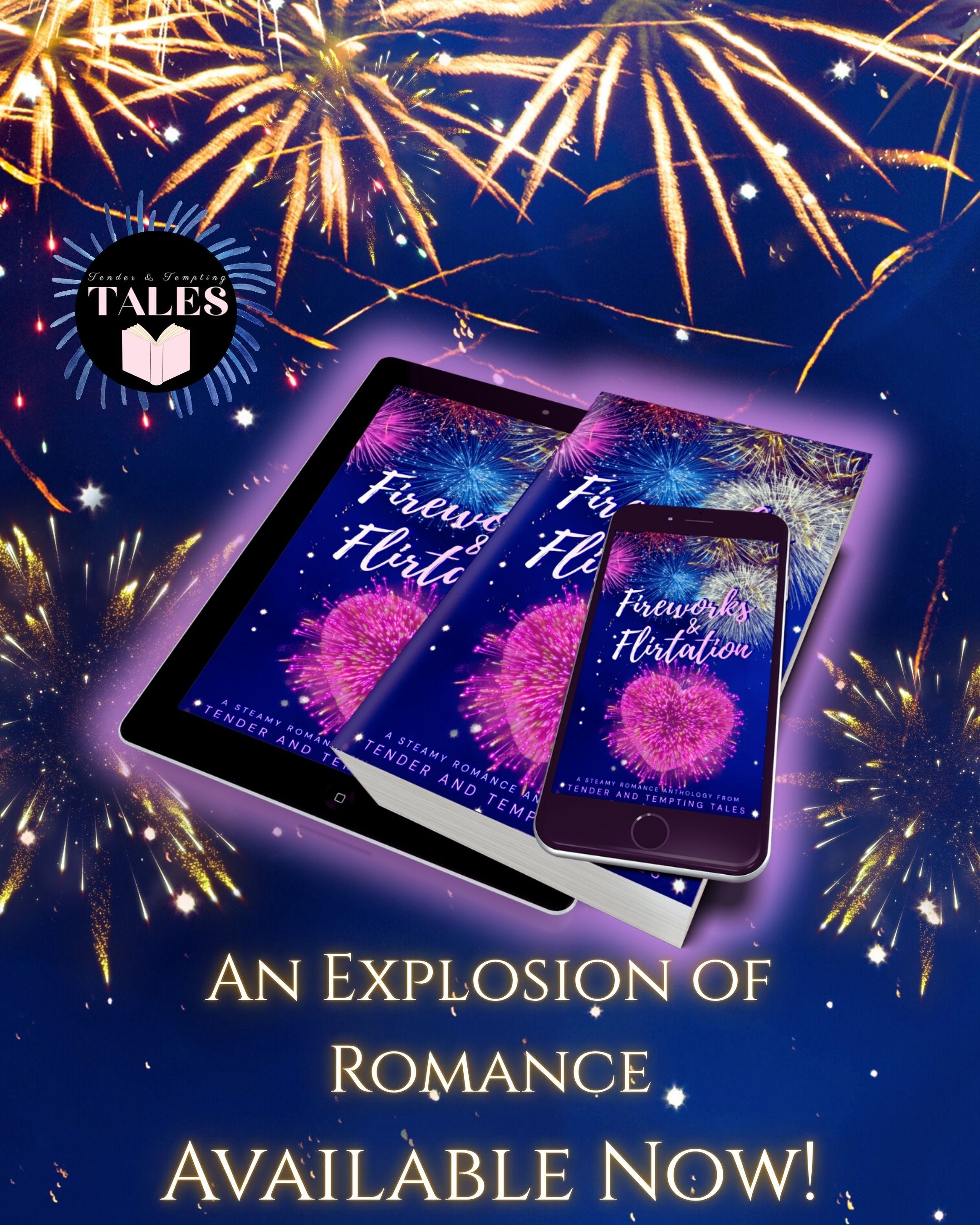
Remember that Fireworks and Flirtation is out and a wonderful way to continue enjoying your summer! You can find it on Amazon KU and in paperback here!
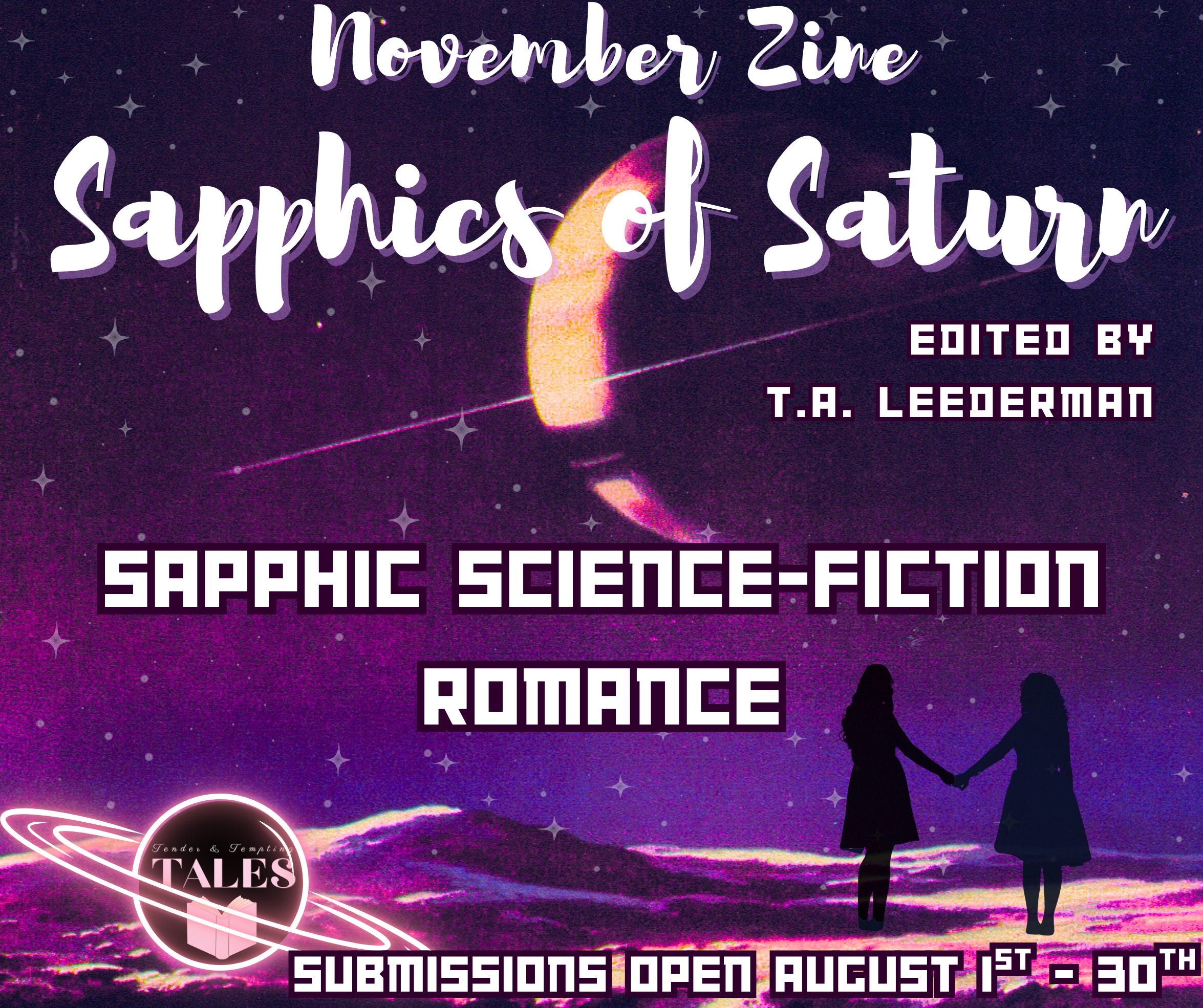
Are you an author? Don’t forget that our submission call for Sapphics of Saturn is open this month, from August 1st to 31st! Check out the mission briefing here!
Coming Soon: Our cover reveal for Starlit and Spellbound will be starting soon over on Instagram! Come check us out there and get in on the fun!
Share Tender and Tempting Tales
Prepared by T.A. Leederman for Tender and Tempting Tales. Are you interested in offering a guest post with the press? Check out our page on how you can do just that here.
Comments
Nothing yet. Say the first thing.
Sign in to join the conversation.