
Matthew 16:13-20
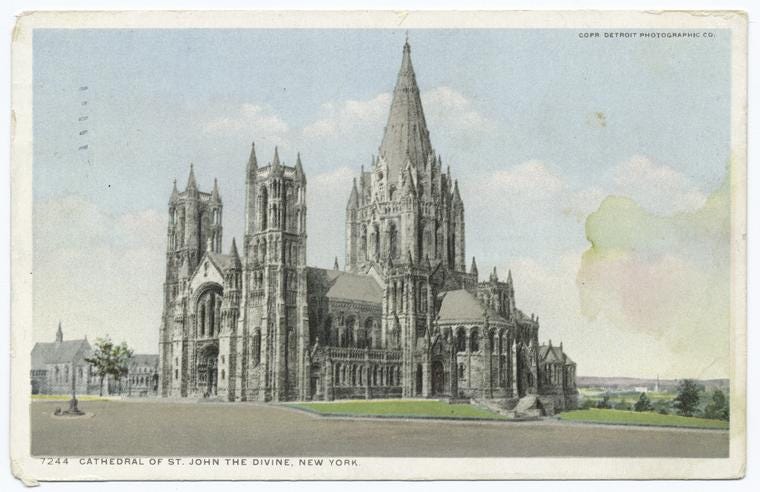
In January 1999, The New York Times ran a story about the Cathedral of St. John the Divine in New York City. Construction on the cathedral began in 1892. And more than a century later, it is still unfinished. So, the Times gave the story a headline that nobody on the cathedral’s stewardship committee would have chosen: “St. John the Unfinished.”[i]
That is not much of a building campaign slogan.
“Come worship with us. We have been working on the building since the Cleveland administration, and no, we are not done yet.”
The cathedral is still unfinished today. The towers were never completed. Parts of the original design have not made it beyond the blueprints. In all likelihood, St. John the Divine may continue being built for centuries to come. And still, every Sunday, the church gathers, people pray beneath unfinished stone, and the Gospel is proclaimed in an unfinished building.
Bread is broken. Wine is poured. Children are baptized. The dead are buried.
Apparently, nobody at St. John the Divine got the memo that you have to finish the church before Jesus can use it.
Which brings us to Peter.
Jesus and the disciples have gone the Caesarea Philippi when Jesus asks what sounds like a simple question: “Who do people say that the Son of Man is?”
The disciples have answers: John the Baptist, Elijah, Jeremiah, one of the other prophets. Everybody has an opinion about Jesus. Not much has changed in two thousand years
Jesus the moral teacher.
Jesus the revolutionary.
Jesus the therapist.
Jesus the life coach.
Jesus the defender of traditional Christian values.
Jesus the progressive activist who, rather conveniently, agrees with everything I posted on Facebook yesterday.
We are remarkably talented at creating Jesuses who already agree with our opinions.
But Jesus is not interested in the latest neighborhood polling. So, he turns the question on his disciples, “But who do you say that I am?”
And Peter, because he is Peter, is the first to chime in: “You are the Messiah, the Son of the Living God.”
And, for once, Peter is right. If the Gospel ended there, Peter would have had a very good Sunday morning.
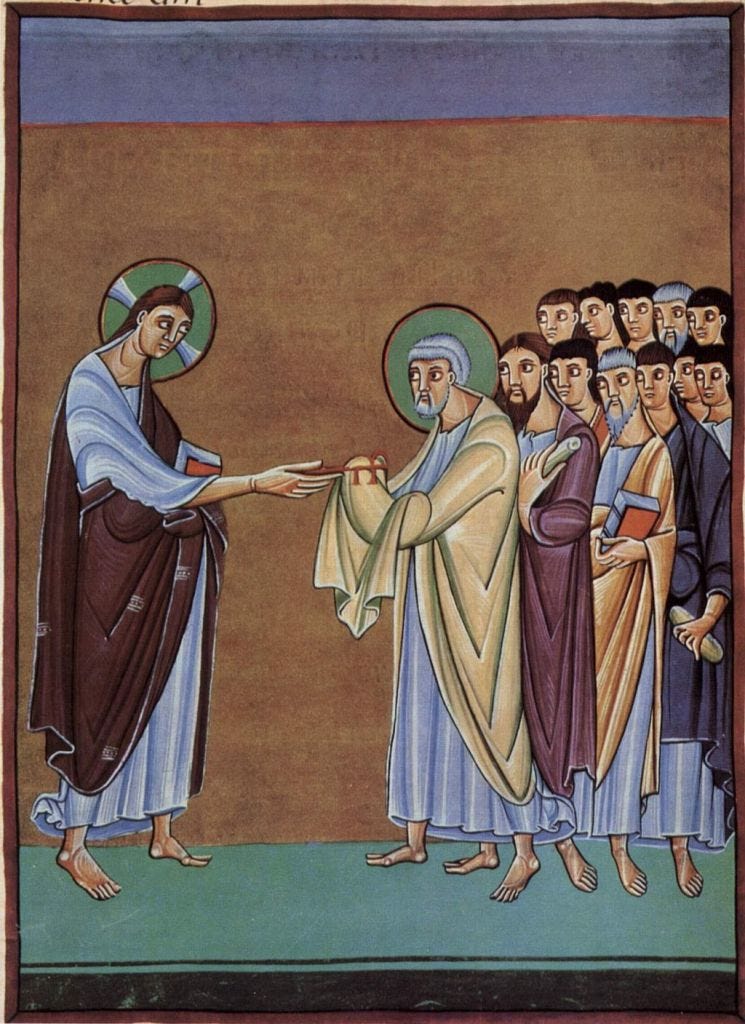
Jesus blesses Peter, calls him the rock, and gives him the keys to the kingdom.
I have been a pastor through three presidential administrations, and no one has offered me a set of keys to the kingdom. I do not know which doors half of the keys you gave me go to.
Peter declares the thing that makes the church the church: Jesus is the Messiah.
Christianity is not first a philosophy. Nor is it a collection of good ideas or a moral improvement program or a political platform with hymns attached. And contrary to the evidence, Christianity is not principally about committee meetings.
Christianity is Jesus.
Take Jesus out of the equation and we may still have a lovely organization. We might feed hungry people, sing beautiful music, and host the best potlucks on Cameron Mills Road. We might even be the type of nonprofit that wins awards and is featured in local papers.
But we would not have Christianity.
The astonishing Christian claim is not simply that God has given us some information about God. The claim is that God has given us God. God comes among us in Jesus. The Galilean Jew who eats with sinners, touches lepers, forgives enemies, welcomes children, casts out demons, feeds hungry people, and keeps hanging around the sort of people respectable religion has learned to avoid.
This one. This Jesus.
“You are the Messiah, the Son of the living God.”
Peter gets it right.
The trouble is that Peter has almost no idea what he is saying. And we know this because Matthew, inconveniently for Peter, keeps writing.
The lectionary stops at verse 20, but Jesus keeps going.
Peter confesses Jesus as the Messiah. Jesus names Peter as the rock. But six verses later, the rock cracks as Jesus explains what being the Messiah actually means.
He must go to Jerusalem where he will suffer, be rejected, and killed. And on the third day, he will be raised.
Peter hears all of this and thinks Jesus has misunderstood what it means to be the messiah. So, Peter takes Jesus aside and rebukes him.
Think about that for a moment. Peter has known Jesus is the Messiah for about six verses and already feels qualified to explain to Jesus how to be Jesus. Which, if we are going to be fair to Peter, is pretty much what the church has been doing ever since.
Peter has the correct word (Messiah). He just has the wrong definition.
Peter wants a Messiah who wins, takes charge, fixes people causing the trouble, and flexes a little divine muscle every now and then.
Peter knows that Jesus is the Messiah. What he does not know yet is that Jesus gets to decide what Messiah means. And Jesus defines Messiah at the cross.
The cross is not some tragic interruption in Jesus’ otherwise promising ministry. The cross is not Plan B. Nor was it what happened because Jesus’ PR team lost control of the message.
The cross tells us who God is.
God does not save the world by becoming better at violence than we are.
God does not beat Caesar by becoming a bigger Caesar.
God comes down into the mess.
God gives himself away.
God enters suffering, sin, rejection, violence, and death and takes the whole rotten mess into himself.
Then, Easter happens.
God raises the crucified Jesus from the dead and vindicates everything the world called foolish.
Peter’s confession is right. But the cross is going to spend the rest of Peter’s life teaching him what his confession means.
That sounds all too familiar. We stand in church on Sunday and say things that are truer than we understand.
“Jesus Christ is Lord.”
We say it. We sing it. Do we understand it?
We say that one through whom all things were made hung dead on a Roman cross.
We say that in baptism we die and rise with Christ.
We come to the table and say that somehow, in bread and wine, Christ gives himself to us.
We stand at funerals beside coffins and dare to say, “Christ is risen.”
Christian confession has never depended on our ability to explain every inch of the mystery. Peter proves that. He gets the answer right and still has to spend the rest of his life catching up to it.
And here comes grace.
Jesus knows all of this about Peter. Jesus knows what is coming next. Jesus knows that within minutes Peter is going to rebuke him and that chapters later Peter will deny knowing Jesus.
And Jesus gives him the keys anyway. That is grace.
Jesus gives the keys to the kingdom to a man who does not yet understand the lock and says, “I will build my church.”
There is an important word in that sentence that the church routinely overlooks.
“I.”
Jesus says, “I will build my church.”
Which is fortunate, considering the building materials.
Peter. Thomas. James and John. A tax collector. A zealot. People who misunderstand Jesus, argue with Jesus, fall asleep on Jesus, abandon Jesus, deny Jesus.
These are the stones Jesus picks up and says, “I can work with this.”
Grace rummages around in the rubble, finds what everybody else discarded, and says, “Perfect!”
That is more or less the whole story of the church. And since I am still relatively new here, let me tell you something about the kind of church I hope we can be together. My hope is that Trinity will continue to be a place where people do not need perfect answers in order to belong. I hope this church is where people can say, “I don’t know,” and nobody panics.
Where someone can say, “I’m not sure I believe that yet,” and we do not immediately form a committee to deal with them.
Where children can ask questions adults stopped asking years ago because adults learned that pretending to understand is easier.
Where people who have been following Jesus for 70 years can admit that Jesus still surprises them.
Where someone can walk through the door knowing almost nothing except that they need grace and discover that grace was already waiting for them.
Not because theology does not matter; it matters enormously, but because taking theology seriously ought to make us more humble, not less.
The church is built on a confession bigger than our comprehension.
That is why I think about St. John the Unfinished. For more than a century, people have walked beneath stonework that somebody intended to finish but never did. And still, the church worships. Still prays. Still proclaims the Gospel. Still Christ shows up.
I am beginning to believe that every church needs to have “unfinished” somewhere on a sign.
Trinity United Methodist Church, Alexandria, VA: Unfinished.
That would at least be truth in advertising.
We are unfinished.
Our theology is unfinished.
Our discipleship is unfinished.
Our understanding of Jesus is unfinished.
Your pastor is unfinished.
The person sitting beside you is most certainly unfinished.
Peter is unfinished.
And Jesus says, “I can build with that.”
The good news is not that one day we will finally understand enough for Jesus to love us. The good news is that before Peter understands the cross, before Peter understands Easter, before Peter knows how badly Peter is going to fail, Jesus has already called him blessed.
Already given Peter the keys. Already make Peter part of the promise.
“I will build my church,” Jesus says.
So, when Jesus asks, “Who do you say that I am?” we answer with Peter: “You are the Messiah, Son of the living God.”
And then we spend the rest of our lives discovering just how much more gracious, strange, crucified, risen, and alive that answer is than we ever imagined.
The church is built on a confession we barely understand, held together by a grace we did not create.
And that is enough. Not because our confession is small but because Jesus is so much bigger.
The church is unfinished. We are unfinished. And Jesus is still building.
Grace loves to travel. Please share this sermon with someone who needs to hear the good news of God’s love for them.
[i] https://www.nytimes.com/1999/01/10/nyregion/st-john-unfinished-dean-cathedral-morningside-heights-vows-fix-what-he-s-got-not.html
Comments
Nothing yet. Say the first thing.
Sign in to join the conversation.