
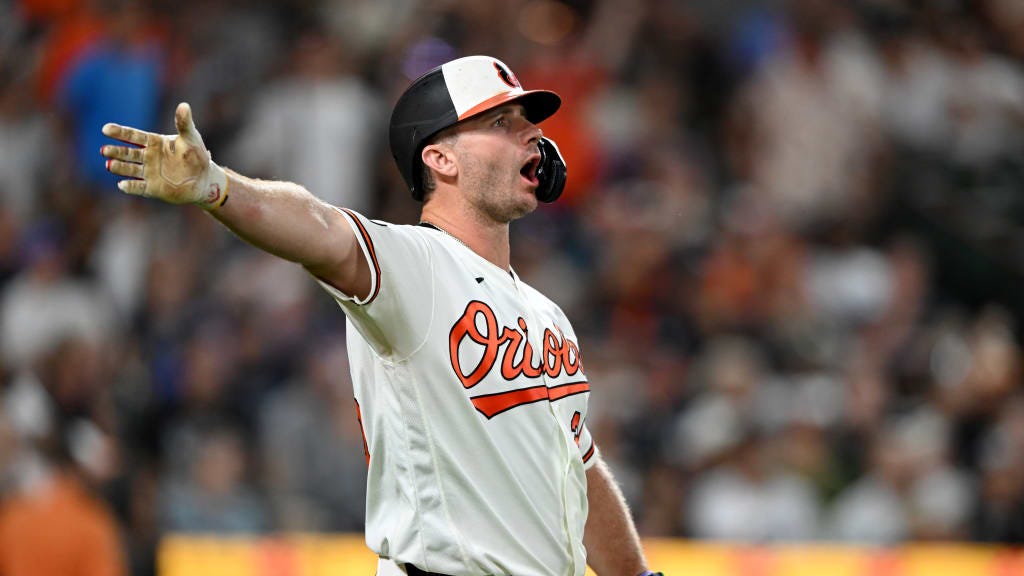
Thought, Major League Baseball would dispute that statement.
The Orioles and Yankees were tied 3-3 in the seventh inning when Polar Bear Pete sent a towering flyball down the left-field line. The crowd knew it was a home run. The Orioles knew it was a home run. The Yankees (though they would never admit it) knew it was a home run.
The ball sailed to the fair side of the left field foul pole for what should have been Alonso’s second home run of the game and pushed the Orioles ahead.
Except, the umpire called the hit foul.
Fine. I get it; umpires are not perfect. They miss calls. That is part of baseball. Which is why MLB has replay.
So, the umpires went to the replay center in New York.
After reviewing the video, the call stood as called on the field.
WHAT?!?!?!
What really irritated me was that the Orioles had Hawk-Eye tracking data in the dugout showing the ball as fair. Alonso said that the best camera angle showed the same thing. Yet because the replay process didn't have enough camera footage to meet its standard for overturning the ruling on the field, the foul remained a foul. MLB later said there was not enough video evidence to overturn the call.
The computer said fair.
The video appeared to say fair.
Pete Alosono said fair.
Pretty much everyone wearing orange (and even NY penstripes) said fair.
The official ruling?
Foul.
Sometimes the obvious fair is still foul.
And that, unfortunately, is about more than baseball.
We have convinced ourselves that our problem is a lack of information. If we could just see clearer, know more facts, collect more data, read one more report, commission one more study, install one more camera (which I hope the Orioles have already done), then we surely would do the right thing.
This is one of modernity’s more adorable theological assumptions.
Scripture does not seem to think our deepest problem is that human beings lack sufficient information. More than we would like to admit, we know perfectly well what is in front of us and find sophisticated ways to call it something else.
Nobody in Jesus’ day demonstrated this better than Pontius Pilate.
When Pilate examines Jesus, he says, “I find no case against him.”
Great. All charges dropped. Case dismissed. That should settle it.
Fair ball!
Except, nothing was settled.
Pilate says it again. Then again. Three times, the man with the authority to render judgment admits the evidence doesn't support the verdict everybody wants.
And then, he hands Jesus over to be crucified anyway.
Pilate has the evidence. He has the authority. He announces the correct verdict. And still, the call on the field stands.
We like to imagine evil as people twirling their mustaches and plotting terrible things in dark rooms. But more often than not, evil looks like respectable people following parliamentary procedures, citing precedent, and reminding everyone that there is a process.
Then, it washes its hands.
At the cross of Christ we lose any remaining illustrations about humanity’s ability to recognize the good when the Good is standing in front of us directly.
Here is Jesus Christ, of Nazareth, the one human who is truly righteous and innocent, and we call him fair.
Religious authorities call him a blasphemer.
Rome calls him a threat,
The crowd calls for Barabas.
Pilate calls him innocent and crucifies him anyway.
And God?
God raises him from the dead.
Easter is God refusing to let our call stand.
Comments
Nothing yet. Say the first thing.
Sign in to join the conversation.