
4:42 a.m. (thirty-two minutes before sunrise). Fifty-nine degrees, wind west-southwest three miles per hour, gusting to seven—an altogether delightful morning, cool enough to keep mosquitoes at bay. The sky is lightly textured, a loose assemblage of thin, orange-pink-grey clouds, open and airy, a heavenly pastel wash. Windrows and patches drift overhead like a favorite pair of worn jeans. Smarts Mountain, Mount Cube, and Mount Moosilaukee stand out in sharp relief, darker islands on the paling horizon, moored in a brightening sea of sky.
Seasonal Queue:
A) The second wave of wildflowers: columbine, starflower, and Jack-in-the-pulpit. Fringed polygala (Polygala paucifolia), like Babe Ruth, is a collector of nicknames: gay-wings, bird-on-the-wing, and flowering wintergreen. Unlike Babe Ruth, it’s inconspicuous, hugging the forest floor, small, purple, bilaterally symmetrical. It looks like an orchid, gorgeous as an orchid. If botanists classified flowers by looks, fringed polygala would be an orchid. But, alas, it’s a milkwort, anonymous royalty in the understory.
B) Second wave of frogs: gray treefrogs are calling from the trees and along the shoreline, bursts of loud, fast-paced chirps, not unlike the excited voice of a red-bellied woodpecker, a percussive treble line in the morning score.
The woods are a youthful green. The meadows are green. The world smells of lilac. For the moment, Vermont is lush, as green as the Green Mountains get, as if the hills themselves were taking a long, deep, contented breath before the day begins.
4:56 a.m. First warbler, an ovenbird, screams from the floor of the forest. Wakes up a black-throated green warbler. Then, a score of chickadees. Titmice. Both species of nuthatches, the choir assembling by habit and by heart.
4:58 a.m. Barred owl glides over the road and into the woods. Silent as a stone. Disappears. I cannot believe the owl didn’t graze a branch or disturb the leaves. A big, blunt body shape-changing amid a weft of branches, feathers and shadow weaving together. The calculus of flight.
5:01 a.m. Black and white warbler sings from a roadside branch. A high-pitched, reclusive warbler. A tiny bird in jailbird stripes. Stops singing, then, defying gravity, wanders up a maple trunk, picking and pecking, a feeding niche shared with nuthatches but not other warblers, a quiet acrobat on the bark.
5:07 a.m. Catbird, concert in a lilac. Perfumed performance. Scat-master of the underbrush. Late spring mornings don’t get better than this, when even the shrubs seem to hum along.
Department of Agitation: At the top of the hill, just inside the hemlocks, wood thrushes (definitely more than one) calling, explosive, staccato pit, pit, pit, pit. I turn and look. Three wood thrushes dart around or perch momentarily above a barred owl, screaming. Attracts a dive-bombing blue jay and a chickadee. Owl, motionless, on hemlock limb. Expressionless. A woodland stoic, carved from dusk. Eventually, enough is enough; owl bolts, a reabsorption deeper into the shadows.
Overhead: three mallards, a raven, and a host of crows. A pileated on an aspen trunk, calling. Hairy and downy woodpeckers. Northern flicker. Sapsucker drumming. Red-bellied woodpecker calling. Just passing through the neighborhood: black-billed cuckoo, killdeer, alder flycatcher, and field sparrow—voice like a bouncing pingpong ball: slow, faster, fastest (first I’ve heard in the Upper Valley in fifty-plus years). Eastern wood pewee, eastern phoebe, great crested flycatcher, hermit thrush (I can listen to him all day), Swainson’s thrush, robins (many). Red-eyed and blue-headed vireos. Brown creeper. House wren, ballisticly singing. Warblers: American redstart, northern yellow, common yellowthroat, blackpoll (also passing through), chestnut-sided, pine, and black-throated blue (nine species total). Sparrows: song, white-throated, chipping, and dark-eyed junco. Northern cardinal. House finch. Yellow clouds of goldfinches. Indigo bunting on an electric line, singing. Scarlet tanager. Brown-headed cowbird. The roll call of a morning in full voice.
Fifty species, a splendid harvest on a splendid morning, the ledger of dawn written in feathers and song. Flowers and chorusing treefrogs.
THE ANNALS OF ACQUISITION: At the invitation of an old friend, in two weeks I leave for Anchorage, shipboard naturalist on a pair of cruises, Seward to Vancouver and back again. My charge, beyond being cheerful, helpful, accessible, and knowledgeable, is to deliver five lectures (or, in my case, four and a reading from The Promise of Sunrise). For the past two weeks, I’ve been piecing together the illustrated stories I’ll tell. The one that has held me longest—Beringia: The Asian–North American International Highway—follows a lifelong fascination with evolution and geological change, the slow, restless shifting of the world beneath our feet, a transformation I may never master in myself but love to trace in flora, fauna, and the drifting continents.
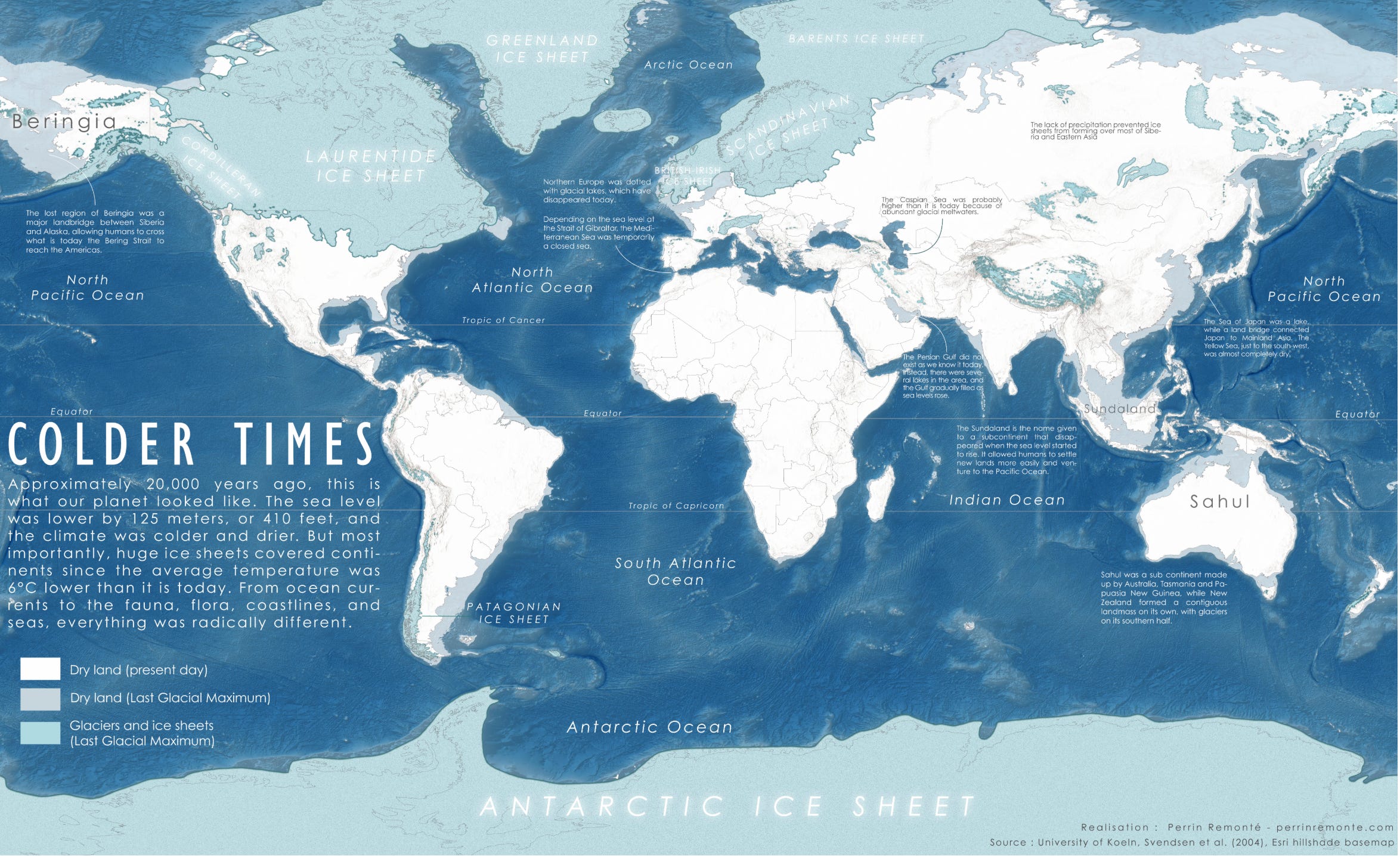
During the Pleistocene Epoch, which began approximately two-and-a-half million years ago and ended less than twelve thousand years ago, sea levels rose and fell with the breath of the ice, according to how much water lay locked in the glacial heart of the world. More glaciers, lower sea level, and vice versa. When the worldwide sea level was three hundred feet lower than today, England and Ireland were joined to mainland Europe, Sicily brushed against Italy, the Persian Gulf and the Strait of Hormuz did not exist, Hudson Bay opened to the south, Greenland was not an island, Florida was three times wider and less than fifty miles from the Yucatan Peninsula, Japan was attached to mainland Asia, and Australia, New Zealand, and Indonesia were strands of a single, intertwined landform. Earth wore a different face then, a vastly altered look and feel beneath the same old sun.
Beringia, the ice-age treeless plain, more than six hundred miles wide (north to south), welded eastern Siberia and western Alaska. Plants and animals moved freely in both directions, colonizing new landmasses, enriching the biodiversity of the Northern Hemisphere. Asia gave North America cats and dogs and bears, deer and bison and elephants. And, of course, us.
North America gave Asia very little, maybe horses and camels. The jury’s still out on their origins. The Northern Hemisphere and northern Eurasia share a number of species of plants and animals: moose, brown bear, pika, wolf, lynx (closely related but different species on each continent), great gray owl, golden eagle, red crossbill, wheatear, star flower (the species I saw this morning), cottongrass, wild ginger, blue cohosh, Jack in the pulpit … sixty-five genera in all.
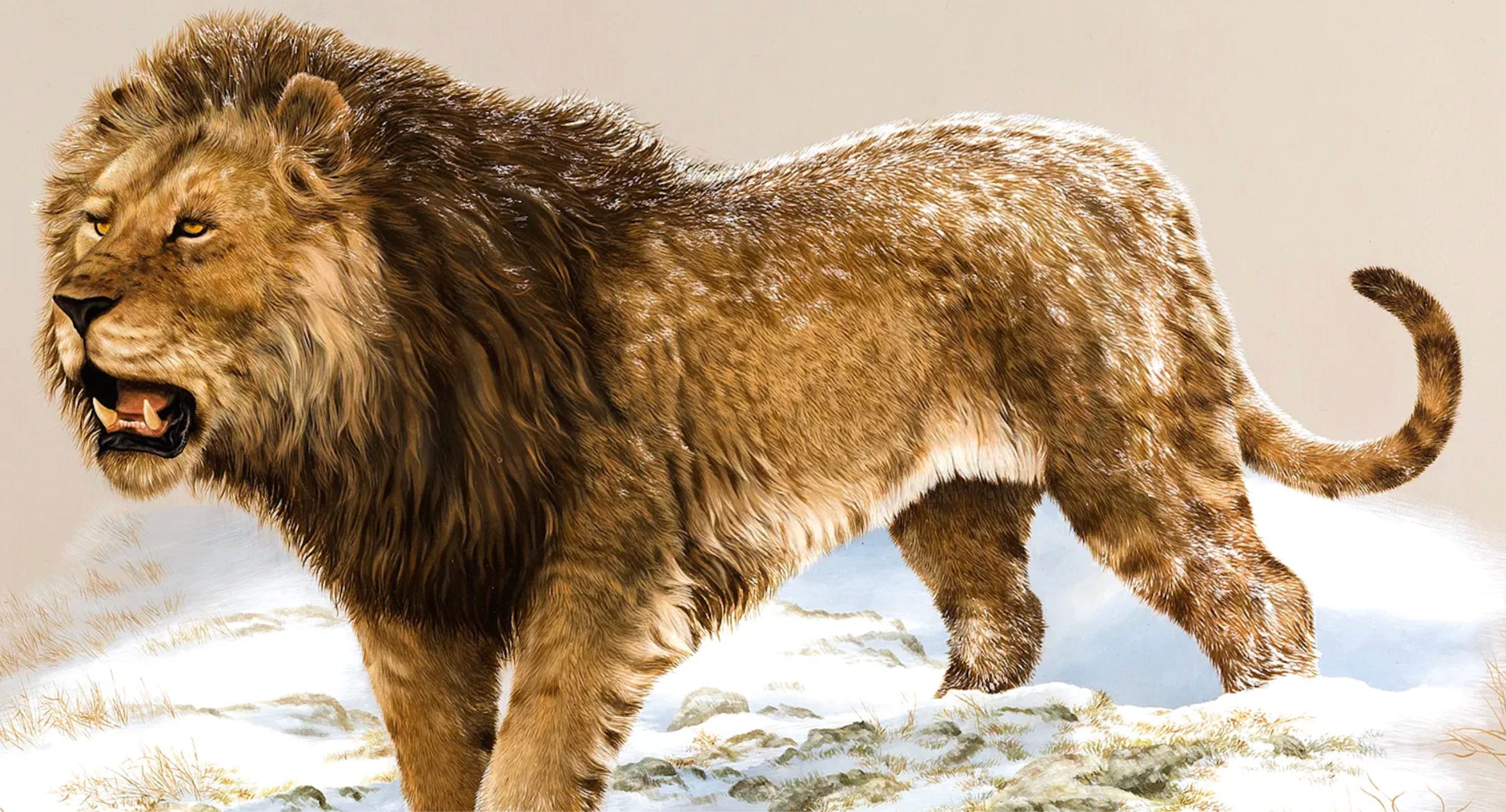
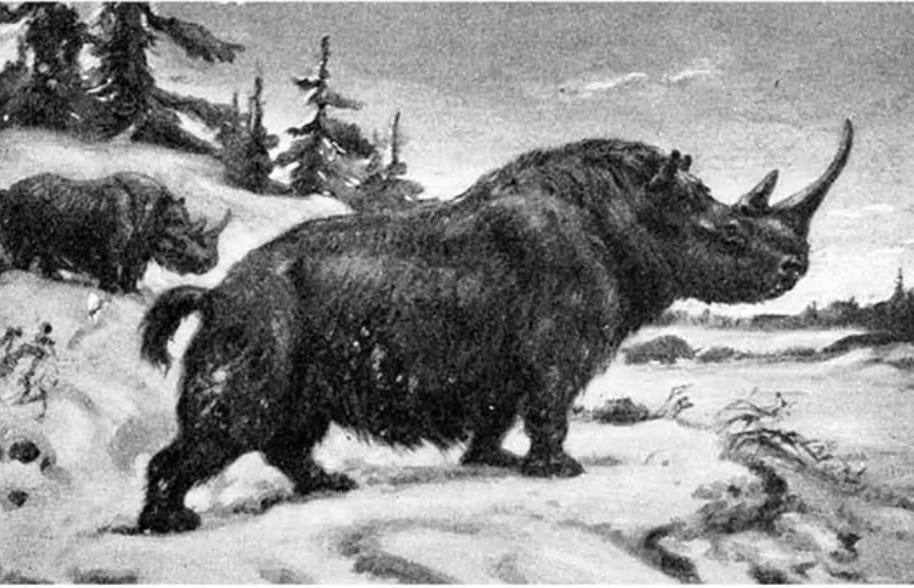
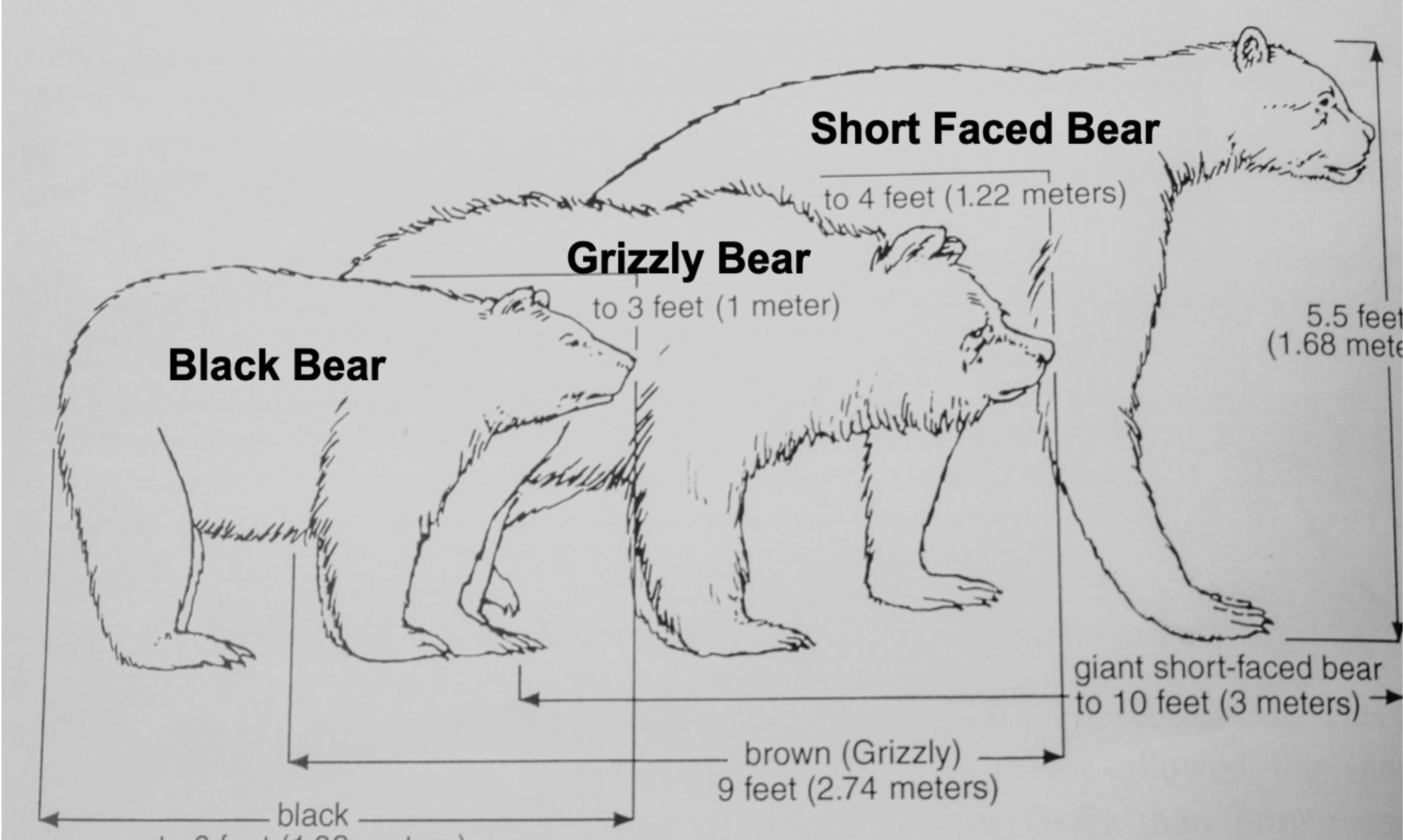
Eurasia’s iconic wooly rhinocerus, stymied by the treeless plains, never made the crossing. Cave bears remained in Eurasia, too, while short-faced bears remained in North America. For thousands of years, Beringia and adjacent Alaska were an American Serengeti—more diverse, even, than Africa today. Among the menagery: four species of bison (one weighing 4,000 pounds); two species of mammoths; American mastodon; two species of moose; four species of deer; pronghorn; dire wolf; grey wolf; scimtar cat; sabor-toothed lion; American cheetah (the reason pronghorn run sixty-five miles an hour); cave lion; American lion; camels and horses and sloths (some as tall as billboards). At twelve feet tall, upright on hind legs, weighing over two thousand pounds, the long-legged short-faced bear was a runner, a most majestic predator … king of them all. In fact, short-faced bears may have stymied human migration over the Bering Land Bridge for thousands of years.
Everything, everywhere, has a pedigree, a history that binds form and function to landscape. Natural selection translates weather and stone and water into living design. Nothing stays the same for very long (except, possibly, horseshoe crabs). We live on a planet in constant flux, a world endlessly revising itself. Species come. Species go.
Nothing lasts forever. Stability is nothing but a nine-letter word, a brief lull in the murmur of change.
American lion
Woolly rhinoceros
Bears by size (speed and power)
A consideration: Watching and writing are how I make my way in the world. Your support matters. Thank you all for sticking with me on this journey. Revel in spring.
As a lifelong naturalist and Yankee fan, I follow a trail blazed by John Burroughs and John Muir, neither of whom paid much attention to baseball. My work has appeared in Houghton Mifflin’s The Best American Sports Writing, Audubon, Sierra, Sports Illustrated, National Wildlife, OnEarth, National Geographic Traveler, National Geographic Books, Yankee, The New York Times, Newsday, The Boston Globe, The Chicago Sun-Times, The Guardian, and The Daily Telegraph, among other publications and anthologies. For twenty-four years, I was a regular commentator on Vermont Public Radio, and occasionally on NPR. I am the author of Backtracking: The Way of a Naturalist (1987), Blood Brook: A Naturalist’s Home Ground (1992), and Liquid Land: A Journey Through the Florida Everglades (2003), among other works of nonfiction. I received the Burroughs Medal in 2004, the highest literary honor awarded to an American nature writer. E. O. Wilson called America’s Snake: The Rise and Fall of the Timber Rattlesnake (2016) a beautifully written book [that] demonstrates just how good nature literature can be.
Beginning on 14 March 2020, the day after I returned home from Costa Rica, at the onset of the pandemic lockdown, I started writing a daily journal—part natural history, part memoir, and part commentary—that appeared here on Substack. Since the 25 August 2021 post, I have edited the 526 entries (deleting, combining, modifying) into a new book, The Promise of Sunrise: Finding Solace in a Broken World, which Green Writers Press published on the vernal equinox 2025.
From: Seven Days
Ted Levin, Green Writers Press, 400 pages. $21.95.
A pissed-off woodpecker flies in and screams...
When COVID-19 crashed into his life in 2020, naturalist Ted Levin began taking a walk each day at sunrise through the woods and wetlands around his home in Thetford. His walks begat a daily blog and now a lyrical book that brings to life the world of efts and otters, warblers and wrens, chickadees and coyotes. Engaging natural history lessons — loon semen and mammoth bones make an appearance — weave through the daily entries, and slowly the reader also learns the story of the author’s life.
Levin’s writing can be extraordinarily vivid: Coyotes “hurl their voices at the crescent moon”; a bobcat has a face “like a soiled, fraying softball”; chickadees are “four maestros working on a score.” Writing such as this demands to be read as one reads poetry, in small sips, to be fully savored.
—Candace Page.
No posts
Comments
Nothing yet. Say the first thing.
Sign in to join the conversation.