
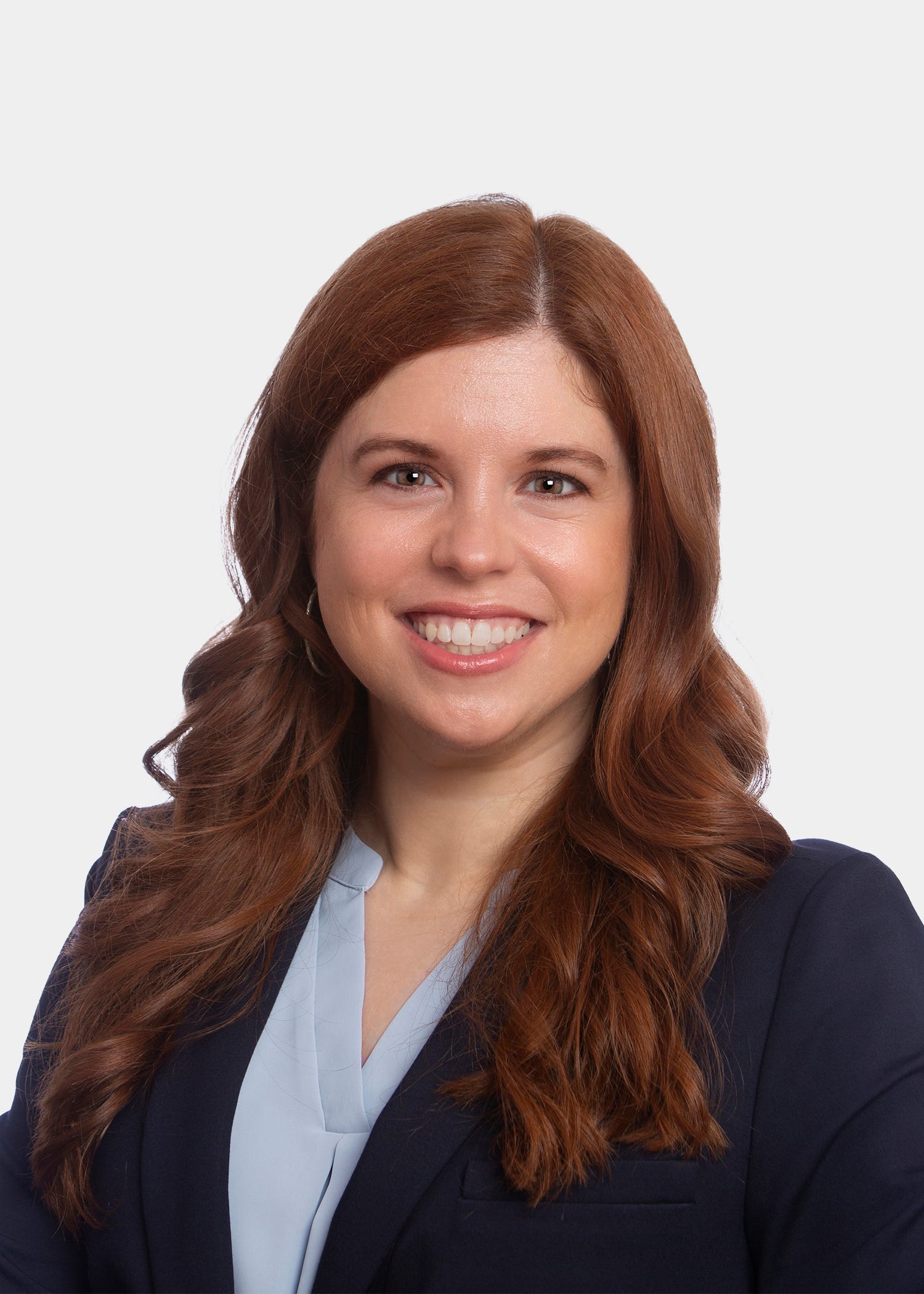
Nicole Palsa is a Nashville-based communications professional whose career spans country music, genealogy, and marketing. For more than 15 years, she has covered the country music industry as a freelance journalist, interviewing artists and tracking the genre's evolution from the inside. She currently runs two Substack newsletters: Amplify Country, dedicated to elevating voices in country music, and Kinfolks, which helps readers discover their heritage and breathe life into the stories of their ancestors. Since 2016, Nicole has been a volunteer guide with Musicians On Call, escorting musicians to perform bedside for veterans at the Nashville VA Hospital and hosting virtual programs for pediatric hospitals across the country. Outside of music, she brings more than 20 years of experience as a family historian, using both analog and digital genealogical research tools, including DNA, to solve decades-old family mysteries.
Listen to “Music Heals, Kinship Reveals” below, or on Apple Podcasts, Spotify, YouTube, Amazon, Pandora, or wherever you get your podcasts. The episode transcript is shared below the embed.
Frank: Welcome to another episode of TechXY Turbo. My name is Frank Gullo and I am your host. On this episode, we’re joined by Nicole Palsa, Nashville-based entertainment journalist, genealogist and professional marketer. Nicole has spent more than 15 years covering the country music industry as a freelance journalist, and brings over two decades of experience as a family historian.
She’s one of those people who lives at the intersection of storytelling and strategy, and she has a front row seat to how tech is reshaping both. Nicole, welcome to TechXY Turbo. It’s so great to have you here. How are you doing today?
Nicole: I’m great. Thanks so much for having me.
Frank: Absolutely. So you’ve spent over 20 years as a communications professional across multiple industries, including not only music, but health insurance. And you’ve also simultaneously built a separate freelance journalism career covering country music. And now you’re running two Substacks: one on music and one on genealogy.
So how did you end up doing all of this, holding all of this? And how has tech enabled your success?
Nicole: Well, I’ve always had multiple special interests, and technology has really allowed me to share those passions with a broader audience. So my freelance journalism career has really been built on relationships. Every opportunity has been the result of a personal connection. Nashville is really a relationship kind of town.
But once those doors open, technology had really allowed me to execute my work more effectively and connect to more people. On the genealogy side of things, it’s always been a personal hobby, and I use technology to leverage that and make it available to more people. So before launching my genealogy Substack, I just had a research log and a family tree that I kept to myself.
But as I started talking about some of my discoveries with my friends, they encouraged me to publish my findings, and so I was also inspired to write about my ancestors by a fellow genealogist named Amy Johnson Crow. She has a 52 Ancestors in 52 Weeks challenge that gives you writing prompts every week, and that also inspired me to start writing about my ancestors.
So it’s really helped me connect with people who share similar interests and even help me find some distant cousins.
Frank: Very cool. So you’ve been covering country music for well over a decade, which means through that time you’ve watched streaming, social media, YouTube, and now algorithmic playlists reshape the entire industry. From your vantage point as a journalist and also someone in Nashville, what’s the single biggest structural change tech has made to country music — how it gets made, distributed, and discovered?
Nicole: Technology has really changed the gatekeepers for country music. More people can make and distribute music and discover music than ever before. So in years past, record labels and country radio programmers were often the be all, end all when it came to whether or not an artist could be heard. Now there’s more opportunities for musicians and listeners — artists can record and release their music independently, and listeners can turn to streaming platforms and social media to find their favorite new artists.
Playlists and algorithms are the new gatekeepers for those platforms, but overall, music is much more accessible than it used to be.
Frank: So in researching for this episode, some of what I’m hearing is that you kind of have these two groups now — artists who have built audiences organically over many years, and a new generation who’s using new media like TikTok and other platforms.
So as someone who covers the space, how is this playing out in country music? What are you seeing, and how is the industry changing?
Nicole: Yeah, I think there’s always been different segments of audiences. And even before artists found success on TikTok, they were discovered on YouTube. And before that, they were finding success on reality TV singing competitions — as early as the 80s, Sawyer Brown was discovered on Star Search in 1983.
So it goes back a long way where artists are launching their careers through different avenues. And radio has always been a key gateway for music discovery over the years. So there’s always been multiple avenues for artists to reach fans.
Some artists who found success in earlier decades are embracing these new channels like social media. But others prefer to stick to what they know, and they’re still finding success that way because their audiences know how to find them.
I think really the tension that is happening now is with the responsibilities of an artist and how that’s changed. It used to be really focused on creating the music and performing the music, but now there’s this other element where they’re having to create bite size content for the social media algorithms. And for some artists, it’s a new creative outlet, but for others it takes away from writing music and performing. So I think that’s where some of the rub is — artists feeling like they’re being pulled in more directions than they used to be.
Frank: I would say though, as a fan, some of it is really well done. My daughter grew up liking Megan Moroney — shout out to her — and we saw Kenny Chesney, some of their content is as good as a short film. Do you think that’s artists who have the budget, or is that just the sensibility you’re talking about?
Nicole: I think it’s a little bit of both. Artists like Kenny Chesney and Brad Paisley have had really good storytelling in video form well before social media, and I think that’s just evolved over time. Budget is definitely an aspect of it, but I think a lot of it has to do with the creativity of the artist and the team around them. It takes a lot of people to be able to put that together and execute it.
Frank: Okay, so I have a Gemini subscription, and there was an email a few weeks ago telling me I could use it to generate text, content, images, and music. I’ve heard of AI generated music and I know it’s beginning to appear — sometimes even imitating real voices. What’s the conversation in Nashville? We hear a lot about Hollywood, but what are artists and labels specifically saying about AI, creative ownership, and artistic integrity?
Nicole: Yeah, there’s a lot of concern in the songwriting community in particular, making sure that songwriters are fairly compensated for their work and that artistic integrity is kept intact. But there’s also a really great example of how AI has helped an artist in an unexpected way.
Randy Travis, who’s known for hits like “Forever and Ever, Amen” and “Three Wooden Crosses”, had a stroke in 2013 that left him unable to speak and unable to sing. But in 2024, he was able to release a brand new song called “Where That Came From”, thanks to AI. With his consent and oversight, his record label and producer took samples from his previous recordings and overlaid them with vocals from an artist named James Dupré.
Randy’s producer and engineer worked closely together, along with Randy, to fine tune that AI generated song. It wasn’t just an AI output — there were humans involved throughout the process to preserve the artistic integrity that’s true to Randy Travis. The result was a really beautiful way to extend his career beyond what it could have been because of his stroke.
Frank: That’s pretty cool. I’ve got to check out some Randy Travis after this episode. Okay, so your tools have changed dramatically. You now have AI writing assistants, social listening platforms, press kits both physical and digital, and streaming data. What does your toolkit look like today? What do you use, and how do you draw the line between using tech to work faster while keeping your authentic human voice?
Nicole: To be honest, my toolkit is pretty limited. I’m kind of old school in a lot of ways when it comes to journalism, but I do use an AI powered transcription service, which is really helpful because transcribing audio can be a very time intensive task. I use video editing programs now that I’m getting more into content for social media, and I’ll use AI platforms to brainstorm sometimes, but I prefer quality over quantity.
The process itself has a lot of value to me — the process of writing, brainstorming and editing, thinking through concepts, tailoring messages to specific audiences, and really creating narratives. And as far as protecting my voice in my writing, something that I think about a lot is how any published work with my name on it ultimately impacts my personal brand and my professional identity.
Frank: I want to switch gears and talk about genealogy. You’ve been a family historian for over 20 years, well before Ancestry.com turned genealogy into a mainstream hobby. How has tech changed this work? What can you do now that was impossible a decade ago?
Nicole: So many things. When I first started, I was a youngster — genealogy as a hobby is traditionally more of a senior citizen pursuit, and I definitely started young. I was going to a lot of libraries, archives, and different repositories to get access to records.
What technology has done is made those records more accessible. The volume of digitized records has expanded exponentially over the last decade. Sites like Ancestry.com are now enormous record aggregators that are improving access around the world. Cost is unfortunately still a barrier for a lot of people, but it takes money to preserve those records, so there’s a balance.
One of the biggest breakthroughs I’ve seen recently is AI powered full text search capabilities, which can search both printed and handwritten documents. For example, it found my ancestor’s name that was written sideways on a document from the 1700s. That survey record had only been indexed by the original owner listed, so my ancestor’s name would have never shown up in an indexed search. But now this full text search capability looks at every single word on an image, and it’s opening so many possibilities and helping people break through the brick walls of their history research.
Frank: On that note, I want to take a moment to thank you, Nicole. I commissioned you to craft a piece about my late Uncle Chuckie, knowing that it would entail a lot of research and expertise in genealogy as well as technology. What you came back with impressed me — it was more than the records, more than the research, more than what you found. It was a story you were piecing together.
I also hear different perspectives on this kind of research across different cultures. So from your perspective, what do you have to do to reconstruct a life and bring a story together? How does that process work?
Nicole: If you’re building an entire life story from fragments, it’s sort of like working with a puzzle. You start with what you already know — you find those edge pieces and lay them out, then work your way toward the middle. The edges are usually the basic facts like birth, marriage, death, dates, and that sort of thing.
The time period and location are really key because that determines what resources and records are available. In the case of your late uncle, oral history was really key to telling his story because there are people still living who knew him. If I had only looked at a birth record, a school record, or a newspaper article, it would have really limited what I could put together.
The technology allowed me to find those records — newspaper articles from different states and government records about his military service. But having conversations with people who knew him is what allowed me to capture his personality and who he was. That’s one of the reasons I encourage people to interview their family members, especially their oldest living relatives. They can add color to the lives of your ancestors and give you information you won’t find anywhere else. And once those older relatives pass away, their knowledge goes with them.
Frank: And on that note, DNA testing has become a very powerful genealogical tool, but also something complex. People are discovering things about relatives, family secrets, and more. What do you think about the ethics of this kind of research?
Nicole: I think these platforms are starting to recognize the really profound psychological impact these discoveries can have, and they do have a responsibility to help users navigate this type of research. I hope they’ll start publishing more disclaimers and offering more guidance about how to not only process the information they receive, but also how to cautiously communicate with other users.
There’s a TV show I’ve been watching called Long Lost Family, based in the UK, that reunites adoptees with their birth families. They use a social worker, because there are so many elements in these discoveries that can be really traumatic for everyone involved.
It’s amazing what the technology is doing. It’s helped me personally in solving some mysteries in my own family. But I’ve also uncovered things in other people’s families unintentionally, and I’ve had to be very cautious about whether to reach out to them. It’s a very tricky thing to navigate, and I do think DNA companies have a responsibility to help people through it.
Frank: Absolutely. And related — genealogical databases now hold some of the most sensitive personal data in the history of data. There was the 23andMe story, for example. How should people be thinking about what they’re consenting to when they upload a DNA sample?
Nicole: I think one of the most important things is to understand your goal — what are you trying to accomplish by doing DNA testing? There are several different companies and they offer different types of services. For example, 23andMe has a lot of health information in that platform, and if you’re not looking for that, it may not be the service you want to use. If you’re looking for genealogical ethnicity breakdowns, another company might be a better fit.
The biggest thing is to really research the companies you’re going to be submitting your information to. Understand their terms of use and how they use their data. There’s a common misconception that law enforcement agencies can use public databases like Ancestry for criminal prosecution, and that’s just not true. So you really have to look into each company, because your DNA data has a tremendous amount of value and there is risk involved. You have to understand your personal risk assessment before you do that.
Frank: Thank you — great insight and perspective. And we’ll have links to both of your Substacks on country music and genealogy in the notes.
I want to close by getting back to country music. Since 2016, you’ve volunteered with Musicians On Call at the Nashville VA hospital, walking musicians in to perform bedside for veterans. That’s a very human experience in the middle of what is, for most of us, a very digitized relationship with music nowadays. What does this mean to you personally, and what have you seen it do for people receiving this?
Nicole: It’s one of my favorite things to do out of everything — all my hobbies and passions. It is such an honor to bring the healing power of music to veteran patients, their families, and even the medical staff at the hospital. When we walk into a patient’s room, we never know what kind of situation that person may be in, and the combination of a live music experience and caring volunteers really helps people.
Every time I volunteer, I hear feedback from patients about how grateful they are that we spent time with them and brought a little light to their day. I’ve witnessed some incredibly moving moments over the years. One that stands out is when we visited a patient who was near the end of his life. He wasn’t alert or responsive, but his daughter asked us to come in and perform for him, and as soon as the music started, he immediately reacted with a smile on his face and began moving his hands to the music. It brought his daughter to tears, and she FaceTime’ed her family so they could see his extraordinary reaction.
That’s why we say that music heals. That’s one of the mottos of Musicians on Call, because we see it every time we go into a hospital. I also volunteer as a host for their live virtual programs for pediatric hospitals across the country. And even though those programs are less interactive, they still give patients a chance to take a mental break from whatever they’re going through and help make their day a little bit brighter.
Frank: That’s very cool. Thank you for sharing that. There’s also growing research on music therapy — measurable effects on pain, anxiety, and cognition. You’ve witnessed this firsthand at the VA, and you also cover the music industry. These feel like different relationships with what music does to people. Does the industry understand and feel this? Does the commerce complicate it?
Nicole: Anyone who’s experienced live music understands how profoundly it can impact people. But because the music industry covers such a broad spectrum of roles, you’ll find a lot of people seeking more quantitative results instead of qualitative value. And in order for the songwriters and performers who create that music to be paid, there has to be a level of commercial success.
But I do think that defining an artist’s success solely by commercial strength is too narrow a scope. A lot of times when I’m talking to artists about the moments that impact them, it’s the stories they hear from fans about how a song has changed their life — and that can motivate an artist beyond a chart topping hit.
Frank: So Nicole, you mentioned both of your Substacks, and I know you have some other appearances as well. What are you planning for the rest of the spring and the rest of the year?
Nicole: Yeah. So I recently recorded a podcast called Stories That Live in Us with Crista Cowan, who’s the chief genealogist at Ancestry.com. That series is walking through spotlight stories from each state in celebration of the 250th anniversary of America. My story is around Virginia, where my family is from, so you’ll get to hear a little bit about my family’s history.
And in the country music space, we are in full swing with events — the Academy of Country Music Awards is in May, CMA Fest is here in Nashville in June, and all the wheels are rolling. Lots going on.
Frank: That’s awesome. Okay, in closing — I asked an AI assistant to analyze your background and generate a closing question. Let’s see what it came up with.
Nicole, you’ve spent your career as a storyteller across three distinct domains — music journalism, corporate communications, and genealogy — and you’ve watched technology transform all three. If you had to identify the one thing that technology consistently cannot replace in any of these fields, what would it be? And what responsibility do human writers, journalists, and researchers have to protect that as AI gets better and better at imitating us?
Nicole: For me, it’s two things — empathy and compassion. I can prepare for an interview, plan a communication strategy, and develop a research plan using technology, but it doesn’t replace that gut check I do in the moment. We have to protect the human spirit by cultivating emotional intelligence and critical thinking skills.
Frank: Nicole, it’s been a pleasure having you on the show. Where can people find you and follow along?
Nicole: You can follow my work in country music on Substack, Facebook, and Instagram under the name Amplify Country, and if you want to dig into your roots, you can follow Kinfolks on Substack. And I’m also on LinkedIn.
Frank: All right, Nicole, thanks so much for coming on.
No posts
Comments
Nothing yet. Say the first thing.
Sign in to join the conversation.