
Hello and thank you for reading my Substack Technically Food, a biweekly newsletter about food. If you’re not already a subscriber please consider signing up.
I started my writing career at the New School in Manhattan over a decade ago. Today, I’m in California. There is so much to miss about New York but one of those shared things that isn’t well replicated on the west coast are the neighborhood bodegas. The cats, the music, the endless array of stuff. Mostly I miss the surprise and delight of how much was new to me—even someone who writes about food. On the west coast I can hit gas stations or drugstores but the selection is more mainstream, big brands you already know. It’s a little boring.
And then sometimes it’s not. At my local CVS I spotted a bag of Doritos in a puffed white bag. The color was genius—nothing says clean like white. In large letters across the front it read: NKD. (Naked.) As one does, or as I do, I turned the bag over to scrutinize the ingredients.
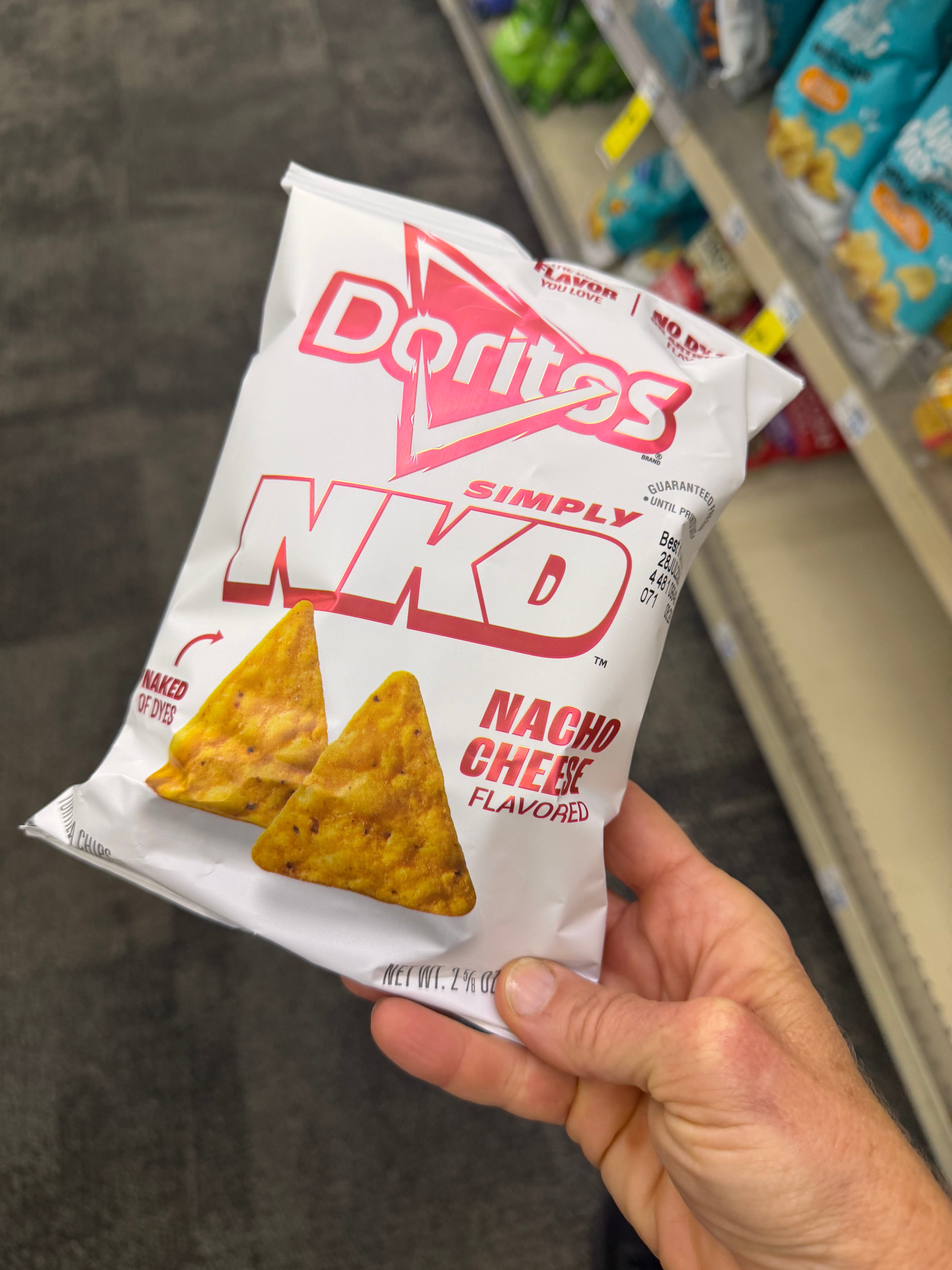
Here they are below, and I’ll bold the things I don’t love. The oil blend and the and/or phrase bothers me because it gives the company (Pepsi Coca-Cola) room to do whatever they want whenever they want. Maltodextrin helps seasoning stick to chips, extends shelf life and improves texture. It’s ubiquitous in processed foods—you can’t make it at home and you wouldn’t want to. Definitely don’t like it. Whey protein concentrate is in everything today because it’s high in protein. It’s the leftover liquid from making yogurt and cheese. I don’t mind it as much, but it’s still highly processed to get to a concentrate. Whey protein is a better option but anything that ends with 'concentrate’ or ‘isolate’ requires extensive manufacturing. Natural flavors is a black box and can be who knows what. Avoid.
Text within this block will maintain its original spacing when published
CORN, VEGETABLE OIL (CORN, CANOLA, SOYBEAN, AND/OR SUNFLOWER OIL), CORN MALTODEXTRIN, AND LESS THAN 2% OF SALT, CHEDDAR CHEESE (MILK, CHEESE CULTURES, SALT, ENZYMES), WHEY, TOMATO POWDER, POTASSIUM SALT, ONION POWDER, BUTTERMILK, ROMANO CHEESE (MILK, CHEESE CULTURES, SALT, ENZYMES), WHEY PROTEIN CONCENTRATE, NATURAL FLAVORS, SPICES, CITRIC ACID, LACTIC ACID, GARLIC POWDER, SUGAR, RED AND GREEN BELL PEPPERS, AND YEAST EXTRACT.
Beyond that these chips are “okay, not okay.” Have em on a road trip with your diet soda and lick your fingers with wild abandon. But don’t pack em in your kids’ lunches.
Moving on. In last weeks’ newsletter titled ‘Why buy organic?’ I covered why we might want to opt for organic produce. After it went out, a few folks wrote in to elaborate on the challenges between organic and conventional as well as how organic isn’t perfect. Paul S. wrote to say: “EWG’s ‘Dirty Dozen’ ranks only conventional produce, ignoring organic produce, even though organic crops also use pesticides and can carry residues.” Organic rules, Paul S. says, allow shellac-based wax, too. Here’s the full EWG list, which indeed only looks at conventional. And here’s the link of what’s allowed to be used in organic farming.
Peter G. wrote in to say that there are health benefits to using pesticides because, for example, pesticides prevent mold and rancidity, which are bad for us. And, he noted, which is a fair point, “the risks posed by the pears on your counter are trivially small. The health benefits of eating fresh fruits are significant.” One-hundred percent.
Back to chips, and to another recent newsletter titled, ‘What the TBHQ?’, Karen C. chimed in to a thread in the comments from a reader who wondered why snack foods were all brightly colored. Karen C. wrote: “That orange-y hue is there because American consumers associate it with punchy umami cheesy flavors. If you took the strong color away, the snacks would seem to taste less flavorful, would be less appealing and would sell fewer units. In the Cheez-its in your pic, the color is from paprika and annato extract. They’re both natural colors, not problematic from a health perspective. It’s also worth noting that natural colors can be quite expensive. As a former product development technologist for a savory snack brand, I can promise you that if the manufacturer could reduce the amount of color without impacting sales negatively, they would.”
Fascinating stuff! If you find any NKD Dorito chips, which are “chip colored,” please drop me a line and let me know what you think.
For Earth Day last week, Johanna McCloy, a writer friend who eats plant-based, shared reasons why readers might switch up their diet. In her newsletter she shared her favorite products. If you’re tempted by the category but reluctant to buy something you don’t like, her list will help.
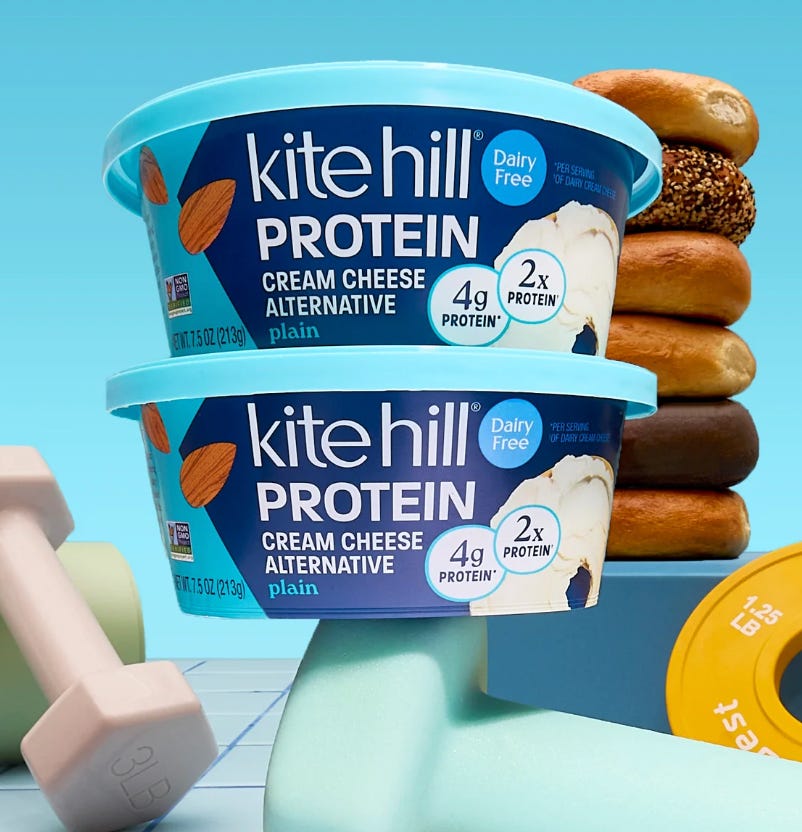
My favorite plant-based cream cheese is by Kite Hill, OG plant-based dairy brand. Now it comes with extra protein. (Of course it does.) Look forward to trying it.
Is gluten the new thing to invest in? The NYTimes covered the venture money hitting the bagel world. Maybe these shops will offer plant-based protein cream cheese?
Kara Swisher has a new documentary series on CNN called “I Want To Live Forever.” Why would anyone want to live forever? Remember a few newsletters ago I wrote that it’s the quality of life lived, not the quantity. Anyways, Swisher visits San Francisco-based Wildtype, which makes cell-cultured salmon. The proof point, the founders tell Swisher, is that cultured fish has none of the toxins from our polluted rivers and oceans. I gave Swisher my book Technically Food when it came out in 2021. I wonder if she ever read it?
Thanks again for reading. Leave a comment. Hit the like button. Drop me a line.
Comments
Nothing yet. Say the first thing.
Sign in to join the conversation.