
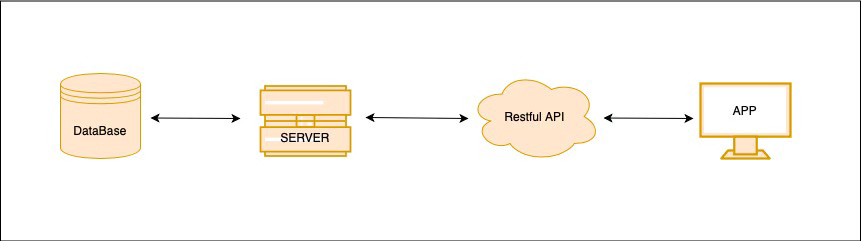
In the digital age, the seamless transfer of data between systems is critical to the functioning of modern web applications. REST (Representational State Transfer) APIs have emerged as the dominant architectural style for enabling this communication, becoming a fundamental building block for web services. This article provides an in-depth exploration of REST APIs, examining their underlying principles, functionality, use cases, and best practices.
A REST API (Representational State Transfer Application Programming Interface) is a web service that adheres to the principles of REST architecture. Introduced by Roy Fielding in his 2000 doctoral dissertation, REST defines a set of constraints for creating scalable web services. These constraints promote simplicity, scalability, performance, and ease of use. REST APIs are primarily used to enable interaction between clients (usually web or mobile applications) and servers over HTTP/HTTPS.
Key Characteristics of REST:
Statelessness: Each request from a client to the server must contain all the necessary information for the server to understand and process it. The server does not store any client context between requests, which makes REST services highly scalable.
Client-Server Architecture: The client and server are separate entities, and their interaction is limited to requests and responses. This separation allows each component to evolve independently.
Uniform Interface: REST APIs use a consistent and uniform interface, which simplifies interactions and increases the scalability of the API. Resources are typically represented as URLs, and standard HTTP methods (GET, POST, PUT, DELETE) define operations on these resources.
Layered System: REST allows for intermediary layers (e.g., load balancers, proxies) between the client and server. This feature enhances scalability, security, and fault tolerance.
Cacheability: Responses from the server can be cached on the client-side to improve performance by reducing redundant requests.
Code on Demand (optional): REST can allow clients to execute code sent by the server (e.g., JavaScript) to extend client functionality. However, this is an optional constraint and not always implemented.
In RESTful services, HTTP methods correspond to different CRUD (Create, Read, Update, Delete) operations on resources. The most common methods include:
GET: Retrieves a resource from the server. It is a read-only operation that does not modify the server state.
Example:
GET /api/books/1might return details of the book with ID 1.
POST: Submits data to the server, often used to create new resources.
Example:
POST /api/bookswith a JSON body containing book data creates a new book.
PUT: Updates an existing resource, often replacing its current state.
Example:
PUT /api/books/1updates the book with ID 1.
PATCH: Partially updates an existing resource.
Example:
PATCH /api/books/1might update only the title of the book.
DELETE: Removes a resource from the server.
Example:
DELETE /api/books/1deletes the book with ID 1.
These methods map directly to REST principles and the underlying HTTP protocol, making the interaction between client and server highly intuitive and predictable.
Resources are key elements in REST APIs. A resource could represent anything a client might want to access on the server: a user, a product, a comment, etc. Each resource in a REST API is identified by a unique endpoint (typically a URL).
For example, in a book management API:
GET /api/booksretrieves a list of all books.GET /api/books/1retrieves the book with ID 1.POST /api/bookscreates a new book.PUT /api/books/1updates the book with ID 1.DELETE /api/books/1deletes the book with ID 1.
This structure makes REST APIs straightforward to design, implement, and consume.
Since REST APIs are stateless, authentication becomes an essential part of securing these services. Several methods can be used to authenticate users and ensure data security:
Basic Authentication: Uses the client’s credentials (username and password) encoded in Base64 and sent via the
Authorizationheader. This method is simple but not secure unless combined with HTTPS.OAuth 2.0: An industry-standard protocol for authorization, OAuth 2.0 allows third-party services to exchange data without exposing user credentials. Instead, access tokens are used to authenticate and authorize clients.
JWT (JSON Web Tokens): JWT is a compact, URL-safe token used to represent claims between two parties. It is often used in modern web applications to authenticate and securely exchange data.
API Keys: API keys are unique identifiers sent in the request header or query parameters to authenticate and track the usage of the API. While simpler to implement, API keys do not provide the robust security of other methods like OAuth or JWT.
REST APIs are versatile and widely applicable across various industries and types of applications:
Web Applications: Modern web applications rely on REST APIs to retrieve and display data asynchronously without reloading the page. This is the core of "single-page applications" (SPAs) such as those built with React or Vue.js.
Mobile Apps: Mobile applications frequently use REST APIs to interact with server-side databases and services. For example, a weather app might use a REST API to get current weather conditions.
Microservices Architecture: Microservices rely on REST APIs for communication between different services, each of which might manage a distinct part of a large system.
IoT: REST APIs are used in the Internet of Things (IoT) to communicate between devices and cloud services.
Third-party Integrations: Many popular platforms provide REST APIs for developers to integrate services like Google Maps, Twitter, Facebook, or payment gateways into their applications.
Use Nouns, Not Verbs: RESTful URLs should refer to resources (nouns) rather than actions (verbs). For instance, use
/productsinstead of/getProducts.Handle Errors Gracefully: Use appropriate HTTP status codes to indicate the result of an operation. Common status codes include:
200 OK: The request was successful.
201 Created: A resource was successfully created.
400 Bad Request: The request was malformed or invalid.
404 Not Found: The requested resource does not exist.
500 Internal Server Error: Something went wrong on the server.
Versioning: APIs should be versioned to ensure backward compatibility. This can be done by including a version number in the URL (e.g.,
/api/v1/).Rate Limiting and Throttling: To protect the API from abuse or excessive use, implement rate limiting, which restricts the number of API calls a client can make within a given timeframe.
Documentation: Comprehensive API documentation is crucial for developers to understand how to use the API. Tools like Swagger and Postman can help with both documenting and testing REST APIs.
REST APIs are an indispensable part of modern web and mobile applications, enabling seamless communication between clients and servers. By adhering to REST principles such as statelessness, a uniform interface, and cacheability, REST APIs provide a scalable, flexible, and reliable architecture. Whether you're building a small application or designing a complex system of microservices, understanding REST is key to creating efficient and effective web services. By following best practices like proper endpoint design, authentication, and error handling, developers can ensure their APIs are robust, secure, and easy to use.
As the demand for more sophisticated and connected applications continues to rise, REST APIs will remain a cornerstone of web communication, driving innovation and enabling the integration of systems across the digital ecosystem.
Comments
Nothing yet. Say the first thing.
Sign in to join the conversation.