
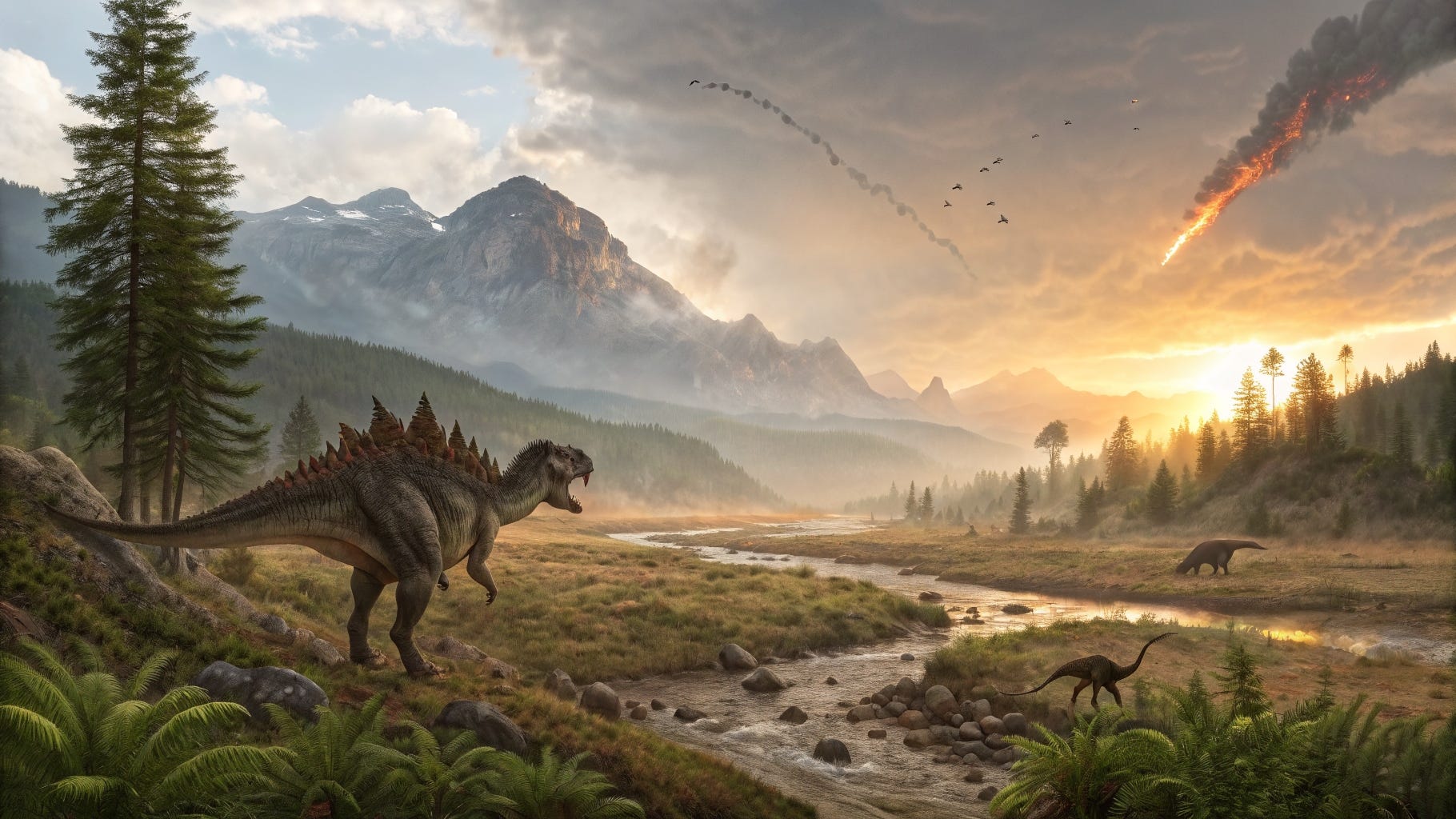
The end of the dinosaurs wasn’t the end of everything.
It was the beginning of something new.
Here’s how the Earth changed forever — and how one final roar still echoes through time.
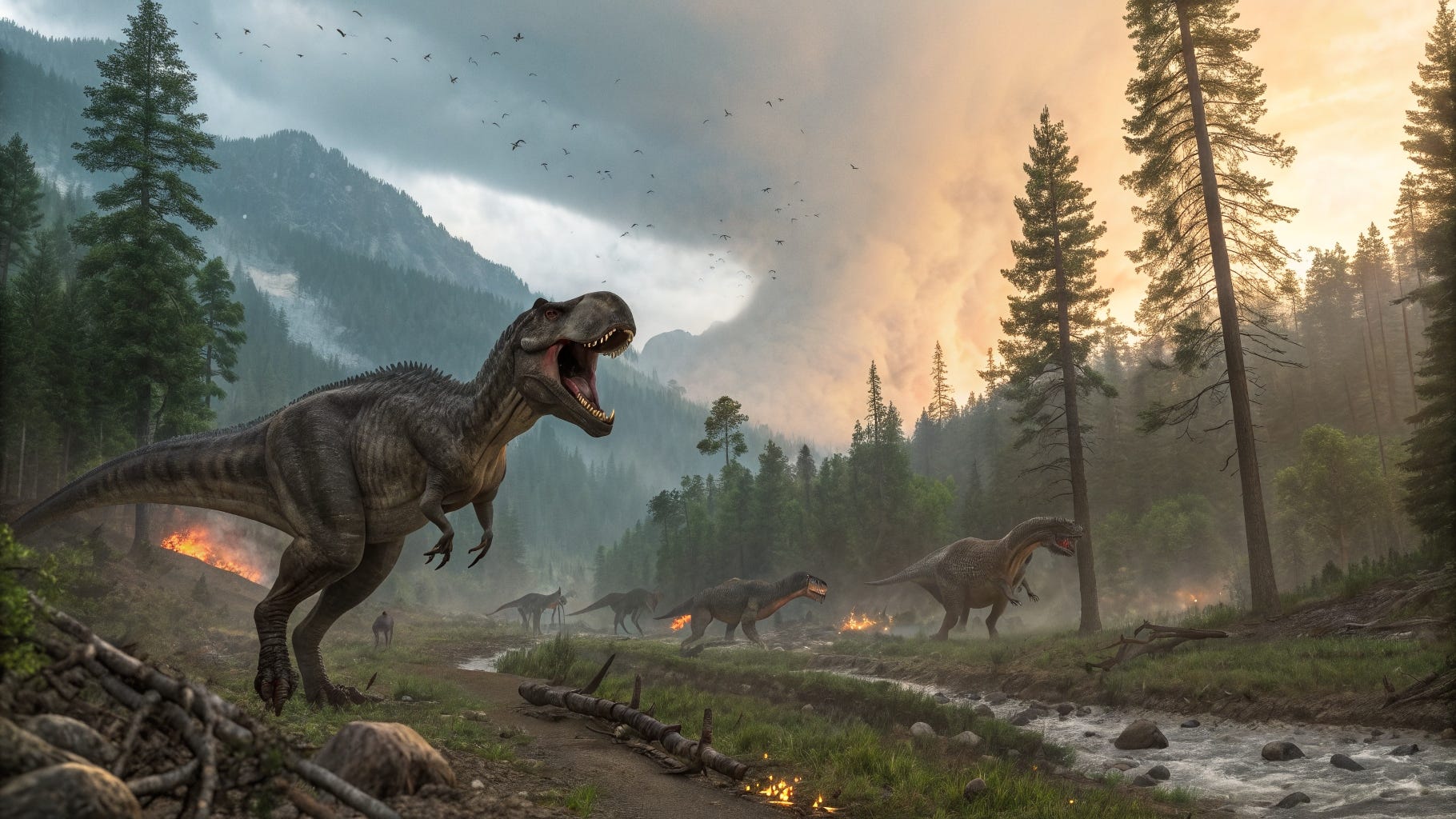
Sixty-six million years ago, the Earth was full of life — forests rustling, rivers rushing, and dinosaurs everywhere.
Then, one day, a light brighter than a thousand suns flashed across the sky. A giant rock from space slammed into Earth.
The ground shook; trees toppled, mountains rumbled, and rivers churned into whirlpools. Fire swept through forests, roaring louder than any beast.
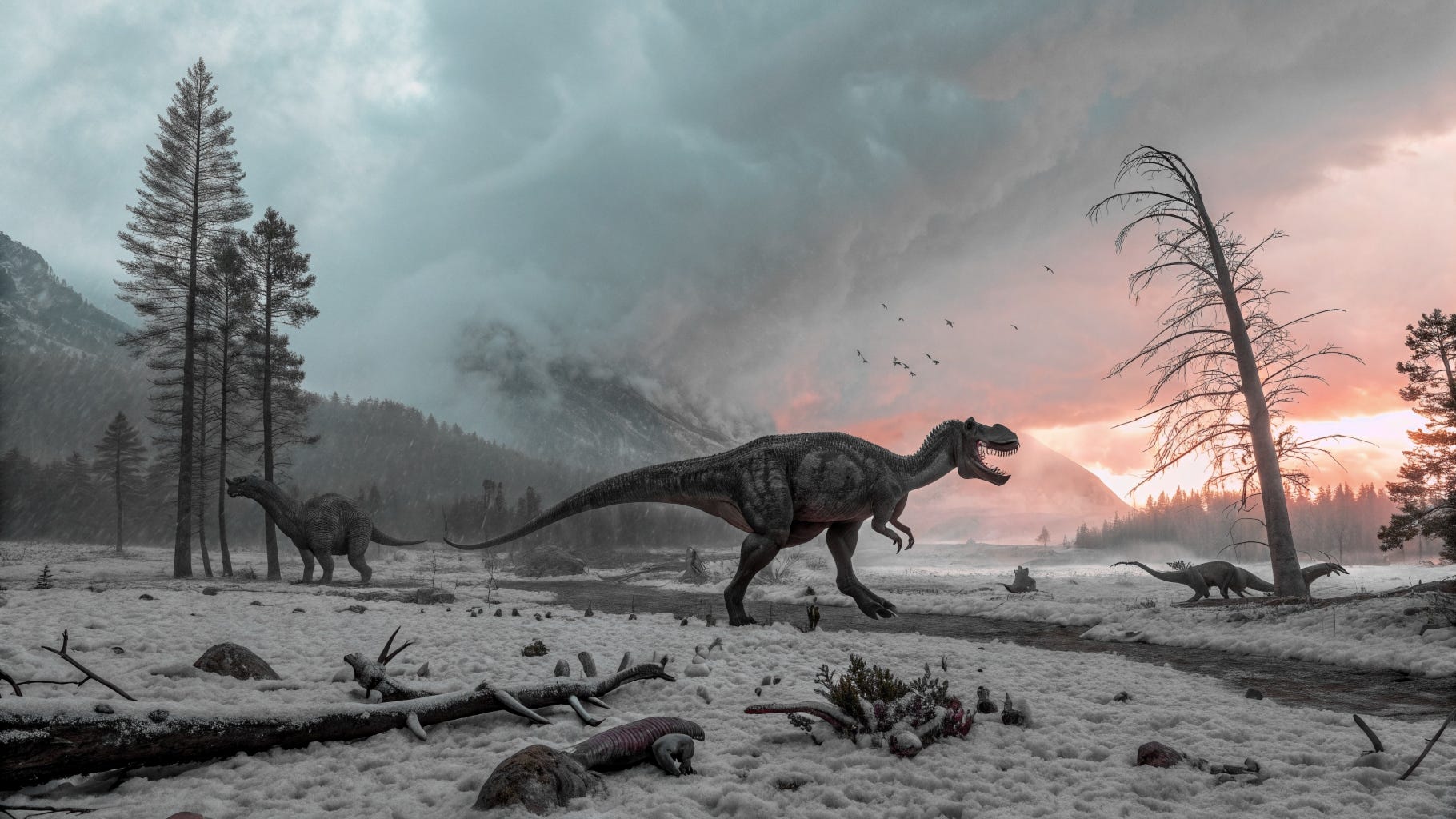
Ash drifted down like snow — soft at first, then endless gray. And slowly, the great ones — Tyrannosaurus, Triceratops, Argentinosaurus, and all their kin — fell silent, never to wake again.
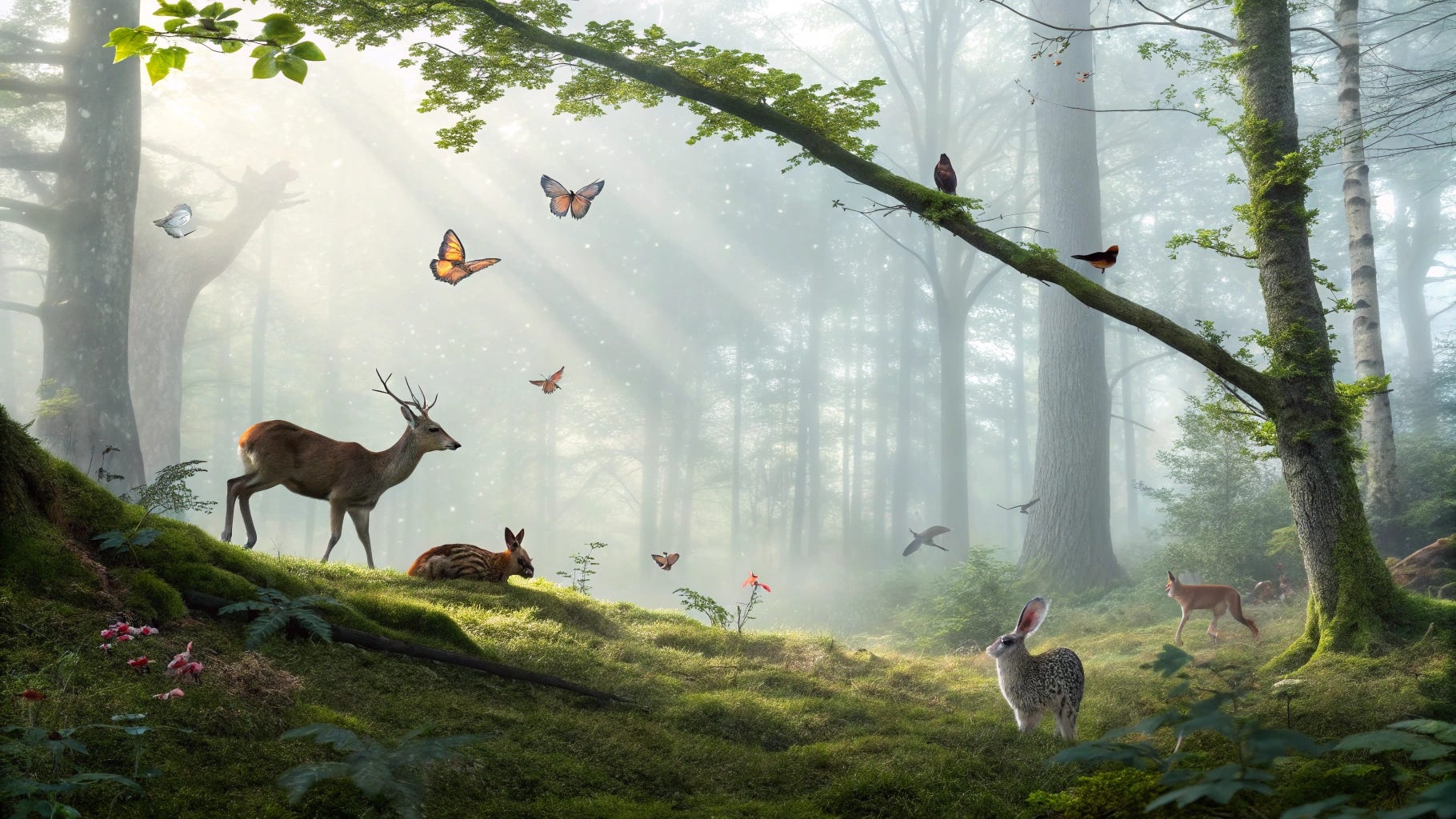
For a long time, the Earth grew quiet. But under that silence, new life stirred. Tiny mammals scurried through roots and leaves, their paws pattering in the dark.
Birds, small dinosaurs with feathers, spread their wings and sang again. The giants were gone, but not forgotten. Their bones slept deep in stone, waiting for curious hands to find them.
Millions of years later, people dug into hills and deserts, their picks clinking against rock.
They uncovered the sleepers — skulls, teeth, and tails like secrets revealed.
And once more, they met Tyrannosaurus rex — the king who had roared long ago.
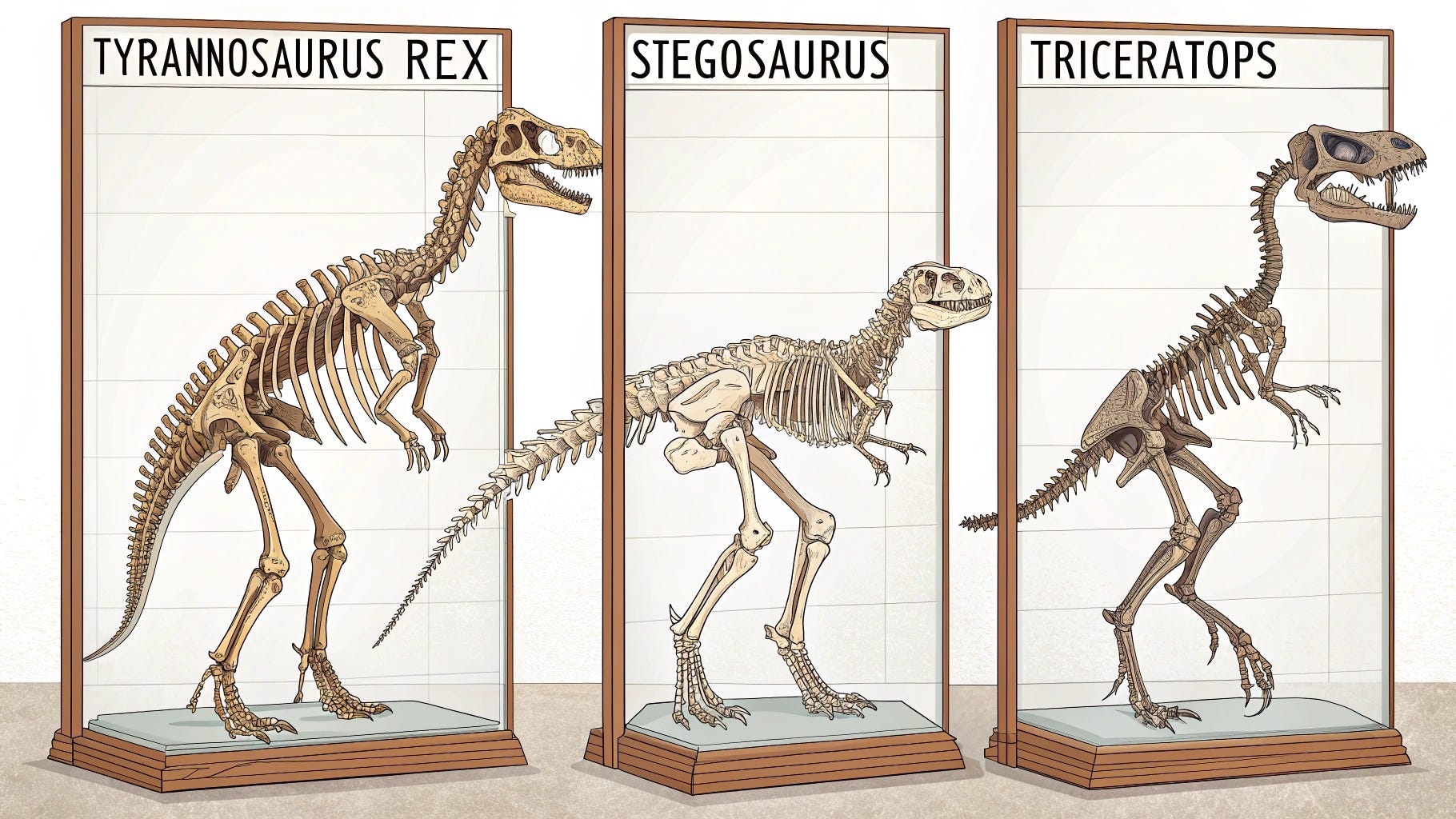
Now he lives again in museums and storybooks, in toys, movies, and dreams — a memory that never truly faded.
For though the ages passed, the dinosaurs’ last roar still echoes through time.
Author’s Note: The Story Behind The Last Roar
About 66 million years ago, a giant asteroid struck the Earth near what is now Mexico’s Yucatán Peninsula. The impact set off wildfires, earthquakes, and waves that raced across the seas.
Clouds of dust blocked sunlight for months, and plants could no longer grow. Many animals, including almost all dinosaurs, disappeared during this great extinction. But not all of them vanished — small feathered dinosaurs survived and evolved into the birds we see today.
So, when you watch a sparrow hop or hear a robin sing, you’re hearing a faraway echo of the dinosaur age. Millions of years later, the world changed again. Wind and rain wore down mountains, uncovering bones hidden deep in rock.
Curious people — scientists called paleontologists — began to find them. They pieced together skeletons of creatures like Triceratops and Tyrannosaurus rex, bringing the lost giants back to life in museums and stories.
The dinosaurs may be gone, but they still teach us about time, change, and survival. Their last roar reminds us that even when something ends, the Earth always finds a way to begin again.
The Last Roar is the fifth and final story in a five-part Teacup Twist series about dinosaurs and the ever-changing world they called home.
Till we twist again,
Sherri Eri
It helps me write and produce picture books and audiobooks that include both sighted and blind kids.
Starting at $5/month or $50/year, your subscription supports inclusive storytelling and keeps this work going.
Thank you, truly, for helping make these stories possible.
Thanks for reading Teacup Twist! This post is public so feel free to share it.
Comments
Nothing yet. Say the first thing.
Sign in to join the conversation.