
The Terror is the only fandom I can think of where genealogy has become a legitimate fan practice.
After Fabiënne Tetteroo (who many of us Terror fans met and befriended through the online community) made headlines for helping the University of Waterloo team led by Dr. Douglas Stenton match James Fitzjames’s DNA to a famous and likely cannibalized jawbone, Katie Gorsalitz was inspired to take a crack at it herself. Instead of focusing on one particular expedition member, she cast a wide net, chasing down family trees for dozens of crewmen and searching for eligible living DNA matches.
Not just any living relation can offer their sample — for complicated scientific reasons, it has to be either a strictly male-line descendant OR a strictly female-line descendant. Katie had her work set out for her, and her dedication paid off: last week, it was announced that her efforts led to an unprecedented FOUR matches being found, putting names to remains whose identities had been a mystery for centuries.
Most notably, one ID included the Gladman Point body, which was discovered in the 1850s to be carrying papers bearing the name of one Harry Peglar, but for various reasons the body was thought not to be his. Surprise: it actually was!
For Franklin-heads, this is a really big deal. I was so excited to chat to Katie—who presented at last year’s Terror Camp about her genealogical work, though she had to keep the in-progress IDs a secret the whole time!—about her incredible experience making archaeology history as a Terror fan.
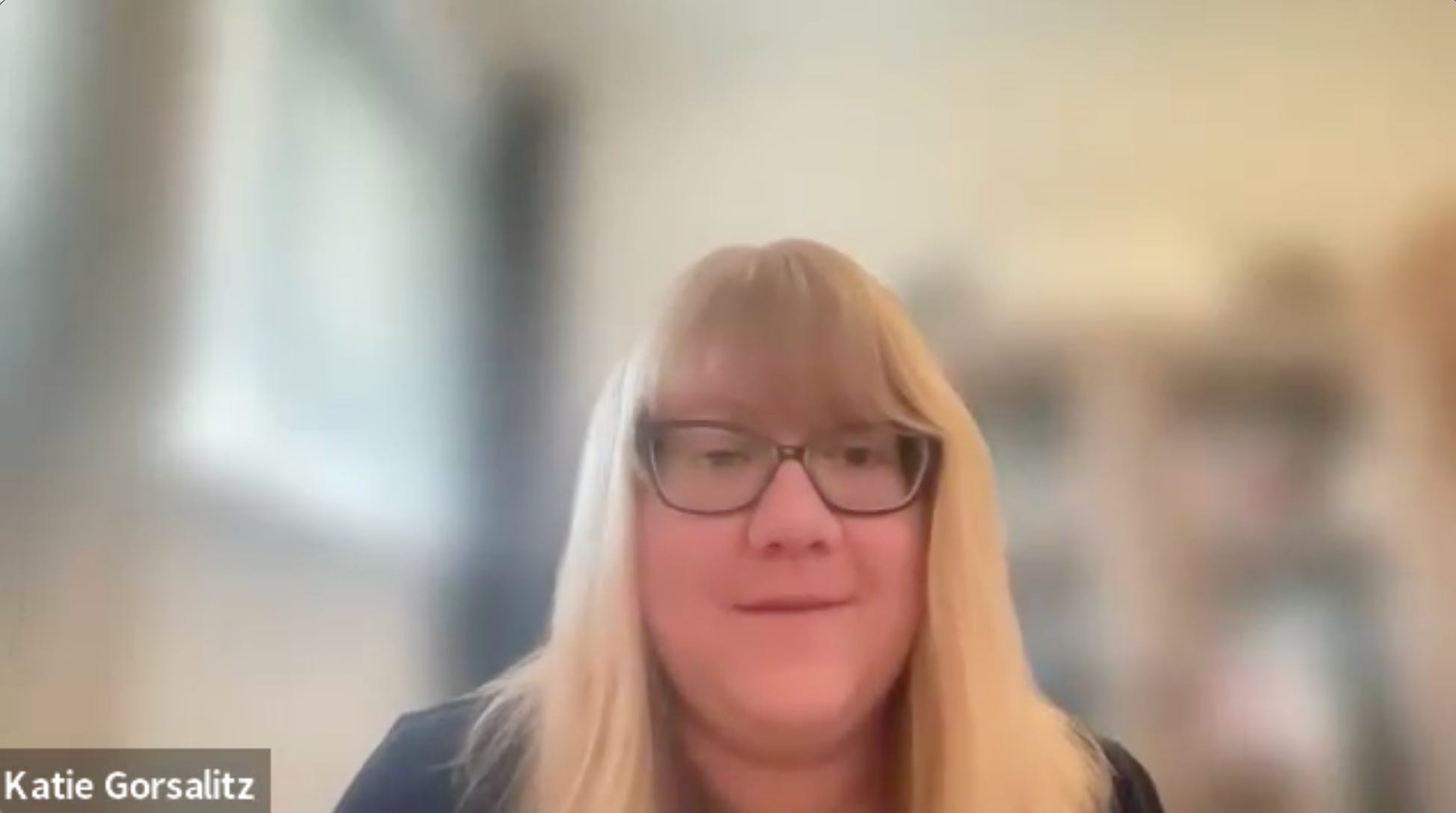
When did you first get into The Terror? How did the obsession start for you?
Despite being Canadian, I had never heard of the Franklin Expedition until someone recommended The Terror to me online. At the time, I didn’t have whatever streaming service it was on. So I just watched a trailer, and I didn’t watch the show until a year or two after seeing the trailer. But the trailer was like, “What is this? I want to know more about it. “ And so I went in a rabbit hole, was reading all about the Franklin Expedition. I got into [the expedition] before I actually watched The Terror. When I did watch The Terror, I loved it. I watch it once or twice a year, it’s a great show.
When did you actually watch it?
I think it would’ve been around six years ago. It wasn’t a pandemic watch for me, so maybe it was just before then.
So that meant that there was a stretch of time in between when you watched it and you began doing your genealogy research. Can you talk more about what that was like, and what inspired you to go from somebody who enjoys the show and enjoys history to somebody who’s actually doing your own research?
That was when the announcement came in September of 2024 that Fitzjames had been identified. I found that very enthralling. I think it’s the most exciting thing that happened since they found the ships, even though I wasn’t here for that because I didn’t hear about the Franklin Expedition until after both ships were already discovered. Reading about what [Fabiënne] did was lightbulb, like—wait a second, people can just do this. I saw a few other people at the time trying online—there were a few of us. I just was like, “I want to try doing this. I want to throw my hat in the ring.” And it worked.
Something that really stood out to me from these [4 new] IDs is that they were all named characters from The Terror [Bridgens, Peglar, Young & Orren]. For you when you started out, did you start out with names that were familiar to you because of the show, or is it just coincidence that the ones that were ID’d are people that we know from the show?
Complete coincidence. So when I started, like I said, there were a few other people at the same time, some of them kind of tapered off, but I felt that probably some of the members of the expedition being investigated by the other people probably would be characters from The Terror. So I avoided them for a bit because I didn’t want to double up on work.
My methodology last year was anyone related to the Gladman Point body—which was stewards, and Peglar.1 So that’s where Bridgens comes from. I did other stewards, like Aylmore and Fowler that I don’t think have a presence on the show.
And then the ships’ boys were secondary to that, because I just wanted to get someone identified. I wanted one. We knew there was a jawbone with the wisdom teeth not fully emerged that was speculated to belong to a ship’s boy, and there’s only four.
So I was like, I’m just going to start doing these guys. One of them actually already had sent in DNA years ago [with no match], so really it was a one in three shot. I think every ship’s boy is named in the show, but David Young is probably the most prominent of the ship’s boys. And that was just a coincidence that it matched with him, because I did Chambers as well, and I looked into Evans, but his family frustrated me, so I didn’t finish.
And then my last one was just any of the single fellows, because their estate would go to a blood family member, instead of a spouse, so I find them easier than the guys who were married. And Orren was just throwing a dartboard at who wasn’t married—and the surname was unique, so I was like, “Oh, let’s try this guy.”
But there were a lot of people that I tried that weren’t on the show. So yeah, complete coincidence, pretty crazy.
With a lot of these people, they are collateral descendants, so there is not a direct line of descent. Do you find that the story of this relative going missing in the Arctic gets passed down in the family? Is that something that comes up [when you reach out]?
Nope. Out of these four, the only family that had an idea that this was a connection,—it was kind of a family fable moreso than something confirmed, but something they believed—was the Young family. They’re the only ones. That is a paternal connection, so they have the Young surname still, so it’s a little different.
I think I did 10 [reach-outs] last year, and there were only three that had any idea. But usually the family will confirm up until either the generation the sailors are from, or the generation after. [Rich Preston’s family] didn’t know they were related to Bridgens, but they knew they were related to Bridgens’ mother or sister or whatever.
Is it in the books at all that you’ll get to actually go meet the researchers in person at Waterloo?
I mean, there’s nothing planned. It’d be fun. I’d love to sit down for coffee because I have so many questions, and I don’t want to bother these guys on email all the time. I’m like, they’re probably busy. I’ll leave my genetics 101 questions alone because they don’t need this, but it’d be fun.
Given that you have looked into the [expedition] archaeology, and that has led you to research certain individuals, is that leading you in other directions in terms of specific bodies or artifacts, based on where they’re discovered, with names on them? Are you looking into specific people based on relics?
Not really anymore, because I kind of eliminated the ones I knew about with the Gladman Point body and the jawbone. There was one other that was kind of hard because it was in the isotope paper, which was beyond the scope of my understanding. There was something about isotopes and one bone maybe belonging to someone who was from a kind of country other than the British Isles—there’s only four of those guys, but sadly, they’re really hard to research.
So the three Erebus identifications, are they from the same site that Fitzjames was found at?
Only one of them is and that’s David Young. Bridgens is from a separate site where there were three bodies in a boat. One of them was John Gregory, the engineer. I am very interested [to see] if I could identify that third guy, I think that’s interesting. But I mean out of everyone, there’s nothing to indicate really who that would be. So it would be a complete coincidence, but I’m very interested. That [site], I don’t think there was any cannibalism found there at all. And then Orren was just a single bone nearby.
So David Young is from a site where we know there’s cannibalism, but he’s only been matched to a few bones [and] those few bones didn’t have any signs—but I don’t know if the full body would [have]. I’m not sure how many bones they were able to DNA test that had signs.
It’s a miracle that there’s now six IDs, and that’s so exciting, especially when you look at how there were a significant number of samples taken before Fabiënne and you got involved. It was not like there was nobody.
The first [ID in 2021], with John Gregory, I think he was the 16th or 17th descendant they had tested. So they went 16 without a match. I was like, okay, it might take me 16 of these guys before I get lucky. And then somehow it didn’t!
I would like to encourage everyone [to try]. I literally didn’t start doing genealogy until after the Fitzjames identification, then two months later I found the family for Bridgens. It just took longer to get the DNA in the lab, but it was literally two months after. If I can do it, anyone’s capable of it—except also, you do need to be lucky!
You can follow Katie’s ongoing genealogy journey on her blog, A Long Blank.
For the non-Franklinheads: the Gladman Point body, despite carrying papers with Peglar’s name, was speculated (by the original search expedition discoverers of the body) to be a steward because of the clothes he was wearing and the distinctive way his neckerchief was tied, which Peglar as a sailor would not have done. Victorians and their hierarchies!!!
No posts
Comments
Nothing yet. Say the first thing.
Sign in to join the conversation.