
Summer has a way of slipping by before you know it. One minute it seems to be stretching out forever, the next you’re wondering how August arrived so quickly. Since our last postcard we’ve been making the most of it while we can, traveling from Southern California up the West Coast to visit family in Oregon and Washington, reconnecting with old friends, and as always, searching out local markets and cooking together.
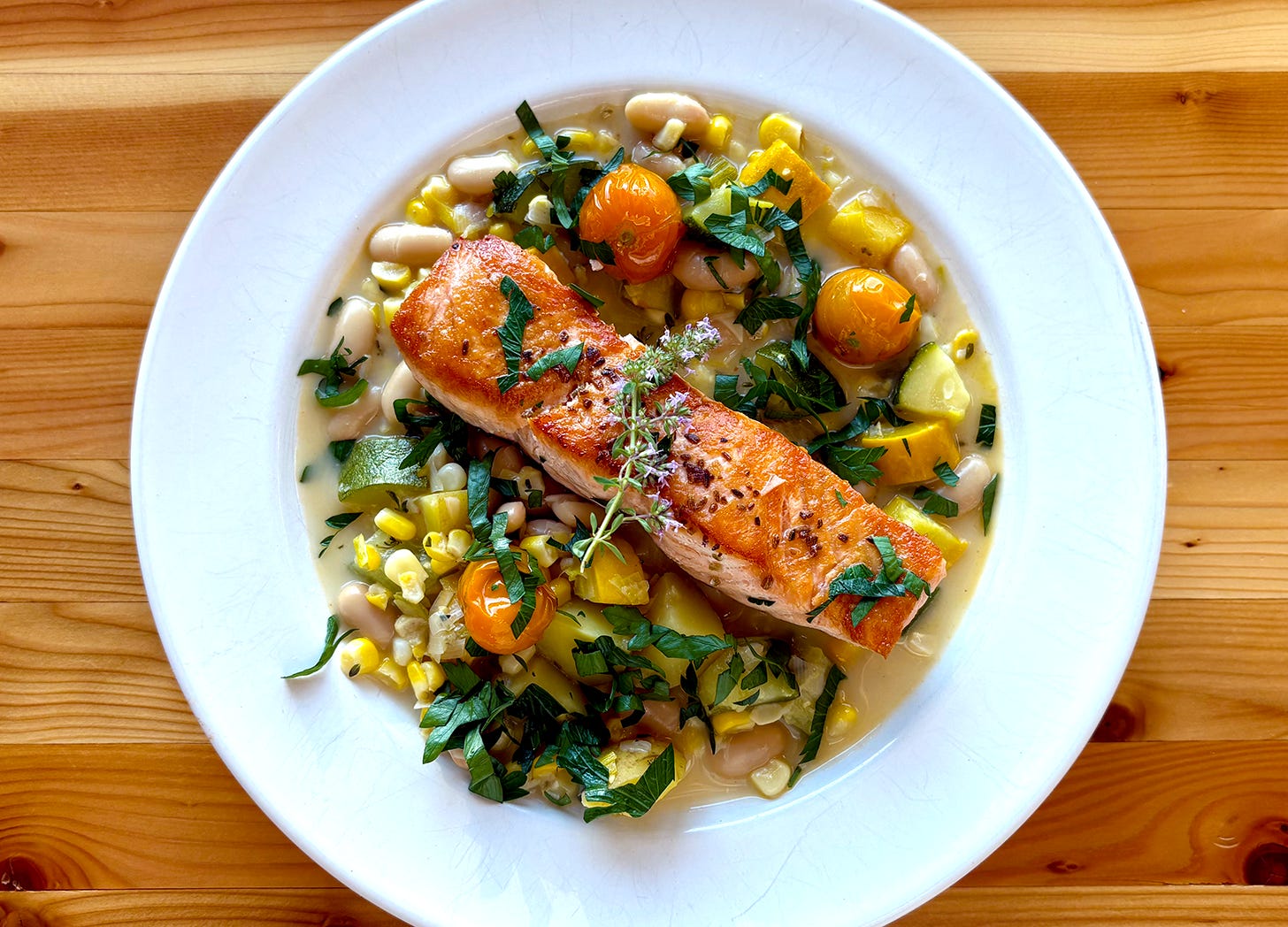
When it comes time to plan a family dinner, all eyes usually turn in my direction, a role I’m happy to assume. This summer I found myself returning to one dish again and again, succotash.
Few dishes are more distinctly American than succotash. Long before the Pilgrims arrived, Native Americans were cooking fresh corn and beans together. The name comes from the Narragansett word msíckquatash. Over time, cooks added whatever the season offered, summer squashes, peppers, herbs—but the heart of the dish remains the same: corn and beans, simply prepared.
My mother, a born-and-bred New Englander, taught me what she considered the real recipe, handed down from her own mother. She was quite firm about the ingredients: sweet corn cut fresh from the cob, shell beans, always fresh, never frozen, and salt pork, not bacon. Try finding salt pork today, it might take longer than making the dish itself.
Given my years spent working in kitchens, I can’t resist “cheffing” it up a bit. A few extra vegetables, a handful of fresh herbs, a touch of butter or cream at the end. I love the way this simple dish can be elegant enough to accompany almost any fresh fish at a summer dinner table. Even so, every time I make this dish I think of my mother, and like to think she would approve, even with a few substitutions and embellishments. Make a big batch, the extra is great for breakfast topped with a poached egg, or turned into a frittata or strata for brunch.
Another thing I love about succotash is that it invites helping hands. Someone can shuck the corn, another picks the thyme, someone else to shell the beans or help dicing the vegetables. It’s no secret that everyone enjoys the meal a bit more when they’ve had a hand in preparing it.
One final tip comes straight from my mother. After cutting the kernels from the cobs, use the back of your knife to scrape the milky juices into the bowl. It’s a small step that adds sweetness and body to the dish. Here’s the version that’s become our favorite this summer, it feeds about 8 hungry guests.
6 ears fresh sweet corn
1 medium yellow onion, finely diced
2 tablespoons olive oil
2 medium zucchini, cut in 1/2” dice
1 bell pepper, red or green, cut in 1/2” dice (optional)
2 medium Yukon gold potatoes, cut in 1/2” dice
2 tablespoons fresh thyme, coarsely chopped
1 15 oz can lima, cannellini, or butter beans, undrained
(or the equivalent fresh cooked beans)
2 tablespoons cold butter
1/4 cup heavy cream or half and half
Salt and pepper to taste
Just barely cover the potatoes in salted water and cook until done, 5-10 minutes. Set aside reserving the cooking water.
Slowly saute the onions in olive oil until translucent.
Add the zucchini, thyme, corn, pepper if using, and continue cooking, adding a bit of the potato water as needed.
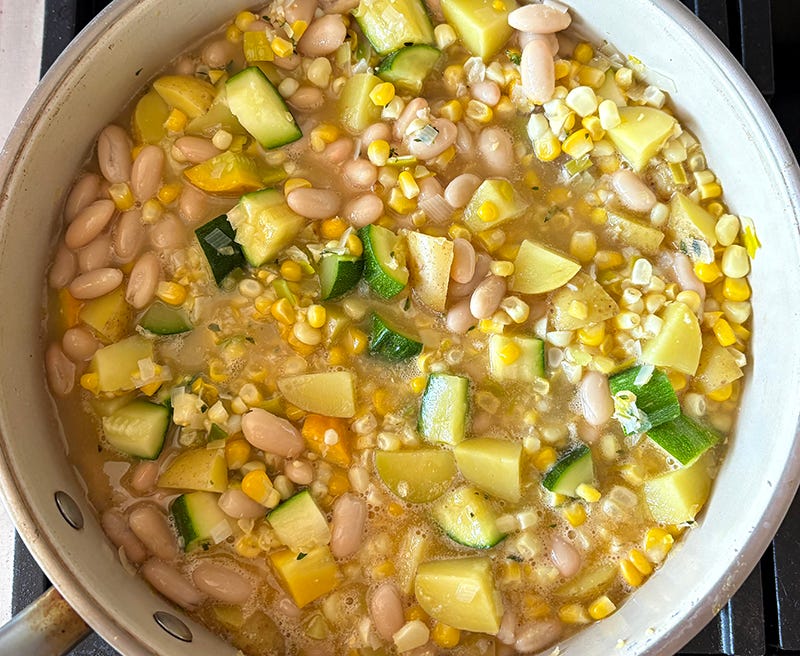
When the corn and squash are almost done, 5-10 minutes, add the beans and their liquid. Now add the cooked potatoes and enough of the cooking water to make a light stew, but not so much that it becomes soupy.
Simmer a few minutes then add the butter and cream to finish.
That’s it! Taste, adjust the seasonings, then let the succotash rest for a few minutes before serving.
Everything can be prepared in advance and sit while the fish is cooking. I’ve served this with cod (my favorite), scallops, haddock, halibut and salmon. Steamed clams make a festive garnish and paired with cod, you’ve got a meal worthy of an upscale seaside restaurant. Quickly sautéed cherry or Sungold tomatoes tossed with fresh parsley add a colorful summery touch.
You’ll notice I left out the salt pork. Apologies to my mother but I think for today’s tastes, the butter and cream provide enough richness. If you want, bacon can be used if no salt pork is to be found, but I’d blanche it first so the smoky flavor doesn’t take over.
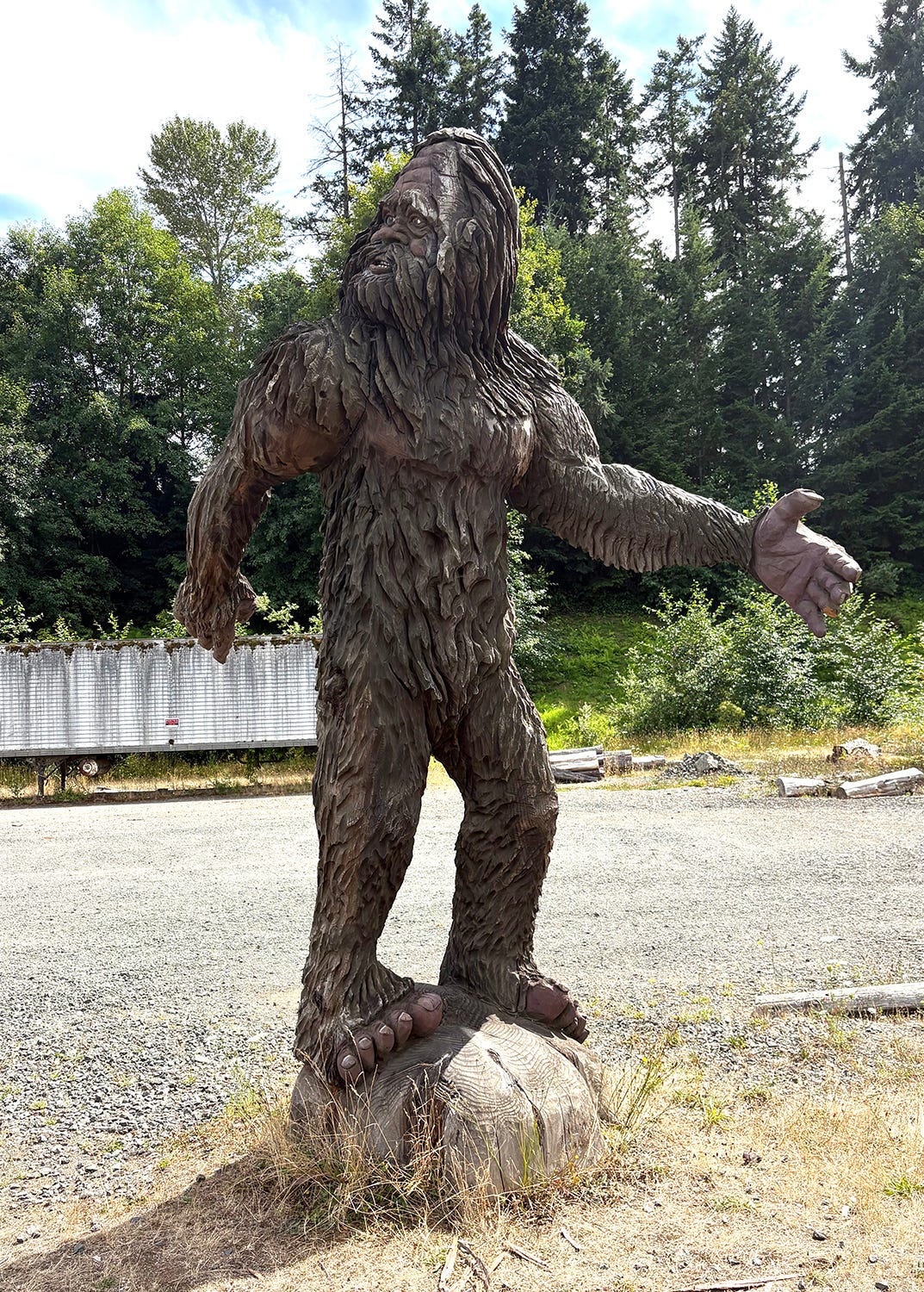
P.S. We didn’t totally forget about neon signs or other Vanishing Roadside Americana after leaving California. Washington’s Olympic Peninsula has its own unique oddities scattered along the roadside, chiefly Sasquatch, also known as Bigfoot, a large, hairy, mythical creature living in the deep forests of the Northwest. And we did see this guy, carved, (perhaps chain-sawed) from an enormous tree trunk, along with others we sadly didn’t stop to document. We think they fit right in, in their own quirky way, with the same traditions Mary Anne documents in her Vanishing Roadside paintings.
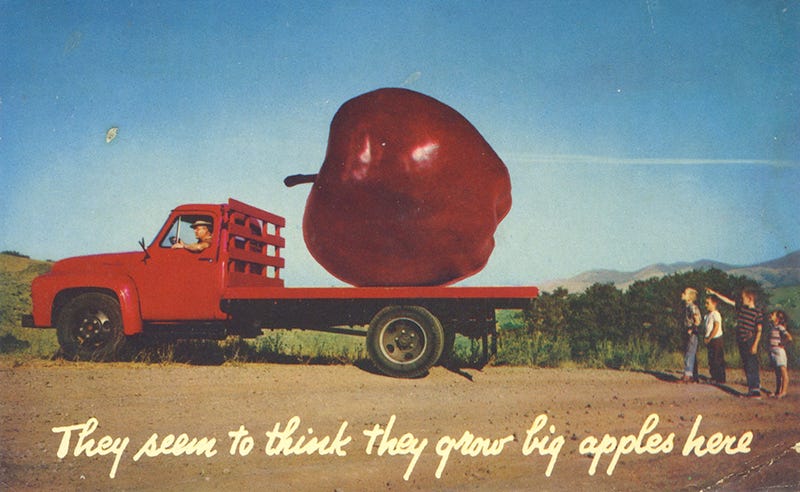
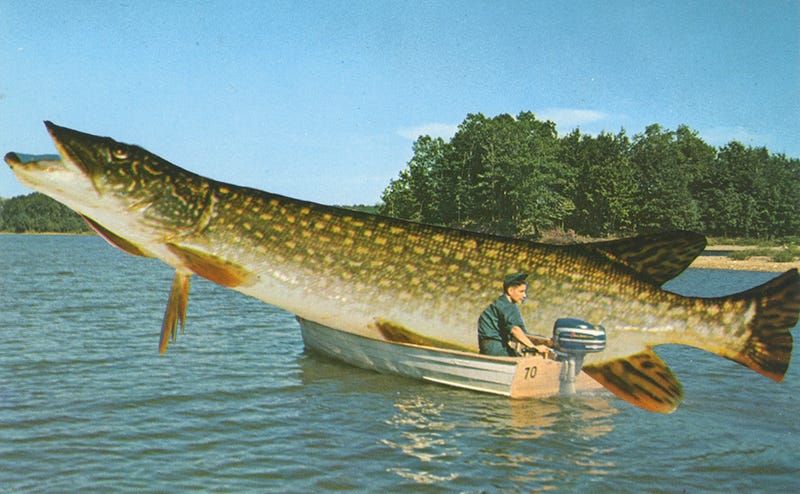
Like many states, Washington has its own humorous brand of playful boosterism, with tall-tale exaggerations of things unique to the local economy. Quirky postcards of giant apples and salmon the size of a station wagon have a similar appeal as do vintage signs in drawing attention to the region.
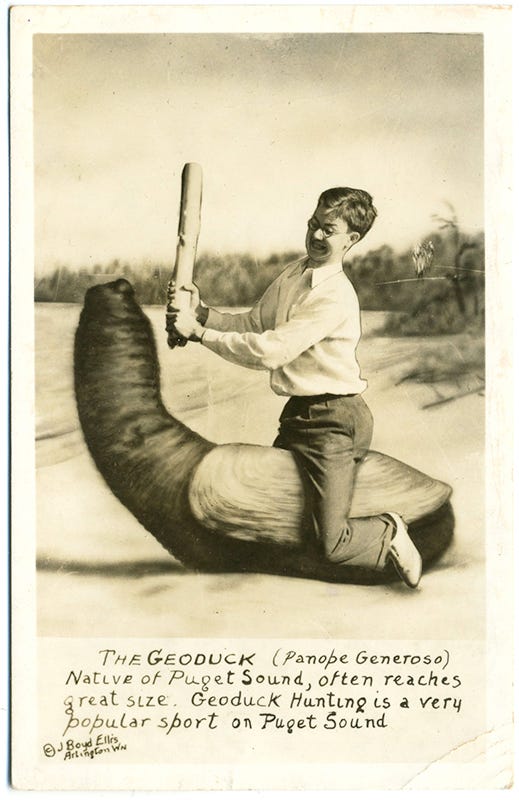
And then… there’s the regional phenomenon, the geoduck (pronounced gooey-duck), a clam whose appearance is so absurd it invites every double entendre imaginable.
Scenic views of Mount Rainier are magnificent.
But if you gave us one postcard rack and a couple of stamps, we’d probably come home with Bigfoot, a giant salmon, and a geoduck that defies polite description.
That’s roadside America at its best—equal parts history, humor, and irresistible weirdness.
Comments
Nothing yet. Say the first thing.
Sign in to join the conversation.