
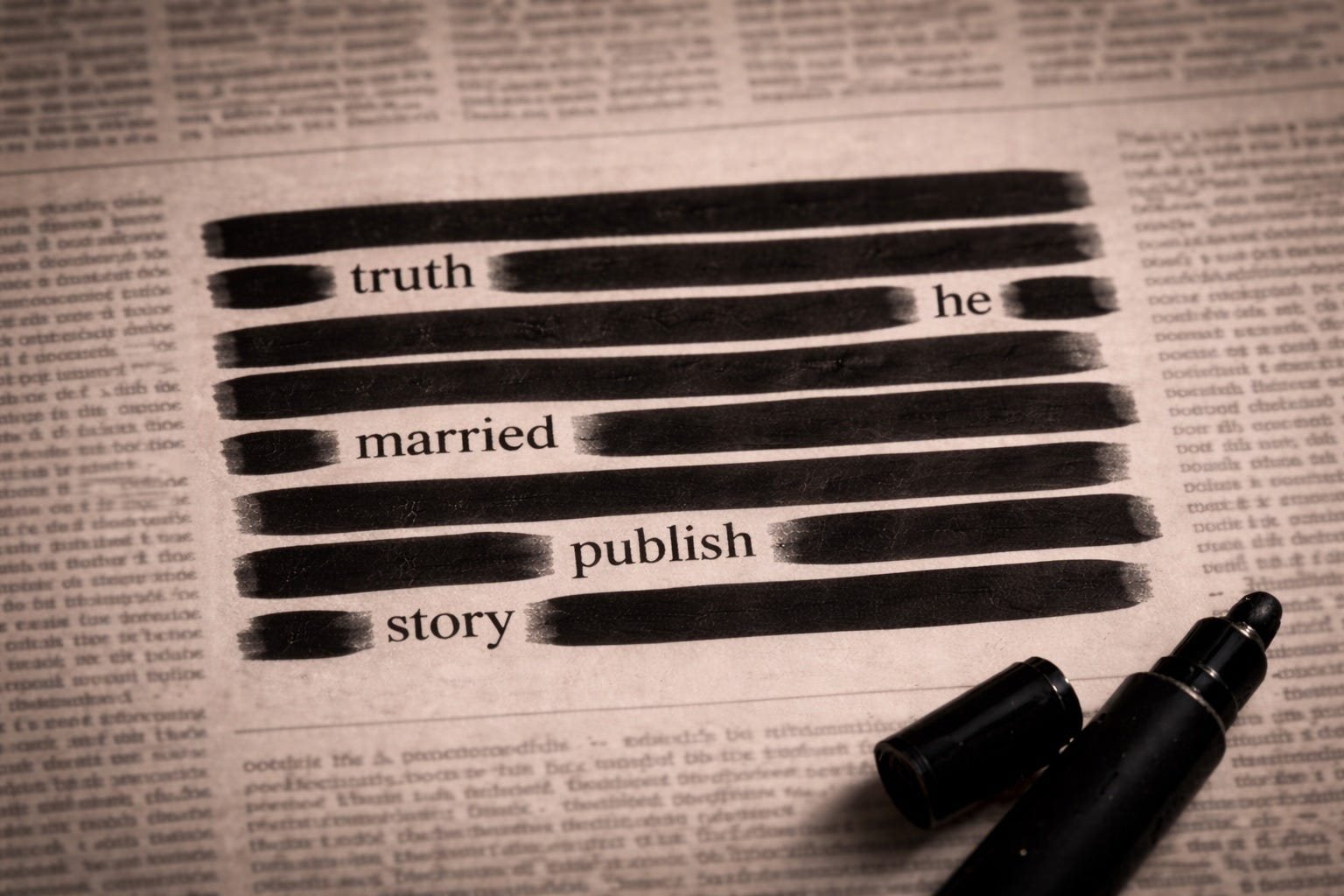
“This is my worst nightmare,” she cried. “It’s not your story to tell!”
Not my story to tell? I fumed. Whose is it, then? To whom does the story of my relationship belong, if not to me?
Once upon a time, I enjoyed a romance with a man I’ll call Arthur. Arthur was married, but he and his wife, “Guenevere,” had been living like roommates for years. She’d recently told him she had no interest in ever being physically intimate with him again.
Shortly after meeting, Arthur and I fell wildly in love. Before consummating our passion, I insisted he talk to Guenevere. I knew firsthand the devastation of betrayal—I refused to be part of any deception. He spoke to her, and she bestowed her blessing.
Arthur and I had an astounding amount in common. Perhaps too much. In addition to having the same taste in books, movies, and music, we were both stubborn, impractical, and highly emotional. Within a year, our passion had burned itself out in a spectacular conflagration of shouting and tears. After we recovered, a beautiful friendship rose from the ashes.

Several months later, I told Arthur I wanted to write the story of our romance to submit to a popular column about Modern Love.
Arthur was enthusiastic. He adored the idea of our passion becoming immortalized. I told him I’d run the piece by him before submitting. If he objected to anything, I’d consider changing it. No promises, but I’d try to honor his preferences. He said he was sure he’d love every word.
I worked on the story for months. Landing something in that column was a long-held dream. This was my first attempt—I wanted to get it right. I ran the story by several trusted readers and went through countless rounds of revision. When I’d finally managed to slash my original tome down to the required word count, I sent it to Arthur.
A half hour later, he texted.
“Sweetie, you can’t publish this. It would destroy things with Guenevere.”
Huh? He and Guenevere were now living separately and headed for divorce.
“She wants her privacy.”
“Your names aren’t in it.”
“She thinks people will recognize us. Besides, I look like a fool.”
Excuse me? That last part made no sense. Everyone who’d read my draft had fallen in love with the charming, handsome, endearingly goofy man I’d described. I believed I’d told our story faithfully and affectionately.
Arthur, however, had seen himself as a dragon-slaying rescuer of maidens. He felt he came across in the story as a feckless layabout, more in need of rescue than the resourceful damsel telling the tale.
I asked him to tell me which lines bothered him so I could revise them.
“ALL OF IT!” he wrote.
This was getting too intense for text. I called.
It turned out that immediately after reading my story, he’d phoned Guenevere—his closest friend besides me—to complain about how ridiculous I’d made him sound. When she’d learned of the story’s existence, Guenevere had completely freaked out. She wanted it gone.
“She’s barely in it!” I protested. “And everything I say about her is glowing.”
“Her family didn’t know we were separated then.”
“So? They know now.”
Apparently, Guenevere was an extremely private person who didn’t want anything about her life published anywhere, ever. Since Arthur had known about the story before I started writing it, I wondered why the hell he hadn’t mentioned this sooner.
We argued a while but made no headway. I hung up furious. He was distraught.
“Guenevere wants to talk to you tomorrow,” he texted later that night.
“Fine.”
“I’ll let you two work it out,” he wrote. “I don’t care anymore what you say about me. I just want the women I love to be happy.”
I stewed on this throughout a mostly sleepless night. I’d put an insane amount of work into the piece. Acceptance was a longshot, but I wanted to take my shot. I hoped I could ease Guenevere’s concerns by offering to omit more identifying details.
When Guenevere and I spoke, she explained that leaving out further details wouldn’t help. Her parents knew my name and that I was a friend of Arthur’s. Given the timeline and a few key elements—the very elements that made the story interesting—she was convinced that if they saw it, they’d recognize him.
What difference did it make, I wondered, since she and Arthur were no longer together?
I’d always liked the sound of Guenevere’s voice, which was smooth and melodious. Now, however, it rose in panic. “Because it’s my private life!” she cried.
Her parents were old-fashioned, she said, with increasing agitation. They would never understand how she could tolerate Arthur’s being involved with someone else while they still shared a home.
“Do your parents even read that column?” I asked.
“Sometimes!” she shrieked. And that’s when she said it, screamed it, really: That this was her worst nightmare. It was not my story to tell. “I can’t believe I’m even having this conversation,” she wailed.
“People have these conversations all the time,” I said, a hardness rising in me. “Anyone who writes about their life has to deal with the question of where their story ends and other people’s begins. It can be very hard to know where to draw the line.”
“You draw the line when you hurt someone!”
I told her I’d think about it and hung up, shaking.
For the next week, I vacillated, stymied. I wanted desperately to submit the piece. But as angry as I was with Arthur for not mentioning this potential roadblock earlier, I didn’t want to hurt him or Guenevere.
I reached out to friends and colleagues for advice. Though opinions varied, I was pleasantly surprised to find more people in Camp Submit-Your-Story than Camp Kill-It.
An artist friend summed up Camp Submit’s position thusly: “I just believe that having the right to tell our own stories should have primacy,” she said. “I don’t think anyone should be able to squash our self-expression. You’re not doing a hit piece. There’s no vindictiveness in it. You’re telling your own true story, and it happens to touch on someone else’s life. To my mind, in this situation, your rights outweigh theirs.”
William Faulkner famously said, “The writer’s only responsibility is to his art…If a writer has to rob his mother, he will not hesitate,” he went on to say. “Ode to a Grecian Urn is worth any number of old ladies.”
Remind me never to leave that guy alone with my mom. (Never mind, he’s dead.)
On the opposite shore from Faulkner sat the memory of my late stepfather Erich, a renowned statistician and a highly principled man. Many years before, I’d discussed with him a piece I was considering writing about one of my college professors—a brilliant and polarizing character. I’d wondered aloud whether the piece I wanted to write might hurt my former teacher’s feelings.
“If there’s a chance it could hurt him, don’t write it,” said Erich. “Nothing is more important than that.”
Somewhere between publishing whatever the hell you want—consequences be damned—and relegating your masterpiece to oblivion so as not to ruffle anyone’s feathers lies a vast river of nuanced approaches. These include examining your motives, changing identifying details, re-classifying your work as fiction, and allowing the passage of time. Figuring out what to do involves deep reflection on the relationships involved, the potential for harm, and how much the piece in question means to you. There is no short-cut. Serious soul-searching is required.
I now teach memoir-writing workshops. In every group, the problem of how to write about friends and family arises. Mostly, people bring up legal issues. These certainly exist, I tell them, but to my mind, the ethical ones are thornier.
As I agonized over what to do with my story, I found myself questioning my entire moral code. The question seemed not so much What do you want to do? as Who do you want to be? I’d always considered kindness my highest value. Now I wasn’t so sure.
I went to see my therapist.
“I feel like there’s this warrior inside me,” I told her. “She’s this Amazon, standing on a mountaintop, holding a spear, her silver hair streaming out behind her. She’s roaring into the wind. She wants her voice heard, and she doesn’t give a flying fuck who gets hurt along the way.”
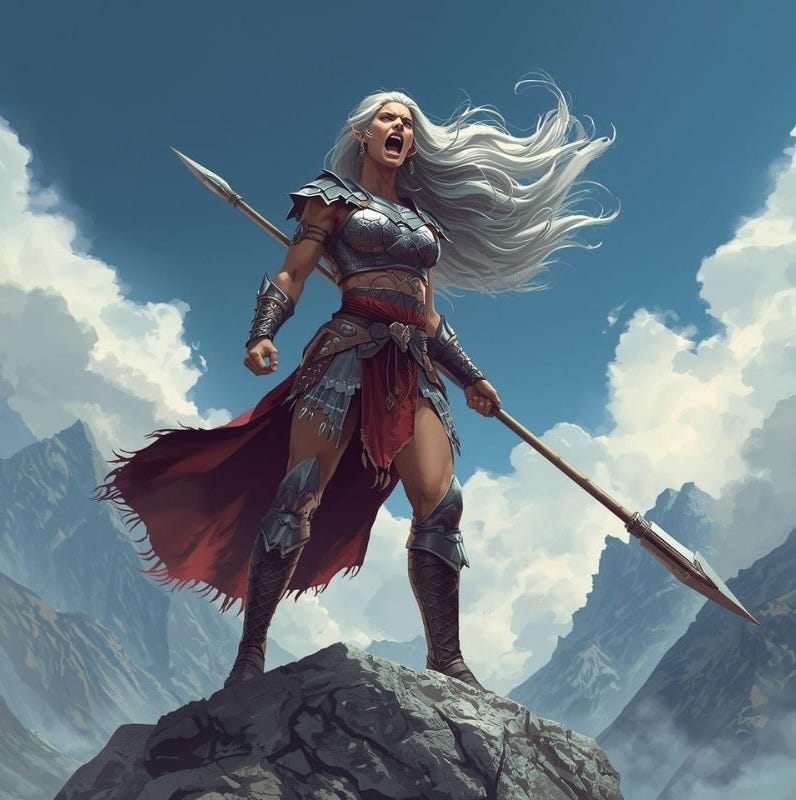
“Kindness is a complex concept,” said my therapist. “Particularly for women. Often it’s meant putting others’ interests ahead of your own. Maybe you’re coming into a different moment in your life, where you have other priorities.”
I wanted this to be true. But every time I came close to submitting the piece, I heard Guenevere’s voice in my head, crying, “This is my worst nightmare!”
Reader, I couldn’t do it. I told Arthur and Guenevere I would not submit the piece to that column. I also told Arthur I needed a break from our friendship.
Several months passed. Then one day I got a message from Arthur, saying that what I’d written had made him sad, but it would make him a lot sadder if our friendship ended.
I missed him too, but there were things I needed to communicate to get past the experience. I wrote him a letter detailing everything about it that still rankled: That he’d let me work on the piece for months without mentioning Guenevere’s feelings about privacy. That he’d shared the story with her without speaking to me first. That her fears about her parents’ opinions had stood in the way of my ambitions for my work.
Then I told him that, if we were to be friends again, there was something he needed to know: I would tell our story one day. I would keep my word not to submit it to that column, and I would do everything I could to disguise his and Guenevere’s identities, but I would find a way to tell it. And next time, I would not show it to him in advance.
He wrote back, “I hear and respect your raging roaring presence. I think you should write your stories always. This is your calling. Wherever you decide to send it—even there—I won’t stand in your way. Do what you think is best. I just ask that you respect my privacy. I trust you.”
Those three words, “I trust you,” changed everything. It was as if a fairy godmother had waved her wand, and my inner Amazon transformed into a pussycat. I began to feel tenderly towards Arthur again.
“Maybe your warrior was a protector,” said my therapist. “Once the threat was removed and no one was trying to prevent you from speaking, she was deactivated.”
Years passed. Arthur and I remained friends. Then one day, not so long ago, I told him I was writing a piece about what happened when I tried to tell our story.
“There won’t be a single detail in it that could possibly identify you,” I assured him.
“Great!” he said. “I can’t wait to read it.”
“You can read it when it comes out.”

Where do you stand on the rights of the artist to expression vs. the right to privacy of those they come in contact with? Share your thoughts in the comments!
If you found this post compelling, I invite you to help me reach more people by sharing it.
Photos and text ©Tanya Shaffer, 2026. All rights reserved. Photo of Tanya in red coat by Robert Chester, @rchesterphotography. Woman warrior image created in Canva.
Longing to tell your own stories? My writing workshops help you get those haunting images out of your head and onto the page. I also offer private coaching and editing. Reach out!
Comments
Nothing yet. Say the first thing.
Sign in to join the conversation.