
Dear Friends,
Before we dive in, I’d like to announce that summer Off-Leash Writing Workshops start online at the end of June. If you’ve been aching to explore your life on the page, I invite you to join us! See dates at a glance.
Last year, I began writing a piece called You’re Gonna Be a Star Someday, about growing up acting on stage in Kansas and California, and my father’s belief, which was also my childhood dream, that I’d one day become a star of stage and screen. I intended a single essay, but it quickly morphed into a multi-part exploration of my journey as a performer, a journey that carried me through college and the first fifteen years of my professional life.
You don’t have to read the previous installments to understand this one. Each piece is intended to function as a standalone essay. However, if you’d like, you can find Part 1 here, Part 2 here, and Part 3 here. You can also find a sequel to this essay, called On Becoming a Reed, here.
Enjoy!
Tanya

THE BEST VISIT EVER
When I was thirty-three years old, I was touring with my solo show Let My Enemy Live Long!, inspired by my travels in West Africa, and I performed a couple of shows in my hometown of Lawrence, Kansas. After the packed Saturday night performance at the University of Kansas, dozens of people—many of whom I’d known all my life—surrounded my Vati and me. (Vati, pronounced FAH-tee, is German for Daddy). They heaped praise on us, hugged us, and shook their heads in amazement, gushing about the little girl I’d been and the adult I’d become. They always knew I was headed for greatness, they said.
Several days later, I stood with my suitcase in the flagstone entryway of the house I grew up in, hugging my Vati goodbye before the shuttle arrived to take me to the airport.
He gazed at me, his eyes shining with love and pride.
“This was the best visit ever,” he said.
I don’t remember my response. I don’t even know whether, in the moment, his comment gave me pause, but I’ve thought of it countless times in the twenty-five years since.
I’d been living away from home for more than a decade at that point. There had been many, many visits. Why was that one the best? What made it better than others, in which we’d shared laughter, tears, and deep, tender conversations?
I know the answer, of course. On this visit, everyone we knew had turned out to see and admire me.
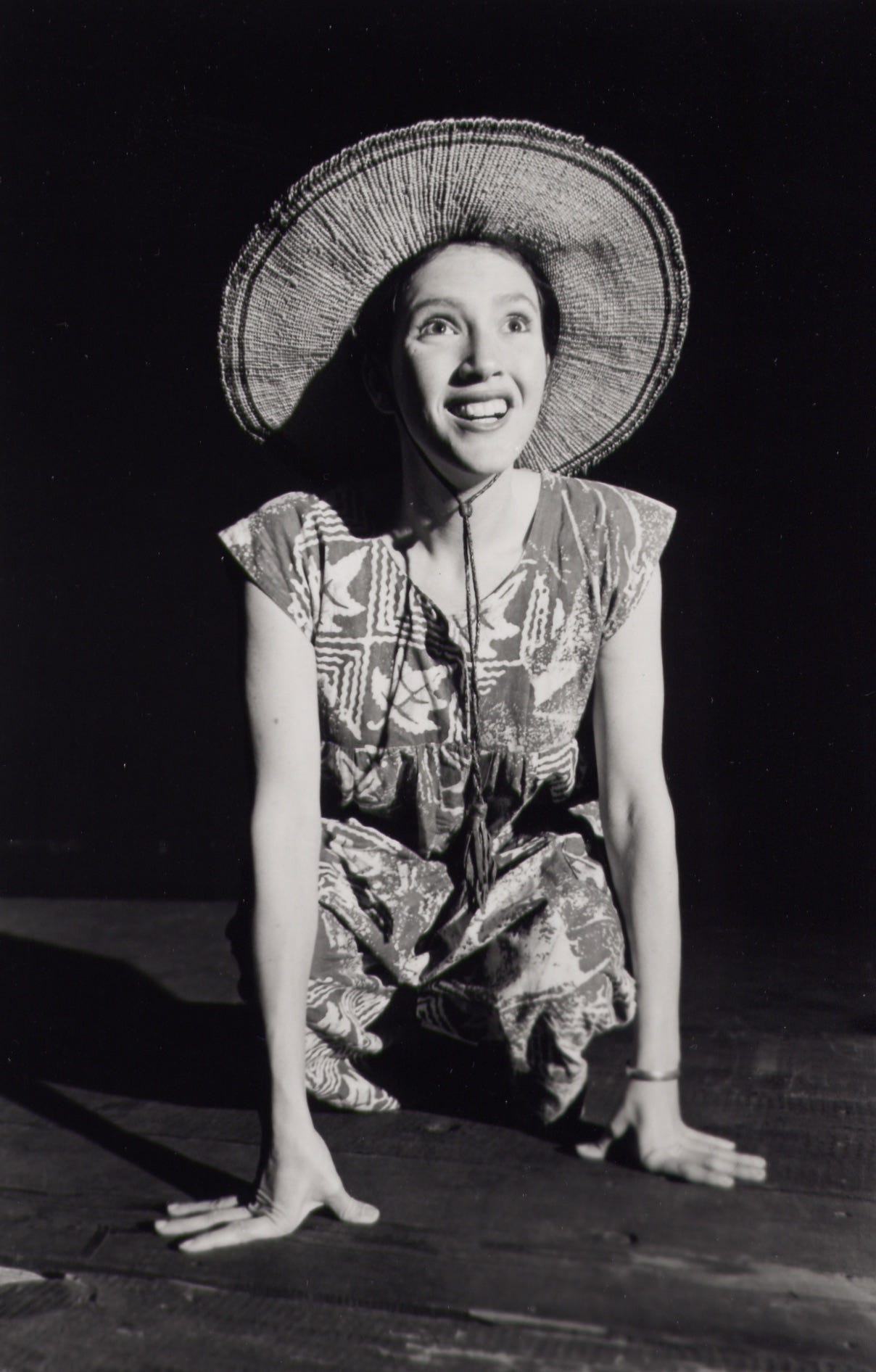
My Vati always delighted in sharing my gifts with the world. He was just so proud of me. In his eyes I was an absolute miracle, and he wanted the world to know it.
So what’s wrong with that? you ask. Shouldn’t a father be proud of his daughter? It’s a lot better than the opposite.
You’re absolutely right. There’s nothing wrong with it. I’m not trying to paint my father as wrong. I’m just trying to understand the effect this particular form of adoration had on my life.
I’ll turn sixty this year. I’ve managed to have a career in the arts, as an actor, writer, and more recently teacher. I love the work I do and the life I’ve made. And though I’ve been blessed with the support of some loyal fans of my performing and writing over the years, I’m certainly not a star. You might think at this point I’d no longer be living my life in conversation with the wishes and hopes and dreams of the person who loved me most, especially when that person has not walked this earth in human form for sixteen years.
But if you thought that, you’d be wrong. Even after all this time, I feel the need to explain myself: to him, to you, and to myself.

START SPREADING THE NEWS…
During the years in which I acted professionally in and around the San Francisco Bay Area, I was plagued by the question of whether I should stay there or move to New York or Los Angeles, where the opportunities for career advancement would be greater.
I remember one Bay Area casting director looking me up and down with an appraising eye and saying, in an almost accusatory tone, “You should go to L.A. You’d do well there.”
In truth, that was never going to happen. I may have looked the part for that brief moment, but I’m a hippie at heart. I can’t walk in heels, I’m terrified of waxing, and I’ve never had a pedicure in my life. I’d rather hike through three feet of snow in a hailstorm than spend the precious hours of my life in a gym, and I’d commit harakiri before I’d ask someone to take a knife to my face with the intent of making it appear more youthful. LA and I would not, could not, be a match.
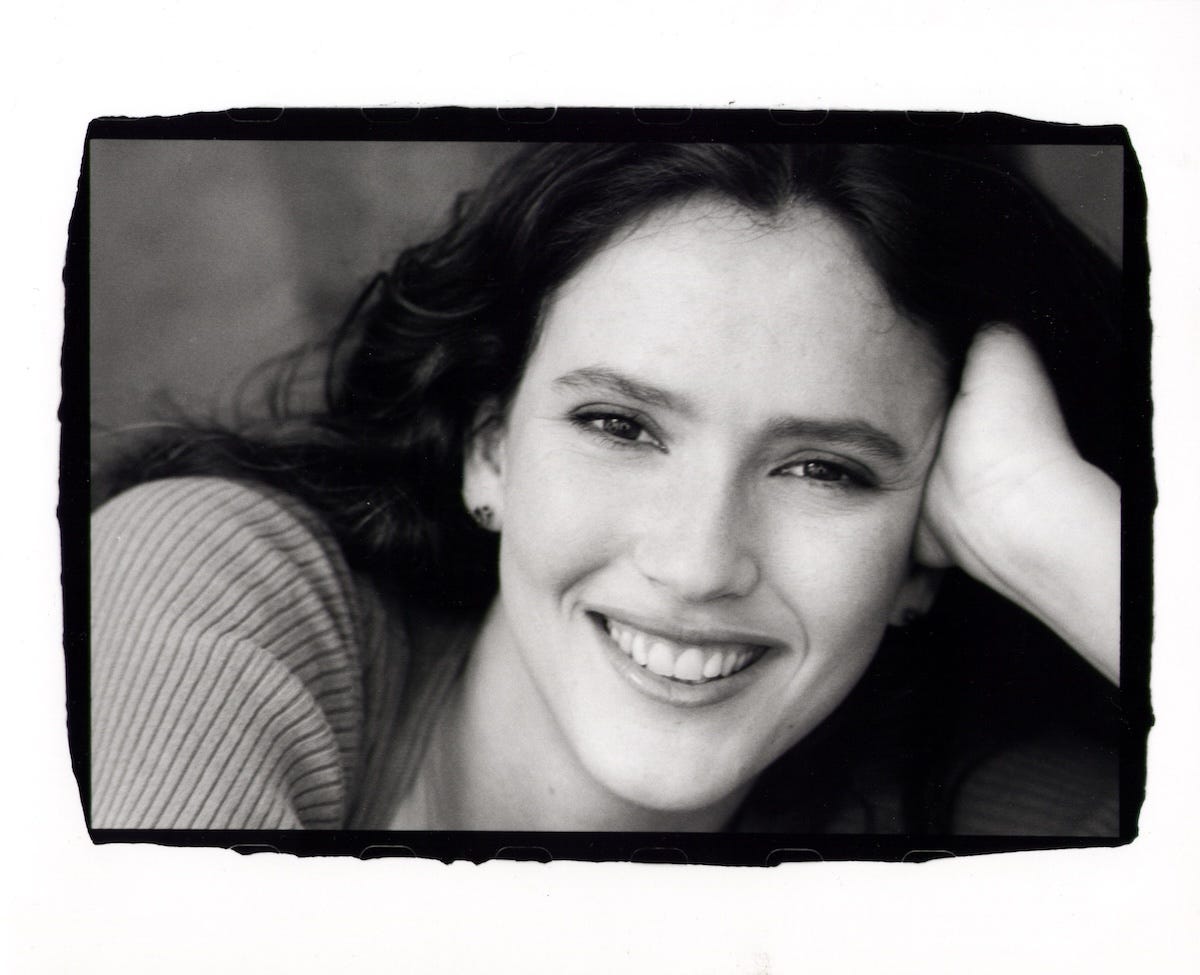
New York was another story. I am, after all, a theatre kid. By the time I was ten, I was belting out, “God, I hope I get it” and, “If I can make it there, I’ll make it anywhere,” with jazz hands and fancy footwork in my living room. There was definitely a part of me that wanted to take my shot on the Great White Way.
Year after year, I considered a move, and year after year, I kicked the decision down the road. Was I afraid? Certainly. Was fear the deciding factor? To this day, I can’t say for sure.
What I knew was that I loved my Bay Area life. I knew how to do things there. The theatrical casting directors all knew me and regularly called me in. I’d also developed a following for my original work. I could produce my own shows and reliably fill a one to two-hundred-seat house.
One night in 2002, when I was in San Diego for a run of Let My Enemy Live Long!, I went out to dinner with a man named David. He was living in Washington, DC, at the time, and I was living in San Francisco. We’d met a few years before at one of my performances, and he’d been on my email list ever since. I’d found him intriguing, but I’d never had the opportunity to spend meaningful time with him until that night. A month later he relocated to San Francisco and moved in with me.
David’s work took him all over the world, but when he wasn’t traveling, he could work from anywhere. After finishing an acting gig with A Traveling Jewish Theatre in San Francisco, I too was footloose and fancy-free.
In those early days of our relationship, we moved around a lot. We were already working on having a baby when we decided to spend some time in New York. I figured if I was ever going to scratch the New York itch, this was the moment.
We found a sublet on the Upper West Side, with a balcony facing the Cathedral of St. John the Divine. I’d written a new play called Baby Taj, inspired by my travels in India, and I was hoping to set up a reading for it in New York. As we settled in, I also scanned the audition listings.
Within a week of arriving in New York, I connected with an Indian theatre company who agreed to produce a reading of Baby Taj. I set to work immediately on rewrites.
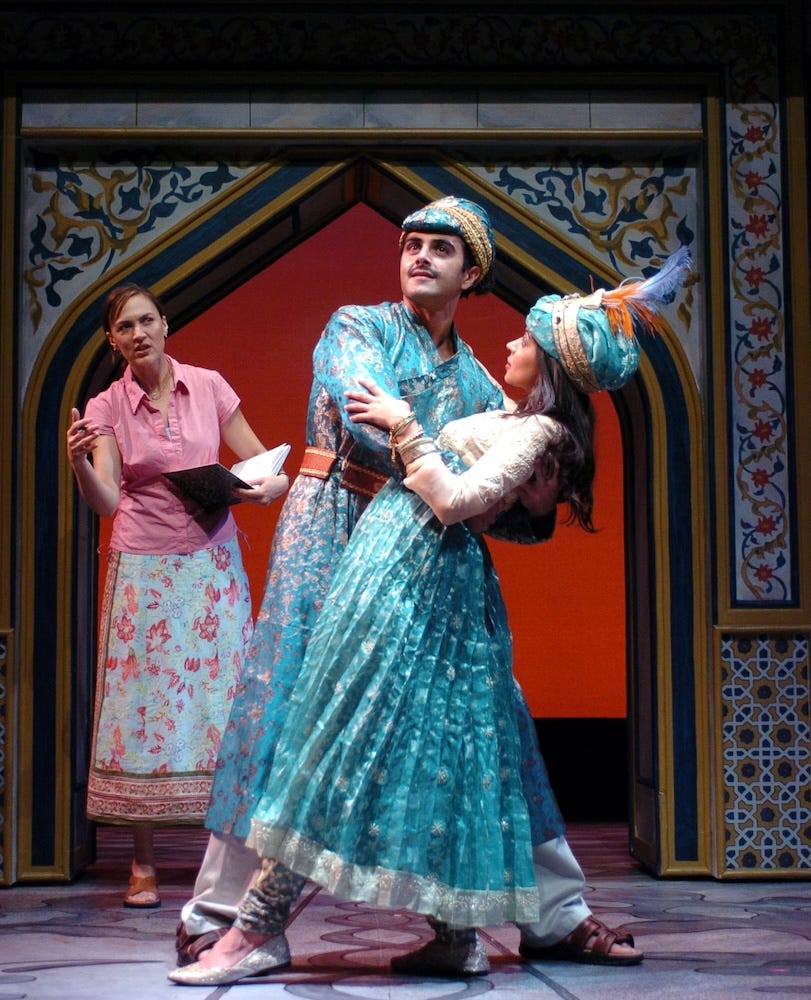
As the days and weeks slid by, I noticed that although I continued to glance periodically at the listings, I wasn’t auditioning. Whenever I saw a project that looked interesting, I’d talk myself out of it. It was out of town, the pay was too minuscule, the contract too long … I told myself these things, but soon I had to face the fact that the idea of getting started in New York no longer made sense to me. I was thirty-five. My biological clock was ticking so loudly it was practically all I could hear. What would I do if I got a gig? Put my motherhood dream on hold? Keep trying to get pregnant and risk having to drop out of the show? That would not be the way to ingratiate myself with the casting people in a new market!
Ultimately, I just didn’t have the will. Somehow, during those years of indecision, my New York acting ship had sailed. Or maybe my indecision had been a decision all along.
I’d thought so often over the years of a line from the poem The Waking, by Theodore Roethke: I learn by going where I have to go. Once again, my actions—not my rational mind—showed me what was true. Perhaps I’d pursue Broadway stardom in another lifetime. In this one, I had other plans.
And then, after several months of ovular tracking, I peed on a stick in the tiny bathroom of our Upper West Side sublet and saw that tell-tale second blue line. I was pregnant.
We returned to the Bay Area. My son was born in Oakland, California, in the summer of 2003.
I’d thought that once I became a mother, I’d take some time off from acting and then return, albeit at a more measured pace. But again, as the months went by, my actions told a different story.
Theatre had always fulfilled the extrovert in me, while writing had fulfilled the introvert. Now all my outgoing energy flowed towards my child: playing with him, learning from him, keeping him engaged. In my work life, I wanted nothing more than to turn inward and be with my thoughts.
In addition, a professional performance schedule would have taken me away from my son six nights a week and weekend days. There was no way I was doing that. I wanted to put him to bed.
Up to this point, the writing and acting parts of myself had engaged in a gentle tug-of-war for dominion. Now the decision made itself: I stopped acting.
BUT YOU’RE SO GOOD
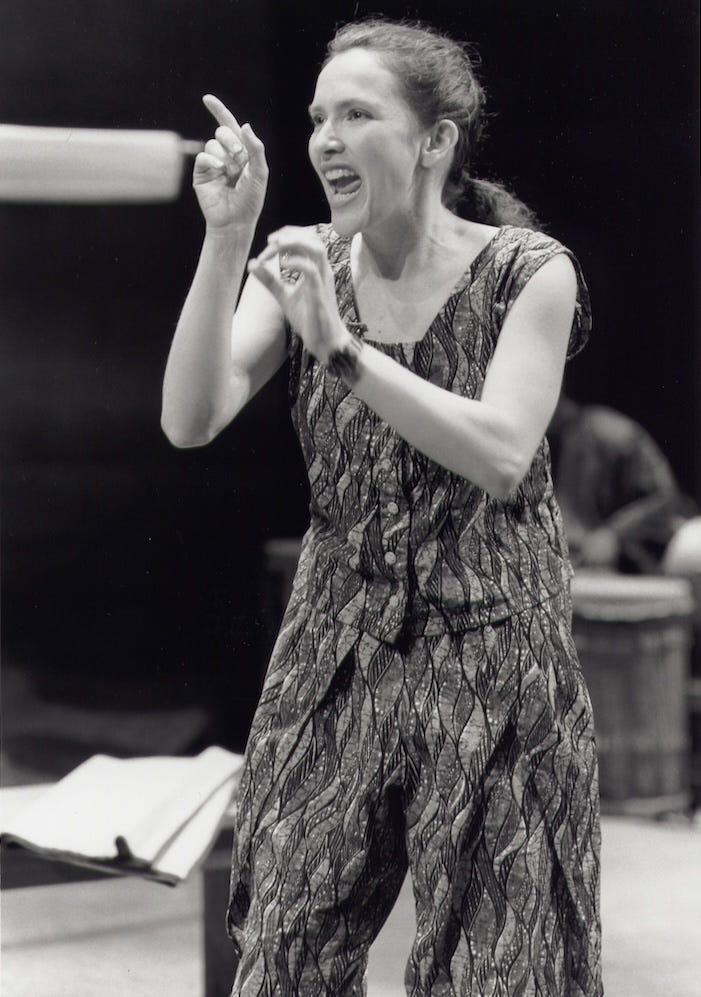
Somehow my father never seemed able to accept the fact that I wasn’t performing anymore. Every time we spoke, the conversation made its way to when I’d start performing again. When I reminded him I’d quit, he’d say something like, “For now. But you’re so good! I’m sure you’ll go back one day.”
This always threw me into a tizzy of self-doubt. I’d try to hold my ground and tell him it was entirely possible I would not go back. But no sooner did I say that, than anxiety would overtake me, and I’d undercut myself, muttering, “I mean, never say never, maybe some day, but …”
This happened over and over. He’d question my choices, igniting my uncertainty. Every time I answered him, it reopened a painful internal dialogue.
Unpacking it now, from the vantage point of decades, I see that his “You’re so good” called forth a sense of obligation. There seemed to be an assumption that if you were good at something, it was your duty to pursue it at the highest possible level. As if you owed that to the world.
But was I that good? I was a solid journeywoman actor. Through study and practice, I’d acquired the physical, analytical, and emotional technique to embody characters, interpret text, and convey my character’s dramatic arc to the audience. I was good in most roles and great in a few. But I knew actors who had far greater emotional facility than I did onstage. I knew my strengths and I knew my limitations.
So whenever my father said, “But you’re so good,” a storm of emotion moved through me. A part of me wanted to believe I had the kind of gift that would leave the world bereft if I stopped performing. Another part knew I did not.
The exchange about my acting tainted many of the conversations I had with my Vati in the final years of his life. In retrospect, this seems beyond ridiculous. I don’t blame him—he was just being himself. Why on earth couldn’t I just let it go?
But perhaps I shouldn’t be too hard on my younger self either. Family patterns run deep. A lifetime of attachment and a profound entangling of his wishes and desires with my own made it impossible for me to simply say, calmly and firmly, “I have no plans to act again,” and leave it at that.
So why, even now, as I sit here writing, do the emotions rise in my chest, bringing tears along for the ride?
A DIFFERENT KIND OF GREATNESS
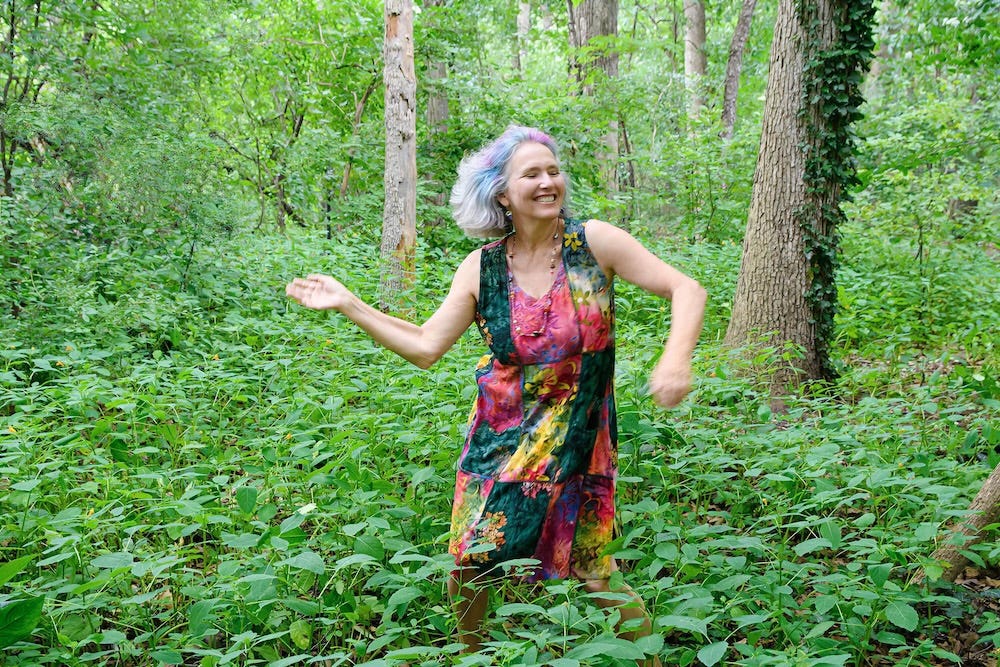
I often think when you’re brought up with the message that you’re destined for greatness, it’s hard to make peace with just being a person.
In her essay, “We Are in Training to Be Nobody Special,” Buddhist teacher Sandy Boucher talks about the challenge of letting go of the ego’s need for exceptionality. Changing our beliefs about ourselves can be a challenge, but it can also be a relief.
“I’m simply a person,” I tell myself now, “and that’s enough.” Then the words of the poet Maya Stein float into my head: “I’m aiming for a different kind of greatness.” And once again, tears rise.
Over the last two decades, I’ve arrived at a sense of clarity within myself that my work here is to write. It’s not the only thing I do, but aside from my personal relationships, it’s my top priority. As a writer, I strive to tell the truth with as much precision, complexity and depth as I’m able. This is an intention that has no endpoint. I will never arrive. It’s also a goal whose success can’t be measured. Publication, money, praise—these things feel good and keep me going, but they are not the goal. The goal is continued doing. The dailiness of sitting with notebook or computer and stringing together words, trying to name that which moves through me but is not of me. I might call it the human experience. I might call it life. I might call it the Mystery.
So yes. I’m on a quest to be nobody special and I’m aiming for a different kind of greatness. Though this appears paradoxical, I believe the two aims are compatible, because the greatness I’m aiming for is available to all of us. It’s one that arises from pointing myself repeatedly towards truth, care, and attentiveness and trying to stay the course. It’s the kind of greatness that can be found and lost and found again each day. The kind that can provide a meaningful scaffold for every moment of life. The kind that needs no external acclaim.
Which leads me back to my Vati. In his eyes, the sun rose and fell on my every breath. Every word out of my mouth was a miracle. Did this have something to do with all he survived—exile from his native country; the loss of his beloved uncle, his first wife, his second-born child, his dear mother and so much more? Or was it simply that the beam of his love shone so brightly that he could see nothing else, and in his enthusiasm, he wanted all the world to see what he saw?
Ultimately, the “why” is unknowable. What I do know is that, though there were moments when the weight of his expectation felt like a burden, the gift of being loved so completely far exceeded any accompanying cost. He gave me the message, every day of my life, that I was lovable. And though there were certainly times in my twenties and thirties when I lost the ability to access a sense of my own value, it never entirely left me.
The Buddha said that all beings are equally deserving of love. You yourself, he said, deserve no more or less than any other. If I accept this as truth, then the gift my Vati gave me—the belief in my own inherent value—extends outward to everyone I meet. He taught me to love myself, and loving oneself is the prerequisite to loving all others, including, dear Reader, you. Can you imagine a greater gift?
Please share this post with anyone you think would enjoy it!
Want to write your own stories? I offer writing workshops and private coaching and editing. Check out the summer offerings here.
If you enjoyed this piece, you might enjoy the rest of the You’re Gonna Be a Star Someday series: Part 1: The Triumphant Team, Part 2: Where I Have to Go, and Part 3: My Fairy God-Juggler and Beyond.
Comments
Nothing yet. Say the first thing.
Sign in to join the conversation.