
There are days we live as if death were nowhere in the background.
-Li Young Li, “From Blossoms”
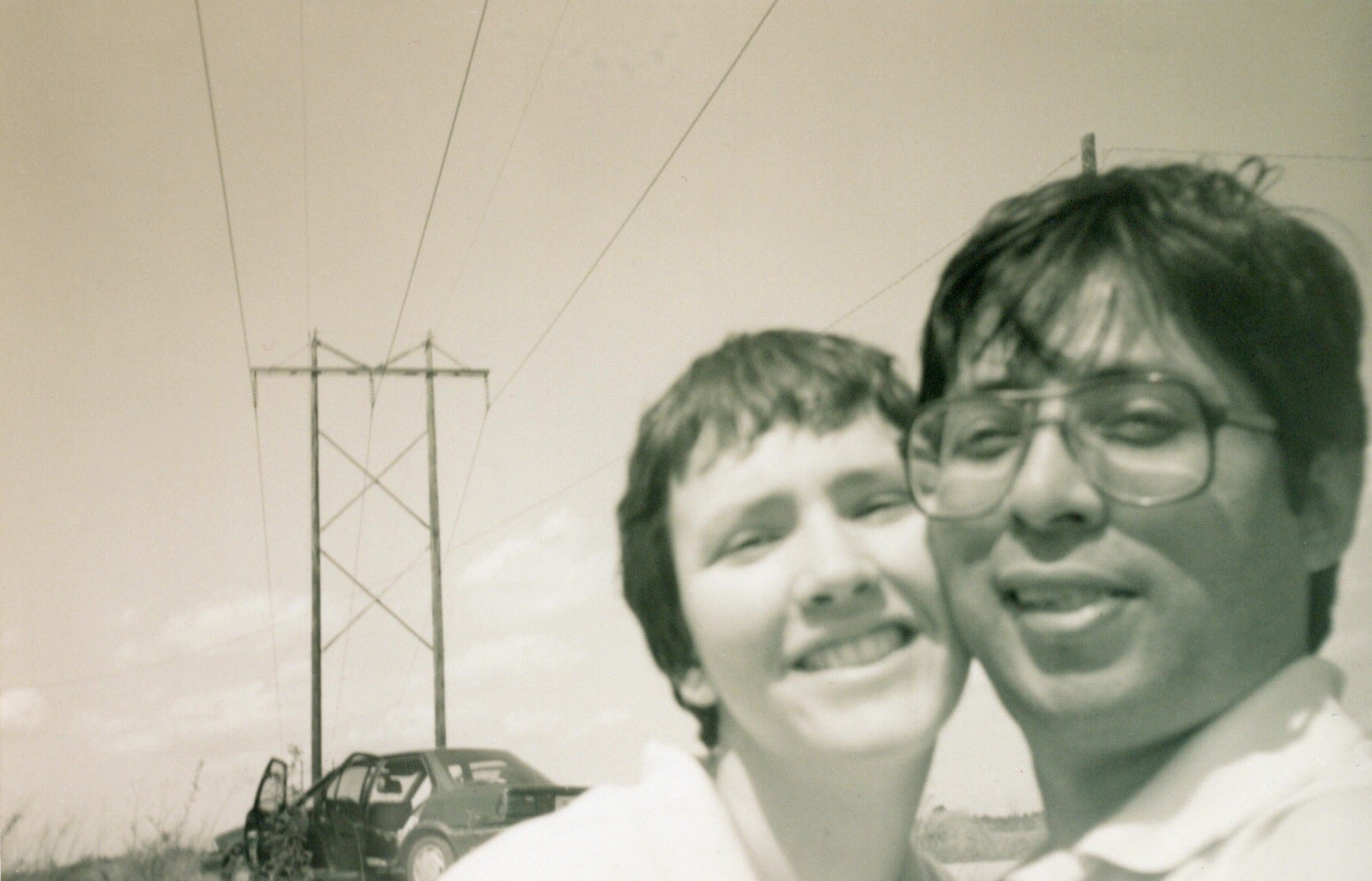
I was twenty-three when I met Richard Talavera. A young twenty-three. He was not my first boyfriend, but he was my first real love.
He was thirty-eight, but I never felt an age difference. To me, we felt like equals. Twins. Two souls who’d found each other in an open field where nothing existed but the story we were creating, as if we’d plucked each other from our respective imaginations, picked up blank sheets of paper and begun to write.
We met in a playwriting workshop sponsored by El Teatro de la Esperanza, a Chicano theatre company in the San Francisco Bay Area. Although I’m of Eastern European Jewish descent, I’d been invited to participate because I was fluent in Spanish and was writing a play inspired by my experiences in Nicaragua. Richard had a gentleness about him, a softness to his voice and manner. For a while I assumed he was gay.
One night our playwrights’ group was gathered at the cozy house in Richmond, California, that Richard shared with his roommate, Rubén. We were trying to come up with alternative names for my play-in-progress. The working title was Work, which we all felt lacked a certain no sé qué. People were throwing out ideas, both silly and serious. We were all a little drunk.
“Sharks in Still Waters!” shouted Richard.
“Why?!” I asked, laughing.
“Because Lake Nicaragua is one of the only lakes in the world with freshwater sharks!” said Richard.
After that, whenever there was a lull in the conversation, Richard would shout, “Sharks in Still Waters!” and we’d all crack up.
A while later, I was stretched out sideways on the living room rug, an elbow crooked against the floor, my head propped on my hand, with Richard beside me. I was telling him I had no hips, that I’d never had hips, that the lower half of my body went straight down the sides like a teenage boy’s.
He ran his eyes over my extended form and said sexily, “Mm, no, I disagree.”
A chemical reaction shot through me. Something fluttered in my chest.
I guess he’s not gay, I thought.
The next morning, I had an irresistible urge to call him. I dialed his number three times. Each time I chickened out, hanging up when he said hello.
I made myself take a break. Then I gathered my courage and dialed the number one more time.
“Hi,” I said. “This is Tanya.”
“Fantastic!” he crowed.
And so it began.
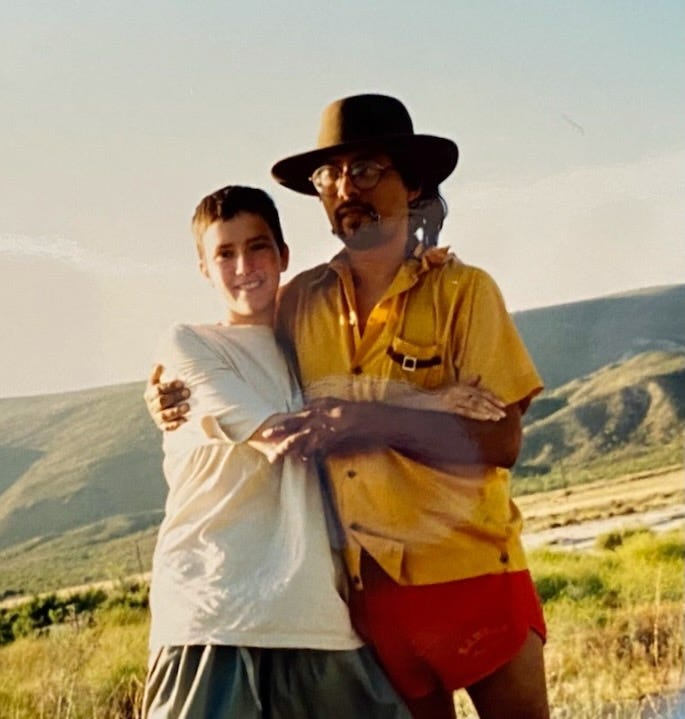
I hold you in my heart like the love that holds the stars in place.
- Richard Talavera, in a letter to me
Unfortunately, I was leaving the next week to spend a year in Ann Arbor, Michigan, helping a college friend start a theatre company.
Richard and I made no promises, but we stayed connected. He sent the most wonderful letters. He made me tiny cartoon books. In poetic language, he unfolded dreams, memories, and romantic imaginings. I fell in love with the humorous, whimsical, brilliant mind I was corresponding with, even though his spelling was atrocious.
I poured my heart into my missives as well, sharing intimate stories I would have felt shy to speak aloud. Within those pages, I felt free.
I planned a visit to the Bay Area to see my family. Richard saved a lot of time for me. He gave me several windows when he was available and alerted me to a couple of times when he wasn’t.
At that time in my life, I was often plagued by fickleness. I’d get interested in someone, but when they reciprocated, I’d back way up. It seemed I was playing games, and I suppose I was, but I couldn’t help it. I’d want something, someone, and then suddenly I wouldn’t, like a switch flipping off.
When I got to California for my visit, this skittishness emerged. I declined to see Richard until the last of his available times. Something in me was backpedaling, tearing away at top speed. When we finally got together, I told him I just wanted to be friends.
“Okay,” he said easily, “but I want you to know that if you change your mind, this would be my ideal relationship.”
No defensiveness, no attempts at persuasion, no apparent hurt or anger. Just an openness, an invitation. I’d never experienced anything like it. It floored me.
This easiness around others’ behavior was a quality in Richard I came to know well. He was extraordinarily accepting. If I complained about something a mutual friend was doing, he’d just shrug and say, “That’s so-and-so.” He took people as they were, never seeking to smooth over their prickly parts or inconsistencies.
I’m embarrassed to admit this, but after he made that astonishing pronouncement, I asked to see him again at one of the few times he’d said he was not available.
He said no. He reminded me he’d offered many available windows for us to spend time together, and I’d passed over most of them. He would not change his other plans.
Which of course made me want him again.
I returned to Ann Arbor, and our correspondence picked back up, with even greater intensity.
I love the man beside me
We love the open road
No phones till Friday
Far from the overkill
Far from the overload
-Joni Mitchell, “Night Ride Home”
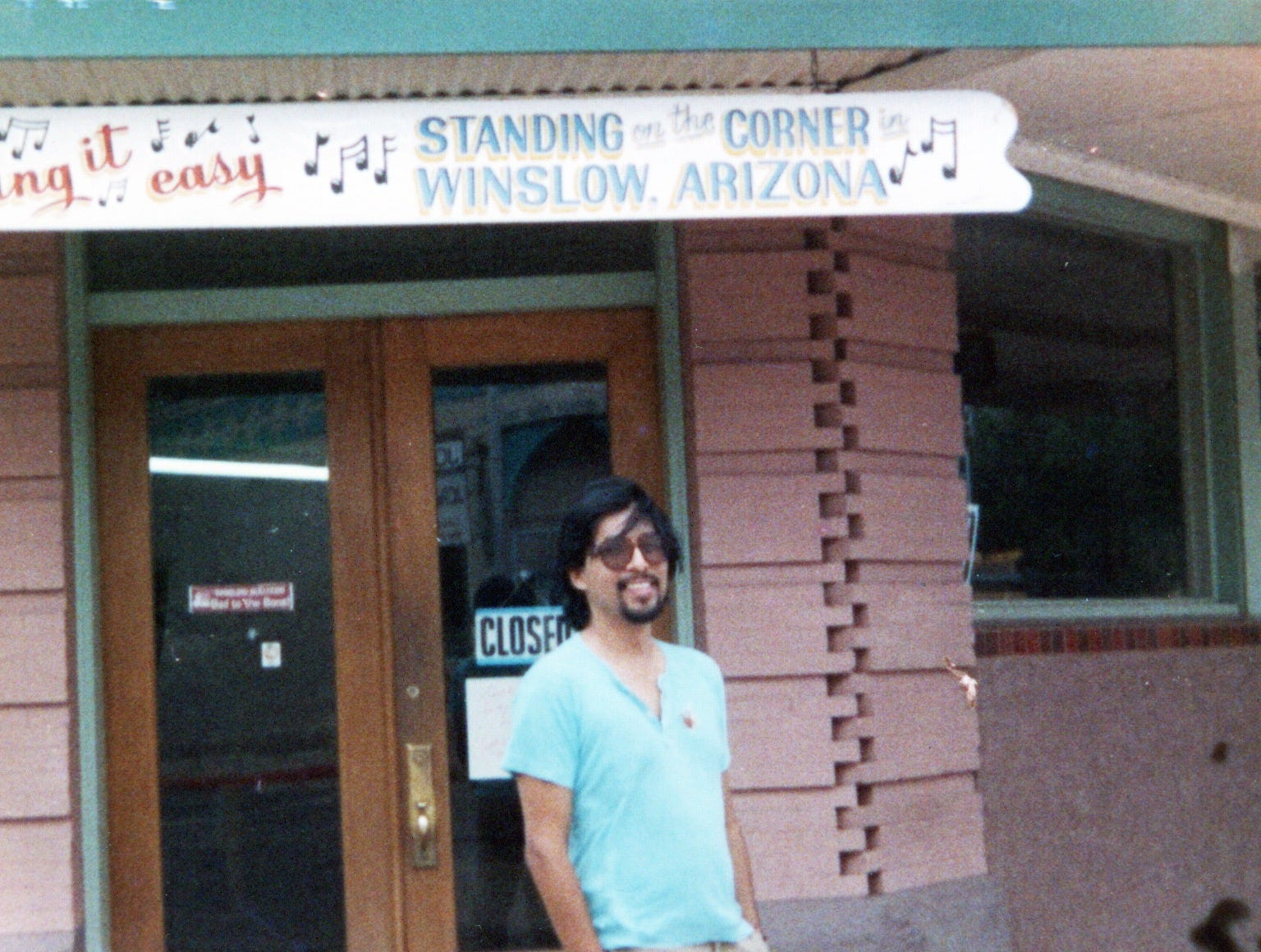
When my year in Michigan was up, Richard took a Greyhound across the country to meet me. We drove back from Michigan to California together, camping along the way, and it was love and love and love and love. We shared our life stories, from childhood onward, filling what Richard called “expanding time” with our words. We recounted the rise and fall of our previous relationships, calling each story “The Book of [Name of ex].”
We played our favorite albums and sang along. We laughed as we tried to wrap our mouths around Joni Mitchell’s rapid-fire lyrics, crowing at the top of our lungs:
The last time I saw Richard was Detroit in ‘68
And he told me all romantics meet the same fate someday
Cynical and drunk and boring someone in some dark café
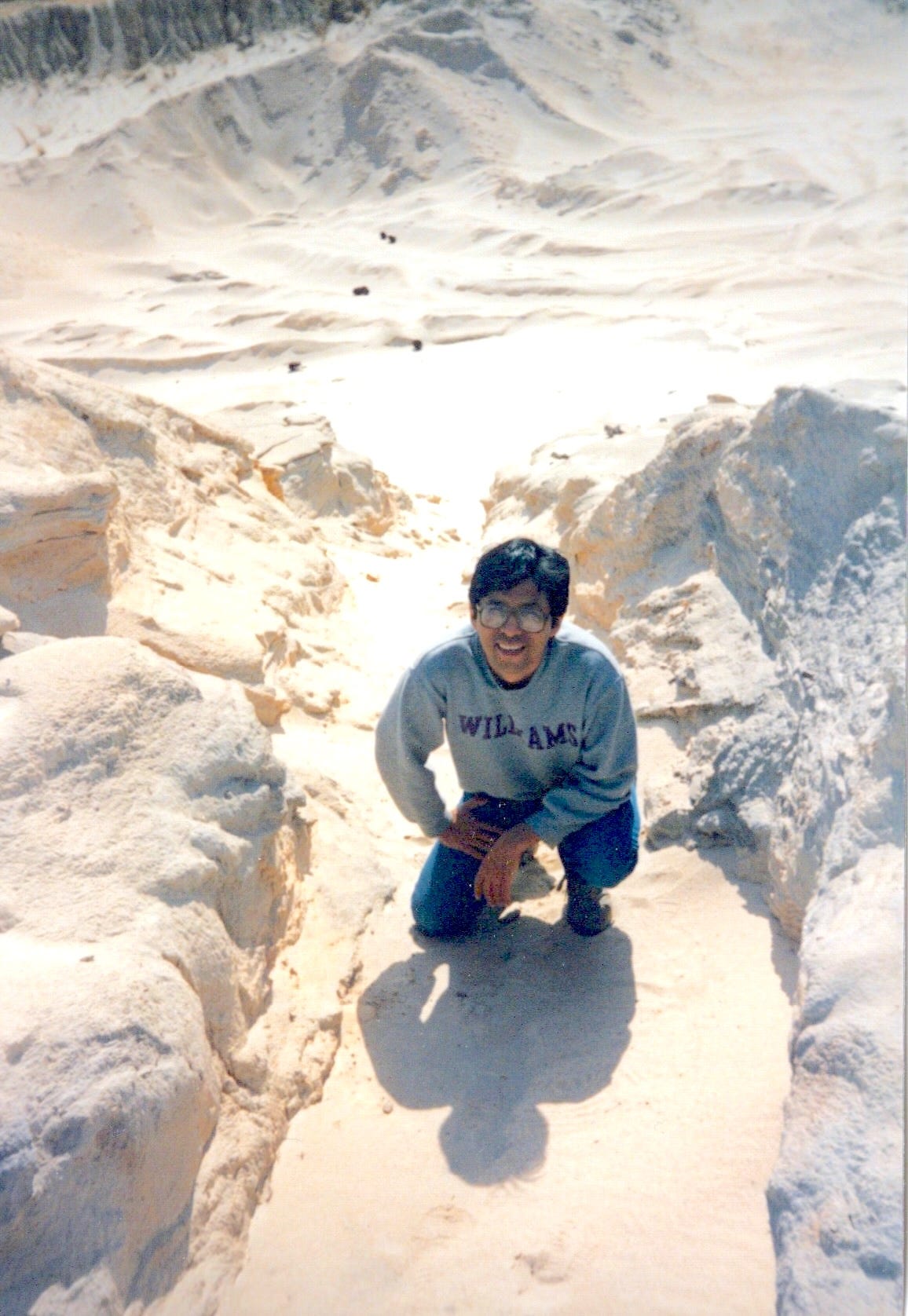
Early in the trip, we visited the Warren Dunes in Southwestern Michigan. It was late afternoon, that marvelous, glowing, witching hour. We were in a grove of ferns surrounded by oaks and maples, frolicking in the dappled gold and green light. I felt we’d been transformed into woodland sprites. We played like children, laughing and rolling around on the ground, and I was happy in a way I … well. Have I ever been that happy since?
Do we know, at the times we’re happiest, just how happy we are?
Richard once said, while we were together, that we were lucky. He said some people never get to experience a love like this in their lifetime. I didn’t entirely believe him. I didn’t realize, then, the specialness of what we had. I thought there were many such loves out there, for others, for me. I thought they grew everywhere, like brilliant yellow dandelions.
Now, at fifty-nine years old and separated after twenty-plus years of marriage to another man, I wonder: Will I ever love like that again? Is it possible for me in this lifetime?
Of course the answer is no—not just like that—because no two loves are alike. People are not replaceable. I’ve had other profound loves, and no doubt I’ll have more, but each one is different. Not less than, just different. Grieving that truth is like grieving the fact that I’ll never again be a child. Like grieving the human condition.
And you love your lovin’
But not like you love your freedom
-Joni Mitchell, “Help Me”
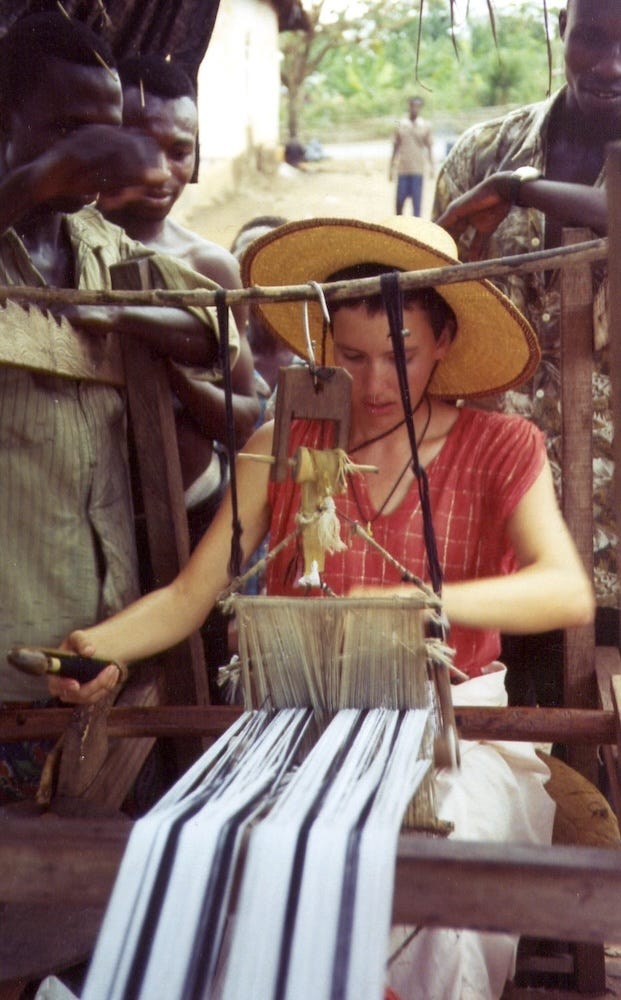
I was twenty-six when I left Richard to travel in West Africa.
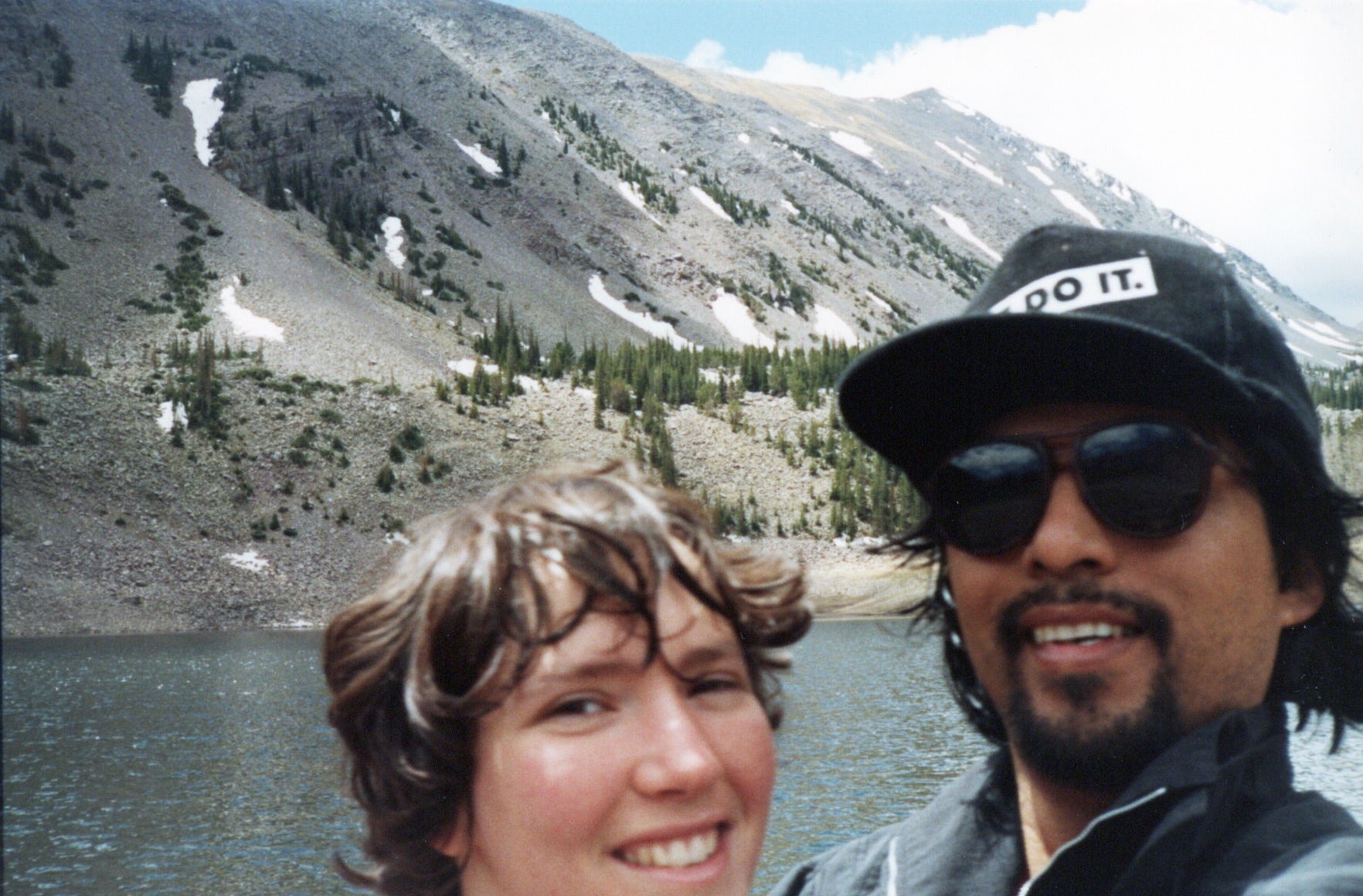
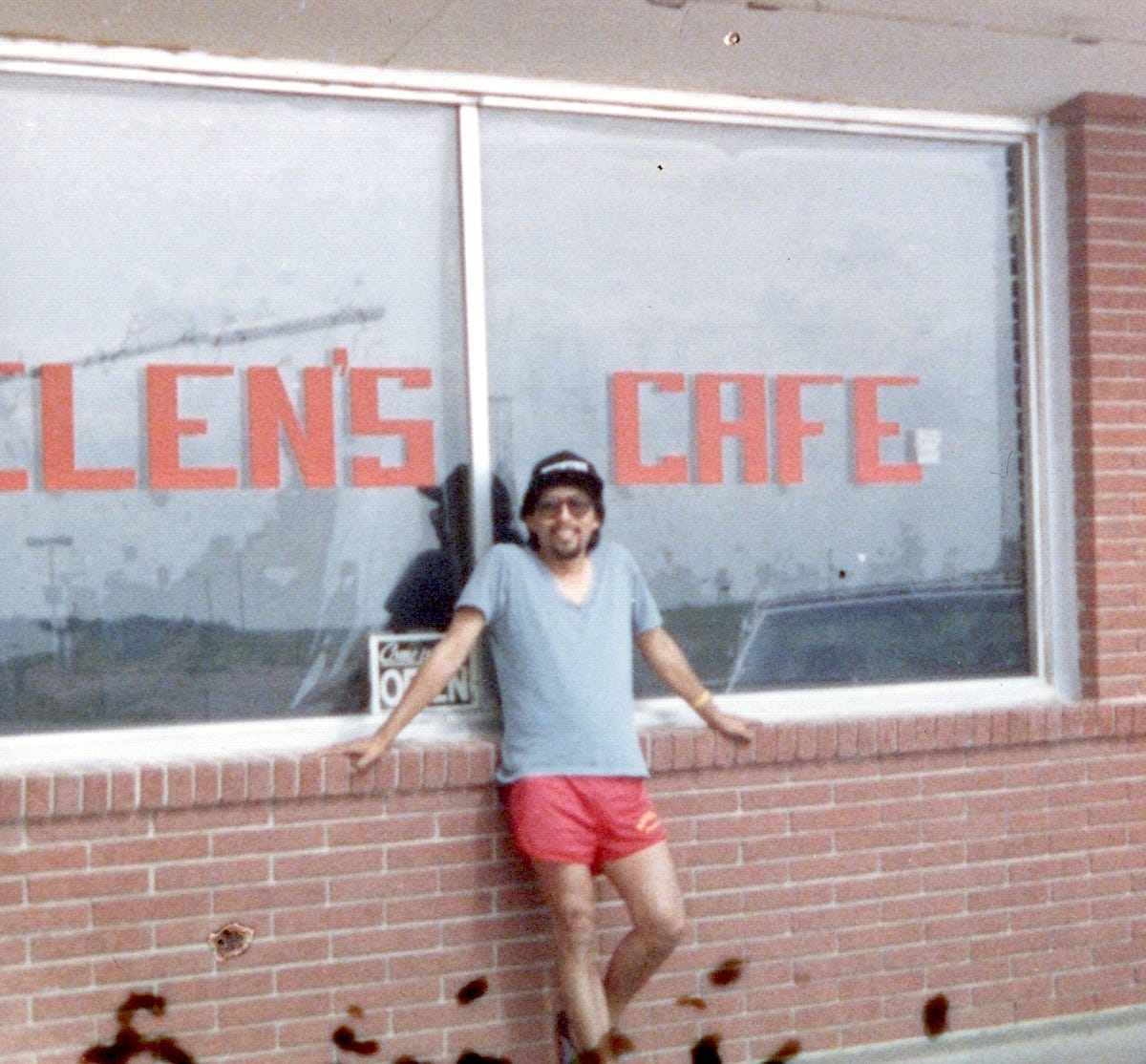
We’d been living together for two years. We wrote, acted, produced our own plays, loved each other. We traveled a lot during that time, touring first with a children’s show, then with my play Brigadista (the title that finally replaced Work), and later with El Teatro de la Esperanza, the bilingual theatre company that had brought us together.
On afternoons when we were home, we’d often look at each other and say, in unison, “Thai lunch,” in goofy nasal voices, so it sounded like “Thay-eee laaaaaaahnch.” We’d grab our notebooks and walk ten minutes from our house to a Thai restaurant that offered a lunch special that was both cheap and good. There, we’d sit and write. We’d do timed writings, grabbing topics out of the air: “Salt shaker, ten minutes, go!” We’d write, then we’d share our writing with each other. We did this over and over again.
We had our problems, of course. Richard was slow to anger, but when he did, he’d shut down, becoming remote and unreachable, sometimes for weeks on end. I’m sure he had his reasons—I was capricious and thoughtless and an absolutely horrible housekeeper, spewing the detritus of my life throughout the house. But when he withdrew like that, I was utterly bereft.
I remember one such occasion vividly. I was howling and crying, begging him to return to his warm, affectionate self. He wanted to go to his computer and write and for me to go do the same. He said, “Just do your thing. Do your own thing, and I will fall at your feet.” He didn’t want the needy, clingy girlfriend me; he wanted the fierce, independent writer me. I did as he asked. Eventually, he softened. That moment has stuck with me: a reminder that sometimes we need to step back to give another the space to come forward.
Before I left for West Africa, Richard offered to wait for me. He offered, even, to marry me. But I didn’t want either of those things. I wanted freedom. I wanted my travel to be open-ended. I wanted to be at liberty to experience whatever adventures arose.
When I returned a year later, I wanted to get back together. But by then it was too late. He was with someone else.
Make laws against regret
Otherwise you’d have to start with Adam and Eve
The line is long and waiting
- Elizabeth Swados, “Runaways”
For years, I grieved, unable to forgive myself for letting Richard go. I had a series of relationships ranging in length from two months to a year. None of them lived up to my memories of what we’d had.
Eventually, I moved on. I married and had children. I had an entire life, decades of it, separate from Richard. And though he never married or had kids, he too had an entire life, separate from me.
He showed up for me at times. At every major opening of my work, he was there. I showed up for him too, at performances of his plays and the occasional birthday party.
But though we lived ten minutes apart in the Bay Area for years, we rarely met. Perhaps every couple of years, we’d catch up over coffee. I invited him to visit my home, to meet my husband and children, but he never came. Was it too painful for him to see my other life up close, just as for several years it had been too painful for me to see him at all?
He wrote me once in a letter, a few years after my return to California, that he’d gone through such a dark period after I left that he’d vowed never again to commit to a long-term monogamous relationship the way he had with me. I don’t know whether he stuck to that vow.
Do you still want to know,
Where does the love go when it dies?
Hey, I want you to know, love never dies
It is sheltered here very safe inside, and it’s left you
With a friend out in the madness
-Nanci Griffith, “Friend Out in the Madness”
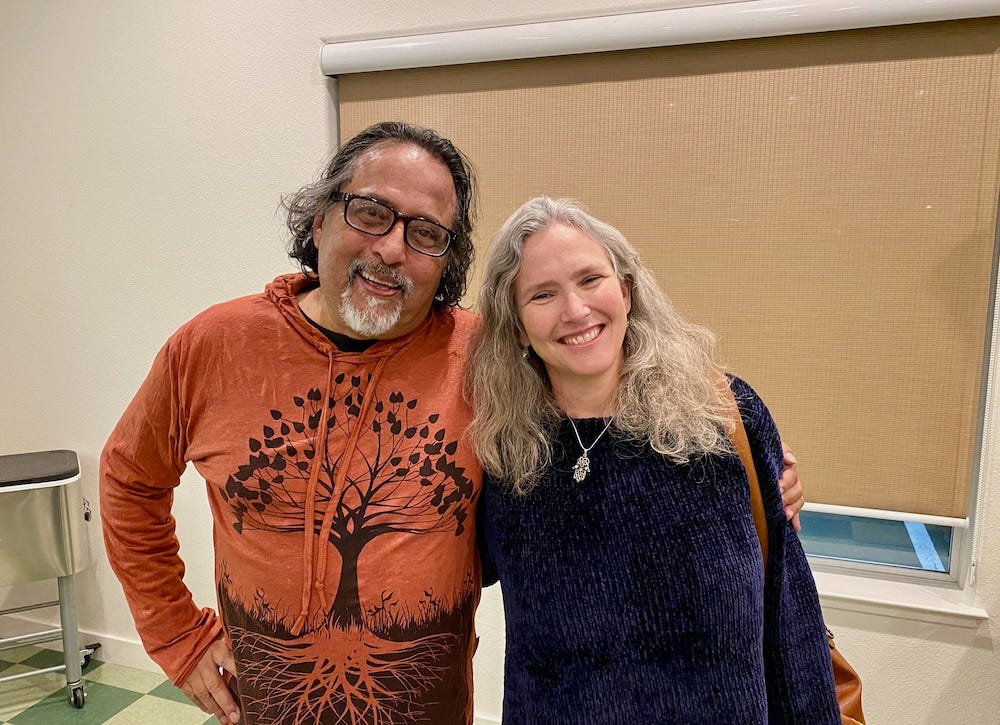
In 2022, Richard invited me to his seventieth birthday party, near the Veteran’s Home where he was living, in Yountville, California. I was living in Michigan again by then, but the party coincided with a visit to the Bay Area, and I was able to attend.
I was overjoyed to see him surrounded by friends and admirers in this new place. He was ebullient, thanking me profusely for coming. He’d asked people to bring poetry to share, and we went around the circle reading our offerings. I read a favorite poem of mine, Mary Oliver’s When Death Comes. I looked up at Richard as I delivered my favorite lines:
When it’s over, I want to say all my life
I was a bride, married to amazement.
I was the bridegroom, taking the world into my arms.
We both had tears in our eyes. Afterwards he told me that my coming had been the highlight of his night.
We stayed in better touch after that. He was studying German on Duolingo. I was trying to learn Korean. We became language buddies, sharing our challenges and triumphs. I loved being back in touch. Once I saw him twice in a single visit to the Bay Area.
“An embarrassment of riches,” I wrote to him afterwards.
What would people look like
if we could see them as they are,
soaked in honey, stung and swollen,
reckless, pinned against time?
- Ellen Bass, “If You Knew”
On May 30 of this year, I received an email from a mutual friend. The subject line read, “Fw: Sad news about our colleague, Richard Talavera.”
The moment I saw those words, my adrenaline spiked. I could hardly breathe. My finger shook as I went to open the email. Had Richard died?
I skimmed the intro, “… remembered you were close to Richard … sorry to be the bearer of bad news … inoperable brain cancer … currently in the hospital.”
Richard was sick. Richard was dying. But Richard was alive.
Fortunately, I happened to be in California at the time. I sprang into action, messaging Richard and, when he didn’t immediately respond, reaching out to others in his life. His close friend Tessa helped me to arrange a visit to him during the few days I had left in the Bay Area before returning to Michigan.
He was not in the hospital, but at his sister Jackie’s house, in a hospice-like setting. He did not want to fight the cancer, Tessa told me. He just wanted to be comfortable.
I drove in my rented car to Jackie’s house in American Canyon, about forty minutes from Berkeley. I had no idea what state I’d find him in. When I arrived, the front door was open. I climbed the porch steps and opened the screen.
“Hello?” I called.
Richard appeared from the recesses of the house, walking slowly.
“You just had to see me, didn’t you?” he said wryly.
“I absolutely did,” I answered, relief flooding my body as I went to hug him. He was still Richard.
Then he tilted his head and said, “What was your name again?”
I started to answer, and he broke up laughing.
“Just kidding,” he said.
I held out some flowers I’d picked up on the way, feeling ridiculous and inadequate.
“You didn’t have to do that,” he said, taking them.
“But nevertheless, I did,” I said, in a humorous, semi-ironic tone we’d often used with each other.
“Nevertheless, you did,” he repeated.
We walked back to a bedroom, where he settled himself on top of the bed, pillows propped behind his back. I pulled up a chair.
Richard was communicating well, though he sometimes had to search for words. When he couldn’t find a word, he’d stop, take a deep breath, make a slowing down gesture with his hand, and say, in a strained tone, “Start again.” Sometimes he’d find the word he was seeking; sometimes I’d supply it, and he’d nod; sometimes neither of us would find it, and he’d give up with a defeated shrug.
He told me he was not afraid to die. What he was afraid of was having to live with this condition.
“If…” he gesticulated downward, “chop off my leg—okay. But this is my brain. I can’t write!” He said this so fiercely, I felt the impotent fury of it. The rage. The despair. And I understood; I did. Richard was always writing. In notebooks, on the computer, on scraps of napkin. Poems, plays, random thoughts. The passion for and commitment to the act of writing and the belief in the sacred power of the written word were things we’d shared.
“Why did you come to see me?” he asked at one point. “To see the freak show?”
I stared at him. Didn’t he know how much I loved him? But this too was Richard, always so self-deprecating.
“When I heard you were sick,” I said, “I couldn’t bear the thought I might never see you again.” And suddenly tears were spilling down my cheeks. I looked at him, and his eyes grew wet too.
“The time we spent together was magic,” I said. “Among the best times of my life.”
He nodded. “Magic,” he said, with an intensity that managed to capture the essence of what we’d had in a single word. We gripped each other’s hands tightly, gazing into each other’s eyes as the tears rivered down.
“I always thought we’d get back together some day,” I murmured.
“Make you … the happiest woman in the world,” he said. And we laughed through our tears.
A few minutes later, he tapped his wrist.
“Schedule,” he said.
“You have a busy schedule?” I asked.
He took a breath, then blurted, “I just get exhausted.”
I stood up. We made our way to the kitchen to put the flowers I’d brought him into a vase.
He leaned against the kitchen counter, and we hugged each other tightly.
“I love you,” I said.
“I love you,” he said.
He walked me out. We said goodbye. I walked briskly to my car. As I opened the door, he called out, “Goodbye,” a second time.
I looked up. He was still standing on the porch, studying me intently, as if he’d never see me again.
“Bye.” I waved, then got quickly into the car and drove away. I managed to drive about five minutes before I had to pull over and let the tears pour down, blurring my vision, soaking my collar.
I told myself this was not the final goodbye. I’d be back in mid-August. I’d visit him again then.
He died on July 28.
Application for Release from the Dream.
-Title of a poem by Tony Hoagland
Richard Talavera has been released from the dream.
I must accustom myself to living in a world without him in it. Yet I know I will never become entirely accustomed to it, just as, in sixteen years, I have not become accustomed to being in a world without my father. Neither have I become accustomed to being in a world without my childhood friend Susan, who died a couple of years ago. Or my friend Mary. Or, or, or …
Each time someone I love leaves, the world becomes a bit more strange to me. Its shape changes. And though I no longer experience the daily shock of loss, there are moments when I’m struck all over again by a sense of unreality. How is it possible that I am here, and this person I loved for so much of my life is not?
And so I continue, we continue, walking around in a world growing stranger by the day.
There are more things in heaven and earth, Horatio,
than are dreamt of in your philosophy
-William Shakespeare, “Hamlet”
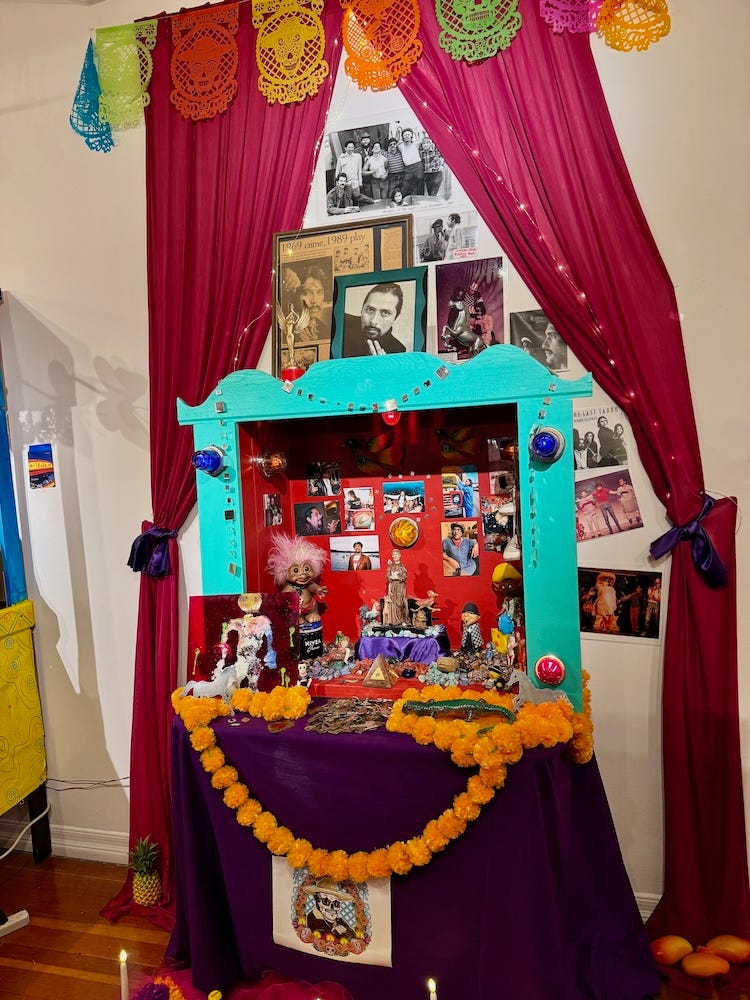
On October 26, over a hundred and fifty people packed into San Francisco’s Mission Cultural Center to remember Richard. All the luminaries of the Bay Area Chicano theatre scene were there. People spoke, sang, performed a scene from one of his plays. He’d meant so much to so many. I hoped he could see it, feel it, know, in whatever form he now inhabited, how deeply he was loved.
I’m an agnostic. I have no idea what happens after we die. The best I can do is try to stay open to the mystery. Could the stars be held in place by love, as Richard wrote to me so long ago? I don’t see why not.
A few weeks before Richard’s death, Tessa, who was seeing him regularly, invited friends to send video messages for her to play for him.
“I hope we meet again, in this life or the next,” I told him in my message. “If you get to the next one before I do, please save me a spot.”
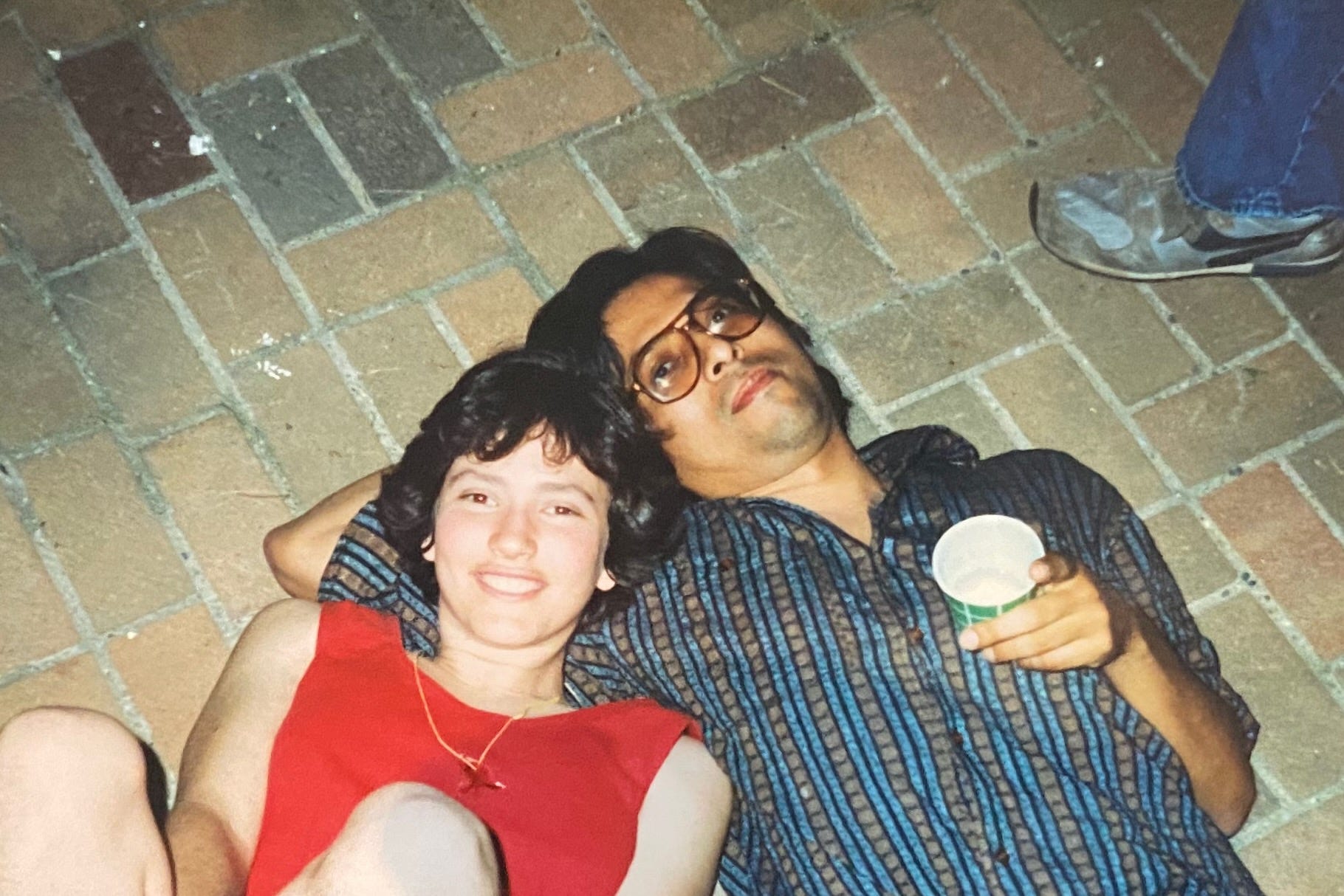
Thank you for reading this tribute to my beloved Richard. If you’d like to explore your own memories and imaginings through writing, I invite you to join one of my writing workshops. This December, I’m offering three-week online Off-Leash Writing sessions. These short sessions are a great way to try out the process and get your words flowing fast and free. You do not have to consider yourself a writer to benefit from this joyful, liberating practice.
Comments
Nothing yet. Say the first thing.
Sign in to join the conversation.