
About a year ago, I shared my experience discovering Suno, an AI-based automatic music generation service. Time flies—it has already been a year since then.
ちょうど1年ほど前でしょうか。Suno という、AIによる自動音楽生成サービスと出会った話を、このニュースレターでもお伝えしましたね。あれから早いもので、もう1年が経ちました。
You may know that services like Suno have faced scrutiny from the music industry. Major companies, including WMG (Warner Music Group), have filed lawsuits against AI companies over concerns about the sources of the music used for AI training and potential unauthorized use.
ところで、Suno をはじめとする音楽生成AIをめぐっては、AIが学習に使った楽曲の出所や、無断利用の疑いを理由に、WMG(ワーナー・ミュージック・グループ)などの大手音楽企業がAI企業を提訴していたことをご存じでしょうか。
As a user of these services myself, I have been following these developments closely. In November 2025, a milestone was reached: a settlement between the AI companies and the major music labels. According to reports, from now on, fees will be paid to rights holders for music used in deep learning. On one hand, this is a relief — but on the other, it raises a question: does this implicitly acknowledge that prior uses may have been legally questionable?
私自身も利用者のひとりとして、この動きを追ってきましたが、今年11月、その問題にひとつの区切りがつきました。AI企業と大手音楽企業とのあいだで、和解が成立したのです。報じられている内容によれば、今後ディープラーニングに使用される楽曲については、使用料を支払う、という取り決めがなされたとのことでした。ただ、この和解は、見方によっては複雑です。「これからは使用料を払う」ということは、裏を返せば「これまではグレー、あるいは違法と見なされかねない状態だったのではないか」とも受け取れてしまいます。
This also brings up a curious point. It’s interesting how humans can freely draw inspiration from others’ works without much issue, but when AI does something similar — learning patterns from large amounts of data — it often gets judged much more harshly, as if it’s copyright infringement.
人間が他人の作品からインスピレーションを得て創作することは、誰もが当たり前に認めています。しかし、同じようなプロセスをAIが行うと、なぜか別の基準で厳しく判断されてしまう。これは不思議な点です。
After all, when a person says “I was influenced by this artist,” it’s generally accepted, yet AI simply referencing data tends to be held to a different standard. From a human perspective, deep learning can feel more like direct imitation than genuine creative inspiration. The line between the two remains quite blurry, and it’s still very much a gray area without clear boundaries.
結局のところ、AIのディープラーニングは大量のデータを参照してパターンを学ぶだけなのに、人間側からは「ただの模倣」や「複製に近いもの」と映りやすく、著作権侵害との線引きが非常に曖昧になってしまう。人間の「影響を受けた創作」とAIの「トレーニング」は本質的に近いはずなのに、なぜAIだけが特別に問題視されるのか — このグレーゾーンは、まだ社会全体で明確な合意が得られていないと感じます。

I have appreciated AI services like Suno as helpful tools, especially for people who are not fully trained in musical expression. They can generate pieces that are simple yet valuable. At the same time, having invested time and effort in mastering the craft of music creation, I cannot help but feel that results generated from learning on vast amounts of pre-existing material may constitute an overreach of copyright.
私はこれまで、Suno を含むAIサービスを、表現の訓練を十分に受けていない人にとっての、有効なツールとして評価してきました。シンプルに、生成された音楽を「作品と呼びうるもの」として受け取れる場面も確かにあります。一方で、時間をかけて技術を身につけ、作品を作ってきた立場から見ると、世の中に存在する膨大な素材を学習して得られた結果が、「著作権の濫用」にあたるのではないか、という考えが頭をよぎるのも事実です。
I myself experienced, when I was younger, the frustration of having my own work used without permission by a major advertising agency. Perhaps because of that, I have grown somewhat disillusioned with AI-generated works that rely mostly on the AI itself for creativity. Naturally, works by artists who skillfully incorporate AI while expressing their own voice are entirely different.
私自身、若い頃に自作の作品を大手広告代理店に無断で使われた経験があります。そのため、著作権をめぐる争いには、正直うんざりしている部分もあります。そうした経験も影響してか、AIに作品性の多くを委ねて生まれた表現を「自分の作品」としているモノに対して、幻滅しているのも事実です。もちろん、AIを道具として使いこなし、自分らしさをしっかり表現している作家の作品は、まったく別物だと思っています。
The concern for me is no longer about focusing on the act of creating the work itself, but about whether the work is “truly safe” or might be contested later. What should be a fun exploration of new creative possibilities often comes with an underlying caution.
ただ、作品を作る行為そのものよりも、「これは本当に大丈夫なのか」「後から否定されるのではないか」という不安が、先に立つようになってしまった。その感覚が、私にとっては大きな変化でした。本来なら、自分ではできないことを手助けしてくれる未知の創作は、もっと楽しいはずなのに、どこかに常に警戒心が入り込むようになったのです。
When I heard about the WMG settlement in November, I felt a small sense of relief. At least AI-generated music was not being categorically rejected. Yet at the same time, it didn’t feel like a return to full creative freedom — it felt more like the establishment of new limits. Rather than resolving the dispute, it seemed the boundaries had been redrawn through money and contracts.
11月に報じられた WMG との和解のニュースを聞いたとき、正直に言えば、少し肩の力が抜けた気もしました。少なくとも、AI音楽そのものが即座に全面否定される方向には進まなかったからです。しかし同時に、その和解が「自由の回復」ではなく、「新しい制限が確定した」出来事のようにも感じられました。争いが終わったというより、資本と契約によって、線が引き直された。その印象が、どうしても拭えなかったのです。
As a creator, I stand firmly against copyright abuse and believe that the rights of artists should be protected. My concern with this settlement is not the copyright itself, but how it can be used by large corporations as a tool for market control and monopolization.
私は、ものを作る立場として、著作権の濫用には明確に反対していますし、クリエイターの権利は守られるべきだと考えています。ただ、今回の和解で気になるのは、著作権そのものというより、それが巨大な産業によって、市場支配や独占の道具として使われてしまうことです。
The fundamental question of whether AI learning is legal or not seems to be sidelined, replaced by a discussion of “who pays whom and how much.” That shift feels deeply troubling.
AIの学習が違法かどうか、という本質的な問いが十分に議論されないまま、「誰が、誰に、いくら払うのか」という話にすり替えられていく。この流れには、強い違和感を覚えます。

This settlement does not clarify whether AI learning is right or wrong. Technology that copyright law did not anticipate is being addressed by powerful companies before society at large has had a chance to discuss it. The result may create a perception that “AI services contracted with major labels are safe, while others are risky,” placing independent or small-scale creators in an increasingly precarious position.
今回の和解は、AIによる学習が正しいのか、間違っているのかを明らかにしたわけではありません。著作権法が想定していなかった技術に対して、本来なら社会全体で考えるべき問いを、大手企業同士が資本の力で先に囲い込んでしまったようにも見えます。その結果、「大手と契約しているAIサービスは安全で、そうでないものは危険」という空気が生まれ、個人や小規模な表現の場が、より不安定な立場に置かれていくのではないか。そんな懸念も拭えません。
An additional concern is that as AI companies secure legitimacy through contracts with major labels, indie and unaffiliated artists’ works may become less protected. The question of “who has a contract” becomes a measure of legitimacy, leaving the works of those without contracts vulnerable to use as training material. This is a problem not only of copyright but of power dynamics.
さらに心配なのは、AI企業が大手音楽産業と契約を結び「正当性」を獲得したとき、その枠組みの外にいるインディーズや無所属のアーティストの作品が、相対的に守られにくくなる可能性です。「誰と契約しているか」が正義の基準になってしまえば、声を上げにくい個人の作品が、知らないうちに学習素材として扱われる危険性も高まります。これは、著作権の問題である以前に、力関係の問題だと感じています。
On the other hand, I also see potential positive developments. In illustration and photography, stock images have long allowed countless anonymous creators to make their work available under defined conditions for compensation. If AI companies follow a similar model — paying for the materials they train on — new types of artists and new forms of engagement could emerge.
その一方で、この流れが必ずしも暗い未来だけを意味するとも思っていません。イラストや写真の世界には、ストックフォトやストックイラストという仕組みがあり、多くの匿名の作家が、自身の作品を一定の条件と対価のもとで提供してきた歴史があります。もしAI企業が、このモデルにならい「学習するための素材」を明確に購入し、対価を支払う方向へ進むのであれば、そこには新しいタイプのアーティストや、新しい関わり方が生まれる余地もあるはずです。
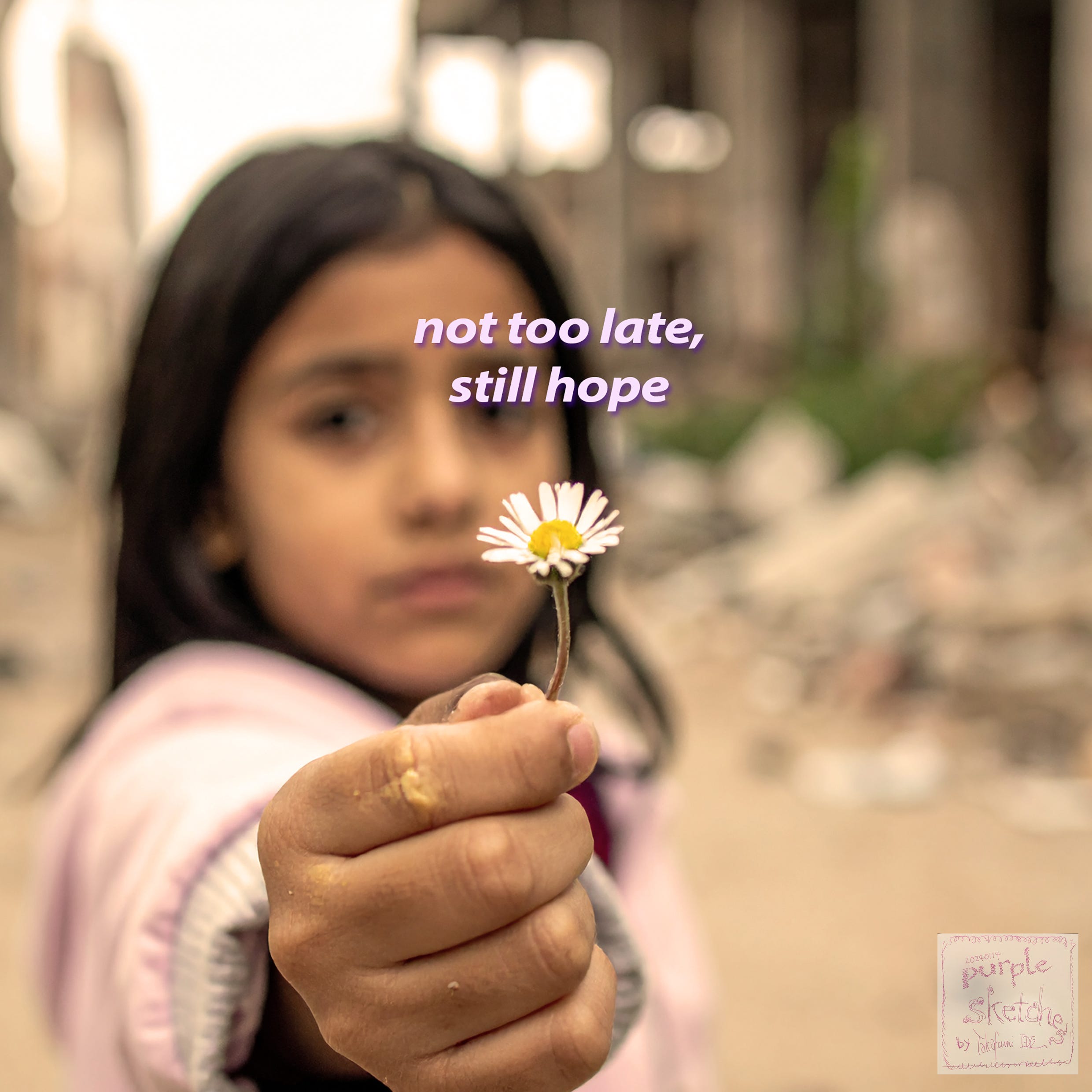
A real-world example is Adobe’s generative AI, Firefly. Firefly limits its training data to images provided via Adobe Stock or in the public domain, clearly avoiding the use of scraped images from the web. In fact, for the artwork “not too late, still hope #4” featuring a child holding flowers that I introduced above, as well as the dove material used in the Anaglyph 3D image from the previous issue, I used Adobe Firefly.
その実例として挙げられるのが、Adobeが提供する生成AI「Firefly」です。Fireflyは、学習に使われる素材を「Adobe Stockに提供された画像」や「著作権が切れたパブリックドメイン素材」に限定していることを、明確に打ち出しています。無断でネット上の画像を集めて学習させているわけではなく、あらかじめ利用条件が整理された素材を使う、という立場です。実は、上で紹介した花を持つ子どもが描かれている作品not too late, still hope #4や先号のAnaglyph 3D画像の鳩の素材も、私は Adobe Firefly を利用しています。
Adobe Stock is a massive platform where countless creators, including amateurs, provide their work under specific conditions. Firefly extends that framework into AI, showing a model where what the AI learns and whose materials it uses are clearly defined. It demonstrates that AI can operate without “stealing” creative work, but within an existing framework for distributing and compensating content. However, I don’t know what kind of contract was in place at the time for the work from 10 years ago…
Adobe Stock は、無名の作家も含め、多くのクリエイターが作品を提供してきた巨大なストックプラットフォームです。その延長線上に Firefly があると考えると、AIが「何を学ぶのか」を契約と対価によって明示するモデルの、ひとつの完成形だとも言えます。AIが創作を奪う存在としてではなく、既存の素材流通の枠組みの中で管理されている点は、特徴的です。ただし、10年前の作品について、当時どのような契約が結ばれていたのかまでは、私は把握していません。
Of course, this model is not ideal for all creators. Questions remain about the fairness of compensation and the market impact of AI-generated works. Still, Firefly proves that AI can learn from materials transparently and responsibly — a model that could potentially apply to music as well.
もちろん、こうしたモデルが、すべての創作者にとって理想的とは限りません。報酬の妥当性や、AI生成物が市場に与える影響など、課題は残っています。それでも Firefly は「AIが何を学び、誰の素材が使われているのか」を不透明なままにしない、という方向性を示しています。その意味で「学習可能な素材を買い、使う」というモデルが現実に成立しうることを、すでに証明している例だと言えるでしょう。
In the music world, royalty-free music and sound effect libraries exist, providing a comparable framework. In theory, AI services could learn from such licensed materials, paying fees and respecting rights, offering one of the cleanest approaches to AI-assisted music creation. Some AI services are already heading in this direction, demonstrating that the Firefly-style model could work for music too.
音楽の世界にも、ロイヤリティフリー音楽や効果音など、ストックフォトに近い形で素材を扱う企業が存在します。理屈の上では、こうした素材企業と音楽生成AIが組み、契約と対価のもとで学習させるモデルは、最もクリーンな方法のひとつです。実際、一部のAIは権利処理済み音源のみを使う方向を示しており、画像分野と同じ発想は、音楽でも成立しうることが見え始めています。
At the same time, major labels may be concerned less with copying individual songs than with reproducing an artist’s style or musical grammar developed over many years. As a result, learning models are evolving in two directions: one focuses on anonymizing material to prevent any specific style from emerging — what we might call “AI material.” The other treats style itself as a managed asset, under the control of labels or rights holders, or “AI major.”
その一方で、大手レコード会社が警戒しているのは、個々の楽曲のコピーというより、アーティストやレーベルが長年培ってきた「作風」や音楽的文法そのものが再現されることなのかもしれません。そのため、素材中心の学習モデルだけでは不十分だと考えられ、音楽生成AIの学習のあり方は、次第に二つの方向へ分かれつつあるように見えます。ひとつは、特定の作風が浮かび上がらないよう、学習素材を匿名化し、「誰のものでもない音の素材」として扱う方向です。作風を意図的に前面に出さない、この考え方は、いわば「AI素材」と呼べるものかもしれません。もうひとつは、作風そのものを価値として明確に管理し、大手レーベルや権利者の管理下でAIに扱わせる方向です。こちらは、作風が商品として管理される「AIメジャー」とでも言える考え方でしょう。
AI in music raises not just copyright questions but also questions about who controls artistic styles. It’s complicated, to say the least.
音楽生成AIをめぐる問題は、著作権だけでなく、「どの作風が、誰の管理下に置かれるのか」という問いでもあり、なかなかややこしい話です。

From my perspective, the most stifling aspect of creating art is having to consider what is allowed before even starting. The drive to make something, to experiment, should not be curtailed by legal risks or industry practices. The background of money and monopolies makes it even harder to accept the current trend.
私自身、AI企業の在り方を論じる以前に、創作において最も息苦しいと感じるのは、「作る前から許されるかどうかを考えなければならない」状況です。作品を保管する場所がないから作れない、という現実的な悩みを抱えているだけでも大変なのに、「作りたいから作る」「試したいから試す」という衝動が、法的リスクや業界の都合によって抑え込まれてしまうことは、あってはならないと思っています。その背景に「金による支配」やモノポリー化を感じるからこそ、私はこの流れに素直に納得できません。
The Suno-WMG settlement brings both relief and disappointment: not a total defeat, but not full freedom either. Creative space has gained a bit of stability, yet unseen boundaries have taken on clearer shapes. This feeling is shared by many who wish to express themselves with AI, even if it is hard to put into words. That is why this is more than industry news — it is a question about the future of creation itself.
How do you feel about it?
今回の Suno と WMG の和解は、安心と同時に、失望ももたらした出来事だったのかもしれません。完全な敗北ではないけれど、完全な自由でもない。創作の場が少しだけ安定した代わりに、見えない柵が、よりはっきりと姿を現し始めた。そんな感覚があります。この感覚は、AIを使って表現しようとする多くの人が、言葉にできずに抱えているものかもしれません。だからこそ、これは単なる業界ニュースではなく、「これから作るという行為が、どこへ向かうのか」を問いかける出来事なのだと思っています。皆さんは、どう感じられますか。
— So, after thinking a lot about the blurry lines of copyright triggered by AI (sorry, that got a bit long😅), my simple conclusion was, “Well, then I should just play the guitar and sing myself.” And that’s exactly what I did.
Maybe it’s also because of my age, but things like breathing, getting calluses on my fingertips, and the physical feedback you only feel because you’re a material being alive—right now, I really treasure that very sense of “being present.”
While continuing to value that feeling of tangible existence, I think it would be interesting to keep experimenting with various things, incorporating AI along the way.
— というわけで、AIをきっかけに著作権の線引きの曖昧さを考え続けた結果(ちょっと文章長かったぁ😅)出た答えが「だったら自分でギターを弾いて歌えばいいよね」と、単純な私は行動に移したのでした。
年齢的なこともあるのでしょうか、息をすること、指先にマメができること、物質として生きているからこそ感じられる手応え。
今は、そうした「そこに存在がある」感覚そのものを大切に、AIも取り入れながら、色々と試していければ面白いと感じています。
Comments
Nothing yet. Say the first thing.
Sign in to join the conversation.