
Allison Gacad is a climate journalist covering science, environment, and climate news for Canadian and international outlets. In this personal essay, Allison explores the challenges that come with climate reporting and “objectivity” in journalism. Allison reflects on Trump’s impact on the climate movement, and the struggle of finding meaning during difficult times.
More than a quarter of a century ago I escaped the front lines of climate change without knowing it - diaspora delivered me to a hospital room in Toronto, on the other side of the world from aunts and uncles and cousins who dealt with rising sea levels and the withdrawal of opportunities and livelihoods that come with each tide a metre higher.
Admittedly, Canada hasn’t been immune to the impacts of a changing climate: hotter temperatures have shaken the country and set forests on fire in my lifetime. Still, I’ve been privileged enough that the spook of a changing climate has always felt aspirational for me to solve. I’ve smelled the smoke and seen the flames but it has never evacuated me out of my home, at least not yet. Climate change has always felt far away enough that I could still live my life, undeterred - until maybe, one day, I won’t?
Becoming a climate journalist poked at my existentialism, in a sense. The job, in a nutshell, was inherently asking others– what are you doing to delay our sooner-coming demise? (Please, help me grapple with the slow-motion end of our world. Mine hasn’t ended, yet, but I’ve seen how it’s chipped away at the lives of those I know and care for.)
For a good amount of time I was in awe of the stories before me. Through the early 2020s, people collectively recognised that there was a problem, and they were supported to solve the problem. I’ve reported on community gardens and clean energy for rural communities and reforestation efforts that suck CO2 out of the sky. For the most part, I spent my early career feeling like things were moving on track to a better future.
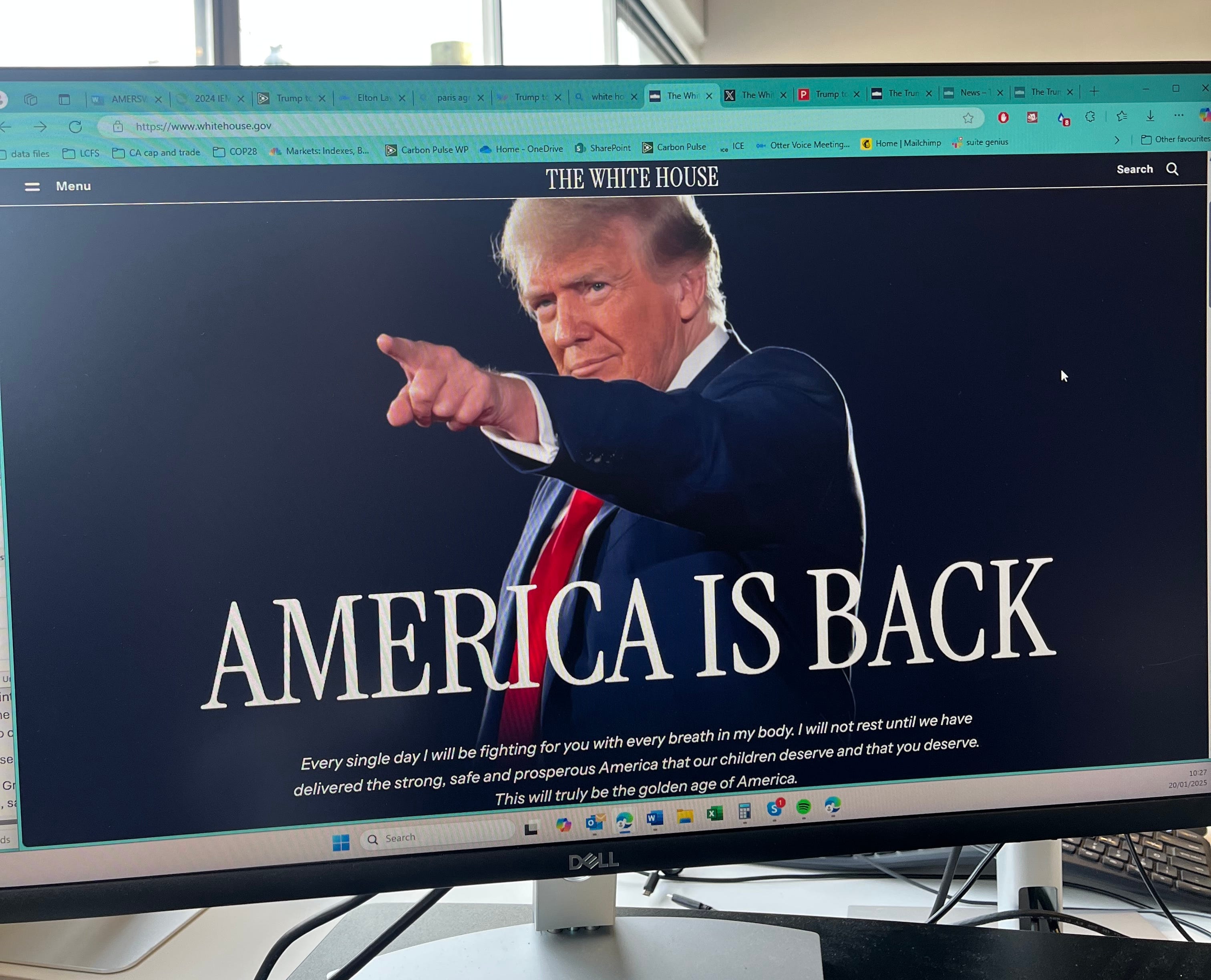
Then came January 20, 2025, the day I first started reporting on the end of the world. Donald Trump entered the White House that day, for the second time in my lifetime. His presidency is an assault to my psyche. He asks: why keep the fossil fuels in the ground if you can extract it, now? He practically says: the earth will eventually meet its end, anyways - we may as well take what we can from this planet without regard for its consequences, because those of us who have the means to survive its demise, will.
It felt like he granted a new moral permission - to give up on solutions because they’re too expensive, too difficult, too woke. The quiet part out loud: that we could have our cake and eat it too, though the cake was supposed to last us several lifetimes. That the world will end earlier than it should, and that is okay.

Part of the appeal of journalism was its guise of objectivity. I’d always admired the mysterious centre line that reporters seemed to tow: to present the facts and remain neutral in face of voices, stories, opinions that may lull you otherwise.
Reporters have grappled with this fallacy from time immemorial. Walter Cronkite, an American broadcast journalist of the 60s, makes the labour sound akin to science - “the reporting of reality, of facts, as nearly as they can be obtained without the injection of prejudice and personal opinion.” Closer to modern day, Wesley Lowery, a 2016 Pulitzer prize-winning journalist, instead offers objectivity as a “fetishization” of newsrooms, and describes the act of reporting as a series of decisions that lead to the outcome of a story.
Pre-Trump, my series of decisions as a reporter, upon encountering news, were as follows:
Does this affect the greenhouse gases in our atmosphere?
Does this change how we deal with those greenhouse gases?
Is this worth a story?
The first three months of reporting under the Trump administration were an experiment in my inbox when faced with a statement, some accusation, or a strange press release that came out of the White House:
Is this even real?
Does this affect the greenhouse gases in our atmosphere?
What is going on?
Does this change how we deal with those greenhouse gases?
If I report on this, am I contributing to the chaos?
Is this worth a story?
I’ve wondered whether to take a position, on the record, to call out those who enable and support the destruction I’ve reported on before me. It feels cowardly not to - and at the same time, I haven’t.
I’m still holding on to the vision of what objectivity offers. What can I learn from listening to rhetoric - hateful, dishonest, as it may be? Will it help me understand why blue states went red; why women granted Trump their vote; why my immigrant relatives look at him and think - he will lead us to a better world?

I once sat in a circle with an oil and gas executive, an environmental activist, and another journalist. Everyone agreed on the end game – a planet for our kids and future generations. No one could agree on how we get there.
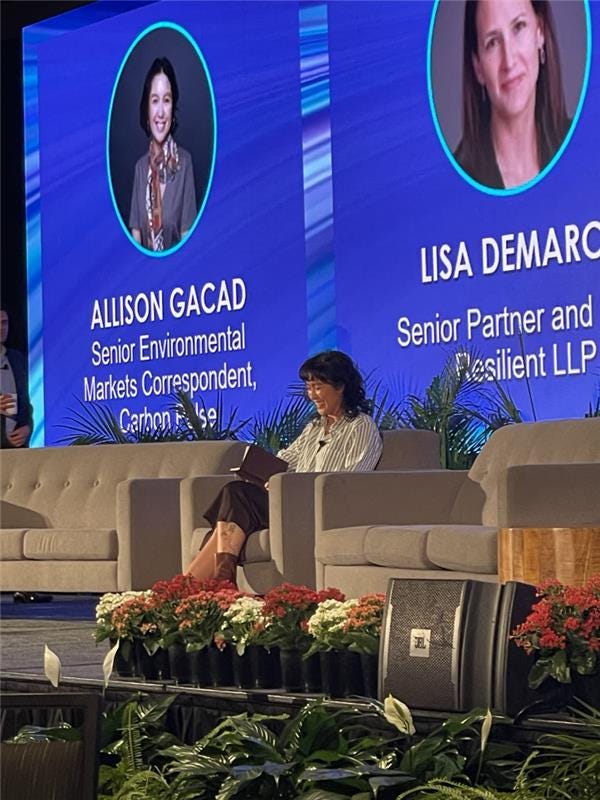
I’m trying to figure out how we get there, reporting on the darts everyone is throwing at what they think will work. It’s now been a year since Trump has become President again, and it’s led to a few observations: life is expensive, so is dealing with climate change; people are afraid of losing the power they have held for centuries; and no matter how we frame it, there will be winners and losers in how we navigate a changing climate.
I no longer have many relatives in places deeply affected by climate change, either. Several have immigrated to the very same places responsible for the crisis to begin with, drawn to the vision of a better future than those of their home countries - admittedly, a vision on the back of putting more greenhouse gasses into our atmosphere.
I think this essay, partly, is about making peace with my conscience. I’m not one to deny someone’s idea of a better future, but to ask about the ways of getting there. And in assuming that role, perhaps I also have to be okay with reporting on steps toward a future different than what I had reported on prior - not of solar panels and climate justice, but of nuclear and nationalism.
It’s uncomfortable. Fundamentally, reporting on rhetoric that denies climate change is real feels like an about-turn from where I pictured things going. In pursuing this career, I had hopes that the story of climate change would play out in a certain way - an uphill climb of understanding the challenge at hand and the multilateralism needed to solve it, followed by a gentle crest over the peak of technological and cultural hurdles to build a future we could feel safe in- and my job would be to tell the story of the details. I didn’t expect that the details would so closely test the edges of disinformation, fascism, and hatred under the presidency of Donald Trump.
Still, it’s my job to tell the story of the details. I’ve learned that how we get to a future free of fossil fuels, towards climate adaptation and hope, also means answering the challenges of energy security, affordability, and artificial intelligence.
These are the pragmatic bumps in the road towards a future that will, indeed, be warmer. This is the steady, slow, upclimb of a reckoning with the consequences of our decisions. For many, the smoke has already entered our lungs. Everyone else, surely, is in denial.
I still have a dormant hope that these diverging paths will converge in my lifetime, that all roads will lead to a climate future we can agree on. I’ve convinced myself that this period of time, reporting under Trump, is about the slow burn of addressing exactly that - what mistakes, what surprises, what celebrations will we make along the way to our ideal world? One year later, I am still struggling to be a witness to how it has unfolded before me. But my job, humbly, is to tell that story, whether I like how it pans out or not.
Reporting on the beginning of Trump 2.0 and the subsequent months of chaos was probably the most disorienting thing to happen in my career thus far. It’s taken me awhile to come to peace with what I do and don’t in response to Trump and this essay was very much a part of that process. I hope it encourages you to examine yourself not only in the context of the world we find ourselves in today but also the world you want to be a part of, in our future. Doing so has brought me a lot of hope for the future and my place in it, and I think it will for you, too.
Allison’s Instagram | website | docuseries on climate solutions
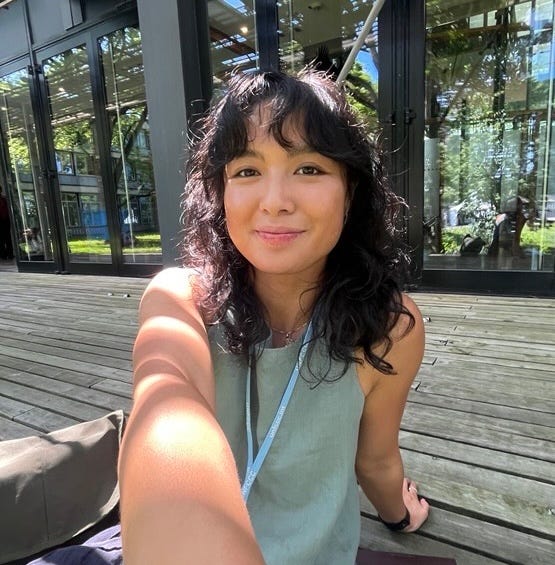
Allison Gacad is a writer, journalist, and filmmaker based on unceded Coast Salish lands in Vancouver. In brief past lives she was a scientist and urban farmer.
rerooting, rerouting is sword fern collective’s online publication on climate emotions.
No posts
Comments
Nothing yet. Say the first thing.
Sign in to join the conversation.