
The ECB’s decision today to leave its policy rates unchanged at 2.25% was widely expected. More interesting was what it chose not to say. Despite markets assigning an 85% probability to another rate increase in September, the Governing Council offered no signal that another increase was imminent. Instead, it reiterated that policy will remain data-dependent, meeting-by-meeting, and that it is “not pre-committing to a particular rate path.”
This is consistent with the interpretation I have developed in recent posts.
The ECB is no longer asking whether inflation is above target. It is. Nor is it asking whether inflation has remained above target for too long. It has. Instead, it is asking whether the latest energy shock is becoming embedded in wages, services prices and inflation expectations.
So far, the evidence suggests otherwise. HICP inflation excluding energy, which is my preferred measure of underlying inflation, has fallen from 2.4% in February, before the conflict in the Middle East began, to 2.2% in June. While the ECB stresses that the full effects of the energy shock have yet to play out, it also notes that developments in underlying inflation have remained contained. That combination explains why it has chosen to wait rather than tighten policy today.
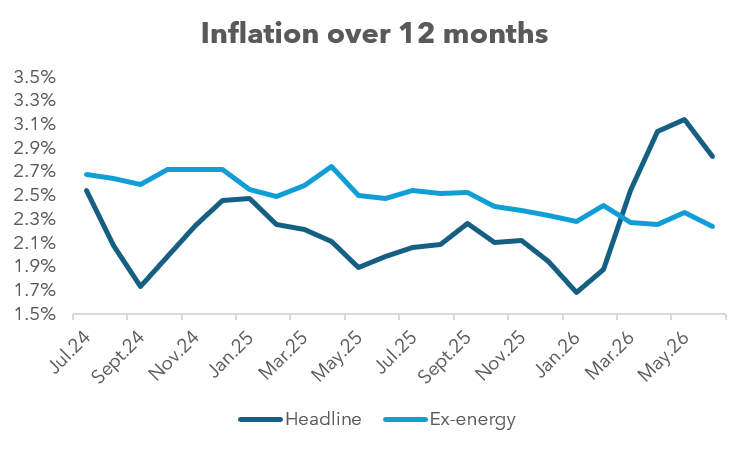
Source: ECB
Today’s decision is consistent with what I previously described as opportunistic disinflation. Inflation has exceeded the ECB’s 2% target every year since 2021. A central bank concerned only with returning inflation to target as quickly as possible would probably continue tightening until inflation was firmly under control. The Governing Council has chosen a different strategy.
Rather than forcing inflation back to target as rapidly as possible, it is allowing time for inflation to decline while remaining ready to respond if second-round effects emerge. Today’s statement repeatedly emphasises those risks, but it stops well short of suggesting that another rate increase is imminent.
Whether markets are right to expect a September rate increase will therefore depend less on headline inflation than on wages, services inflation and inflation expectations over the coming weeks. Until those indicators deteriorate materially, the ECB appears content to wait.
Today’s decision reinforces the interpretation I advanced before the meeting. The ECB is not trying to return inflation to target as quickly as possible. It is trying to return inflation to target without tightening more than necessary.
The views expressed are my own. The work presented is preliminary and may contain errors. It should not be construed as investment advice. Readers are encouraged to seek professional investment guidance.
No posts
Comments
Nothing yet. Say the first thing.
Sign in to join the conversation.