
Over the Christmas break, my oldest daughter was home from law school. She was reading Orwell’s book, “Why I Write” on the couch. It’s really a long form essay or pamphlet, but I had never read it and after she was done, I figured I should too. I am glad I did. It resonated deeply given the current state of backsliding American democracy. I recommend it to everyone; it’s short, meaningful, and ends with five useful tips for anyone striving for clearer writing.
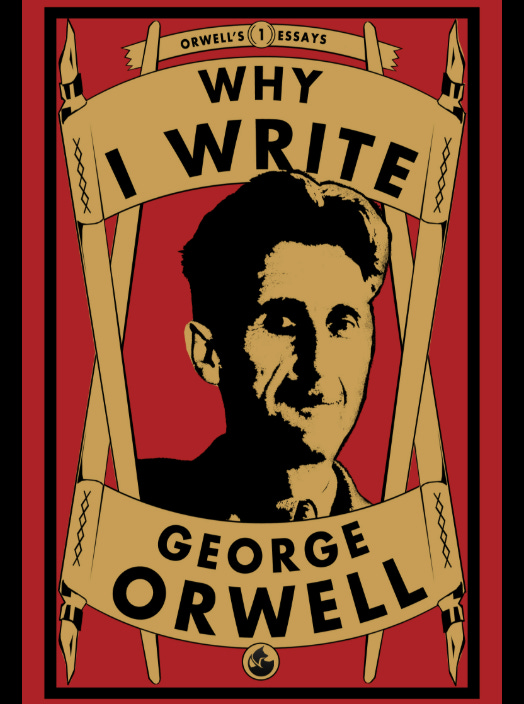
In his 1946 essay “Why I Write,” George Orwell explained the animating purpose behind his mature work: “Every line of serious work that I have written since 1936 has been written, directly or indirectly, against totalitarianism and for democratic socialism, as I understand it.” He had witnessed totalitarianism firsthand in Spain and understood its essential nature.
Later in the essay, discussing England’s democratic tradition, Orwell identified what he saw as the crucial difference: “Everyone believes in his heart that the law can be, ought to be, and, on the whole, will be impartially administered. The totalitarian idea that there is no such thing as law, there is only power, has never taken root.” This line, read against the Trump administration’s corrosive acts in January 2026, moved me to pick up a pen.
This distinction—between governance under law and governance by power—captures what is most alarming about three events in early January 2026. On January 7, Immigration and Customs Enforcement agent Jonathan Ross shot and killed Renee Nicole Good, a 37-year-old U.S. citizen and mother, in Minneapolis. Federal officials immediately labeled her a “domestic terrorist” who had “weaponized” her vehicle, despite video evidence demonstrating quite the contrary. Three days earlier, on January 3, U.S. military forces bombed Caracas and forcibly abducted Venezuelan President Nicolás Maduro, bringing him to New York to face narcotics charges filed years ago. Throughout this same period, President Trump has repeatedly threatened to seize or take Greenland—an autonomous Danish territory and part of a NATO ally — “whether they like it or not,” explicitly refusing to rule out military force.
These are not mere policy disagreements or examples of executive overreach within familiar bounds. They represent the adoption of a governing principle fundamentally at odds with democratic governance: that power, not law, determines what government may do. Understanding this ongoing and accelerating shift, and its implications for American democracy and international order, requires careful examination of the pattern they collectively reveal.
The Domestic Killing: Renee Nicole Good
The facts of Good’s death are largely documented on video. On the morning of January 7, Good had just dropped her six-year-old son at school when she encountered ICE agents conducting operations in her Minneapolis neighborhood. According to eyewitnesses and video footage, Good stopped her SUV perpendicularly in the street and engaged with agents for approximately one minute. When she began driving forward, ICE agent Jonathan Ross, who had stepped in front of her vehicle, then fired a shot, stepped to the side and then shot two more into the passenger window, killing her. It is reported that when he walked away he was heard saying “Fuckin’ Bitch.”
The federal response was immediate and revealing. Homeland Security Secretary Kristi Noem immediately publicly commented that it was a justified shooting of self-defense. President Trump, in a post on his Truth Social platform, described Good as “very disorderly, obstructing and resisting” before she “violently, willfully” attempted to harm the agent. Secretary Noem went further, labeling Good’s actions as “domestic terrorism.”
But video footage told a different story entirely. Minneapolis Mayor Jacob Frey, having reviewed the evidence, was blunt in his assessment in a press conference televised the night after the shooting: “Having seen the video myself, I want to tell everybody directly that is bullshit.” Policing experts reviewing the footage also questioned why Ross was holding a cellphone in one hand while shooting with the other—behavior inconsistent with genuine self-defense scenarios.
Setting aside the legal defense for justification under use-of-force standards (though the evidence suggests it was not justified and there will be legions of articles written on that by others), what is perhaps most concerning to me is what the Trump Administration’s acts and rhetoric are doing to the very fabric of the rule of law. Rather than conducting a transparent investigation or deferring to local authorities, federal officials doubled down on a narrative contradicted by video evidence and deployed an inflammatory label: “domestic terrorist.” Federal officials have even taken actions to exclude state and local law enforcement authorities from conducting their own investigation into the shooting. The implicit message: federal power operates beyond the reach of factual inquiry, local authority, or legal accountability. A common meme currently circulating on social media captures the feel of the current federal revisionism: Orwell’s quote from 1984 that “The Party told you to reject the evidence of your eyes and ears. It was their final, most essential command.” The message is simple: believe power, not your eyes.
The International Abduction: Nicolás Maduro
If the Good shooting demonstrated contempt for domestic legal constraints, the Maduro operation revealed similar disregard for international law. In the early morning hours of January 3, U.S. military forces struck targets in Caracas. The objective: to abduct President Nicolás Maduro and his wife, Cilia Flores, and transport them to New York to face federal narcotics charges.
The operation succeeded. Maduro was brought before a federal court on January 5, where he declared himself “a kidnapped president” and “a prisoner of war.” His attorney challenged the legality of his client’s capture, noting that as a head of state, Maduro enjoys sovereign immunity and that there were questions about the legality of his military abduction. As legal scholars noted, even if an ICC warrant existed for Maduro—as was rumored following Venezuela’s December 2025 withdrawal from the Rome Statute—the proper course would be arrest and transfer to The Hague, not abduction to face American narcotics charges.
The administration’s justifications revealed much about its operating principles. Defense Secretary Pete Hegseth, defending the Venezuela intervention, told CBS Evening News it was the “exact opposite” of the Iraq invasion because “we spent decades and decades and purchased in blood, and got nothing economically in return, and President Trump flips the script.” The implication: military action is justified when profitable, illegitimate when not. President Trump made the economic calculus even more explicit, announcing that the U.S. would “take control of Venezuela’s massive oil reserves” and recruit American companies to invest billions in refurbishing the country’s oil industry.
The Trump administration bypassed the Venezuelan opposition it had long supported. María Corina Machado (the 2025 Nobel Peace Prize recipient for her opposition leadership, which reportedly upset Trump when she accepted the Nobel in lieu of offering it to him) called for the immediate installation of Edmundo González Urrutia—widely regarded as the legitimate winner of Venezuela’s contested 2024 election—as president. Instead, Trump indicated he would work with Delcy Rodríguez, Maduro’s handpicked vice president and a regime loyalist, whom Venezuela’s Supreme Court appointed as acting president. The message: legitimacy and democracy matter less than compliance with American or even Trump’s demands.
The Territorial Threat: Greenland
Against this backdrop, President Trump’s escalating threats toward Greenland take on particularly ominous significance. Since returning to office in January 2025, Trump has repeatedly insisted that the United States needs to acquire Greenland, an autonomous Danish territory. Following the Venezuela operation, his rhetoric intensified dramatically.
“We are going to do something on Greenland whether they like it or not,” Trump declared on January 9. Two days later, he added: “I would like to make a deal, you know, the easy way. But if we don’t do it the easy way, we’re going to do it the hard way.” Asked to clarify, Secretary of State Marco Rubio refused to rule out military action, vaguely noting that, every president retains the option to address threats to national security through military means.
The justifications have shifted tellingly. Initially, Trump cited “economic security” as the primary factor. By early 2026, the language had changed to “national security,” with Trump claiming Greenland is “covered with Russian and Chinese ships all over the place.” He warned: “If we don’t do it, Russia or China will take over Greenland. And we’re not going to have Russia or China as a neighbor.” Again, a falsification becomes a justification.
Legal and strategic analysts have questioned these claims. Marion Messmer, director of the International Security Programme at London’s Chatham House, acknowledged that Russia and China have increased Arctic activities but asked the critical question: “What is not clear is why Washington needs full control over Greenland to defend itself.” The United States already maintains Pituffik Space Base (formerly Thule Air Base) in Greenland under agreement with Denmark. Enhanced Arctic security could be achieved through cooperative NATO efforts rather than annexation.
The Greenlandic response has been unequivocal. All five political parties represented in Greenland’s parliament issued a joint statement: “We do not want to be Americans, we do not want to be Danes, we want to be Greenlanders. For Denmark and Europe, the implications are stark. Danish Prime Minister Mette Frederiksen warned that American military action against Greenland would mean “the end of everything—that includes NATO and therefore post-World War II security.” If the United States can attack a NATO ally to seize its territory, what meaning does Article 5’s collective defense commitment retain?
The Philosophy Made Explicit: Stephen Miller’s Interview
What makes these three incidents particularly revealing is that administration officials have explicitly articulated the philosophy underlying them. On January 5, White House Deputy Chief of Staff Stephen Miller appeared on CNN with Jake Tapper and laid bare the governing principle with remarkable candor.
When Tapper pressed Miller on Trump’s statement that the United States is “running Venezuela,” Miller did not equivocate: “What the president said is true. The United States of America is running Venezuela. By definition, that’s true.” He continued: “We are in charge because we have the United States military stationed outside the country. We set the terms and conditions. We have a complete embargo on all of their oil and their ability to do commerce. So for them to do commerce, they need our permission. For them to be able to run an economy, they need our permission.”
When Tapper noted that the United States had invaded Venezuela and seized its leader, Miller’s response was unapologetic: “Damn straight we did.” But it was Miller’s broader articulation of principle that most starkly revealed the administration’s worldview. “We live in a world in which you can talk all you want about international niceties and everything else,” Miller told Tapper, “but we live in a world, in the real world, Jake, that is governed by strength, that is governed by force, that is governed by power. These are the iron laws of the world since the beginning of time.” “This is the totalitarian idea Orwell warned about: that law is a polite fiction and only power is real.
The phrase “iron laws” is intentional. It suggests not merely political choice but immutable reality, natural order beyond moral evaluation. Power, in this formulation, requires no justification beyond its existence. Miller elaborated: “We’re a superpower. And under President Trump, we are going to conduct ourselves as a superpower. The United States is using its military to secure our interests unapologetically in our hemisphere.”
Regarding Greenland, Miller stated flatly that “Obviously, Greenland should be part of the United States,” invoking American military superiority as justification: “The United States is the power of NATO.” When pressed on whether the administration had ruled out military force against the Danish territory, Miller refused to do so, adding: “Nobody is going to fight the United States militarily over the future of Greenland.”
These are not off-the-cuff remarks or excess. They represent a deliberate, public articulation of governing philosophy by a senior White House official—one described by Steve Bannon as Trump’s “prime minister.” Miller was not defending specific actions within a legal framework; he was rejecting the framework itself. Law, in his formulation, is mere “international niceties”—pleasant fictions masking the underlying reality of power. The “real world” operates according to force, and the United States, as the dominant power, acts accordingly.
This is Orwell’s totalitarian principle, stated with remarkable clarity: there is no such thing as law, there is only power.
From Law to Power: The Pattern and Its Implications
The three incidents—domestic, international, and involving an allied territory—combined with Miller’s explicit articulation of principle, reveal a consistent operating philosophy: the assertion of power as its own justification, unbound by legal constraint. In each case, the administration has faced legal obstacles: constitutional protections for U.S. citizens, international law governing state sovereignty, treaty obligations to NATO allies. In each case, the response has been to dismiss these constraints as irrelevant in the face of executive determination.
Consider the common threads. First, there is the rejection of legal process. Good was labeled a “domestic terrorist” without due process or judicial determination. Maduro was abducted without extradition proceedings or congressional authorization for military force. Greenland is threatened despite treaty obligations and the NATO Charter’s commitment to territorial integrity. Second, evidence and facts are subordinated to power’s narrative. Video contradicting the official account of Good’s death is dismissed. International law scholars’ consensus on the Maduro operation’s illegality is ignored. Greenland’s overwhelming rejection of American control is deemed irrelevant.
Third, language itself becomes weaponized to obscure the exercise of raw power. A citizen becomes a “terrorist.” A military invasion becomes “protecting national security.” An allied territory’s forced acquisition becomes “making a deal the hard way.” Legal constraints become mere “international niceties.” This linguistic manipulation serves to normalize the abnormal, to present power’s exercise as somehow legitimate when it is not.
The constitutional implications are profound. The Good shooting and subsequent federal response implicate the Fourth Amendment’s protection against unreasonable seizure (including lethal force), the Fifth Amendment’s guarantee of due process, and principles of federalism that preserve state and local authority. Yet the administration asserts that ICE operations exist in a zone beyond such constraints. The Maduro operation raises fundamental separation of powers questions: the Constitution vests Congress with the power to declare war and authorize military force, yet this operation proceeded without congressional consultation or approval. The Greenland threats similarly bypass constitutional requirements for congressional authorization of military action and treaty ratification.
This is not to claim that we face a completed totalitarian state. We manifestly do not. Courts still function, opposition voices still speak, and institutional resistance—from state and local officials, from Congress members of both parties, from career government personnel—remains possible. But what we see is the adoption of totalitarianism’s core operating principle: that power, not law, determines the scope of governmental authority.
In Orwell’s 1984, the character O’Brien explains the Party’s philosophy to Winston: “The object of persecution is persecution. The object of torture is torture. The object of power is power.” This circularity—power exercised for its own sake, requiring no justification beyond its exercise—represents totalitarianism’s essential logic. When an administration asserts authority to kill citizens, abduct foreign leaders, and threaten allied territories without regard to legal constraint, checking its claims only against its own determination of necessity, we see this logic at work.
Miller’s formulation—that the world is governed by “strength,” “force,” and “power,” which are “the iron laws of the world since the beginning of time”—explicitly rejects the Enlightenment project that produced both American constitutionalism and the post-World War II international order. That project rested on the conviction that reason and law could constrain power, that human societies need not be governed by force alone. Miller dismisses this as naive idealism, “international niceties” divorced from the “real world.”
The implications extend beyond any single administration. These actions establish precedents. Future presidents will cite them. The ratchet effect of executive power—the tendency for authorities once claimed to be retained and expanded—suggests that these extraordinary assertions of power will not remain extraordinary. They will become normalized, incorporated into the accepted toolkit of executive action.
For American democracy, the stakes could hardly be higher. Democratic governance rests on the principle that law constrains power. Even the most powerful officials operate within a legal framework that limits what they may do. When that principle erodes, when power becomes self-justifying, democratic institutions cannot long survive. Citizens who can be labeled terrorists and killed without due process have no real rights. Political opponents who might face the treatment meted out to Maduro—characterized as criminals and subject to extralegal detention—cannot effectively oppose the government. Allies who can be threatened with military action for refusing demands cannot trust American commitments.
For international order, the consequences are equally severe. The post-World War II system, despite its many failures and hypocrisies, rested on certain foundational principles: sovereign equality, territorial integrity, peaceful resolution of disputes, and legal frameworks governing state interaction. When the world’s most powerful nation explicitly abandons these principles in favor of might-makes-right, the entire structure begins to collapse.
Russia justifies its Ukraine invasion with historical claims and security concerns remarkably similar to Trump’s Greenland rationale. China cites historical grievances and strategic necessity regarding Taiwan. If American power brooks no legal constraint, why should theirs?
Resistance and Choice
Orwell did not write against totalitarianism because he expected to win. He wrote because the alternative was to accept defeat without a fight. The first step in any fight is to see what you are fighting. This requires honesty about facts and a willingness to call things by their right names.
The facts are these: A woman was shot dead by a federal agent in Minneapolis. The government called her a terrorist. Video showed otherwise. The government did not care. A foreign president was kidnapped by American military forces. Legal scholars said this violated international law. The government did not care. An allied territory is being threatened with invasion. Treaty obligations say this cannot be done. The government does not care. A White House official said publicly that the world is governed by force and power, not law. He said this as if it were obvious. Perhaps he thinks it is.
These things happened. They are not interpretations or exaggerations. They happened in daylight, on camera, in public statements. The government is not hiding what it does or why. Miller spoke plainly. The world is governed by power. America has power. Therefore America will do what it wants. This is the philosophy. It is stated openly.
The question is whether we accept it. Not whether we like Trump or dislike him. Not whether we are Republicans or Democrats. Whether we accept that power makes right. Whether we believe, as Miller does, that law is just “international niceties”—pretty talk that gets in the way of serious men doing serious things.
Orwell wrote that the English believed law could be impartially administered. Notice he did not say law was always impartially administered. He said the English believed it could be and ought to be. This belief matters. Without it, rights become privileges granted by the powerful to the weak. They can be withdrawn when convenient. Due process becomes a formality dispensed with when it impedes the government’s will. Treaties become scraps of paper, as the German chancellor called them in 1914 before invading Belgium.
The choice is simple to state if not easy to make. We can insist that law binds the powerful, or we can accept that the powerful are bound only by their own judgment. We can defend legal principles even when doing so is inconvenient, or we can shrug and say that power has always governed and always will. We can resist, or we can accommodate ourselves.
Resistance does not require heroism. It starts with refusal—refusal to accept the government’s word when video shows otherwise, refusal to forget that kidnapping violates law even when the victim is unsympathetic, refusal to pretend that threatening allies is normal statecraft. It means calling things by their right names. A killing without legal justification is a killing without legal justification, whatever labels the government applies afterward. An invasion is an invasion. A threat is a threat.
This sounds obvious. It is obvious. But obvious things become hard to see when the government insists otherwise and has power to make its insistence felt. The natural human response is to rationalize, to find reasons why this case is different, why these actions are justified after all. This is how free peoples become unfree—not usually through a coup or a declaration, but through the slow acceptance of things that would have been unacceptable before.
Orwell understood this. He wrote plainly because unclear language makes it easier to accept ugly things. If you call a citizen killed by police a “domestic terrorist,” the killing sounds justified. If you call an invasion a “counter-narcotics operation,” the invasion sounds legal. If you call treaty obligations “international niceties,” breaking them sounds reasonable. The corruption of language enables the corruption of law. The entire last portion of Orwell’s essay concerns the power of language and the ability of totalitarians to bend it to alter truth and reality. As Orwell wrote, “political language . . . is designed to make lies sound truthful and murder respectable.”
Miller spoke clearly, at least. He said power governs. He meant it. The question is whether enough Americans still believe that law can govern, ought to govern, and must govern. The test is now. Not in some hypothetical future, but in how we respond to what has already happened and what officials have already said they will do.
These things will not reverse themselves. Power, once claimed and exercised successfully, does not volunteer to restrain itself. The precedents are set. Future presidents will cite them. The slow work of decades—building international institutions, establishing legal frameworks, protecting civil liberties—can be undone quickly if we let it. It is being undone now.
The alternative to resistance is to live in the world Miller describes. A world where strength, force, and power are the iron laws. Where the strong do what they can and the weak suffer what they must. Where American citizens can be killed and labeled terrorists without trial. Where foreign leaders can be kidnapped. Where allies can be threatened with invasion. Where all of this is normal and expected and justified by power’s existence.
Orwell wrote because he refused to live in that world. He believed that ordinary people, seeing clearly and speaking honestly, could prevent it. Perhaps he was too optimistic. We will find out. The choice is ours, but it will not remain open indefinitely. Some choices, once made, cannot be unmade. Hope, if it is to mean anything now, lies not in wishing this power away but in acting—persistently, collectively—to bind it again to law and to truth. The administration has shown what it intends; the only question is what we will do about it.
No posts
Comments
Nothing yet. Say the first thing.
Sign in to join the conversation.