
Growing up I had a fascination with the history of the American Civil War. I remember spending hours looking through the hand-drawn illustrative military maps of the battles in Bruce Catton’s The Civil War and wanting to walk the fields. I was so obsessed I somehow convinced my parents to take us on a 2-week family driving vacation the summer before my fifth grade year of elementary school to visit Civil War battlefields from Vicksburg to Chickamauga to Gettysburg.
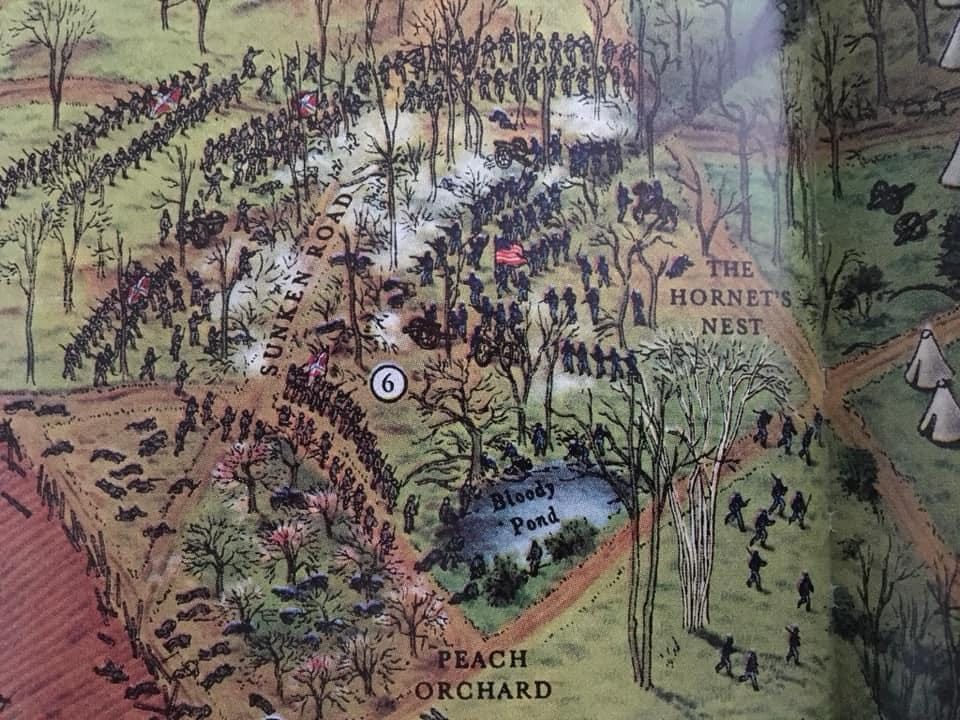
But as I have grown older, my obsession with the military history and the battlefield glory has been replaced with a matured, somber sense of sadness about the whole conflict. President Lincoln’s words in his Second Inaugural address resonate more now than they ever have with me that “both read the same Bilbe, and pray to the same God, and each invokes his will against the other. It may seem strange that any men should dare to ask a just God’s assistance in wringing their bread from the sweat of other men’s faces… ”
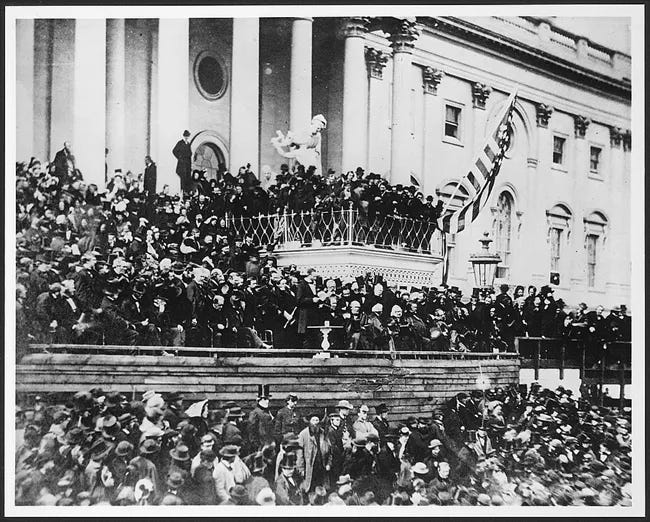
Lincoln’s second inaugural address came as the war grinded to its eventual resolution, but the strife driving the conflict was a division that Lincoln understood could be the undoing of the nation.
Indeed, in June 1858, Abraham Lincoln stood before the Illinois Republican State Convention, warning in language that has become foundational to American political discourse: “A house divided against itself cannot stand.” Addressing the deep crisis of slavery, Lincoln argued the United States could not endure permanently half slave and half free; it would eventually become “all one thing or all the other.” Over 150 years later, this metaphor echoes with a pressing relevance as contemporary Americans confront divisions that, while rooted in different issues, threaten national unity with comparable intensity.
Lincoln’s warning arose from an era of extreme sectionalism. The nation faced divisions not only over policy, but over profound questions of morality, human dignity, and constitutional order. The decades leading up to the Civil War saw a series of some of the fiercest episodes of polarization in American history. Compromises such as the Missouri Compromise (1820), the Compromise of 1850, and the Kansas-Nebraska Act (1854) temporarily delayed outright conflict. But the compromises also deepened animosities and resentment, as each side felt compelled to defend its way of life and vision for the nation. The Kansas-Nebraska Act, in particular, inflamed passions by permitting popular sovereignty over slavery in new territories, leading to violence in “Bleeding Kansas.” The violence was a precursor and foreshadowing of broader national conflict in the not-too-distant future of the 1850s.
These historic episodes highlighted the failure of existing political parties and institutions to bridge emerging divides. The dissolution of the Whig Party and the fragmentation of the Democratic Party reflected the inability of even the nation’s broadest coalitions to accommodate fundamental difference over slavery. As Lincoln observed, the problem was no longer about disagreement over specifics, but rather whether the nation could sustain itself with “two incompatible systems” co-existing. This is why, for many Americans at the time, each election felt existential. Compromise seemed less and less possible, and parties themselves became regional, intensifying political and social conflict.
Sound familiar?
Today’s polarization, though rooted in new issues—truth, democracy, identity—bears comparison to this antebellum atmosphere of mistrust and moral struggle. Americans increasingly inhabit information silos, encounter opposing views less often, and often distrust their opponents’ policies. Even more recently, the rhetoric of President Trump since taking office in his second term has decidedly become more dangerous, questioning even the legitimacy of his political opponents as fellow citizens. Technologies such as social media, alongside economic incentives to provoke anger or fear, have fostered “affective polarization,” where dislike for the other side becomes personal and entrenched.
Historical precedent underlines that deep national divisions rarely dissipate on their own. The growing inability to compromise, the rise of regionally homogeneous political enclaves, and the failure of institutions or parties to mediate difference, all familiar from the antebellum era, are again evident today. As in Lincoln’s time, democratic norms are being eroded. The willingness to view political opponents as loyal rivals, not enemies is virtually non-existent. An escalating national arms race of partisan redistricting threatens to deepen the political divide and rift across regionalized sections of America, pitting primarily rural and southern and central states against denser urban coastal and midwest states. A spiraling government shutdown threatens the stability of a central federal system that ensures a working union of United States and, perhaps most dangerously, wealthy private interests have begun subsidizing the payroll of the U.S. military.
Yet history offers both warning and guidance. The catastrophic resolution of the 1860s, through Civil War and constitutional amendment, reminds us of the costs when a “house divided” finally ceases to be so through force rather than conciliation. The cost in blood and tears is immeasurable. “Every drop of blood drawn with the lash shall be paid with another drawn by the sword.” The central question facing our era is whether the United States can manage its divisions without resorting to conflict or domination by one vision.
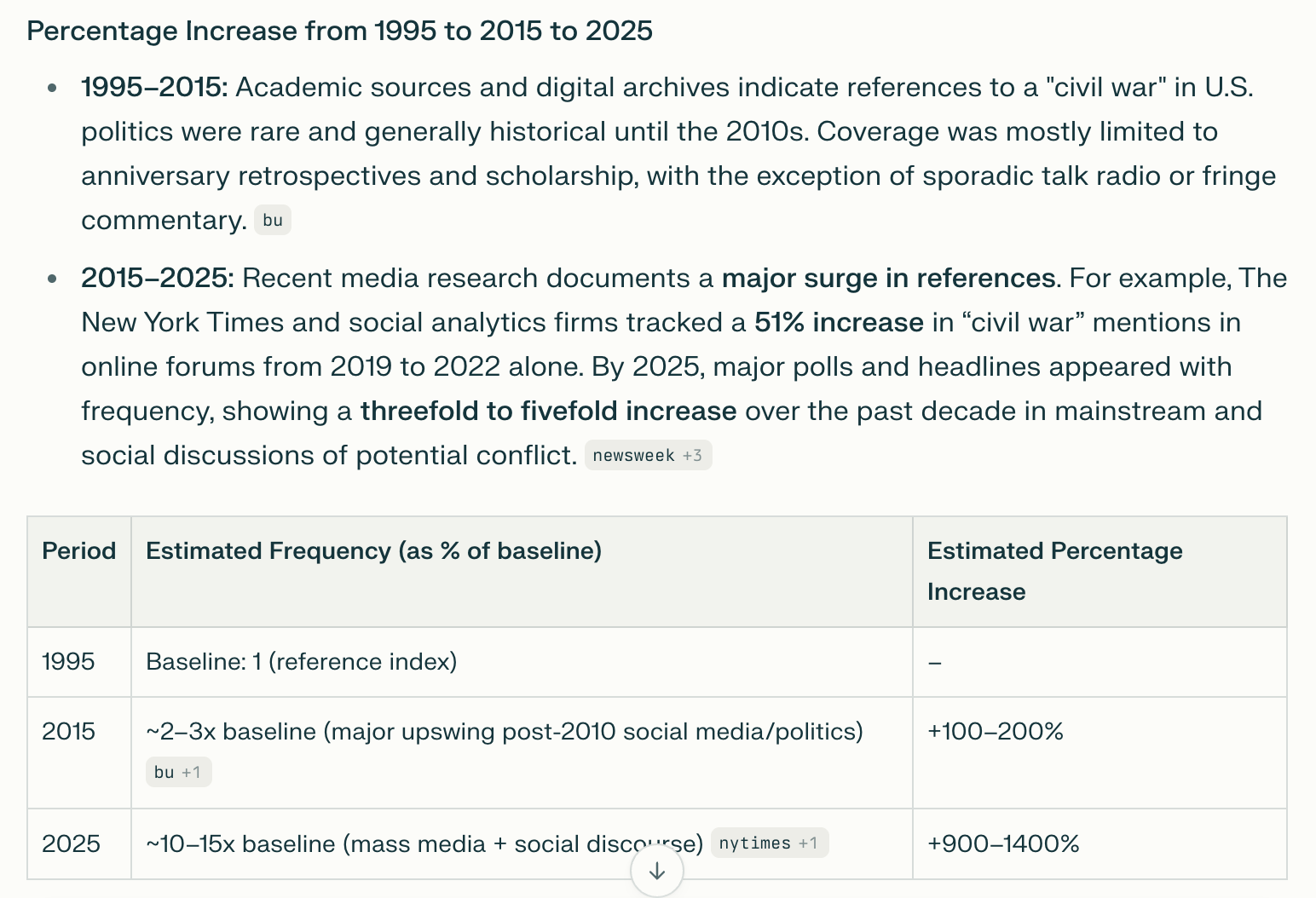
The time for reflection and change could not be more critical as the temperature in American politics appears to be reaching its boiling point. I asked Perplexity AI to note just the rate of reference to a potential second American civil war. The results are not encouraging:
We live in increasingly dangerous times for the future of our Constitutional Republic.
Lincoln’s house divided metaphor remains a call to reflection: structural instability arises not merely from disagreement, but from the loss of shared principles and institutions capable of fostering loyal opposition and peaceful contestation. Addressing polarization today requires renewing these foundations, creating new spaces for authentic dialogue, and recommitting to democratic citizenship, even amidst passionate disagreement. We must reject demagoguery and the politics of dismantling and engage in a restored effort to renew our social contract. The federal government is the product of the genius of our forefathers that knew a centralized system of governance was essential to a strong union. We must reject dismantling for the sake of dismantling and do the hard, necessary work of making government work for the least of us and all of us.
The lesson of the past is clear: A nation deeply split must choose between destructive confrontation and the difficult, essential work of building a shared civic life. Whether today’s Americans can heed that lesson without repeating history’s most painful chapters remains the crucial test of our times.
No posts
Comments
Nothing yet. Say the first thing.
Sign in to join the conversation.