
Hello, hello, and happy Wednesday. This week, I’m returning to your inbox with some thoughts that have been building up in my Notes app. I’ve got a constant stream of food-related observations and half-baked hypotheses running through my head, so it’s nice to move some of that from my drafts into this forum.
First off, though, I want to congratulate my NYT co-critic Ryan Sutton on his Beard Award win in Chicago. Ryan won in the prestigious Columns and Newsletters category for a trio of newsletters in The Lo Times: The Cruel American Food Aid Crisis, A Tufts Student Abducted, Before Iftar, Immigrant Restaurant Workers Are Not Criminals. A well-deserved win for some of the year’s best food and restaurant reporting. Go, Ryan!
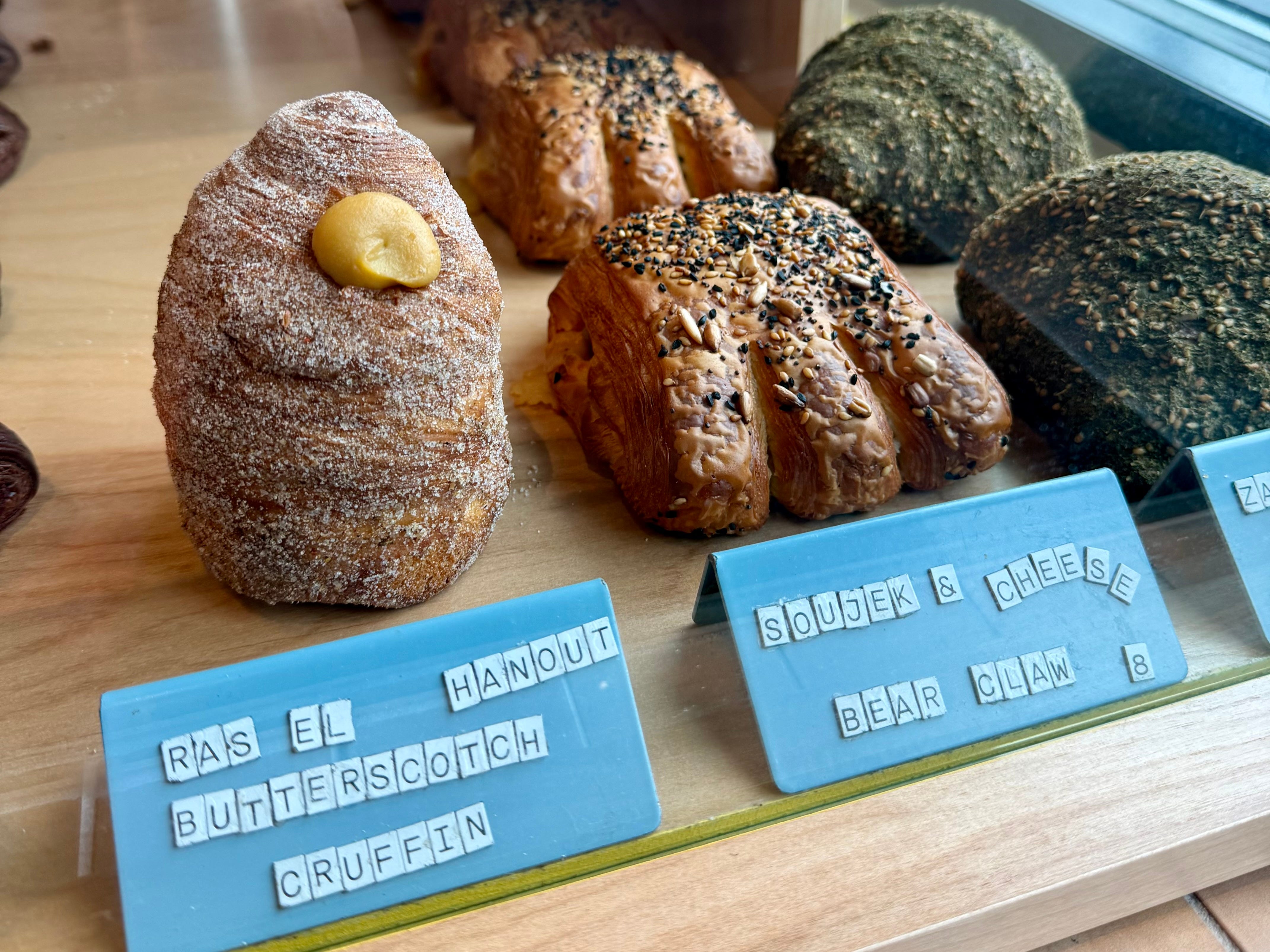
Second, did you see that Ligaya Mishan wrote a first-ever four-star NYT review for a restaurant outside of New York City? (Or, as the restaurant noted themselves, outside of Manhattan?) It was for the Palestinian restaurant Albi in Washington D.C. and I can’t wait to go try it. I visited the chef’s café and bakery, Yellow, in December and loved all the amazing pastries. Truly world-class stuff.
Lastly, the Times published two more of my own brief reviews: one was for Barker, a neighborhood canteen in Bed-Stuy with some pretty inspired from-scratch cooking from two former fine dining chefs; and one for Nin Hao, a playful Chinese restaurant in Prospect Heights with a secret stash of delightful Fujianese dishes on the menu.
Let’s get to the rest.
Over the past few months, I’ve noticed a new trend on restaurant menus: scallops are everywhere. I’d go so far as to say that these mollusks are the new fluke crudo, that once-ubiquitous raw fish starter. Fluke is much harder to spot on a menu these days than, say, a chilled scallop aguachile. (Unless you are at El Pingüino in Greenpoint, in which case you will find both.)
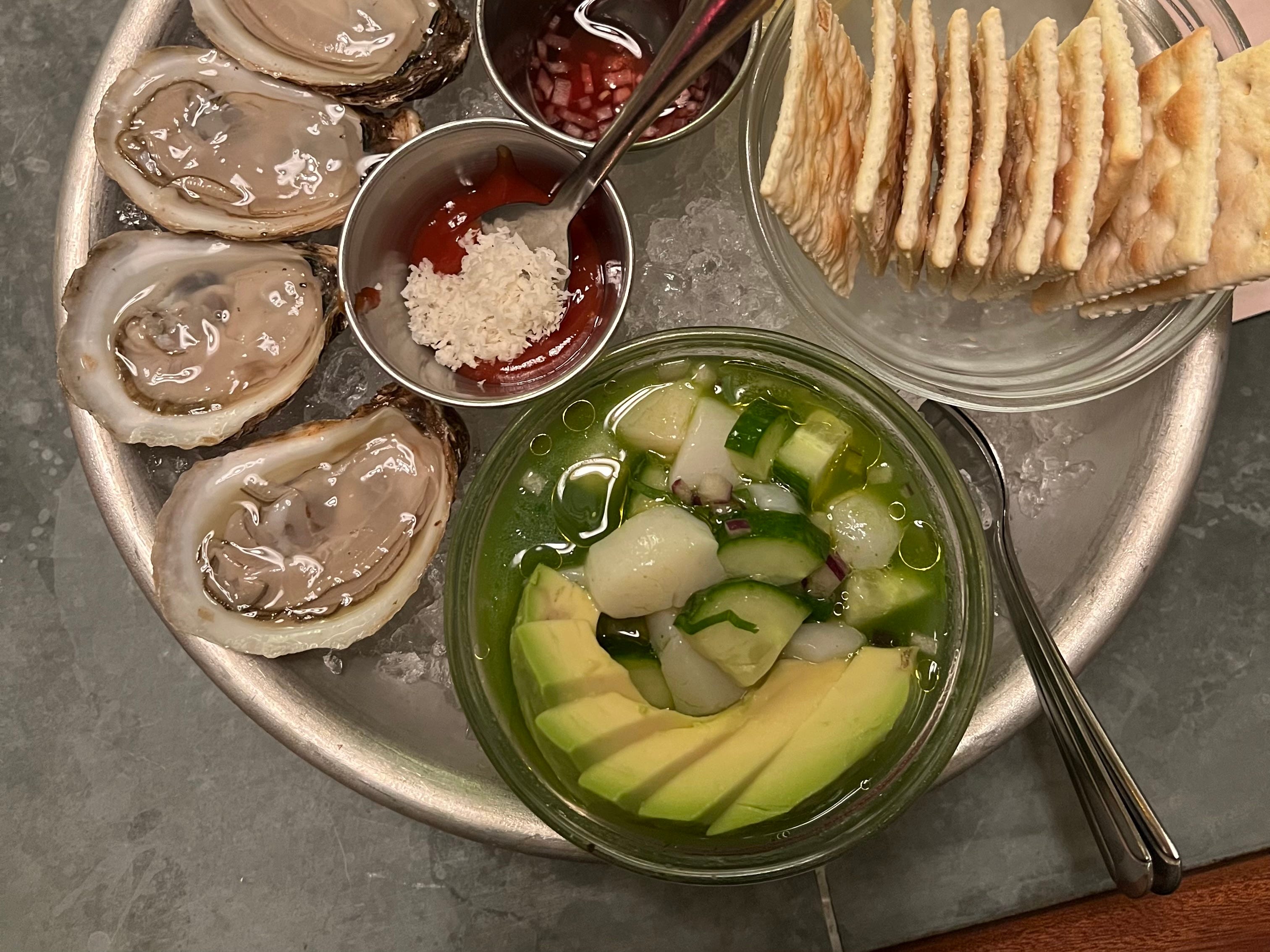
Crudo is a simple Italian dish of raw fish, olive oil, some citrus juice, and salt. Here in New York, it was popularized in the 2000s at the restaurant Esca where chef Dave Pasternack famously turned local fish, in particular Long Island fluke, into a prized fine dining ingredient. In typical restaurant fashion, as the trend trickled down and out, every modestly ambitious neighborhood spot seemed to be using those translucent slivers of firm-fleshed fish as a canvas for chef-driven flavors. Fluke crudo became so popular that its ubiquity grew into a kind of running joke.
If Italian restaurants like Esca introduced mild, meaty fluke crudo to the New York diner then Japanese sushi restaurants surely paved the way for sweet, silky-fleshed scallops to take its place. That, and the proliferation of shareable, assembly-style plates born from wine bars like Wildair and Penny, which, incidentally, both have raw scallops on the menu.
Now, as with fluke before it, scallops have become a base for building flavors, like the Ritz crackers on your cheese plate. Only instead of Camembert, there’s calamansi and turmeric.
I reached out to the seafood supplier Aqua Best to see if this was a data-driven trend and Steven Wong, the owner, confirmed that sales of scallops have indeed increased over the last few years, even as prices have gone up. (The scallops that Aqua Best sources are wild-caught, which means they are subject to supply issues like declining stocks and warming waters, which, per Steven, drives up the cost).
Chefs love scallops because scallops are easy to love. As Steven wrote, “with great ingredients such as scallops, the recipe is usually easy to follow and pickup times from the restaurants are usually very quick. An easy dish gives the chef more time to prep harder dishes.”
Raw fish pairs well with acidity, which is one of my favorite flavor profiles, so I’d be happy with pretty much any vehicle for some lime juice or vinegar (could razor clams be next?). Plus, the inherent umami in seafood is hard to resist. No wonder we’re crudo crazy.
Still, when I’m not working, price is usually what prevents me from ordering to my heart’s content from the raw bar portion of a menu. Just last week I saw a $30 raw scallop dish. I understand restaurant economics, I really do, but that’s insane.
Which brings me to an alarming data point, as reported by the WSJ, that 10% of Americans are responsible for 50% of consumer spend. So, half of everything purchased in this country goes to just ten percent of the population. I’m sure $30 scallop crudos are up there.
In a roundabout way, scallops got me thinking about how restaurant influences wax and wane. The popularization of crudo is an example of how Italian cuisine was once at the epicenter of dining culture in New York. But over the last decade, the industry has evolved to become more inclusive of a wider variety of cuisines and cultures. People seem to be just as comfortable eating sashimi and mariscos as they were with Italian crudo.
Granted, I don’t love using vague labels like “dining culture” and “the industry” because, inevitably, these apply to a very specific style of pricier restaurants largely based in Manhattan, which I realize is a very small part of the whole “culture” and “industry.” (Also, which “people” are we talking about here? Some of us have always loved sashimi and mariscos.) Perhaps what I mean to say is that the narrative of NYC’s restaurants—as told through its reviews, magazine feature stories, and awards—was once pretty limited and has now, thankfully, expanded its view.
My friends and I used to quip that California had the country’s best East Asian food, but I’m not so sure that’s still true. New York is competitive now, particularly when it comes to the genre of innovative, non-traditional cooking, which also happens to be my favorite kind of cooking.
Another example of waning influences is the recent news that Tom Colicchio’s pioneering Craft and Dan Kluger’s seasonally-driven Loring Place are both closing. Of course, restaurants run their course and both of these places had generation-defining tenures. Their respective ends have little to do with any sort of failure and more, it seems, to do with the cost of running a restaurant. But it’s all happening amid a backdrop of shifting appetites. It’s the end of an era, is what I wrote in my Notes app. But not all endings have to be sad.
Just last week, I signed up for the new food podcast and newsletter Shut Up n’Eat and there was a survey question at the end asking me for my favorite food city. Normally, I’d put Hong Kong or Tokyo or some other city in Asia, but I typed in New York City—and meant it.
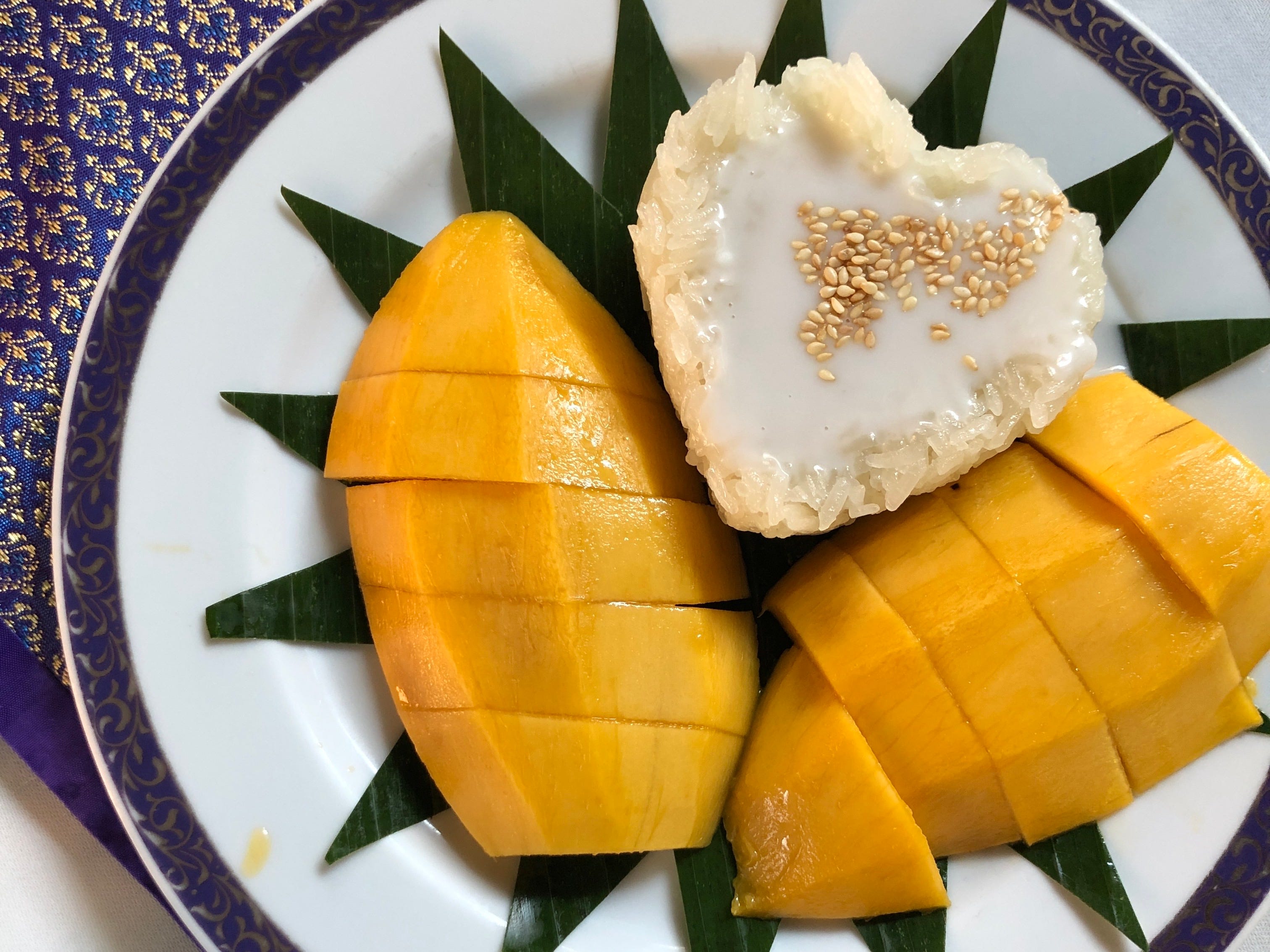
On the sweeter side of things, I’ve never seen so much mango sticky rice in my life. And I don’t just mean the Thai dessert of mango with a side of coconut milk-infused rice. Now that the fruit is back in season, I’ve witnessed everything from mango sticky rice-inspired ice cream sundaes, smoothies, cakes, tarts, tiramisu, donuts, rice crispy treats (clever!), and even sourdough bread.
Some of it feels a little far-fetched, but I appreciate that the combination of ripe, velvety mango and coconut-infused rice has emerged as such a rich source of inspiration. Still, nothing beats the real thing.
Chad Robertson, a co-founder of San Francisco’s famous Tartine Bakery, is opening a new concept called Altbau in Williamsburg. According to the King Arthur Baking Co Substack, it’ll be an all-day café and retail space, but it won’t look anything like the old Tartine. I suspect that just means this will be a whole-grain focused operation because Robertson will be milling American grains on site, following in the footsteps of our very own Brooklyn Granary + Mill. I don’t have much to say about it all other than New York City really is that girl. Everybody wants a piece.
OK, here goes with this one. I have to preface this by first saying I don’t have any interest in defending Michelin nor do I think the company isn’t without its flaws. I gain very little from piping up for a brand that the people of the internet hate with a fervor typically reserved for industries like Pharma or Big Tobacco!
But I’ve seen the viral posts about the recent Sysco partnership and…I don’t get it. If you have more insight into this, please share it in the comments. Because as far as I can tell, people are up in arms over the fact that Sysco, an 80 billion dollar food distribution company, is now a corporate sponsor of Michelin’s star ceremony events, which is where they announce the stars and other awards. What that means, I think, is that if you eat a tuna tartare canape at any of their ceremonies, you’re eating food that was trucked in by Sysco, the same company that sells ketchup to KFC.
Now, Michelin partnering with Sysco is one hundred percent a misalignment in terms of branding and the shoddy logistics of it all is bad, yes, although quite frankly, none of this is new. The company was never very good at getting those red plaques to restaurants. But, assuming things haven’t changed since I left in 2018, it is nonsensical to draw a line from poor events marketing to the total obsolescence of an award or any recognition in the guide.
Because as far as I understand, none of this has anything to do with the food being served at the restaurants, which is what forms the basis of the inspector’s assessment. How and through what channels a restaurant procures their inventory to run their business is up to that restaurant.
To be completely honest, what’s most aggravating to me in all of this is seeing the likes and reposts about the Sysco issue online. Do people actually know what they are endorsing? Or do they just see a post disparaging a brand that happens to be a lightning rod for all that is bad and worse in this industry, in which case it’s easy to say ‘hell yeah’ and scroll on.
To be fair, I get that part completely. Ever since I left the company, I’ve been sitting on the fence, torn between my own largely positive experience working there—and what I personally brought to the table as an inspector—and the general sense that Michelin, as an out-of-touch French-owned company that ultimately services itself and the one percenters, is bad.
I struggle with this quite a bit. On the one hand, the power and prestige inherent to the recognition from companies like Michelin can change lives and shift culture. Going back to my earlier point about the end of an era in dining, I look at what we’ve received in the old guard’s place: restaurants like Atoboy and Atomix, for example. Today, alumni of JP and Ellia Park’s critically-acclaimed restaurants are busy opening their own—just this month there’s been Somssi, Sono, 28 Nomad—which goes to show how influential restaurants can be when they succeed, paving the way for the next generation of chefs to chart their own course and tell their own stories.
These platforms can be used to further equity and opportunity among those who were never given a chance. Or never given the credit. On the other hand, there’s a very hard-to-ignore correlation between power, or more specifically, the empowered, and systems of abuse.
The last thing I’ll say is this: when it comes to Michelin, people are too keen to throw the baby out with the bath water. I’m a partial voice in all of this, I know, and maybe I’m too late and the post-me Michelin really is beyond repair. But for the same reason people want to hear what chefs think about restaurants, to get the “insider” take, as a former insider, I want you to know that the narrative that surrounds Michelin is too cynical and too simplistic. In many ways, it’s just plain misinformed.
Moving on. I recently saw that DoorDash is introducing A.I. search into its platform. I gave it a whirl the other day and while I didn’t get very good results to my admittedly odd test query (“What are other people ordering now?”), the prospect of being able to search Q&A-style is certainly a lot more appealing than just scrolling through the last five places in my order history.
I remember, this was maybe 10 years ago, when “Big Data” was the new and urgent phrase of the day. While I don’t hear those exact words as much anymore, we’re still very much living in an age of information. Maybe the upside to A.I. is its potential as a tool that can help more people access and sift through information for their own benefit. Like turning a massive database of food options into a trove of personalized discoveries.
Which is a nice segue to another behavioral trend I thought was interesting, or concerning, I’m not sure which yet. According to a recent NRN podcast, food businesses are readying themselves for the next generation of spenders, Gen Alpha, with business models rooted in customization and algorithmically-derived recommendations.
I guess this tracks. My daughter only knows the TV shows and songs recommended to her through our various streaming interfaces. Long-gone are the days of Must See TV and forwarding through Lost Ones and Ex-Factor just to hear Lauryn Hill sing the sweet, sweet words “how you gonna win, when you ain’t right within?” Why shouldn’t my kid expect the same from her choice of restaurants?
It’s not just Gen Alpha; the preference for customization is already changing the way we eat. One recent example in my corner of the dining world is the rise in popularity of hot pot, where a diner can pick and choose what they want to cook and eat. Or the latest fad straight from China, malatang, also known as hot pot for one person.
Mao, for instance, has had malatang almost every day for the past four years. “The abundant selection of food, including vegetables and meat, can satisfy people’s different needs,” she says, explaining the attraction of the dish’s versatility where everything that goes in is chosen by the diner. — The World of Chinese
It all has me wondering: where does the road to hyper-individualization end? And what will the world look like when we get there?
Have you ever heard the term grocery store tourism? I came across it on Instagram the other day, which, one, is basically “my why” for travel and, two, I think means we’ve reached peak food-as-culture. The food people I know have always put grocery store shopping on their travel itineraries, but the fact that normies are now doing it too is fascinating.
Travellers are skipping restaurants in favour of supermarket aisles to experience local food culture up close, and it’s beginning to trend. — Architectural Digest Middle East
Maybe we’re all, in our hearts of hearts, baby anthropologists curious to see how other people live in the most ordinary sense. Maybe we all have a little Columbus in our DNA, wondering if what they have is better than what we have (and if so, maybe we can have a little of it, too).
And that’s a wrap! Sorry this was all a bit dessert-light; I promise I’ve got a timely essay about dessert next week and then my roundup of the best sweets I’ve eaten this year. See you then.
No posts
Comments
Nothing yet. Say the first thing.
Sign in to join the conversation.