
Coastal Plain Wetland Delineation Field Course — October 1–2, 2026 | Wilmington, North Carolina Area
Wetland delineation in the Coastal Plain can be deceptively difficult.
Flat terrain, sandy soils, seasonal water tables, disturbed vegetation, subtle hydrology, and gradual transitions between wetland and upland communities can make boundary decisions challenging even for experienced professionals.
The Swamp School’s Coastal Plain Wetland Delineation Field Supplement is a two-day, hands-on field course designed to help wetland professionals strengthen their ability to recognize, interpret, and document these conditions in the field.
The course will be held October 1–2, 2026, in the Wilmington, North Carolina area and will be taught by Marc Seelinger, SPWS, founder of The Swamp School.
This is an intermediate-level field supplement, not an introductory wetland delineation course.
Participants should have previously completed wetland delineation training or have comparable professional field experience. The course builds on that foundation with concentrated instruction in the plants, soils, hydrology, and landscape conditions commonly encountered in the Atlantic Coastal Plain.
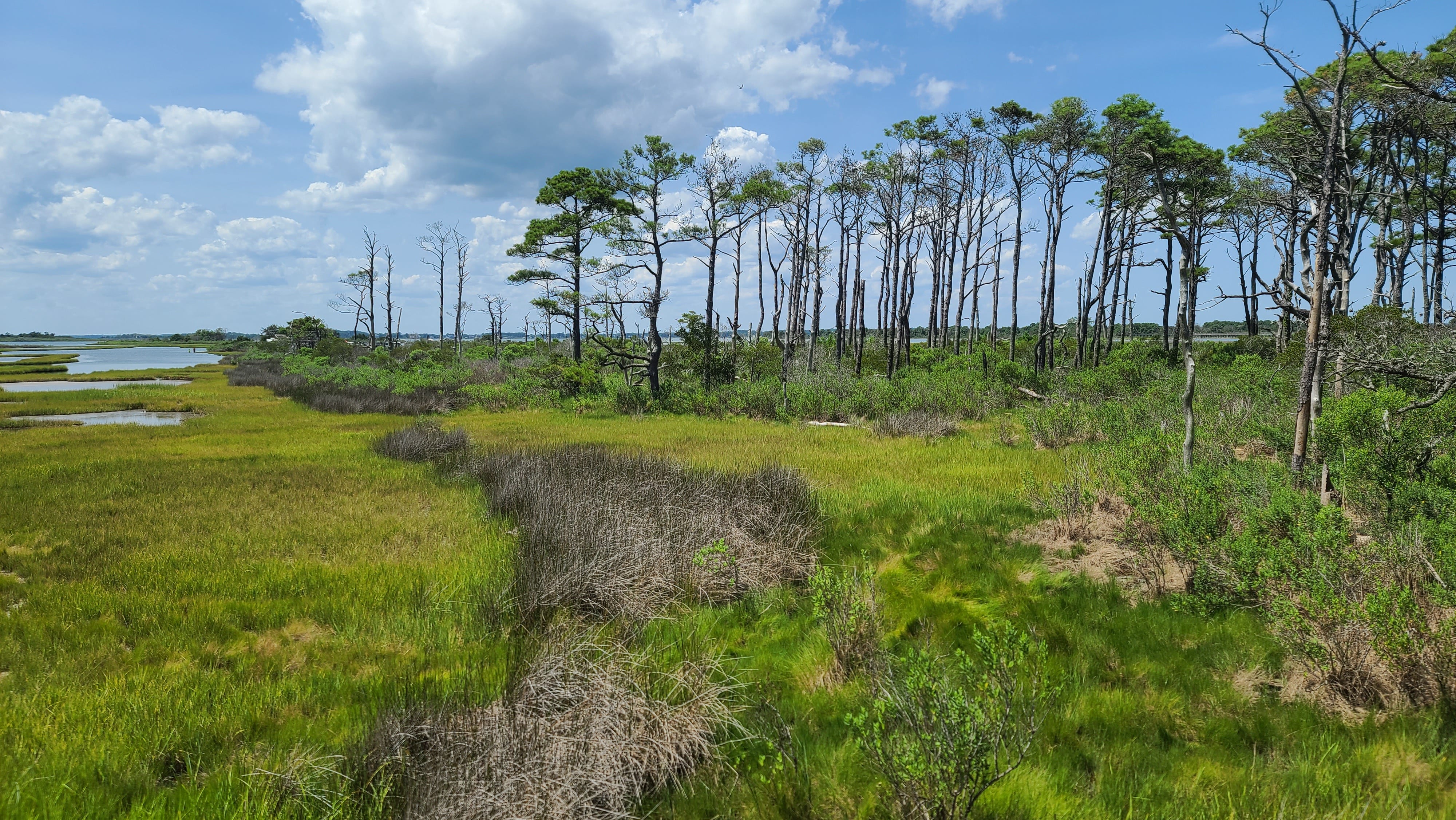
Much of the program will be conducted outdoors at field locations selected to demonstrate real-world Coastal Plain conditions.
Over two days in the field, participants will focus on:
Coastal Plain botany
Hydric soil indicators
Wetland hydrology features
Difficult and marginal wetland boundaries
Wetland connectivity examples
Representative sampling-location selection
Wetland determination data forms
Interpreting conflicting or subtle field indicators
Applying professional judgment to boundary placement
Preparing clearer, more defensible documentation
Participants will examine common wetland and upland plant communities, including regional trees, shrubs, vines, herbs, grasses, sedges, and rushes.
The goal is not simply plant identification. You will also consider how plant communities and hydrophytic vegetation indicators affect wetland determinations.
Coastal Plain soils can present some of the most challenging conditions encountered during a delineation.
The course will examine:
Sandy, loamy, clayey, and organic soils
Common regional hydric soil indicators
Depleted matrices
Redox concentrations
Organic accumulations
Soil morphology
Difficult or potentially misleading soil conditions
Participants will compare soil profiles across wetland, transitional, and upland locations and discuss how those observations affect field decisions.
Participants will also examine primary and secondary wetland hydrology indicators, including:
Seasonal saturation
Shallow water tables
Ponding
Drainage patterns
Landscape position
Microtopography
Hydrology altered by disturbance or land use
These field observations will be tied back to practical wetland determination and documentation decisions.
Some of the most valuable wetland training happens where the answer is not immediately obvious.
Participants will work through difficult or marginal situations, compare available vegetation, soil, and hydrology evidence, and discuss how to make professional field decisions when indicators are subtle, inconsistent, or affected by disturbance.
The course will include application of the Atlantic and Gulf Coastal Plain Regional Supplement and emphasize clear, defensible documentation of the reasoning behind a wetland determination.
The course will be taught by Marc Seelinger, SPWS, founder of The Swamp School.
Marc has more than 40 years of professional experience in wetland science, wetland delineation, environmental consulting, and technical training.
Throughout the course, he will share practical field techniques, regional observations, and approaches developed through decades of professional wetland work.
This field course is designed for:
Wetland scientists
Wetland delineators
Environmental consultants
Engineers
Environmental planners
Natural resource professionals
Government personnel
Utility professionals
Transportation professionals
Energy professionals
Project managers
Participants should have previous wetland delineation training or comparable field experience.
Dates: October 1–2, 2026
Location: Wilmington, North Carolina area
Format: Two-day, in-person field course
Training Level: Intermediate professional training
Continuing Education: 16 PDHs
Instructor: Marc Seelinger, SPWS
Early Registration: $995
Regular Tuition: $1,095
Participants will also receive a certificate of training.
The majority of this course will take place outdoors under typical Coastal Plain field conditions.
Participants should plan to bring appropriate field clothing, waterproof boots, soil tools, a field notebook, regional plant references, insect protection, drinking water, and wetland determination materials.
Specific meeting locations, daily schedules, and field instructions will be provided to registered participants before the course.
Because the course is being held in coastal North Carolina during hurricane season, weather conditions will be monitored closely.
The course is expected to proceed during normal seasonal weather, including light rain, but severe weather, flooding, evacuation orders, unsafe travel conditions, or site closures may require the program to be modified, relocated, postponed, or rescheduled.
Participants are encouraged to make refundable or flexible travel arrangements.
If you already understand wetland delineation fundamentals but want more experience interpreting the difficult conditions encountered in the Coastal Plain, this course is designed for you.
Spend two days in the field improving your ability to recognize plants, interpret soils and hydrology, select better sampling locations, and make more confident wetland boundary decisions.
Learn more and register:
https://swampschool.org/product/coastal-plain-wetland-delineation-field-supplement/
Early Registration: $995
Space is limited for this field-based program.
No posts
Comments
Nothing yet. Say the first thing.
Sign in to join the conversation.