
Versione italiana. English Version below.
Anno 410 d.C. I Britanni scrivono a Roma, del cui impero la Britannia è una provincia, chiedendo di essere difesi dalle minacce che subiscono da Scoti, Pitti e Sassoni. Quelle minacce esistono da molto tempo, almeno potenzialmente. Quello che i Britanni cercano di avere da Roma è in realtà una rassicurazione sulla sua presenza effettiva. Vogliono sapere se l’imperatore continuerà a garantire amministrazione efficiente, commerci protetti, soprattutto stabilità politica.
Ma Roma è in crisi. Le ragioni di questa crisi non sono solo militari. E’ la politica che ha fallito, e l’economia che le è andata appresso. L’imperatore risponde ai Britanni. In sostanza dice loro “difendetevi da soli”.
Le conseguenze di questa risposta gettano la Britannia nel periodo più cupo della storia inglese. Ma anche Roma non se la passa bene. Nello stesso anno arrivano i Visigoti di Alarico, che profanano i templi e segnalano la fine imminente del più grande impero sino ad allora conosciuto.
La Lettera di Onorio rappresenta un Incidente Scatenante. E’ il momento in cui i Britanni devono prendere atto che il sistema che li ha retti fino a quel momento non c’è più, e che devono inventarsene un altro. Ma non è questione di agire, di mettere qualche lancia in mano ai loro uomini per difendersi dai nemici: devono smettere di pensarsi come provincia romana. Cioè devono cambiare la loro identità profonda. Non sono più parte di Roma. E, allora, cosa sono? Questo cambio di prospettiva non si può fare dalla mattina alla sera.
Il loro Essere non basta più. Il loro Dover Essere non è più adeguato alle circostanze: non possono più diventare “la provincia dell’impero più cara a Roma”, perché Roma se ne infischia di loro. Devono scoprire il loro Bisogno Nascosto.
Al di là delle analogie che si possono trovare con la situazione di oggi, quello che mi interessa sottolineare è che il metodo CGW non considera l’Incidente Scatenante come il momento in cui l’azione diventa inevitabile. Quel momento è solo la conseguenza di qualcosa che è già accaduto, e che CGW chiama Incidente Scatenante Primario. Qualcosa che, sul momento, non è parso così importante, né così rivoluzionario e clamoroso come l’arrivo della Lettera di Onorio.
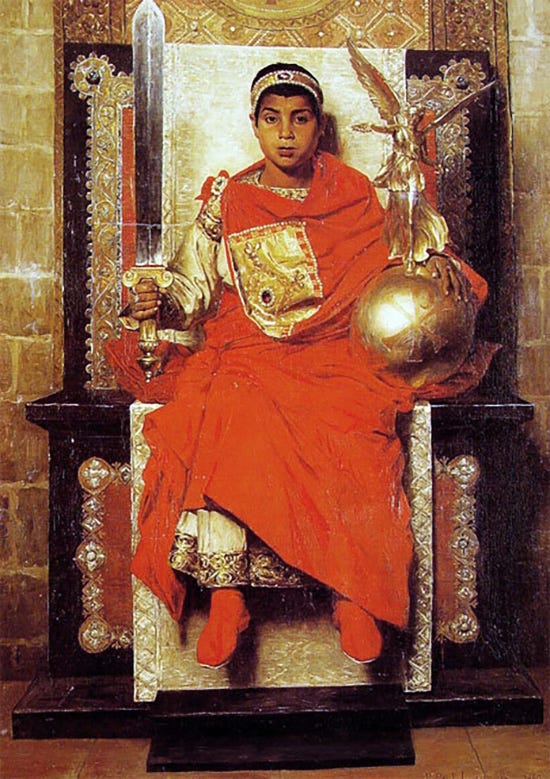
Troppa corruzione a Roma, che ha indebolito il sistema politico, favorendo l’ascesa di contropoteri che hanno finito per paralizzare l’impero. Troppo interessato servilismo in Britannia, che ha finito per spegnere lo spirito dei Britanni. L’Incidente Scatenante Primario è un Senatore che si lascia comprare da un re barbaro. E’ una carestia che affama il popolo di Roma, mentre la classe dirigente si ingrassa con le scorte alimentari, in teoria destinate a tutto il popolo. E’ il reggente britanno che fa la cresta sulle tasse dovute a Roma, o che commercia illegalmente con i nemici arricchendoli oltre la soglia di sicurezza. E’ il momento in cui qualcuno regala a Onorio una gallina, che il bambino amerà più di Roma.
Un sistema politico, che è metafora di un sistema psicologico, non cede di schianto, ma a seguito di mille piccole crepe che si sono succedute nel tempo. Un edificio crolla a partire dal marcire invisibile di una delle sue travi. Gli abitanti dell’edificio non si accorgono della trave. Vivono il crollo, e i manuali lo chiamiamo Incidente Scatenante: è disastroso, è spettacolare, è inevitabile. L’Incidente Scatenante Primario è la trave che marcisce al buio, non il crollo. Per questo è più interessante, più sottile. Più creativo.
Provate a chiedervi: è più efficace vedere subito il crollo, o la gente che vive serenamente il proprio quotidiano mentre la trave marcisce, e solo noi sappiamo che avverrà il crollo?
Le storie iniziano quando un protagonista perde l’equilibrio fra il proprio Essere, il proprio Dover Essere ed il proprio Bisogno Nascosto. Quell’equilibrio va in pezzi quando si verifica un Incidente Scatenante Primario: una piccola crepa che contiene in sé la fine. L’Incidente Scatenante tradizionalmente inteso è il momento in cui le conseguenze di quel piccolo elemento vengono alla luce.
Si potrebbe pensare che in una storia, soprattutto per il cinema, ciò che conta è ciò che provoca immediatamente grandi conseguenze. Ma questo è un errore, perché la ricerca del fatto plateale induce l’autore a pensare in termini di trama, più che di psicologia del personaggio. Il meccanismo è semplice: imposto un personaggio e poi faccio capitare qualcosa che gli cambia la vita. Ma noi non siamo dei. Non “facciamo capitare” qualcosa. Noi registriamo ciò che capita. E ciò che capita ha a sua volta una storia.
La trave che marcisce mentre gli abitanti del condominio vivono tranquillamente introduce un elemento di suspense e di realismo che aiuta immensamente ad approfondire la storia. esattamente come nel caso della trave e dell’edificio, il sistema psicologico di un Personaggio-Generatore non va in pezzi all’improvviso: è accaduto qualcosa, il personaggio ha fatto una scelta, ha preso una decisione, ha visto qualcosa, ha capito qualcosa, che ha incrinato il suo equilibrio fra Essere, Dover Essere e Bisogno Nascosto.
Cercate la trave che marcisce nella vita del vostro personaggio. Il crollo dell’edificio sarà più vero e più efficace.
Il vero lavoro dello sceneggiatore non consiste nell’inventare il crollo. Consiste nel trovare la trave marcia.
Per maggiori informazioni su Characters Generate Worlds: www.voltaggiodev.it
English Version
In 410 AD, the Britons wrote to Rome. Britain was still a province of the Roman Empire, and they asked for protection against the threats posed by the Scots, the Picts and the Saxons. Those threats had existed for a long time, at least potentially. What the Britons were really asking Rome for was reassurance that its authority was still real. They wanted to know whether the Emperor would continue to guarantee an efficient administration, protected trade and, above all, political stability.
But Rome was in crisis. The reasons were not only military. Politics had failed, and the economy had collapsed along with it. The Emperor replied to the Britons. In essence, he told them: “Defend yourselves.”
The consequences of that response plunged Britain into the darkest period of its history. But Rome was hardly in better shape. In the same year, Alaric’s Visigoths entered the city, desecrating its temples and signalling the imminent collapse of the greatest empire the world had yet known.
Honorius’ Letter is an Inciting Incident. It is the moment when the Britons are forced to acknowledge that the system which had sustained them until then no longer exists, and that they must create a new one. But this is not simply a matter of taking action, of putting spears into the hands of their men to fight their enemies. They must stop thinking of themselves as a Roman province. In other words, they must change their deepest identity. They are no longer part of Rome. So what are they? That kind of shift in perspective cannot happen overnight.
Their Being is no longer enough. Their Ought-To-Be no longer fits the circumstances: they can no longer aspire to become “Rome’s favourite province,” because Rome no longer cares about them. They must discover their Hidden Need.
Beyond the obvious parallels with our own time, what interests me here is that the CGW method does not regard the Inciting Incident as the moment when action becomes inevitable. That moment is only the consequence of something that has already happened, something CGW calls the Primary Inciting Incident. Something that, at the time, did not seem nearly as significant, revolutionary or dramatic as the arrival of Honorius’ Letter.
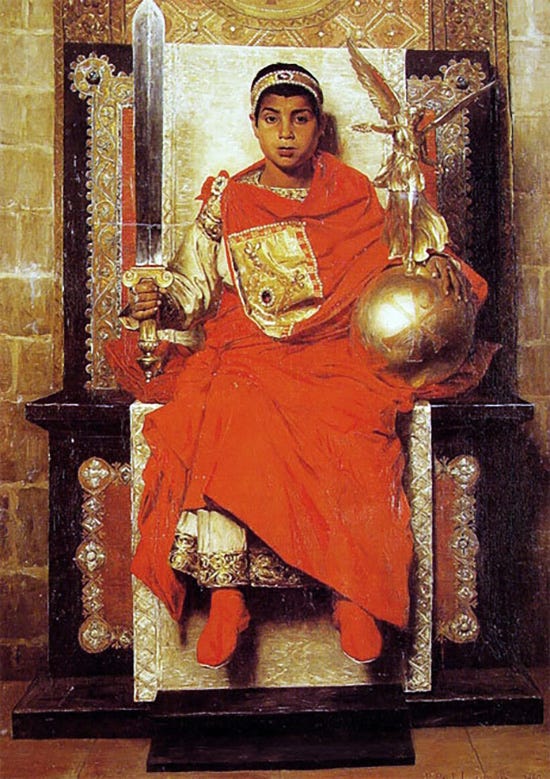
Too much corruption in Rome weakened the political system, allowing competing centres of power to emerge until they paralysed the Empire. Too much self-interested servility in Britain gradually extinguished the Britons’ own spirit. The Primary Inciting Incident is a senator accepting a bribe from a barbarian king. It is a famine that starves the people of Rome while the ruling class enriches itself with food reserves meant for everyone. It is a British governor skimming taxes owed to Rome, or secretly trading with the enemy, enriching them beyond the point of safety. It is the moment when someone gives Honorius a chicken, and the boy will come to love it more than Rome.
A political system—which is itself a metaphor for a psychological system—does not collapse all at once. It gives way through countless tiny fractures that accumulate over time. A building collapses because one of its beams has been rotting unseen for years. The people inside the building never notice the beam. They only experience the collapse, and screenwriting manuals call that collapse the Inciting Incident: spectacular, catastrophic and inevitable. The Primary Inciting Incident is the beam rotting in the dark, not the collapse. That is why it is more interesting. More subtle. More creative.
Ask yourself this: what makes for a stronger story? Watching the building collapse immediately, or watching people peacefully going about their everyday lives while the beam quietly rots above their heads, with only the audience aware that the collapse is coming?
Stories begin when a protagonist loses the balance between their Being, their Ought-To-Be and their Hidden Need. That balance begins to break the moment a Primary Inciting Incident occurs: a tiny crack that already contains the ending within it. The Inciting Incident, as it is traditionally understood, is simply the moment when the consequences of that tiny crack become visible.
It is tempting to believe that what matters in a story—especially in cinema—is whatever immediately produces dramatic consequences. But that is a mistake, because the search for spectacular events encourages writers to think in terms of plot rather than psychology. The mechanism is simple: first we invent a character, then we make something happen that changes their life.
But we are not gods. We do not “make things happen.” We observe what happens. And whatever happens always has a history of its own.
The beam rotting while the people inside the building carry on with their ordinary lives introduces a level of suspense and realism that dramatically deepens the story. In exactly the same way, the psychological system of a Generative Character does not suddenly fall apart. Something has already happened. The character has made a choice, taken a decision, seen something, understood something—something that has disturbed the balance between Being, Ought-To-Be and Hidden Need.
Look for the rotten beam in your character’s life. The collapse of the building will feel far more truthful and far more powerful.
The real work of a screenwriter is not to invent the collapse.
It is to find the rotten beam.
For more information on Characters Generate Worlds: www.voltaggiodev.it
No posts
Comments
Nothing yet. Say the first thing.
Sign in to join the conversation.