
Versione italiana. English Version Below.
Nell’ultimo episodio della seconda stagione di Homeland, La Scelta, la sede della CIA a Langley subisce un terribile attentato che costa la vita a duecento persone. Morto il Direttore, resta provvisoriamente al comando il più alto in grado, uno dei personaggi principali della serie, Saul Berenson.
Siamo al ventiquattresimo episodio. Significa che abbiamo già visto quasi una intera giornata di Homeland. Conosciamo Saul molto bene. Sappiamo perfettamente che è ebreo. Ma, fino a questo momento, il suo credo religioso è un dato puramente biografico. Per noi è un americano qualsiasi, che ha dei guai coniugali, che riveste un ruolo importante nella CIA, e che è molto amico e mentore della protagonista.
A un paio di minuti dal finale di stagione, troviamo Saul in piedi, da solo, in una grande sala, nella quale giacciono le salme coperte di tutte le vittime dell’attentato. Un attentato realizzato da terroristi islamici. Saul prega in ebraico. La colonna sonora accompagna la preghiera con una musica antica, mediorientale.
Seppure siamo perfettamente consapevoli del fatto che l’attentato sia di matrice islamica, e che Saul sia ebreo, questa è la prima volta che avvertiamo emotivamente qualcosa che fino a quel momento la serie non ci aveva fatto sentire. Per un istante, il conflitto al quale stiamo assistendo sembra affondare le sue radici in un’epoca lontanissima. La storia che abbiamo seguito per ventiquattro episodi sembra improvvisamente diventare soltanto l’ultimo capitolo di una storia molto, molto più antica.
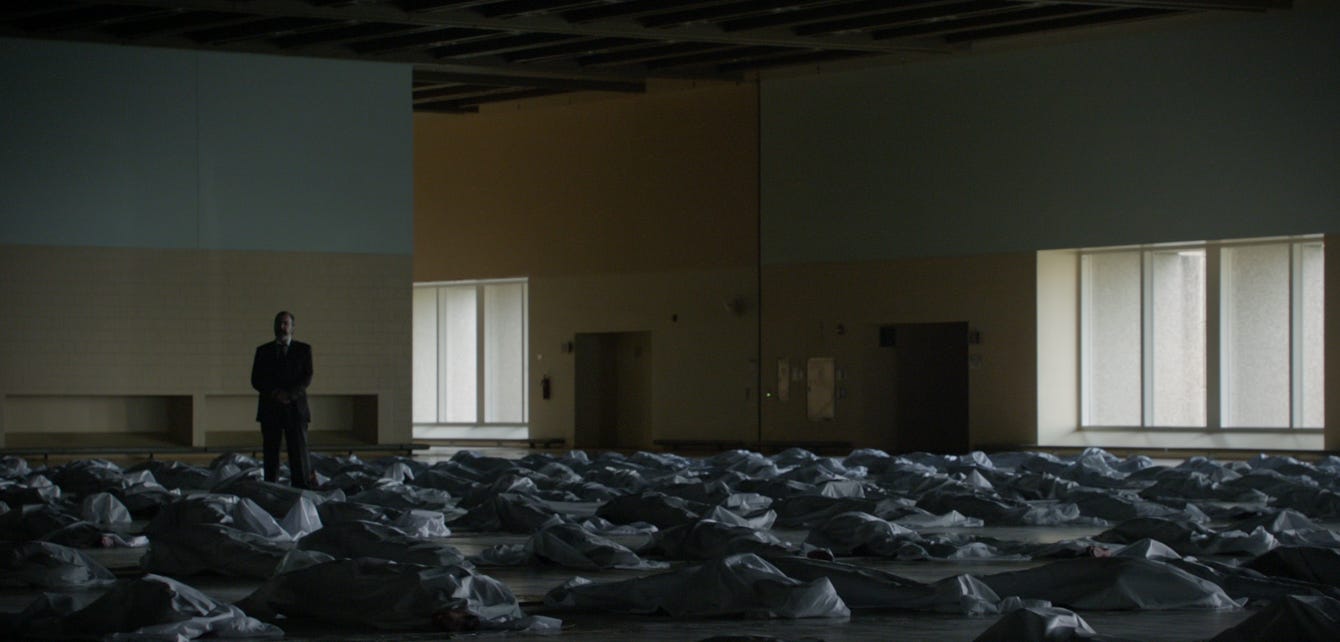
Saul ha una sessantina d’anni. Eppure, in quella scena, sembra averne migliaia. Ovviamente non è lui ad avere migliaia di anni, ma qualcosa che ha ereditato. Supponiamo che un uomo subisca un torto, e che muoia prima di poterlo riparare. Può darsi che i suoi figli vogliano ripararlo per lui. Ma, ad ogni trasmissione il bisogno si separa un po’ di più dalla causa che lo ha generato. Il figlio sa perché vuole vendicare il padre. Il pronipote conosce la storia. Dopo venti generazioni non viene più trasmessa l’esperienza ma un’identità. A quel punto non si pensa più “devo riparare ciò che è successo al mio antenato”, ma “noi siamo quelli che devono tornare”, “noi siamo quelli che sono stati cacciati”. È lì che il meccanismo diventa veramente potente.
Questa catena può non avere mai fine. Nessuno più ricorda il torto iniziale, nessuno ha conosciuto l’uomo che ha subito l’ingiustizia, né hanno più importanza i termini originari del conflitto. Se l’identità del popolo si è costruita su quel bisogno originario, il bisogno può trascinarsi per secoli, per millenni appunto.
C’è un luogo straordinario per osservare questo fenomeno: quella striscia di Levante che, nel corso dei millenni ha avuto nomi, confini, popoli, dominatori diversi. Andiamo indietro: Israele e Palestina, Protettorati coloniali, Impero Ottomano, Crociati, dominazioni islamiche, bizantini, romani, regni ellenistici, persiani, babilonesi, assiri, Israele e Giuda, Cananea.
Non è mai la stessa guerra, non sono né le stesse cause, né gli stessi popoli. Ma in qualche modo è un luogo nel quale la memoria si accumula: espulsione, riconquista, perdita, ritorno, nuova perdita, nuova espulsione. La storia di quella zona precede persino le categorie con le quali siamo abituati a ragionare: nel mondo Cananeo non ci sono islamici, non ci sono ebrei, non ci sono cristiani. Continuando a scavare nel passato, ad un certo punto scompaiono anche loro.
Se andiamo abbastanza indietro nel tempo, persino il Dio in nome del quale per secoli si è combattuto in quella parte del mondo, infatti, comincia a cambiare forma. Le origini di Yahweh sono ancora discusse, ma il Dio che diventerà il Dio di Israele si forma all’interno del più antico mondo religioso del Levante, nel quale esisteva un intero pantheon: El, il dio supremo e padre degli dèi; Baal, dio della tempesta; Asherah e molte altre divinità. Yahweh finì progressivamente per essere identificato con El, assorbendone titoli e caratteristiche, mentre gli altri dèi venivano prima subordinati e poi esclusi, fino all’affermazione di un unico Dio. Scavando abbastanza in profondità sotto tre religioni che hanno contribuito a definire per millenni l’identità di popoli diversi, arriviamo dunque allo stesso antichissimo paesaggio religioso levantino.
Ogni personaggio può portare dentro di sé un bisogno profondo che non riconosce, perché riconoscerlo metterebbe in crisi la persona che ha imparato a essere e che gli altri hanno imparato a riconoscere. Nel metodo CGW chiamo questa pulsione il Bisogno Nascosto.
Si potrebbe pensare che il Bisogno Nascosto muoia con la morte del personaggio. Ma, come abbiamo visto, si tratta in realtà qualcosa che può essere ereditato. Può essere trasmesso. Non viene trasmesso in modo diretto, ma attraverso una costruzione identitaria: “Questo è ciò che ci è stato fatto.” “Questa era la nostra casa.”, “Noi siamo quelli che devono tornare”, “Noi siamo quelli che hanno diritto di restare”, “Ciò che è accaduto non deve accadere mai più”, ecc.
Le storie, dunque, possono non limitarsi a raccontare un personaggio, ma una stirpe. Una stessa storia può essere il veicolo attraverso il quale il Bisogno Nascosto di un personaggio entra in esseri umani che vivono secoli dopo di lui.
Torniamo così a Saul Berenson e a Homeland. Quella scena non ci rivela necessariamente il Bisogno Nascosto di Saul, ma ci mostra qualcosa il modo in cui un Bisogno Nascosto possa attraversare il tempo: un essere umano può portare dentro di sé una parte dell’identità costruita da persone morte molto prima che egli nascesse. Per pochi istanti, vediamo la profondità temporale di una parte profonda della sua identità. Saul è un uomo del XXI secolo che pronuncia davanti ai morti parole che appartengono a una catena di memoria molto, ma molto più lunga della sua vita.
La serie contemporanea si apre così su un’altra storia, che dura da venticinque, trenta secoli.
E’ molto importante, qui, sottolineare che analoga sensazione si avrebbe se, anziché Saul Berenson che piange i morti di Langley, vedessimo uno sceicco piangere i morti di un attacco israeliano o americano.
Queste considerazioni forniscono una seconda risposta alla domanda lanciata la scorsa settimana: come fanno alcune storie ad essere immortali? La prima risposta è stata: “perché ciò che non muore sono i conflitti irresolubili dell’esperienza umana. Se un personaggio è portatore di quei conflitti, la storia diventa immortale.”
La seconda risposta CGW è: “Non sempre il Bisogno Nascosto appartiene ad un unico personaggio. Un personaggio può averlo ereditato da qualcuno che è morto molto prima che egli nascesse. E, se non riesce a risolverlo, può trasmetterlo a sua volta. In questo caso la storia non termina con la morte del personaggio. Aspetta semplicemente il personaggio successivo. E anche questo rende la storia immortale.”
Per ulteriori informazioni su Characters Generate Worlds www.voltaggiodev.it
English Version
In the final episode of Homeland’s second season, The Choice, the CIA headquarters in Langley is hit by a terrible terrorist attack that kills two hundred people. With the Director dead, the highest-ranking officer left temporarily takes command: one of the series’ main characters, Saul Berenson.
We are twenty-four episodes in. This means that, by now, we have watched almost an entire day of Homeland. We know Saul very well. We know perfectly well that he is Jewish. But, until this moment, his religion has been a purely biographical fact. To us, he is an ordinary American, a man with marital problems, who holds an important position at the CIA, and who is a close friend and mentor to the protagonist.
A couple of minutes before the end of the season, we find Saul standing alone in a large room, surrounded by the covered bodies of all the victims of the attack. An attack carried out by Islamic terrorists. Saul prays in Hebrew. The soundtrack accompanies his prayer with ancient, Middle Eastern music.
Although we are perfectly aware that the attack was carried out by Islamic terrorists, and that Saul is Jewish, this is the first time we emotionally perceive something that, until then, the series had never made us feel. For a moment, the conflict we are watching seems to have its roots in an unimaginably distant past. The story we have followed for twenty-four episodes suddenly seems to be only the latest chapter of a much, much older story.
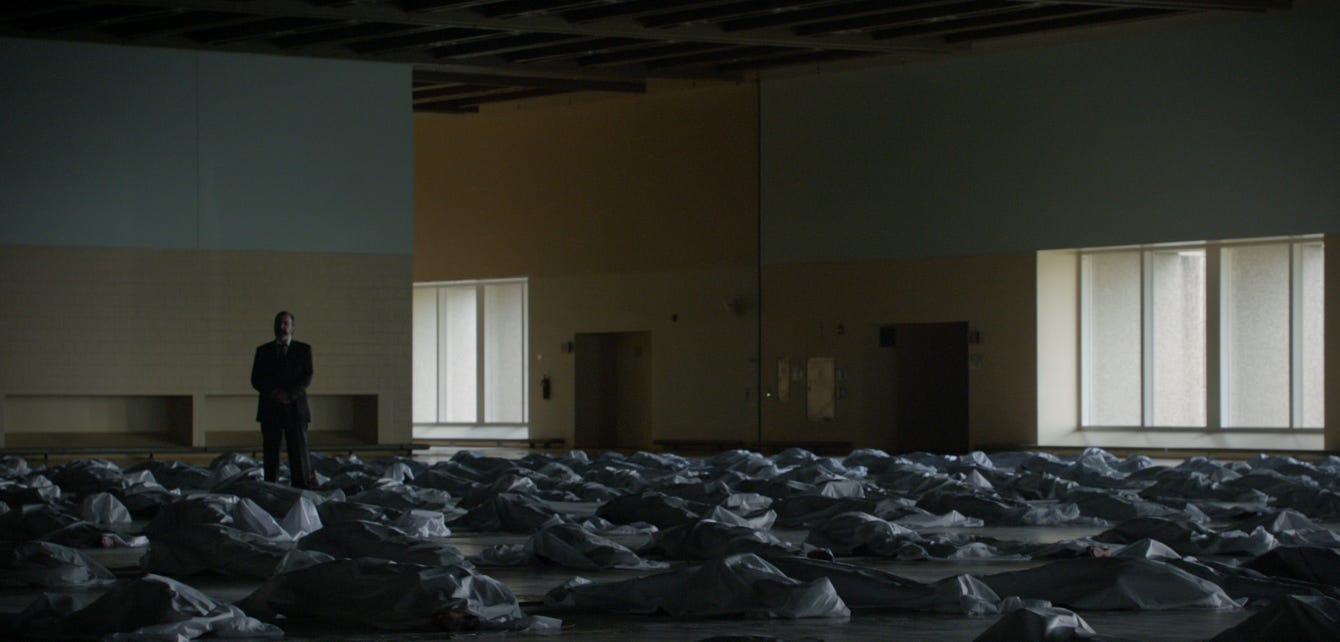
Saul is around sixty years old. And yet, in that scene, he seems to be thousands of years old. Obviously, it is not Saul himself who is thousands of years old, but something he has inherited. Let us suppose that a man suffers a wrong and dies before he can set it right. His children may want to set it right for him. But with each transmission, the need moves a little further away from the cause that originally created it. The son knows why he wants to avenge his father. The great-grandson knows the story. After twenty generations, what is passed down is no longer the experience, but an identity. At that point, people no longer think, “I must set right what happened to my ancestor,” but rather, “we are the ones who must return,” “we are the ones who were driven out.” This is where the mechanism becomes truly powerful.
This chain may never end. No one remembers the original wrong anymore, no one ever knew the man who suffered the injustice, and the original terms of the conflict no longer even matter. If a people’s identity has been built around that original need, the feud can drag on for centuries, for millennia.
There is an extraordinary place in which to observe this phenomenon: that strip of the Levant which, over the millennia, has had different names, borders, peoples and rulers. Let us go backwards: Israel and Palestine, colonial protectorates, the Ottoman Empire, the Crusaders, Islamic rule, the Byzantines, the Romans, the Hellenistic kingdoms, the Persians, the Babylonians, the Assyrians, Israel and Judah, Canaan.
It is never the same war. The causes are not the same, nor are the peoples. And yet, somehow, it is a place where memory accumulates: expulsion, reconquest, loss, return, new loss, new expulsion. The history of that region predates even the categories we are accustomed to thinking in: in the Canaanite world there are no Muslims, no Jews, no Christians. If we keep digging into the past, at some point even they disappear.
If we go far enough back in time, even the God in whose name people fought for centuries in that part of the world begins to change shape. The origins of Yahweh are still debated, but the God who would become the God of Israel took shape within the much older religious world of the Levant, where an entire pantheon existed: El, the supreme god and father of the gods; Baal, the storm god; Asherah and many other deities. Yahweh gradually came to be identified with El, absorbing his titles and characteristics, while the other gods were first subordinated and then excluded, until the affirmation of one God alone. Dig deep enough beneath three religions that have helped define the identities of different peoples for millennia, and we eventually arrive at the same ancient religious landscape of the Levant.
Every character can carry within them a deep need they do not recognize, because recognizing it would threaten the person they have learned to be, and the person others have learned to recognize. In the CGW method, I call this drive the Hidden Need.
One might assume that the Hidden Need dies when the character dies. But, as we have seen, it can actually be inherited. It can be passed on. Not directly, but through the construction of an identity: “we are the ones whose land was stolen”; “we are the ones who have a right to the land of our fathers”; “this is what was done to us”; “this used to be our home”; and so on.
Stories, then, do not necessarily have to tell the story of a single character. They can tell the story of a lineage. The same story can become the vehicle through which one character’s Hidden Need enters the lives of human beings who live centuries after that character has died.
And so we return to Saul Berenson and Homeland. In that scene, a Hidden Need emerges that does not belong to Saul Berenson simply as an individual, but to Saul as the heir to a tradition. Saul does not suddenly become Jewish. He has always been Jewish, even if we, as viewers, have barely thought about it. But for a moment we see the historical depth of a profound part of his identity. He is a man of the twenty-first century, standing before the dead and speaking words that belong to a chain of memory much, much longer than his own life.
The contemporary series suddenly opens onto another story, one that has been going on for twenty-five, perhaps thirty centuries.
It is very important, here, to point out that we would experience a similar feeling if, instead of Saul Berenson mourning the dead of Langley, we were watching a sheikh mourning the victims of an Israeli or American attack.
These considerations give us a second answer to the question I raised last week: how do some stories become immortal? The first answer was: “Because what does not die are the irresolvable conflicts of human experience. If a character carries one of those conflicts, the story becomes immortal.”
The second CGW answer is: “The Hidden Need does not always belong to a single character. A character may have inherited it from someone who died long before they were born. And if they are unable to resolve it, they may pass it on in turn. In this case, the story does not end with the death of the character. It simply waits for the next character.
And this, too, can make a story immortal.”
For more information about Characters Generate Worlds please visit: www.voltaggiodev.it
No posts
Comments
Nothing yet. Say the first thing.
Sign in to join the conversation.