
by Suzanne Gordon and Steve Early August 3, 2026
The media spent a lot of time this summer examining whether a certain Maine oysterman and Marine veteran seeking federal employment should have been better vetted by those around him.
Even after Graham Platner abandoned his U.S. Senate bid, his friends and foes argue about whether service-related conditions—which earned him a 100 percent disability rating from the Department of Veterans Affairs (VA)—contributed to past substance abuse, mental health problems, or aggression against intimate partners.
Now, in the same state, the spotlight has shifted to David Brouillette, a troubled Afghan war vet who might also have been better off harvesting oysters. Brouillette spent eight years in the U.S. Army and state National Guard before getting hired for not one, but two federal jobs. Thanks to an ill-advised push to recruit more ex-military personnel for law enforcement roles, without proper background checks, he got to carry a gun again.
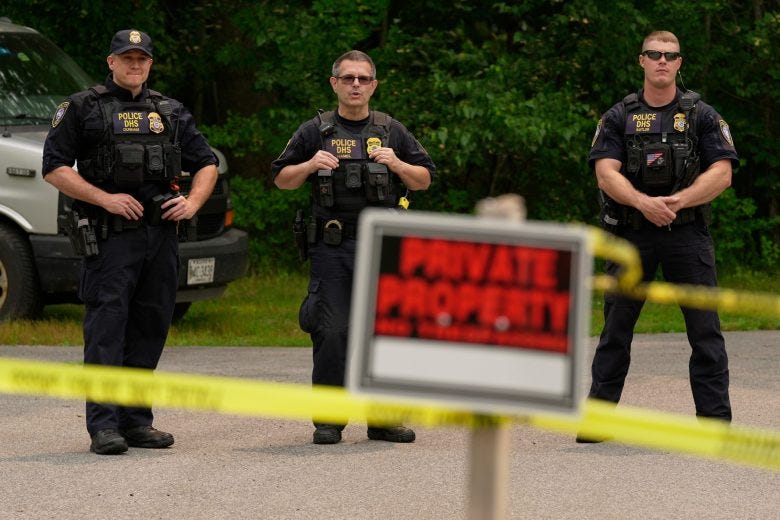
Earlier this month, after serving as a Department of Veterans Affairs (VA) police officer and then joining the Department of Homeland Security (DHS), Brouillette fatally shot Johan Sebastián Durán Guerrero, a young Colombian immigrant, during a traffic stop in Biddeford, Maine.
The Vet-to-Cop Pipeline
Thanks to Congress allocating $30 billion to create 10,000 more positions for that agency between 2025 and 2030—and job cuts at other federal departments, which often employ veterans—more ex-soldiers are getting hired into a para-military workforce, with insufficient vetting, minimal training, and leaders who valorize brutality. Those who have already been cops go to the head of the line for signing bonuses as high as $50,000.
Brouillette is among the 200,000 veterans disproportionately represented in the nation’s nearly one million law enforcement jobs, ranging from local police departments to the fast-growing Immigration and Customs Enforcement (ICE).
For their own good and the welfare of all Americans, some of these vets should not trade one uniform for another. That’s because past military service not only produces Post-Traumatic Stress Disorder (PTSD); it can also leave former service members with traumatic brain injuries that trigger aggressive and impulsive behavior.
No posts
Comments
Nothing yet. Say the first thing.
Sign in to join the conversation.