
by Suzanne Gordon July 30, 2026
In Washington, D.C., scorching heat waves along the East Coast this summer have raised the temperature and humidity in a notoriously hot and muggy city, with the thermometer hitting 100 degrees or higher more than once in July. This was particularly bad news for federal health care workers and their patients in a 35-acre hospital complex in Northwest Washington, just a few miles away from the Capitol.
The Department of Veterans Affairs Medical Center (VAMC) in D.C. is the administrative hub of a regional health care network that employs 2,000 people and cares for 125,000 veterans in D.C., Maryland, and Virginia. The patient population is predominantly African American. But staff reports reviewed by the Prospect indicate that the hospital does not have enough maintenance staff to fix its air-conditioning system, thus creating threats to patient safety and well-being.
Additionally, due to VA Secretary Doug Collins’s initial revocation of remote work arrangements last year, sources have told the Prospect that the VA has lost radiologists who play a central role in patient care in D.C. and elsewhere. Insiders say that medical specialists and other staff members who remain at their posts are increasingly demoralized as DOGE-like conditions persist at the agency.
“The D.C. VA has been neglected for years through various administrations,” one hospital patient, a former VA official, told the Prospect. “Its physical plant has been allowed to deteriorate, and it has been essentially abandoned by Congress and veterans service organizations [VSOs].” Many VSOs have national offices in D.C.
A second source, also a former VA official, compares the medical center to a patient with a debilitating chronic illness. “The patient has been able to hobble along and cope with his deteriorating condition. Then, suddenly, the patient gets a life stress, and that stress brings on a heart attack.”
VA press secretary Quinn Slaven downplayed the problems at the D.C. VAMC, and said that staffing has increased in recent months.
Insiders attribute some of the current challenges at the D.C. VAMC to aging infrastructure which has not been fully renovated or rebuilt across several administrations. For example, patients and staff say that the facility’s air-conditioning (HVAC) system has been unable to cope with this summer’s soaring temperatures. Sources have told the Prospect that shortages of key workers have meant fewer staff are available to repair infrastructure.
One veteran patient who served in Iraq visited the facility on July 15, when the thermostat jumped to nearly 100 degrees. When he entered the hospital, he immediately felt the heat in the sunbaked atrium. As he passed by the neurology clinic on the third floor and allergy clinic on the fourth, he said the place was “blazing hot. I don’t know how people can survive in these conditions.” The veteran said he was sweating profusely after spending only 20 minutes in the hospital.
Another visitor at the hospital told a friend that, as they were visiting a colleague, they noticed that the physician’s shirt was soaked through with sweat because the facility was so hot.
“We have to bring in pallets of bottled water to make sure veterans in the waiting room don’t keel over from dehydration,” a doctor told the Prospect. “Operations are canceled because of the heat in the operating rooms.” You can imagine, this doctor added, what it’s like to be waiting months for an operation and then find it had to be rescheduled because of the heat.
Another D.C. VAMC staffer said that the MRI machines sometimes go down because of the heat. This is hardly surprising; MRI machines generate an enormous amount of heat and require well-functioning HVAC systems to maintain temperatures between 65 and 75 degrees, as one industry publication advises. The combination of condensation from the heat and high-voltage electronics is a safety hazard and can lead to damaged machinery.
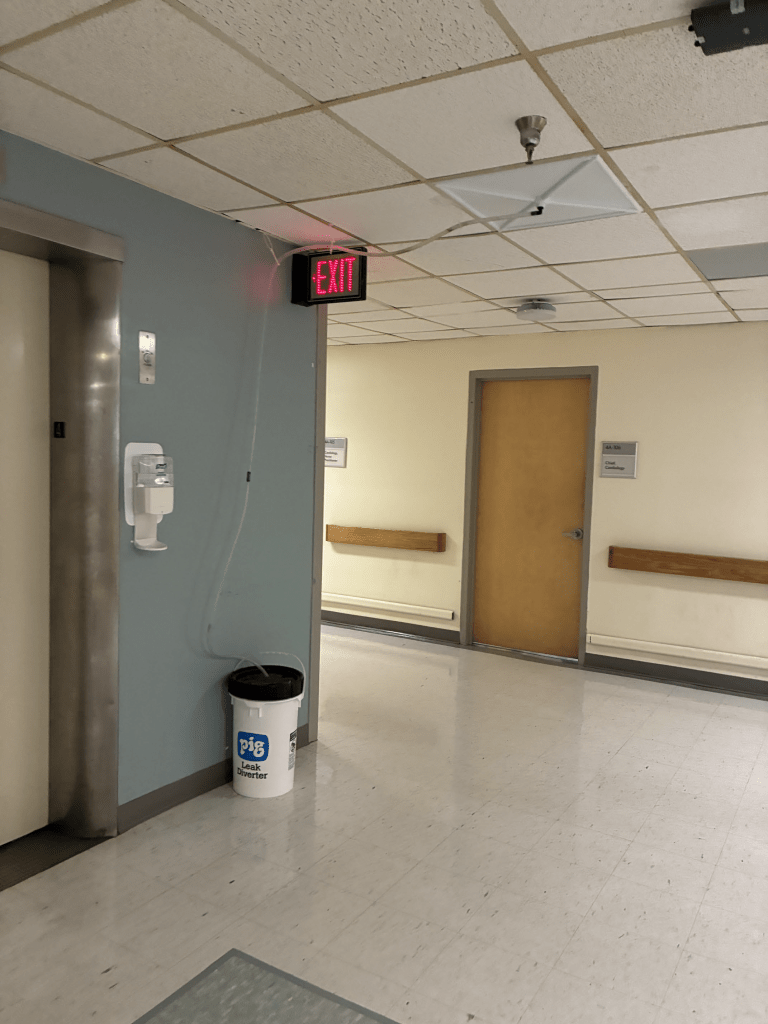
Patients and staff at the D.C. VAMC say that the facility’s air-conditioning system has been unable to cope with this summer’s soaring temperatures, and that shortages of key workers have meant fewer staff are available to make repairs to aging infrastructure.
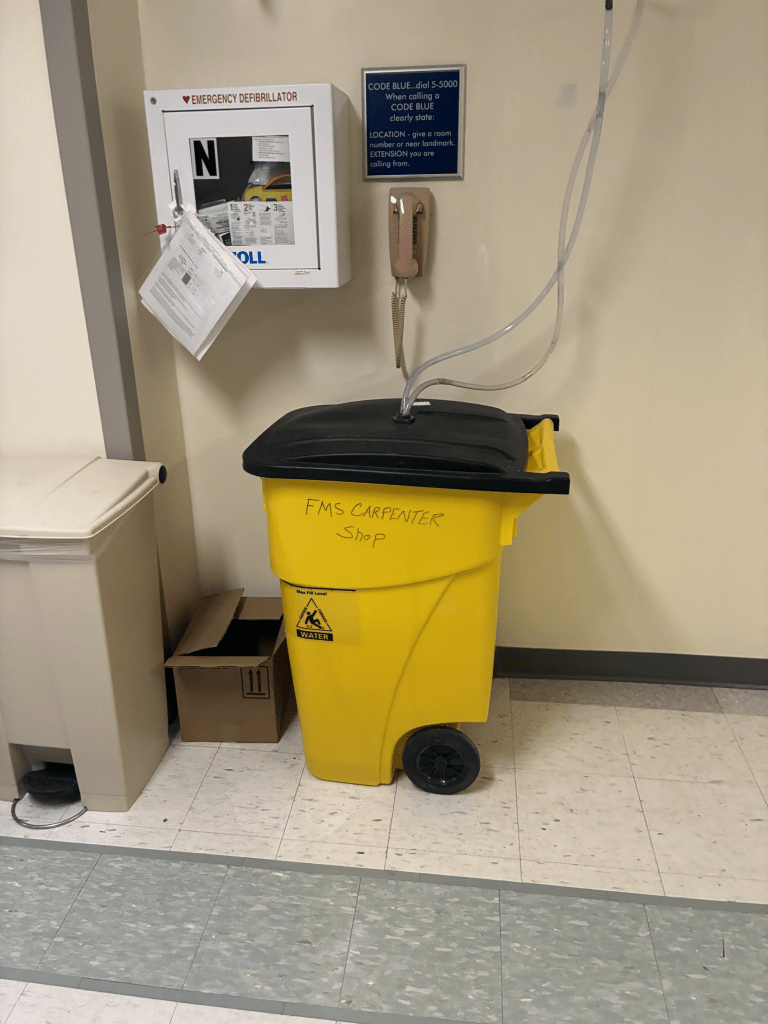
The Iraq veteran who noted high temperatures in the hospital took snapshots of hoses rigged up to the ceiling, snaking down into large buckets scattered along the corridors. One VA staffer told the Prospect that raw sewage had recently been spewing from a drain in the research building.
In the face of concern about staffing cuts and caps, Collins insisted to lawmakers in May that the VA would maintain “mission-essential jobs like doctors, nurses, claims processors, while phasing out nonessential roles, like interior designers and other things—DEI.” Similarly, last December, former VA press secretary Peter Kasperowicz argued that most unfilled positions at the VA “have not been filled for more than a year, underscoring how they are no longer needed,” while adding that the agency was continuing to hire.
In response to questions for this story, Slaven, the VA’s new press secretary, contradicted his predecessor. “VA has not said that ‘positions that have not been filled are not needed.’ We actively recruit for unfilled positions,” he told the Prospect. According to Slaven, “We did eliminate several unfilled positions last year after consulting with local facilities.” He added that “VA still has thousands of unfilled positions it’s working to fill.”
Asked about the HVAC failures, Slaven said, “D.C. VAMC recently had two HVAC repairs and maintenance staff were able to quickly address both issues.”
No posts
Comments
Nothing yet. Say the first thing.
Sign in to join the conversation.