
It’s so easy to smash things. It’s far more difficult to build something from the ruins.
I’ve been thinking so much this past week about brokenness, injury, destruction. More than one night has found me unable to sleep, frightened and frustrated by what I see in the news.
In so many ways I feel powerless. And I am immensely grateful that I have the opportunity to work with my students, and with them to gain a better sense of perspective.
I’m currently teaching a course on African American religious history, introducing my university students to the work of Black historians, theologians, musicians, and documentary filmmakers. For many of them, this is the first time they are learning about the role of religion in slavery, in Jim Crow, in disenfranchisement, the first time they see how Christianity has been used again and again as a means of justifying the dehumanization of others. And, how it has also been employed as a tool of fiercely resisting that very dehumanization.
But before we get to any of that, we start in the 21st century.
We begin our class by watching Obama’s 2015 eulogy for the nine victims of the mass shooting at Charleston’s Emmanuel AME church, gunned down in the midst of prayer by a deranged white supremacist.
Obama’s response is a masterpiece of oratory, one of the great speeches of American history, a call for grace, courage, and change. (And it’s also one of the rare times you get to hear him sing.)
As we go on to read Albert Raboteau’s Canaan Land: A Religious History of African Americans, it quickly becomes clear that ours is a country that has always been divided, that has never had a single story.
Raboteau shows how two competing Biblical narratives have dominated our national myth making.
In the first story, one that white folks have been telling ourselves for centuries, America is the promised land—a land of religious freedom and economic opportunity, given to (white, western-European) settlers by a God who called for the enslavement and colonization of others.
But in the second story, the story maintained in spirituals, theology, and preaching of the Black church, the story of America is far more akin to the story of the Jews’ enslavement in Egypt. This is a story of being strangers in a strange land, of forced servitude, of genocide, of exploitation. In this America, the national story is a promise of future deliverance—a promise that someday we might see what lies on the other side of Jordan. When justice will flow like a river.
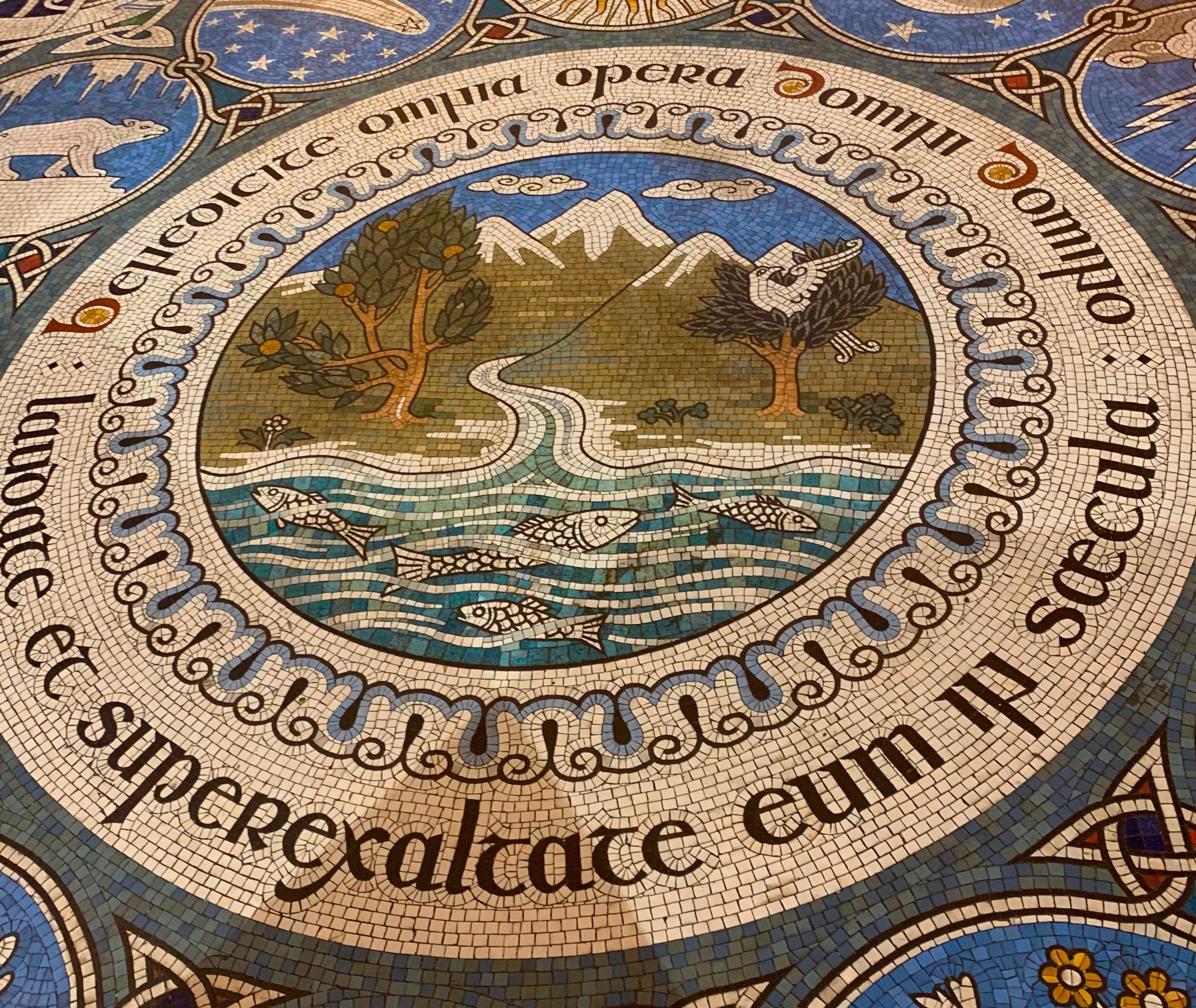
So, I ask my students, are we living in Canaan or Egypt? As we come to see, the answer to that question has had a whole lot to do with who you are, where you are, and the color of your skin.
Christianity has of course always played a perilous—and sometimes diabolical—role in these two stories.
Indeed, some of my students began the class wondering why Black folks would ever choose to ally themselves with Christianity in the first place. It has been after all a religion used to justify slavery. And some are shocked to learn that for centuries, slave owners made sure that enslaved people could not become Christians, fearing that it might challenge the legality of slavery itself. (Many legal codes that enabled the slave trade used slaves’ non-Christian identity as the justification for their enslavement, after all.) And, perhaps even more than this, they feared that Christian teachings would embolden the enslaved, leading them to realize their inherent worth as children of God.
And that is indeed a dangerous, dangerous thing. In fact, it’s the stuff of revolutions.
When enslaved people did become Christians, that latter problem was solved in part by restricting their access to the Bible. In 1831 (following Nat Turner’s rebellion) it became illegal to teach enslaved people to read. And for those who could? They were given their own Bible—one that had been heavily redacted.
First published in 1807, The Slave Bible omitted 90% of the Old Testament (Hebrew Bible) and 50% of the New Testament. No mention of Moses freeing the slaves from Egypt. Anything likely to challenge a system built on hierarchy and inequality was censored. But that bit about “slaves obey your masters”? Oh you know that was there, front and center.
Selectively editing history—removing the bits that don’t support the powers-that-be—is no new tactic. Ron Desantis didn’t invent it. And neither did the monstrosity of a government currently residing in D.C. It’s been around for a long time.
As I struggle to find my footing during this difficult time, as I want to weep and rage, I am continually shaken by the realization that half of our country voted for this madness. And that 40% of them still think it is a good idea.
And then I remember this history. And I am reminded I have no right to be surprised. It is only my privilege (as a professional white, cisgendered woman, married to a professional, white, cisgendered man) that makes it possible for me to be taken aback. I am shielded from the worst of the day to day discrimination and violence that so many of my fellow human beings living in this country are subject to. (Though of course, none of us will be shielded forever.) And that position of privilege can make it easy to forget our history.
The history that clearly tells us that we have forever been a nation divided. And that religion has always been a tool used both to justify injustice and to rally our resistance.
And as I read John Pavlovitz’ piece last week, it resonated with these growing feelings. Rage, and frustration, futility in the face of loss.
Pavlovitz’ piece also called to mind the words of abolitionist, author, and orator Frederick Douglass who, in 1845, made clear his loathing for what he called “the religion of this land.” You can read the entirety of it here, but first take a moment to read these particular paragraphs. It is both startling and terrible for how very apt his words remain, 181 years later.
From Narrative of the Life of Frederick Douglass:
“I find, since reading over the foregoing Narrative, that I have, in several instances, spoken in such a tone and manner, respecting religion, as may possibly lead those unacquainted with my religious views to suppose me an opponent of all religion. To remove the liability of such misapprehension, I deem it proper to append the following brief explanation.
What I have said respecting and against religion, I mean strictly to apply to the slaveholding religion of this land, and with no possible reference to Christianity proper; for, between the Christianity of this land, and the Christianity of Christ, I recognize the widest possible difference—so wide, that to receive the one as good, pure, and holy, is of necessity to reject the other as bad, corrupt, and wicked.
To be the friend of the one, is of necessity to be the enemy of the other.
I love the pure, peaceable, and impartial Christianity of Christ: I therefore hate the corrupt, slaveholding, women-whipping, cradle-plundering, partial and hypocritical Christianity of this land. Indeed, I can see no reason, but the most deceitful one, for calling the religion of this land Christianity. I look upon it as the climax of all misnomers, the boldest of all frauds, and the grossest of all libels. Never was there a clearer case of “stealing the livery of the court of heaven to serve the devil in.”
I am filled with unutterable loathing when I contemplate the religious pomp and show, together with the horrible inconsistencies, which everywhere surround me. We have men-stealers for ministers, women-whippers for missionaries, and cradle-plunderers for church members.
The man who wields the blood-clotted cowskin during the week fills the pulpit on Sunday, and claims to be a minister of the meek and lowly Jesus.
The man who robs me of my earnings at the end of each week meets me as a class-leader on Sunday morning, to show me the way of life, and the path of salvation.
He who sells my sister, for purposes of prostitution, stands forth as the pious advocate of purity.
He who proclaims it a religious duty to read the Bible denies me the right of learning to read the name of the God who made me.
He who is the religious advocate of marriage robs whole millions of its sacred influence, and leaves them to the ravages of wholesale pollution.
The warm defender of the sacredness of the family relation is the same that scatters whole families—sundering husbands and wives, parents and children, sisters and brothers—leaving the hut vacant, and the hearth desolate.
We see the thief preaching against theft, and the adulterer against adultery.
We have men sold to build churches, women sold to support the gospel, and babes sold to purchase Bibles for the poor heathen! all for the glory of God and the good of souls! The slave auctioneer’s bell and the churchgoing bell chime in with each other, and the bitter cries of the heartbroken slave are drowned in the religious shouts of his pious master. Revivals of religion and revivals in the slave-trade go hand in hand together. The dealers in the bodies and souls of men erect their stand in the presence of the pulpit, and they mutually help each other.
The dealer gives his bloodstained gold to support the pulpit, and the pulpit, in return, covers his infernal business with the garb of Christianity. Here we have religion and robbery the allies of each other—devils dressed in angels’ robes, and hell presenting the semblance of paradise.
Dark and terrible as is this picture, I hold it to be strictly true of the overwhelming mass of professed Christians in America. They would be shocked at the proposition of fellowshipping a sheep-stealer; and at the same time they hug to their communion a man-stealer, and brand me with being an infidel, if I find fault with them for it. They are always ready to sacrifice, but seldom to show mercy. They are they who are represented as professing to love God whom they have not seen, whilst they hate their brother whom they have seen.”1
It is Douglass’ devotion to the “pure and peaceable” teachings of Jesus and his love for his fellow human beings that leads him to loathe, deride, and despise the other.
The fact is, religion is powerful. So powerful that we do ourselves no favors when we choose to ignore it, or reduce it to a mere caricature, easy to disregard.
It’s powerful because it may be both a cudgel and a subtle tool of manipulative control. Again, and again, it has been a means of securing wealth for the few, and the acquiesence of the many.
In America, enslaved men, women and children were first denied access to Christianity, then permitted only a highly regulated, sanitized, and controlled form of it. When free Black folks formed independent churches (Emmanuel AME was one of the very first), they had to fight for the right to worship without white supervision or suppression. And those congregations remained a target for violence. For bombing. For gunfire.
Why? Oh, it was always about the money, Honey. An economy built on extracting cheap labor, cheap resources, cheap land, demands a religion of control. The southern economy relied on an enslaved class of workers. The colonial (and later the western) economy relied on appropriating land and natural resources, and that meant eliminating Indigenous land claims and tribal land stewardship.
But it was also about claiming the moral authority to do these things.
And that moral authority was always a fragile thing—balanced on a knife’s edge. And insecurity like that will spark reactionary responses, a lashing out whenever one’s moral authority is challenged. Bad theology will do that to you.
We need to remember that fragility, when we are shocked by the viciousness with which even symbolic gestures of resistance are met.
The violent reprisal to peaceful protestors walking over a bridge. Or sitting down to order a cup of coffee at a lunch counter. Or voicing frustration at armed thugs terrorizing one’s neighborhood.
And it’s also why I return, again and again, to Obama’s eulogy. And why I ask you, once again, to stick with me here, and consider what he had to say on that day, ten years ago. President Obama honored the memories of those lost, and explained the role of faith and the church in Black American life.
From Obama’s 2015 eulogy:
“Our Christian faith demands deeds and not just words; that the ‘sweet hour of prayer’ actually lasts the whole week long – that to put our faith in action is more than individual salvation, it's about our collective salvation; that to feed the hungry and clothe the naked and house the homeless is not just a call for isolated charity but the imperative of a just society…
Over the course of centuries, Black churches served as “hush arbors” where slaves could worship in safety; praise houses where their free descendants could gather and shout hallelujah – rest stops for the weary along the Underground Railroad; bunkers for the foot soldiers of the Civil Rights Movement. They have been, and continue to be, community centers where we organise for jobs and justice; places of scholarship and network; places where children are loved and fed and kept out of harm’s way, and told that they are beautiful and smart – and taught that they matter. That’s what happens in church…
That’s what the Black church means. Our beating heart. The place where our dignity as a people is inviolate. And there’s no better example of this tradition than Mother Emanuel – a church built by Blacks seeking liberty, burned to the ground because its founder sought to end slavery, only to rise up again, a phoenix from these ashes.2
When there were laws banning all-Black church gatherings, services happened here anyway, in defiance of unjust laws. When there was a righteous movement to dismantle Jim Crow, Dr. Martin Luther King, Jr. preached from its pulpit, and marches began from its steps. A sacred place, this church. Not just for Blacks, not just for Christians, but for every American who cares about the steady expansion of human rights and human dignity in this country; a foundation stone for liberty and justice for all. That’s what the church meant.
We do not know whether the killer of Reverend Pinckney and eight others knew all of this history. But he surely sensed the meaning of his violent act. It was an act that drew on a long history of bombs and arson and shots fired at churches, not random, but as a means of control, a way to terrorise and oppress. An act that he imagined would incite fear and recrimination; violence and suspicion. An act that he presumed would deepen divisions that trace back to our nation’s original sin…
As a nation, out of this terrible tragedy, God has visited grace upon us, for he has allowed us to see where we’ve been blind. He has given us the chance, where we’ve been lost, to find our best selves. We may not have earned it, this grace, with our rancour and complacency, and short-sightedness and fear of each other – but we got it all the same. He gave it to us anyway. He’s once more given us grace. But it is up to us now to make the most of it, to receive it with gratitude, and to prove ourselves worthy of this gift.”
For Obama and the AME congregation and the families of those who were slain ten years ago, that challenge to find our best selves meant a reckoning—with racial injustice, with the scourge of gun violence, with inequalities and hatreds that continue to fester. And in the church on that day, we see in action a different form of religious fervour—one committed to the cause of justice.
As I listened to this eulogy last night, I was moved to tears by the stark difference between President Obama—this leader we once had—and the snarling insecure viciousness that passes for national leadership today.
And I am also moved by Obama’s determination, that we not resign ourselves to brokeness. That we do not say, this is too much. This is beyond repair. That we will not submit to despair.
That instead he reminds us of this work that grace demands of us. This labor required to set things right.
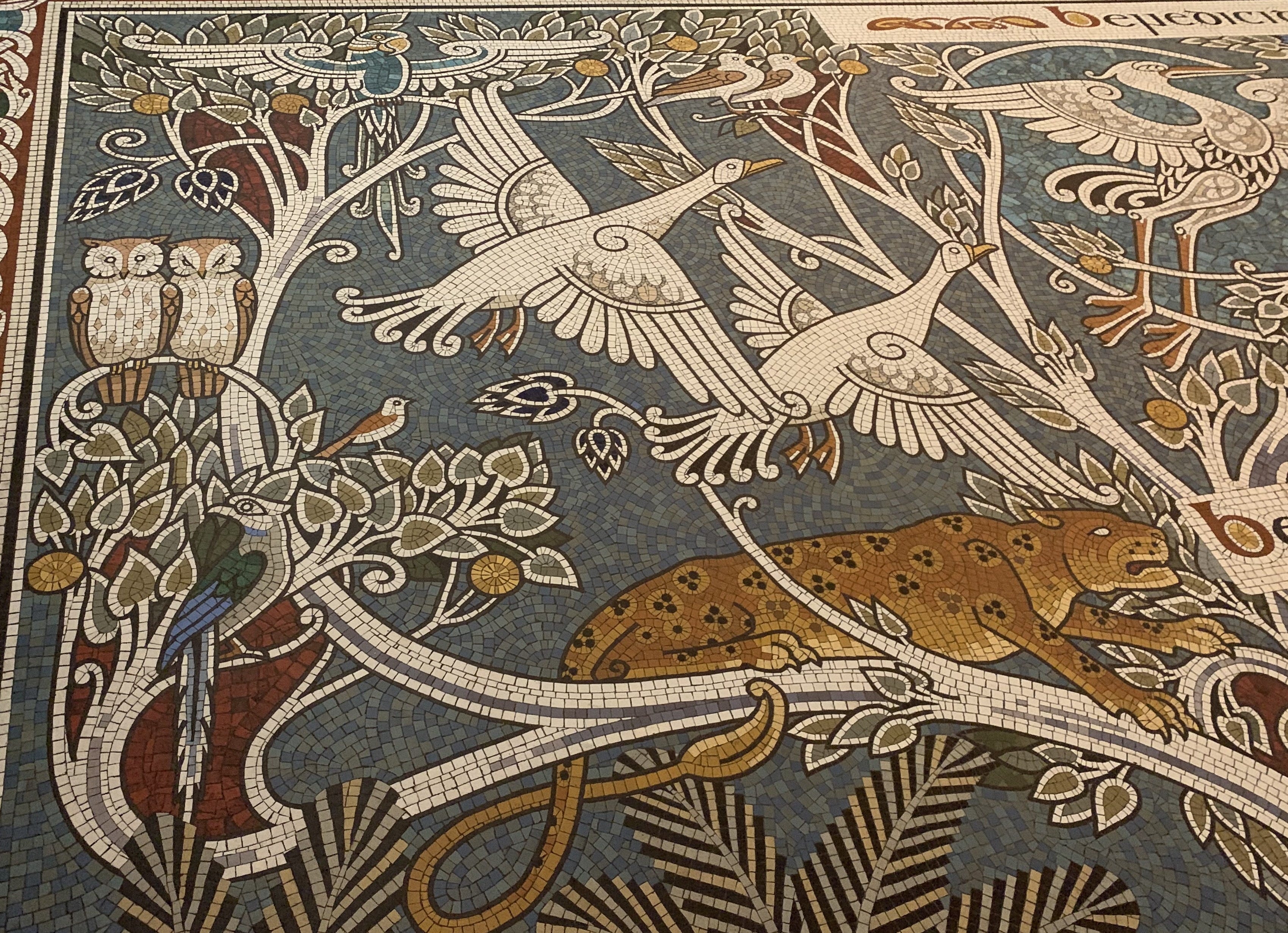
I’ve been revisiting some of my favorite works by writer and conservationist Terry Tempest Williams this week, seeking solace in Erosion, and in Finding Beauty in a Broken World. I notice that I have underlined these phrases:
“A mosaic is a conversation between what is broken.”
“I believe in the beauty of all things broken.”
In Finding Beauty in a Broken World, Williams describes a journey to learn the art of mosaic. And she learns that mosaic is the work of re-creating a unity, of recomposing order out of brittle shards.
To build a mosaic is to recreate the future, she tells us, based on what we have learned from the past.
Mosaic is an act of intention, and optimism, and creative ferocity.
It seems to me, in these days of fear and violence, that we are surrounded by brittle shards. By the terrible shrapnel left behind by the literal and the metaphorical incendiaries that fall relentless around us.
I choose to remember President Obama’s acknowledgement of grace, and what it demands of us. And I dare to envision a day when we come together, gathering these terrible, sharp, and painful remnants, and begin to build something entirely new. And beautiful. And whole.
To make of our communities, our nation, our world a mosaic bound together by grace.
Thanks for reading Climate Anxiety and Spiritual Resilience! This post is public so feel free to share it.
Frederick Douglass, Narrative of the Life of Frederick Douglass (1845).
Obama is referring to Denmark Vesey’s attempted uprising. Vesey was a founding church member.
Comments
Nothing yet. Say the first thing.
Sign in to join the conversation.