
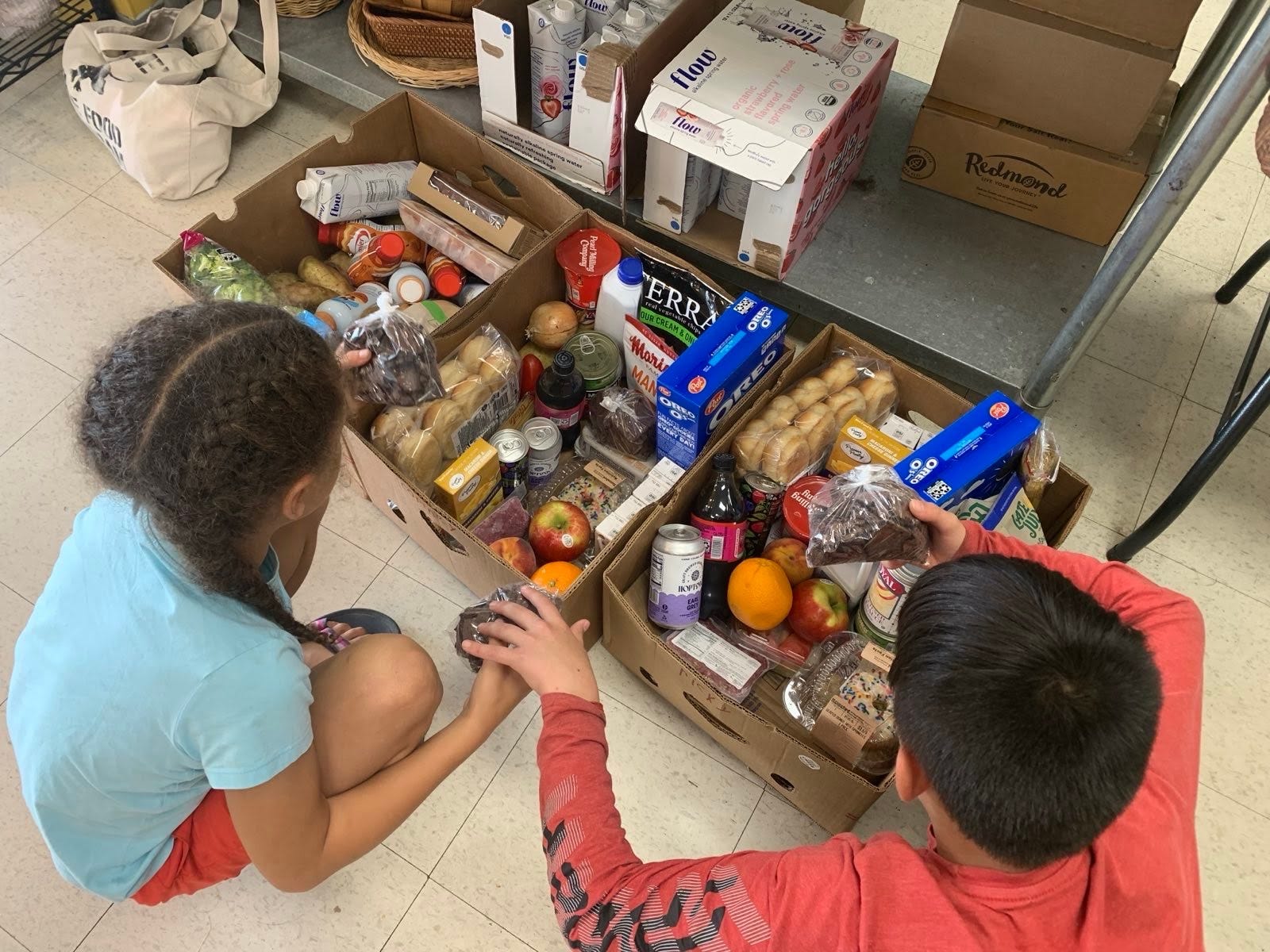
In our school program, multiple kids have said that organizing donations at the local food shelf is their favorite part of the week.
As much as we value and support play, we also believe that meaningful work is important for all humans, including children of all ages. By “work,” I mean activities that serve a purpose, whereas play is not primarily about achieving a goal. The traditional school day is filled with work focused on individual achievement and training for a capitalist future; many refer to this as “busy work.” Students complete schoolwork because it serves a vague future purpose or to avoid negative consequences. In general, these assignments are not contributing to the community in a tangible way. I say this as an experienced Social Studies teacher who has always looked for authentic projects.
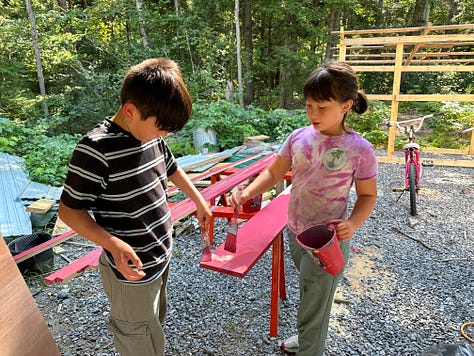
Meaningful work, on the other hand, builds relationships and leverages our strengths to serve authentic needs in the community. When we volunteer at Foodworks and SUSU CommUNITY Farm, we feed people. When we sew stuffed animals, we fundraise for the Emergency Shelter Fund so people can find shelter. When we visit a preschool, we bring joy and new experiences to youngsters. Along the way, we strengthen our connections and build skills. Most importantly, we learn that, at any age, we can help meet the needs of our villagers and neighbors.
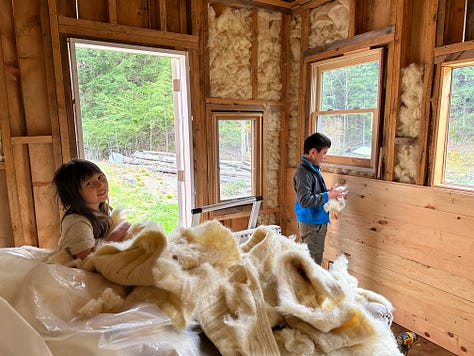
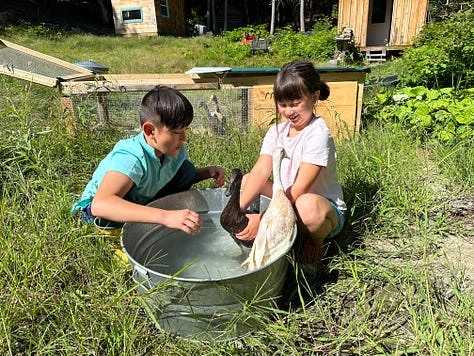
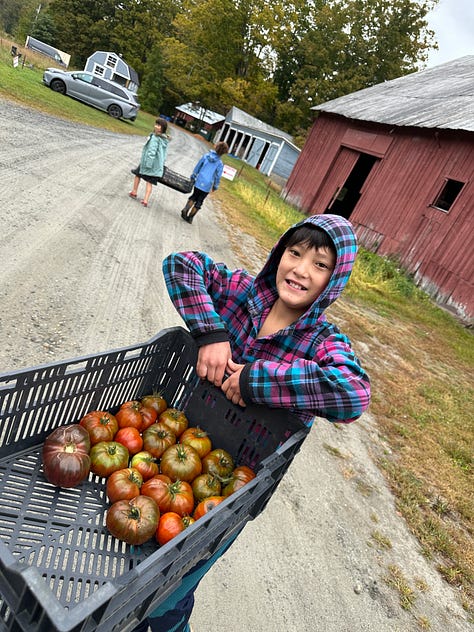
Similarly, on the homestead, we are big believers in chores, and we legitimately need all hands on deck to get everything done. Some examples by age from our family:
Toddlers: Toddlers naturally mimic everything we do, including household chores. We should let them help and take on real responsibility as they are able. Don’t play sweep; actually sweep the home! It can be extra work for adults--more cleanup if toddlers are helping to cook, for example--but so worth it in the long run. Otherwise, they will lose interest in helping out and develop the idea that they don’t have to contribute.
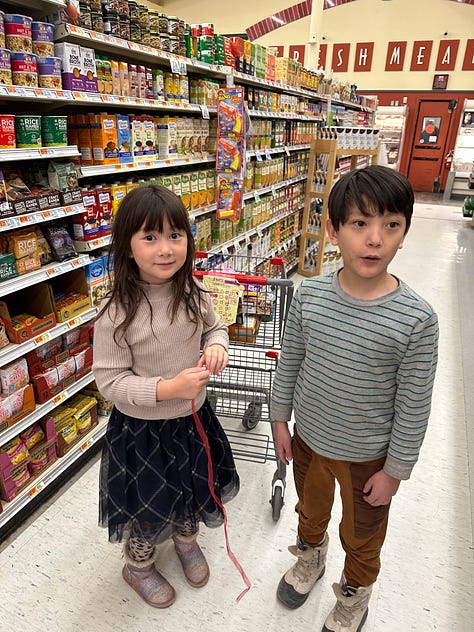
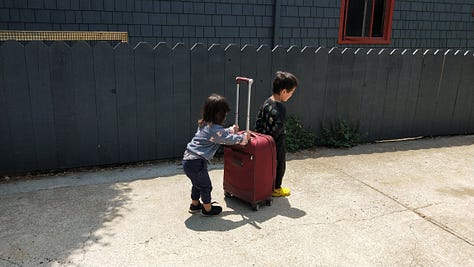
All ages: Bring kids on errands and do things together (dumping garbage, following the shopping list, etc.). Don’t do invisible labor. Fridges don’t magically refill themselves. Errands require the whole family!
Regular chores at home: cleaning up your space, washing dishes, cooking meals, folding clothes, taking out trash, whatever keeps the household going. These are jobs with real consequences—if no one does the dishes, we won’t have enough to serve the next meal.
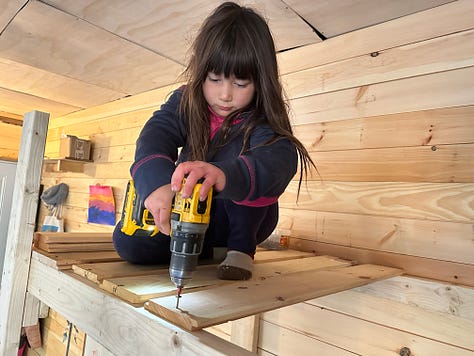
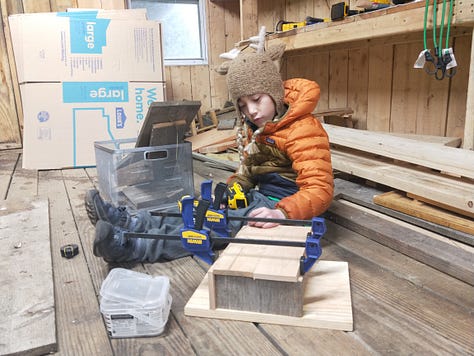
10+: At this point, kids can take on entire projects on their own. I know kids who raise animals, start businesses, and get to keep the revenue. Working with friends is a huge motivator as kids get older. Stephen Covey suggests making older kids the captain of their own domain e.g. the backyard, then letting them fail and learn how to do a better job.
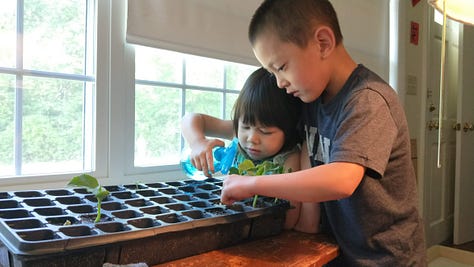
Choice: Depending on your family dynamic, you might have a regular schedule or allow choice. Sometimes we have a self-directed “job o’clock” session where everyone agrees to work during the same time frame and chooses a project to help the homestead. Start an herb garden, clear ice off the steps, tighten a doorknob.
Power struggles: If you’re engaging in power struggles, focus on jobs that your child naturally gravitates toward or has the most persuasive natural consequences. As a minimalist, I actually enjoy donating whatever toys are not cleaned up, probably too much. And the kids know I will stop buying things that repeatedly make a mess. Intentional goal setting may work with older kids or certain personalities. Do what works for your family.
To all the exhausted parents out there: let (make) your children help! What is burning you out? Does your family know? Do they have the skills to take something off your plate? Your kids may not be especially useful at this moment, but over time they can (and should) share the load and will benefit from the confidence and competence that comes with meaningful work. I’ve heard someone say that we shouldn’t raise adults who are independent (taking care of themselves only), but adults on whom others can depend.
What meaningful roles do your kids have?
No posts
Comments
Nothing yet. Say the first thing.
Sign in to join the conversation.