
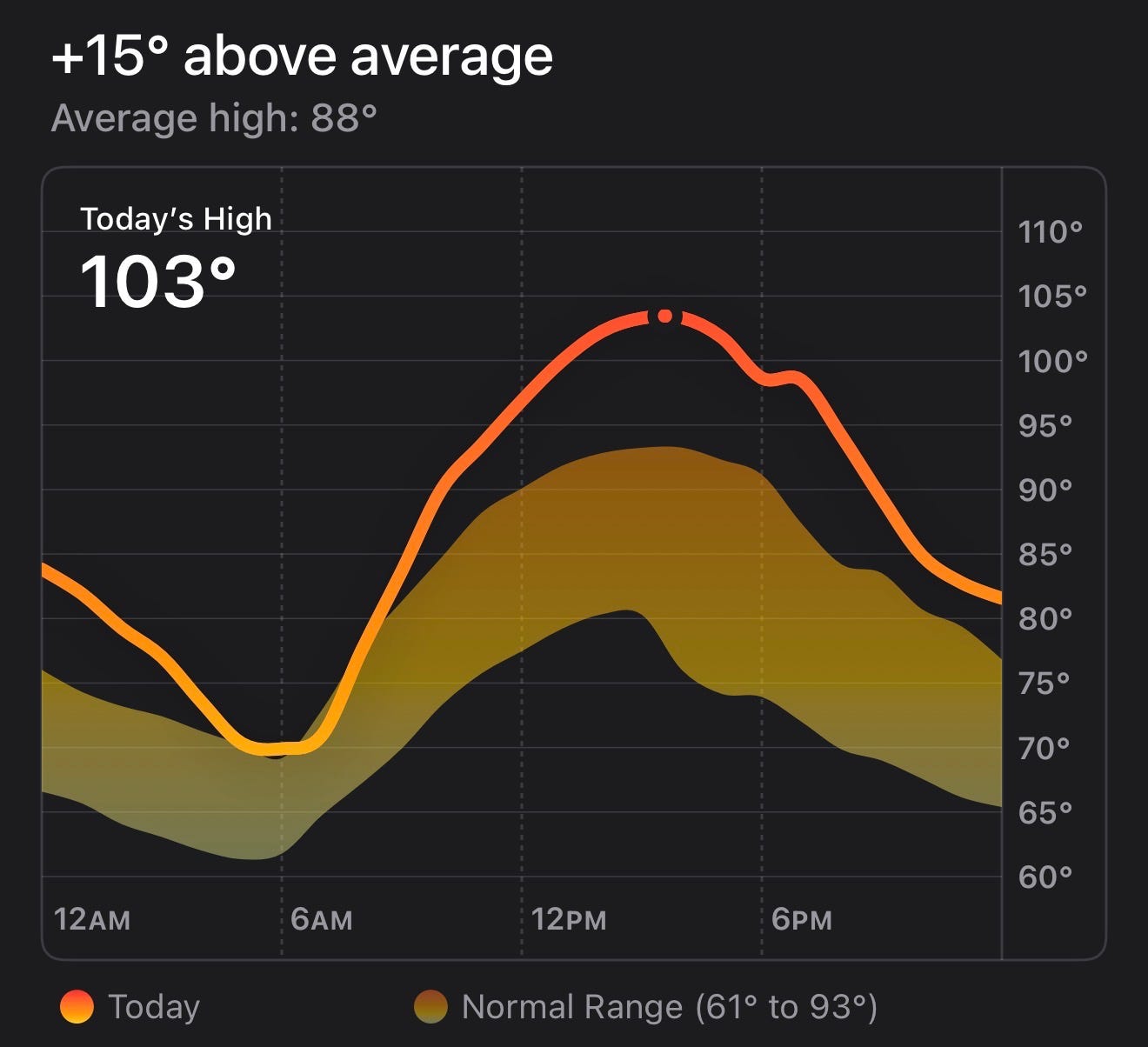
Albuquerque, New Mexico, set record temperatures this past week. My smartphone’s weather application says it was 15°F hotter than normal based on data back to 1970.
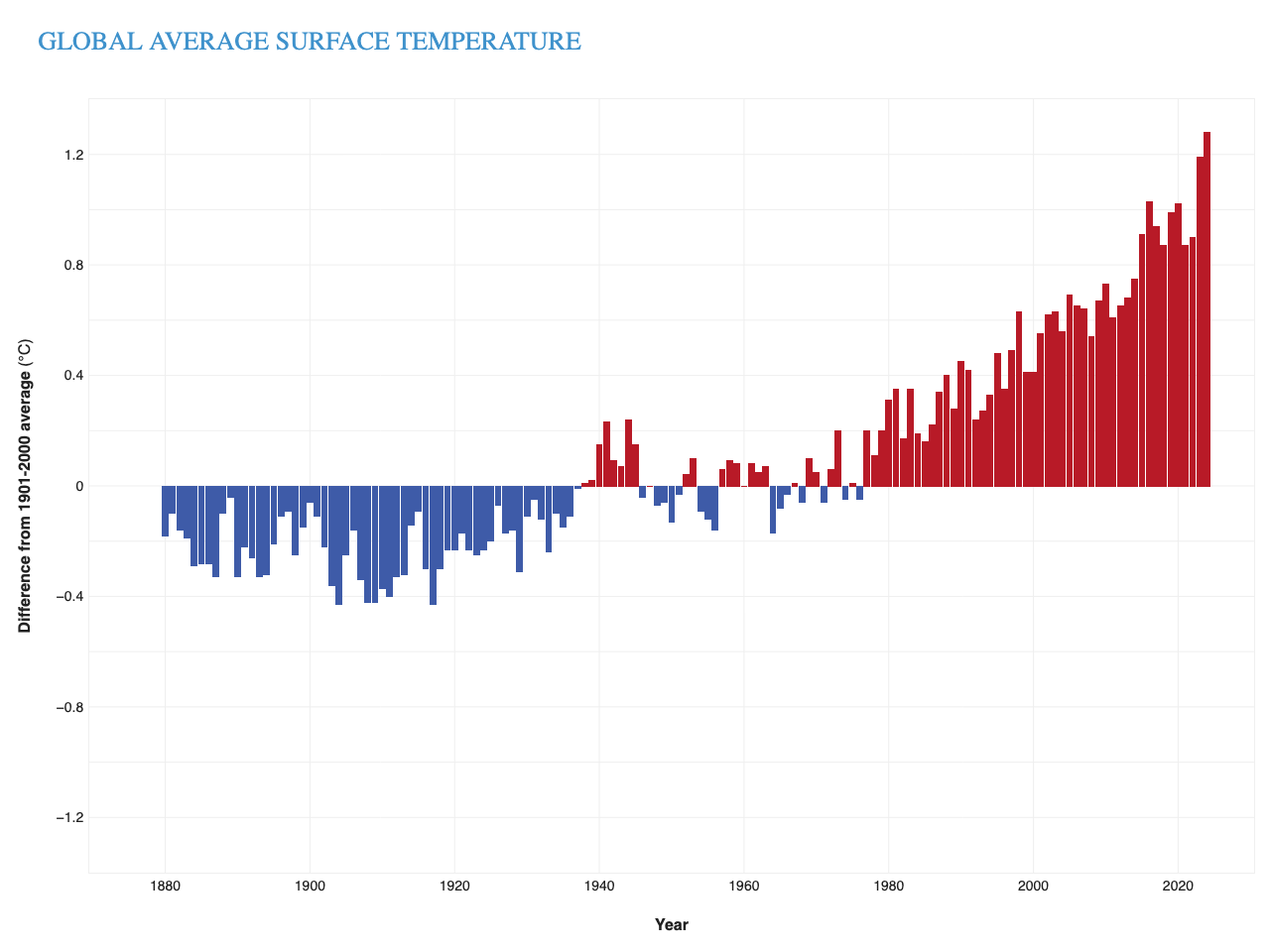
Back in the 1970s, climate was also changing due to humanity’s increasing emissions of greenhouse gases that trap heat in the atmosphere.
But now people are finding it harder to look away.
Plenty of people still do look away, though, which got me to thinking about what to do about that because it matters to our shared future.
The Academy-award-winning movie Spotlight provides a helpful tale. The movie is described as a “true story of how The Boston Globe uncovered the massive scandal of child molestation and cover-up within the local Catholic Archdiocese.”
But that brief description isn’t quite accurate. Reporters and editors at The Boston Globe had—to be kind, I’ll write—“overlooked” the scandal, too, apparently multiple times, with several interviewees—those who had evidence of the child abuse—telling the investigative reporters they previously contacted The Boston Globe and had sent them their evidence. Throughout the movie, tension builds until the editor for the Spotlight investigative team is confronted with the discovery of a decade-old story about abusive priests. He was party to burying that story in the paper’s Metro section rather than giving it the front-page attention the story deserved—and finally got thanks to the new investigation—on 6 January 2002.
In real life, though, it was actually the movie writers who made that discovery of the buried Metro-section story: no one had confronted the editor with it, who told Entertainment Weekly in 2015 “I have no memory of it.”
Connect: Cause to Actions Framed as Prevention
For decades, journalists have reported stories about the urgency of addressing climate change, but even front-page-worthy news about climate change is often buried by editors and so overlooked by audiences who are “tired of talking about climate change” (BBC, 1 April 2015).
Last month, one editor decided for his whole country “We’ve lost the war against climate change” (The Telegraph, 29 July 2026):
Climate change is real, but Britain can do almost nothing about it. The war against global warming has been lost, with only grievous collateral damage to show for it. We have crippled British industry, hammered consumers and pushed the grid to the brink of blackouts, all with no discernible impact on global emissions and the climate.
It’s time to accept this sobering reality, cut our losses, cease tilting at (and building) windmills, ditch the despicable con that is net zero, and learn to cope with, and whenever possible, even enjoy, a warmer, drier, more volatile Mediterranean climate, if that is indeed to be our fate.
That kind of defeatist attitude is well-known to medical researchers, writes Ingmar Rentzhog in “Climate Denial Didn’t Disappear. It Moved From The Diagnosis To The Treatment” (Forbes, 5 August 2026).
Rentzhog, who is CEO and co-founder of We Don’t Have Time, a Sweden-based media platform focused on climate action, argues that the change in climate denial—from denial of diagnosis to denial of treatment—resembles denial in advanced illnesses, in which people have accepted their diagnosis but still reject the prescribed treatment.
For climate change, Rentzhog writes,
The modern retreat from reality unfolds in four recognizable stages:
Deny the diagnosis. “It isn’t happening, or humans aren’t causing it.” The classic form, now a shrinking minority position in most Western publics.
Deny the cause. “The disaster is real, but climate change had nothing to do with it.” The floods were cloud seeding; the fires were arson; the heat is just summer.
Deny the treatment. “The science is right, but this particular policy is too expensive, too fast, unfair or ineffective.” Every policy, every time.
Deny the responsibility. “Action matters, but someone else must go first.” China, consumers, industry, the next government.
Each stage concedes more of the science while protecting the same outcome: inaction.
Borrowing again on medical literature, Rentzhog says moving people to action is a matter of continuing to shine a spotlight on the climate change issue, but changing the messaging: medical people provide patients with support, clear communication, and agency.
The climate research points to three of the same levers:
Connect the event to the cause, immediately and explicitly. The 260,000 press release study shows attribution, not experience, travels with policy support. Every heatwave reported without its cause is a wasted teaching moment.
Connect the cause to something actionable. Catastrophe without agency produces fatalism and avoidance, in politics as in oncology. Leaders, media and executives who pair every warning with a credible next step are working with human psychology instead of against it.
Frame action as protection, not sacrifice. The system justification research found resistance fell sharply when change was presented as preserving and improving the system people value, what the authors call “system-sanctioned change.” Climate action defends energy security, health, food prices and industrial competitiveness. The side that owns the language of protection wins the psychology.
Is Reporting Enough to Influence Action?
In addition to the Spotlight movie being a helpful tale regarding journalists—whether editors or reporters—burying or overlooking a front-page-worthy story, there was another theme in the movie that has relevance to today’s climate change reporting and, frankly, to this publication, SustainLab. At several moments, key characters said the sex-abuse scandal story required the attention of The Boston Globe’s Spotlight investigative team. So any less influential publication might either get the story wrong or otherwise present the story insufficiently, so that the scandal could be again ignored, denied, or covered up.
I’ve struggled with that requirement-thought regarding SustainLab, which I’ve been running since March 2025. It is insufficiently influential even for the issues I’ve reported on for the small town of Jamestown, North Carolina (population less than 4,000), namely:
a bad deal with a billion-dollar developer that, unless changed, will put further environmental pressures on the water supply,
improperly placed storm water drains that allow toxic brownfield sediments into people’s backyards, and
taking advantages of apparent loopholes (or purposefully misreading the law) to pollute the air.
It’s true that my reporting has influenced that small community—in terms of locals following my work—but it has not yet prompted any action to address, or solve these problems or any reform to keep these problems from happening again. In other words, no change. But as one community member posted recently in a non-public, online forum:
A friendly message to all you folks who moved here from the North. DON’T TRY to CHANGE ANYTHING ! You’re not in Kansas Anymore. When in Rome do as the Romans Do. We like things just the way they are. Get use to it. A Public Service Message from a [northern-state-name withheld] Transplant. Thank You!
Recently, though, the editor-in-chief of The Boston Globe at the time of the Pulitzer Prize winning Spotlight series on the sex-abuse scandal, Marty Baron, said today’s media world is different.
Speaking to the 2026 class of Fellows at the Nieman Foundation for Journalism at Harvard, Baron said (Nieman Reports, 15 May 2026):
What’s happening with influencers is that they’re communicating authenticity, and because they communicate authenticity, people believe they have authority. In traditional media, we’ve always focused on our authority — the reporting process — that is the highest priority. We haven’t paid enough attention to authenticity. We have authority generally, but people don’t give us credit for it. We have to figure out how to do that. We’ve got to experiment, that’s just the nature of our times.
I concur that in terms of authenticity, many of the most popular influencers do have authenticity. But they have demonstrated their lack of authority by sharing climate misinformation. According to Yale Climate Connections, “Eight of the top 10 online shows are spreading climate misinformation.”
Going forward, then, it seems worthwhile to continue to report with authority about sustainability on SustainLab, but experiment with relying more “on the personalities of the people on the staff,” as Marty Baron also put it to the 2026 Nieman fellowship class. That means that it’s time to try a wider variety of communities and methods. Reporting on sustainability matters. But just as there are advanced illness patients who deny their diagnosis and treatment until their dying day, so too are there some people, it seems, who will look away from the harms to their local environment that, on the national scale, are contributing to our shared world burning.
What sustainability communication — or change to that sustainability communication — might you do in your habitat? Is it the message itself that’s not working, or does your habitat need a different messenger?
Appreciate this post but are thinking “No, I do not need another subscription, another newsletter, another micropayment to keep track of”?
I get it.
Please consider getting me a virtual coffee or contributing to my virtual tip jar. Thanks for your consideration.
No posts
Comments
Nothing yet. Say the first thing.
Sign in to join the conversation.