
Readers and friends,
If you’re new here, the About page on my Substack will tell you more about Thyme, Place & Story, and what to look for during the month.
If you’ve been here at Substack for a while or if you’ve come via any of my books, thank you for your interest, your friendship, and support. You are deeply appreciated!
To all, welcome to a hot and muggy El Niño July!


Oak (Jun 10-Jul 7), a strong, dominant tree of great power, sacred to the Druids and used in spells for protection and strength, fertility, success, and good fortune. It rules the seventh moon.
Holly (Jul 8-Aug 4), often used for hedges, symbolizes persistence, protection, strength, endurance, courage, justice, hope and growth. It rules the eighth moon.
The Zodiac for July includes the seasons of Cancer (Cardinal Water, ruled by the Moon, June 21-July 22); and Leo (Cardinal Fire, ruled by the Sun, Jul 22-Aug 23). The planet Jupiter recently moved into Leo. Time to shine!
Flower of the Month for July: Larkspur: Each blossom color has a different meaning: pink suggests fickleness, white happiness, purple a first love.
July is National Blueberry Month, National Ice Cream Month.

Week 1
July 6. Opening Day of this year’s Great British Pea Week!
July 9. National Sugar Cookie Day.
Week 2
July 14. Bastille Day, the national French holiday.
July 15. St. Swithin’s Day. Blessings on apples. Is it raining where you are?
July 16. National Corn Fritters Day
Week 3
July 23. Sun moves into Leo, its own sign. Herbs traditionally associated with Leo include rosemary, mistletoe, hawthorn, St. John’s wort.
July 24. Nestlé introduced Nescafé instant coffee on this day in 1938. And yes, of course coffee is an herb. (I know you know that.)
Week 4
July 28. Beatrix Potter—the plucky heroine of the Cottage Tales series—was born on this day in 1866. Happy birthday, Miss Potter!
July 29. St. Martha’s Day. The patron saint of homemakers and cooks, St. Martha stopped peeling potatoes long enough to put out a dragon’s fire. (Do not try this at home!) After which she appeared on the Joy of Cooking cover.
July 31. National Avocado Day

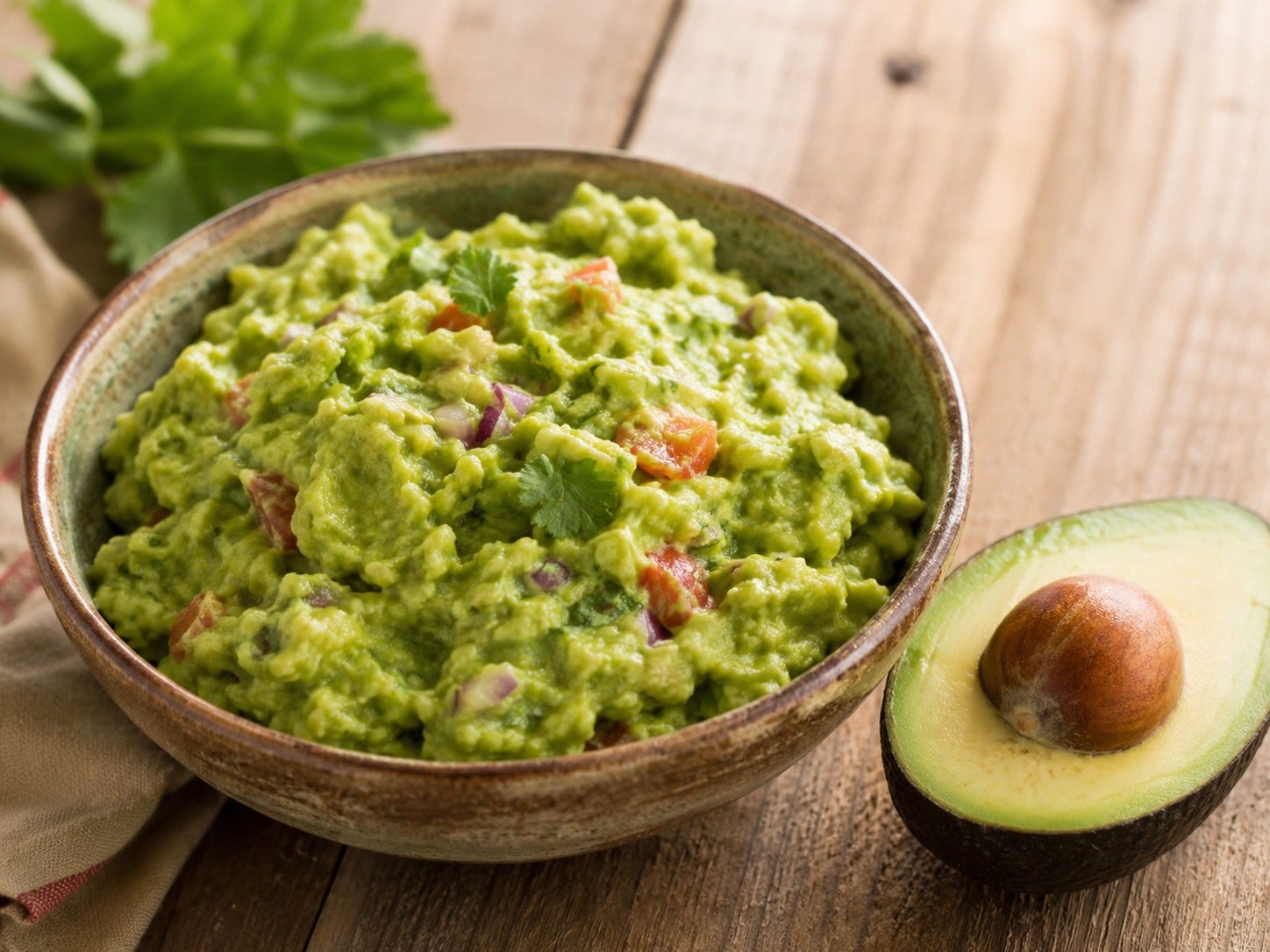
Every July 31, somebody somewhere invites us to celebrate National Avocado Day, the sort of modern food holiday that tends to come with hashtags, guacamole promotions, and perhaps a mild sense that civilization might have lost its sense of values.
But I have a personal avocado story to share. A Midwestern girl, I’d eaten only a couple of avocados when we moved to the Bay Area so I could begin graduate work at UC Berkeley. The house we rented in El Cerrito boasted an avocado tree in the backyard—a large tree that rained rough-skinned Hass avocados from March through June. I became seriously addicted to avocado toast for breakfast, avocado sandwiches for lunch, avocado salad for dinner, followed, naturally, with an avocado dessert. The kids adored munching on avocado chocolate cookies and sprouting avocado seeds in water.
And I learned some fascinating things about that tree, whose story begins long before breakfast menus, long before California growers, long before Spanish ships crossed the Atlantic, and even long before human beings began choosing the best fruits and planting their seeds.
The avocado’s story begins in a lost world of giants and invites us to think about the mysteries of fruit and seeds. Nature uses tasty fruits to tempt animals to eat them and dump the seeds elsewhere. Where Bill and I live in Texas, the blackberries can depend on birds to spread their seeds. In October, Bill’s pecans always invite squads of squirrels. And right now, the wild mustang grape is soliciting raccoons, possums, even deer.
But avocado? That oversize fruit with a seed the size of a golf ball seems to have been made for a mouth much larger than anything we’re likely to meet on an ordinary walk through the garden.
And that, very likely, is the point. The avocado is often described as an evolutionary anachronism: a plant whose original animal partners disappeared millennia ago. In the Pleistocene world of the Americas, huge herbivores roamed the landscape—giant ground sloths, gomphotheres related to elephants, glyptodonts in their armored shells (think Waymo-sized armadillos). Some of these browsing creatures were tall enough to strip the highest branches of their fruit and deposit the seeds later, far away.
But times change. Some 13,000 years ago, the megafauna vanished, leaving the avocado, still producing its generous fruit with its enormous seed, waiting now for a partner large and ambulatory enough to carry it into the future.
Enter human beings.
Early peoples in Mesoamerica and farther south recognized a good thing when they tasted it. Archaeological evidence shows that humans were eating avocados roughly 10,000 years ago. Over time, they did what gatherers and gardeners have always done. They noticed which fruit came from trees that bore larger, richer, oilier avocados. They selected those seeds and saved them. They carried plants and seeds to new places. They helped the avocado survive the disappearance of its old animal companions by becoming, in effect, its new dispersal partner.
Like so many food plants, the avocado was never only food. In traditional medicine in parts of Central and South America, different parts of the tree—the leaves, bark, fruit, seed, and oil—have been used in household remedies for a striking range of complaints: stomachache, diarrhea and dysentery, intestinal parasites, coughs and bronchitis, high blood pressure, inflammation, diabetes, skin problems, wounds, and scalp care. The seed, especially, has attracted modern scientific interest because it is rich in bioactive compounds, including polyphenols, and recent studies have explored possible antioxidant, anti-inflammatory, antihypertensive, and blood-sugar effects.
By the time Europeans arrived in the Americas, the avocado was already deeply established in Indigenous foodways and cultural practices. It grew in several regional forms, including Mexican, Guatemalan, and West Indian types, each adapted to its own climate and landscape. In Nahuatl, the fruit was called ahuacatl. Spanish speakers heard that word as aguacate, and from there, through several linguistic detours and confusions, English eventually arrived at avocado.
This is where the story begins to take a different route. The avocado had moved for millennia through Indigenous cultivation and exchange. After European colonization, it began moving along imperial routes: from the Americas into the Caribbean, across the Atlantic to Spain, and from there into other warm regions. Like so many plants of the Columbian Exchange, it didn’t travel alone or innocently. It moved through the same networks that carried sugar, cacao, maize, potatoes, tomatoes, peppers, enslaved people, missionaries, merchants, and yes, soldiers.
That doesn’t make the avocado itself complicit, of course. Plants are often swept up in human systems of power, appetite, trade, and extraction. But the avocado’s travels remind us that the history of the garden is never separate from the history of the world. A fruit in the hand may carry a long memory: Indigenous knowledge, colonial naming, botanical curiosity, commercial ambition, territorial expansion, betrayal and loss, and reinvention.
For a long time, English speakers were not quite sure what to call this strange green fruit. It was sometimes known as the avocado pear, and later, in the United States, as the alligator pear, a name that is wonderfully vivid and commercially disastrous. We can admire the honesty of it: the rough green skin really does have a reptilian quality. But alligator pear does not exactly whisper “take me home” to the nervous shopper.
California growers understood the problem. In 1915, the newly organized California Avocado Association adopted avocado as the preferred name, hoping to rescue the fruit from the swampy associations of the alligator pear. It was a successful bit of botanical rebranding, and we have been saying “avocado” ever since.
Then came the Hass avocado, which is now so familiar that it feels inevitable. It wasn’t. In the 1920s, Rudolph Hass, a postal worker in Southern California, planted a seed that grew into an unusually productive tree with dark, pebbled skin and rich, creamy flesh. His children liked the fruit so much that they reportedly persuaded him not to cut the tree down when it failed to behave as expected. Good children. The Hass variety was patented in 1935, and over time it showed up in my El Cerrito backyard and in the produce section of supermarkets across America. It had become both a staple and a symbol: health food, party food, brunch food, and, to my Midwestern mother, evidence of my generational irresponsibility when I spread it on toast—or when a friend used it mashed, with honey as a face mask, or I turned it into chocolate pudding. \The tree’s gift is its richness: that dense, buttery flesh, full of oil, unlike almost any other fruit we commonly eat.
And the seed is still there, sitting at the center like a memory of another world.
Every avocado we slice open carries that deep past: giant animals moving through ancient forests; Indigenous peoples gathering, cultivating, and selecting; colonial ships and botanical gardens; California growers fussing over names; immigrant kitchens and backyard trees; guacamole bowls at family tables; and now, because apparently we cannot help ourselves, National Avocado Day.
So yes, by all means, celebrate the avocado on July 31. Mash the fruit with lime and salt. Slice it over tomatoes. Fold it into a salad. Make guacamole. Put it on toast if you like, and refuse to apologize.
But before you eat it, take a moment to look at that great glossy seed. It is a relic, a traveler, a survivor. The giants that once carried it are gone. The peoples who first loved and tended it changed its future. Empires renamed and moved it. Growers marketed it. Cooks adopted it. And somehow, across all those centuries, the avocado tree kept doing what trees do best: rooting itself where it could, bearing fruit, and waiting for the next creature to carry its story onward.
All the world loves a cookie! Observe Sugar Cookie Day by baking some of China Bayles’ famous curry and cardamom sugar cookies, re-posted on the Spice House website. You can read the story the recipe comes from in An Unthymely Death and Other Garden Mysteries.
If you’re French, celebrate Bastille Day. You’re not French? Celebrate anyway: bake a classic Quiche Lorraine. Bon appétit!
Have some special fun on Vanilla Ice Cream Day by helping the kids make vanilla ice cream in a bag (yes, really!). Or maybe you’d rather follow Oprah’s vanilla bean recipe or (omigosh!) fennel seed basil vanilla ice cream. (I haven’t tried this. If you do, let me know how it tastes. I’m wary.) And for more about vanilla, you’ll want to dip into China’s 27th adventure, A Plain Vanilla Murder.
Instant coffee has been around longer than you think. Instant may not be your favorite way to get your coffee fix, but you can make it tasty. Try a couple of teaspoons of one of these refreshing mixes in a mug of hot water. Start with a basic mix of 2/3 cup instant coffee and 2/3 cup sugar. For a mint-flavored mocha, add 1 teaspoon dried mint leaves (powdered) and 2/3 cup non-dairy creamer. For an orange-mocha treat, add 1¼ teaspoons dried crushed orange peel, ¼ teaspoon cinnamon, and a pinch of cloves.
To celebrate Miss Potter’s birthday, read one of the books in my Cottage Tales series about her village life and treat yourself to some of her gingersnaps. You’ll find the recipe at the bottom of the webpage for The Tale of Hill Top Farm, the next book in my Read-Along series, beginning in September.
Missed our slow read of The Darling Dahlias and the Cucumber Tree—or just want to catch up on a weekly segment? I’m planning to repeat the 10-week series July 23-September 24. The weekly readings will be posted here.
Thanks for reading, everyone! The Dahlias and I will be back on Thursday to for the final week in our slow read of their first book, The Darling Dahlias and the Cucumber Tree, a mystery set in small-town America in the 1930s.
Also, a quick reminder: On May 1, I “paused” all paid subscriptions indefinitely, effectively making all of my work available free to all subscribers. You can read more about that here.
Comments
Nothing yet. Say the first thing.
Sign in to join the conversation.