
At 1:07am BST on Saturday morning, Orion splashed down in the Pacific Ocean off San Diego.
Mission elapsed time: nine days, one hour, thirty-two minutes and fifteen seconds.
Total distance travelled: 694,481 miles.
They are home.
The crew woke to “Run to the Water” by Live, suited up, strapped in, and ran through their checklists. At 2:53pm EDT, a final eight-second thruster burn nudged Orion onto its precise re-entry corridor. There was less than one degree of margin for error. Wiseman and Glover held up a photograph of Earth they had taken moments after.
At 7:33pm EDT the crew module separated from the European Service Module, the workhorse that had sustained them around the moon and back, and which burned up in the atmosphere as planned. The heat shield was exposed.
Twenty minutes later, Orion hit the upper atmosphere at Mach 33, thirty-three times the speed of sound. Plasma built around the spacecraft and cut all communications as expected, and for six minutes, Mission Control watched a blank screen. The families in the viewing room at Johnson Space Center waited in silence too.
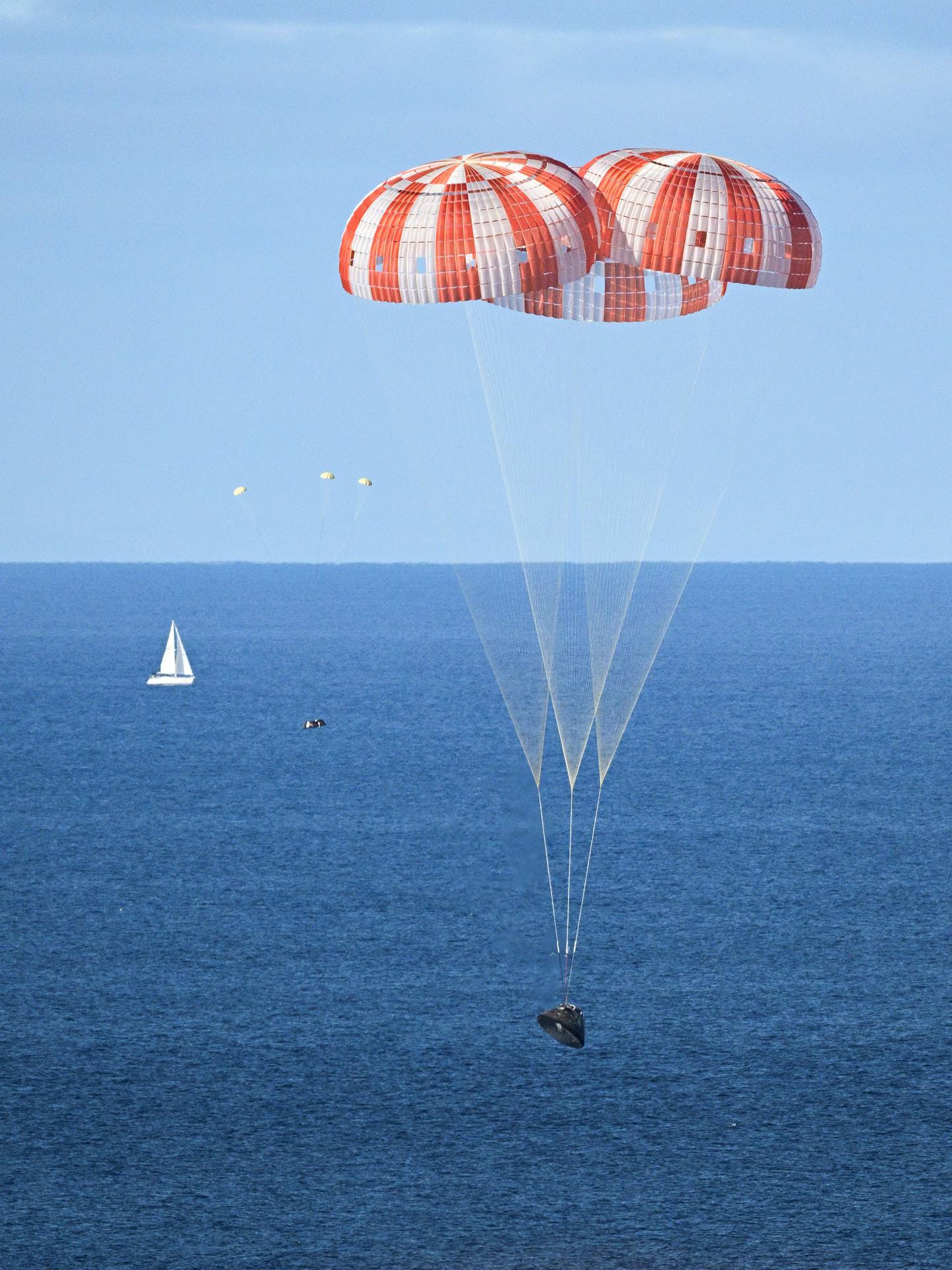
Then the signal returned. The forward bay cover came off and the parachutes (two drogue chutes, then three mains) opened and eventually slowed Orion from 300mph to 20mph.
At 8:07pm EDT, exactly on time, they splashed down into the Pacific Ocean.
Mission Control’s commentator called it “a perfect bull’s-eye splashdown.” From the viewing room, the flight controllers turned to face the families and gave a thumbs-up. I think we all exhaled.
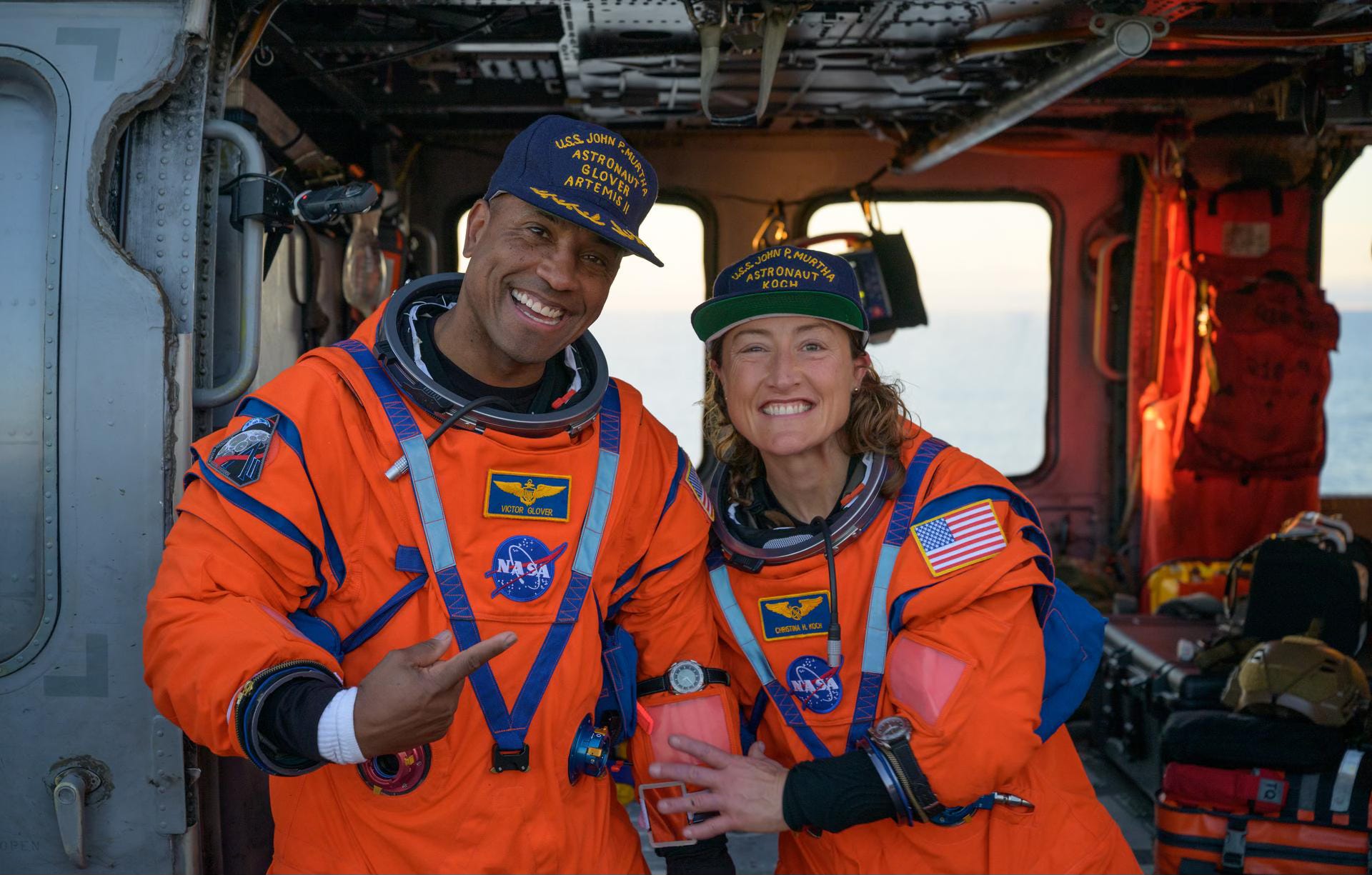
Just under two hours later, all four crew members had been lifted by helicopter to the USS John P. Murtha. Jeremy Hansen was first out, waving with a broad smile. Christina Koch next, waving excitedly. Reid Wiseman was the last to leave Integrity.
Flight Director Rick Henfling said at the press conference: “If you didn’t have anxiety bringing this home, you didn’t have a pulse.”
Howard Hu, NASA’s Orion Programme Manager, said, “This is the start of a new era of human space exploration.”
Dr Lori Glaze, “So y’all, we did it. We sent four amazing people to the Moon and safely returned them to Earth for the first time in more than 50 years, and that generation now knows what we’re capable of. Welcome to our moonshot.”
This was a test flight. Everyone said so, repeatedly, including the crew. And yet… four human beings travelled 252,756 miles from Earth, further than any person in history, flew around the far side of the moon, watched a solar eclipse from deep space, named a crater after a woman they loved, called their colleagues on the International Space Station across a distance that had never been bridged before, and came home, landing within a mile of their target.
At the press conference, NASA Associate Administrator Amit Kshatriya said, “That’s not luck, that’s a thousand people doing their job.”
Thousands of people, thousands of hours of engineering, simulations, procedures, and preparation, compressed into a moment where there was nothing left to do but trust it. The crew trusted the spacecraft. The families trusted NASA. Mission Control trusted the physics.
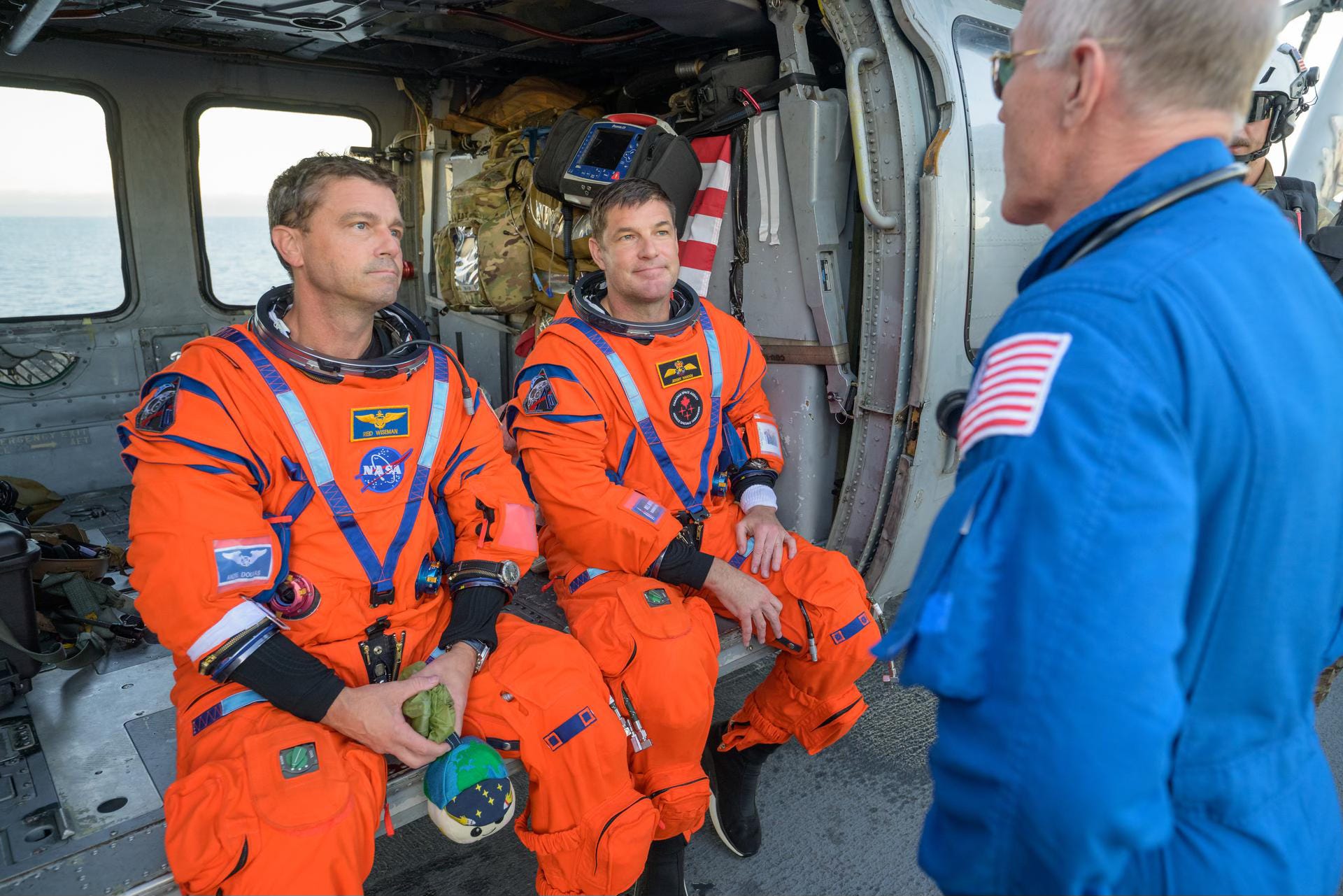
They are on the ship as I write this, undergoing medical checks. In the next twelve to twenty-four hours they will be back with their families in Houston.
The physical readjustment to gravity will take days: legs that have not felt weight in ten days, a vestibular system that has recalibrated to weightlessness, a cardiovascular system being asked to manage blood pressure upright again. The orthostatic garments they wore during re-entry helped. But the body’s adaptation to space, and back to earth, will take time.
The psychological readjustment will take some time too. These four people have seen something that almost no living human has seen. They have been places that no human has been in over fifty years. The research on returning crews from extreme environments: Antarctic expeditions, long-duration ISS missions, isolated deployments, consistently shows that the return phase has its own challenges. Their brains have been running on heightened alertness for ten days. When that ends, and this extraordinary mission becomes a memory, it can feel disorientating.
NASA knows this. Flight surgeons are with them now, alongside behavioural health specialists who have had a relationship with the crew throughout training and will support them through the coming weeks. In the days and months to come, there will be debriefs, media engagements, and a formal public tour. Each of those serves a purpose beyond the obvious one: telling the story publicly, repeatedly, to audiences who are genuinely moved by it, is one of the ways humans begin to process an experience.
They will also need to transition from a crew, a team, back to an individual. For ten days these four people shared every moment, every meal, every extraordinary sight, with a common purpose. Then they go home to separate houses, separate families, and separate routines.
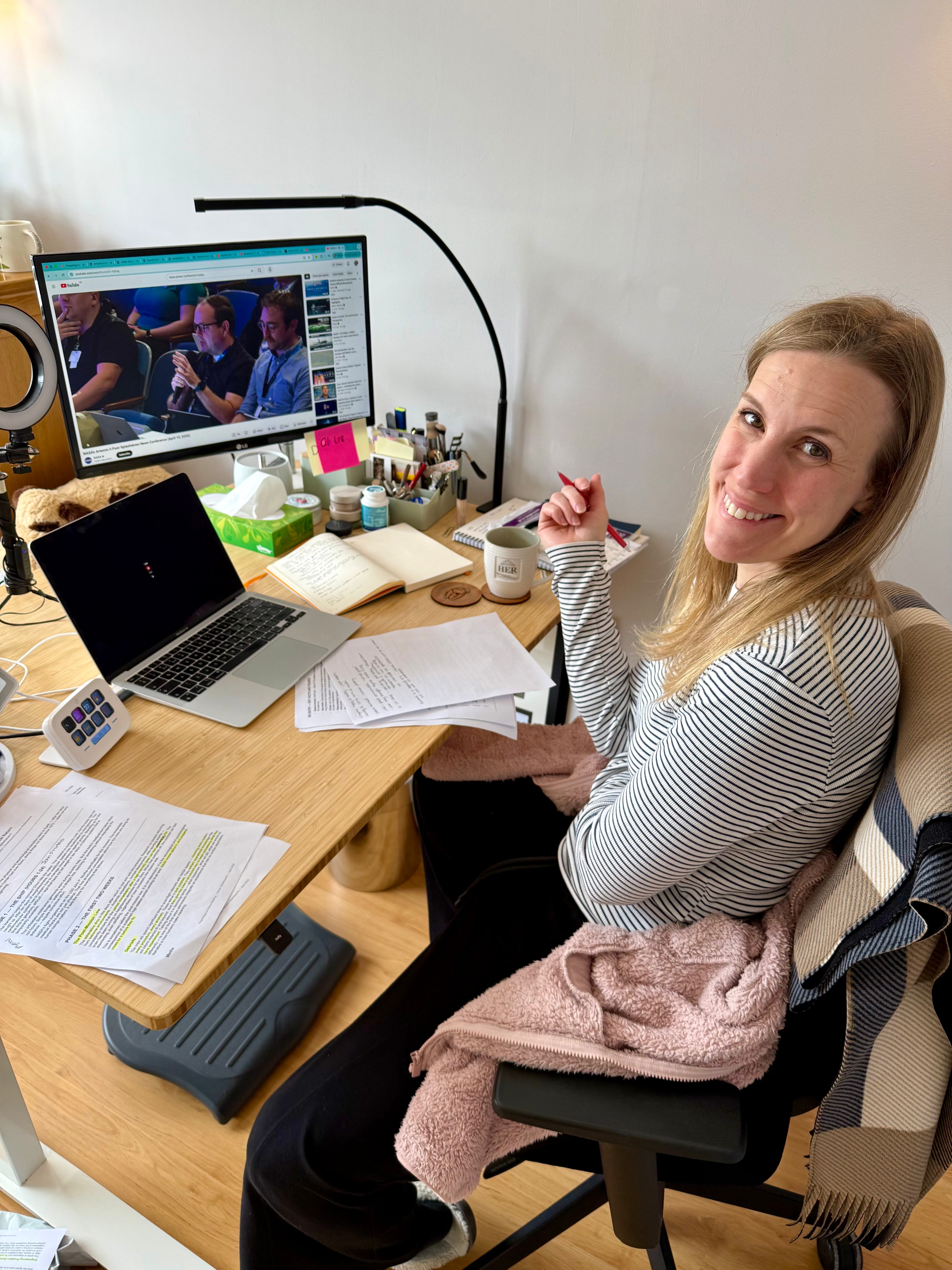
I’ve been writing these articles every day of the mission, trying to keep up with the press conferences, the incredible images coming back, and working through the technical details to see what they might be going through psychologically as well.
My parents have listened to every single interview I’ve done, even at 6am, and sent me whatsapps of support and feedback. My husband has entertained our children every time I’ve sat outside in the car to conduct them.
And every evening, we have taken our daughters out for a walk now the evenings are lighter. We all need the fresh air and a chance to talk. Usually, we go to the sports field at the end of the road, where they practise their cartwheels and handstands and handstands into bridges(!), burning off the last of the day’s energy before bed.
On the way home each evening, we have looked up at the sky and thought about where those four astronauts might be. One evening we were late enough to see the moon clearly. To say to my five-year-old and eight-year-old, there are actual people, like you and me, around that moon right now.. and to watch them look up and take that in, has been a truly unforgettable time for our family.
I genuinely hope this mission inspires a new generation. It has certainly reminded this older one of why any of us started caring about space in the first place.
Howard Hu said at the press conference: “To all our new followers, please stay tuned.”
Day 10 of 10 🌙
Sources: NASA Artemis II Flight Day 10 live blog, NASA post-splashdown press conference, Space.com live updates, CBS News live updates, April 10-11 2026.
Comments
Nothing yet. Say the first thing.
Sign in to join the conversation.