
Hello from sunny (but sometimes foggy) Calistoga! I’m technically on vacation right now—we rent our house each August (if we can), which makes it a good time to go somewhere. The three weeks pass much faster if we spend at least a week away.
Despite having been to Napa and Sonoma many times before, especially in the Martha years, when we often traveled here for photo shoots, I have never come as far as Calistoga nor even been in the area strictly for leisure, so this is a real treat. Calistoga is famous for its natural hot springs, and there are innumerable resorts of all sizes and price points, each with its own pools and baths and spa. It’s also famous for its mud baths, of which we partook this morning. I was a little trepidatious before stepping into a deep tub of hot, steaming volcanic ash, but I’m glad I did. After following up with a massage, I must admit, my muscles feel great, and I’m very relaxed.
Legend has it that Samuel Brannan, one of the early developers here, gave the town its name when he drunkenly (maybe) misspoke, saying he was going to turn the place into a spa town that would be like the “Saratoga of California,” but it came out as “Calistoga of Sarafornia.” Not sure if it’s true, but it’s a good story, and a good name! After being here for just a day, I can see why many people return here year after year. Like Ojai, “there’s nothing to do, and not enough time to do it.” My kind of place.
Did I mention that today is my 19th wedding anniversary? Well, it is, and this has been a great way to celebrate. And did I mention we were originally planning to visit Carmel Valley and Big Sur after a few days in San Francisco? At the last minute, we pivoted because of the unfortunate Timber Fire, which is burning in and threatening Big Sur. I spent quite a bit of time planning that trip, and it all came undone rather quickly, and this immediately popped into my head as a great alternative.
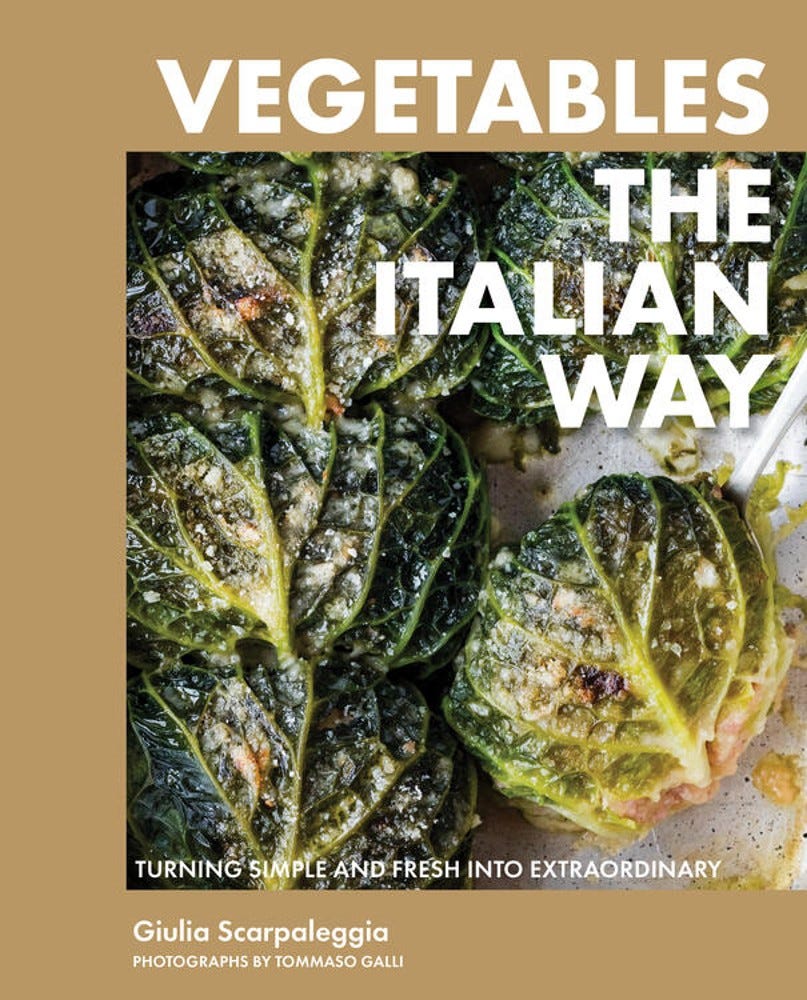
Today I’m sharing a recipe from Giulia Scarpaleggia’s new book, Vegetables the Italian Way: Orzotto with Roasted Tomatoes. I’m also including Giulia’s recipe for the roasted tomatoes therein, which is exactly what I’d like to be eating right now. The name refers to the barley that is the basis of the dish, not orzo. Read on to understand the difference. I interviewed Giulia, also the author of Letters from Tuscany on Substack, about her new book. Please read our Q and A below!
A quick note: I’ll be taking a break from the newsletter next week, but will be back the following week with another recipe for you!

SUSAN SPUNGEN: Tell us a little bit about your new book and why you wanted to write it
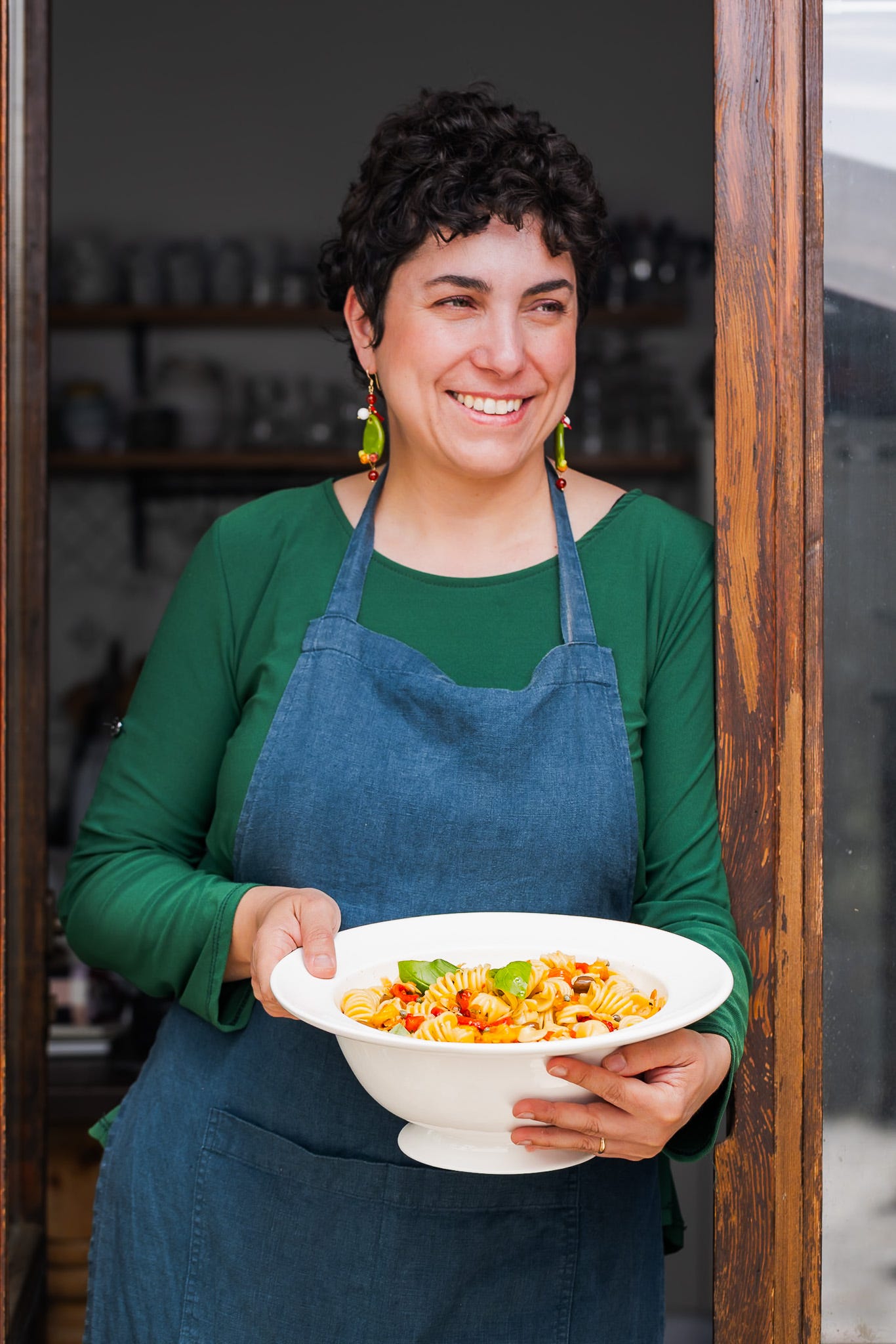
GIULIA SCARPALEGGIA: This is a book about the way we cook vegetables in Italy, especially at home. During my cooking classes, my students often tell me that they have wonderful food when dining out at local restaurants and trattorias (think pappardelle with wild boar ragù, or pici with duck sauce, not to mention the ubiquitous Florentine T-bone steak) but that they miss vegetables.
And yet, when we shop at the market, the vegetable stalls are always bountiful, bursting with colors, textures, and varieties. Then we come back to the studio, and often our whole menu revolves around vegetables: from appetizers to pasta sauces, side dishes, and sometimes even desserts.
They are always surprised, and realize that they have been missing a whole layer of Italian cuisine. So, to cut a long story short, I wanted to write a book about all those vegetable-packed recipes that we often cook at home in Italy, but that people rarely come across on a restaurant menu.
SS: How do Italians do vegetables traditionally, and what modern twists do you employ, if any?
GS: We approach vegetables in a simple way, coaxing out their flavor, keeping the preparations straightforward, and letting the vegetables themselves shine.
One of the most typical ways of cooking vegetables the Italian way is to cook them until they are buttery soft, and then cook them again with plenty of extra virgin olive oil, often with garlic, a touch of chili pepper, maybe a little anchovy... We basically bring them back to life and unlock a whole new range of flavors: sometimes nutty, sometimes sweet. We rarely cook vegetables al dente!
Over the years, though, in some recipes I’ve learned to cook them a little less. I might grill asparagus, for example (I know, groundbreaking...), instead of boiling or steaming it until soft. And in the book there’s a recipe for grilled asparagus frittata which I love!
SS: Do you keep a garden? Tell us about it and/or your local market. I imagine that is a big source of inspiration.
GS: I grow three pots of wild strawberries and lots of fresh herbs (one of my desert island ingredients), and every year I plant fava beans and peas for the sheer joy of watching my six-year-old daughter eat them straight from the pod while standing in the garden.
Since I live next door to my parents, I also take full advantage of my mum’s garden. She learned to garden when she retired, even though she has always considered herself a “city girl” (she was born in San Gimignano, but has been living in the countryside since she got married 45 years ago!). She keeps a summer garden with tomatoes, cucumbers, peppers, eggplants, green beans, and lettuce, and she’s slowly adding winter vegetables to her raised beds too, such as broccoli, Tuscan lacinato kale, and radicchio.
Along with what I can get from our garden, I shop every week at the local market. I share that ritual with my cooking class students, and I love guiding them through the stalls and showing them how to choose the best produce.
Getting fresh vegetables from my mum’s garden, or picking whatever looks best at the market and chatting with the vendors, who have slowly become friends, is indeed one of my main sources of inspiration when I develop new recipes. The other is eavesdropping on what people around me—especially those pugnacious old women trying to overtake you in the queue—plan to do with those vegetables.
My motto is: what grows together goes together. Along with: there’s never enough olive oil!
SS: Tell us about your cooking classes and what the experience is like for your guests. It sounds like a dream to me. Where do guests stay? I hope to visit you someday!
GS: I’ve been teaching cooking classes at my family home in the countryside between Siena and Florence for 15 years now. On Wednesdays, we host a Market-to-Table cooking class: we begin with breakfast at a local café, take some time to chat and get to know each other, and define a menu that suits everyone’s expectations and preferences. Then we shop at the market and at the butcher’s.
After that, we drive back to my studio and start cooking a feast. Nine times out of ten, we also make fresh pasta, and we prepare countless dishes packed with vegetables. Eventually, we sit down around the table to enjoy the meal we’ve cooked together.
Along with the Market-to-Table class, we also offer a Vegetable-Forward cooking class, where I try to include a little foraging, especially in spring, and a Three-Day Masterclass for those who want to stay longer and cook more.
My groups are small, usually no more than eight or nine people, and we cook family-style around a big table, sharing tasks and contributing to the final meal. Most of my guests choose to stay at local agriturismi to get the full countryside experience, although some drive all the way from Florence, Siena, San Gimignano, Montalcino, or Pisa to attend the classes.
And I also have a little preview for you! Starting next year, we’ll be renting out a small apartment right next door to our studio, downstairs from us, for those who would love to stay close to the cooking school. It was my grandma’s home, and since she passed away last year at the age of 97, we’ve been thinking about how to give it a new life and open its doors again, so that more people can experience our hospitality.
So now you know you have to come and visit soon!
SS: What are some of your other favorite dishes from the book that use the abundance of fresh produce as summer eases into fall?
GS: Something I’ve been cooking a lot recently is the Squash and Eggplant Pizzette Capricciosa from the Baked & Roasted chapter: they’re fun to make, and I love eating them even at room temperature the next day, should there be any leftovers. Another dish you’ll want to make right now is fried green (unripe) tomatoes with grapes. It’s such an unusual combination of flavors, yet it’s something I look forward to every year.
And I’m still cooking a lot of peppers. I roast them to make the roasted pepper pasta salad with almonds, olives, and capers, or I stew them into peperonata, a silky, sweet-and-sour dish that works as a side, an appetizer, a pasta sauce, or even as a base for poaching an egg.
And, of course, I roast plenty of tomatoes. Toward the end of the season, when they need a little help to bring out their best flavor, roasting makes them sweeter, richer, and more concentrated. Once roasted, you can serve them as a side dish, turn them into soup, use them for a pasta sauce, or stir them into a risotto (or orzotto!)
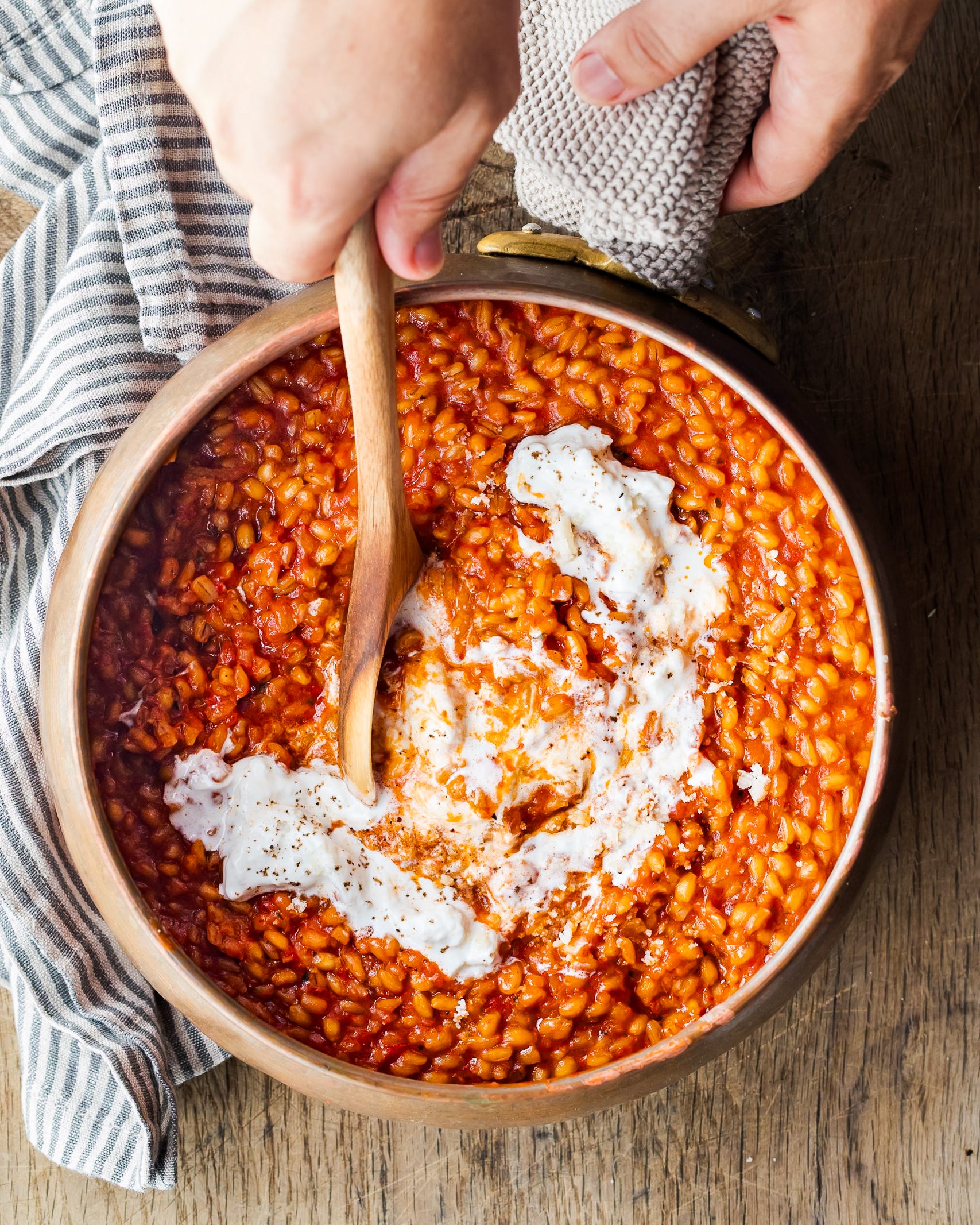
Excerpted from Vegetables the Italian Way: Turning Simple and Fresh into Extraordinary. © 2026 Giulia Scarpaleggia. Photograph ©Tommaso Galli. Reproduced with permission of Artisan Books. All rights reserved. Photography by Tommaso Galli.
Comments
Nothing yet. Say the first thing.
Sign in to join the conversation.