
I’ve been through so many tech hype cycles – hell, even helped orchestrate a few – but AI got me pretty good. I’m not alone. Over the past couple of years, many of us have worked through the cycle from amazed to appalled with the various generative AI platforms.
I still think AI is and will be a transformative technology, but if I’m honest the problem I have with it was really my own expectations. I believed the hype. After all, the texts and conversations that the technology generated looked good, seemed smart. But even aside from the obvious fallacies and hallucinations that it spewed out, eventually just about everything it created began to feel hollow.
AI is just a technology, just code, and I had let myself believe it was something more. And even as I continue to find my own ways of making it useful, it still feels so empty, and damn if I’m not disappointed when I feel that lack of spark, creativity or imagination - the unexpected.
I think Shanna articulates this delta between human creativity and generative AI that I’ve been feeling incredibly well in her article below. Creativity is not really the input or the output, but the experience of the connection between the two. AI might mimic that, but there’s really nothing behind the facade.
- Doug
by Shanna Gerlach
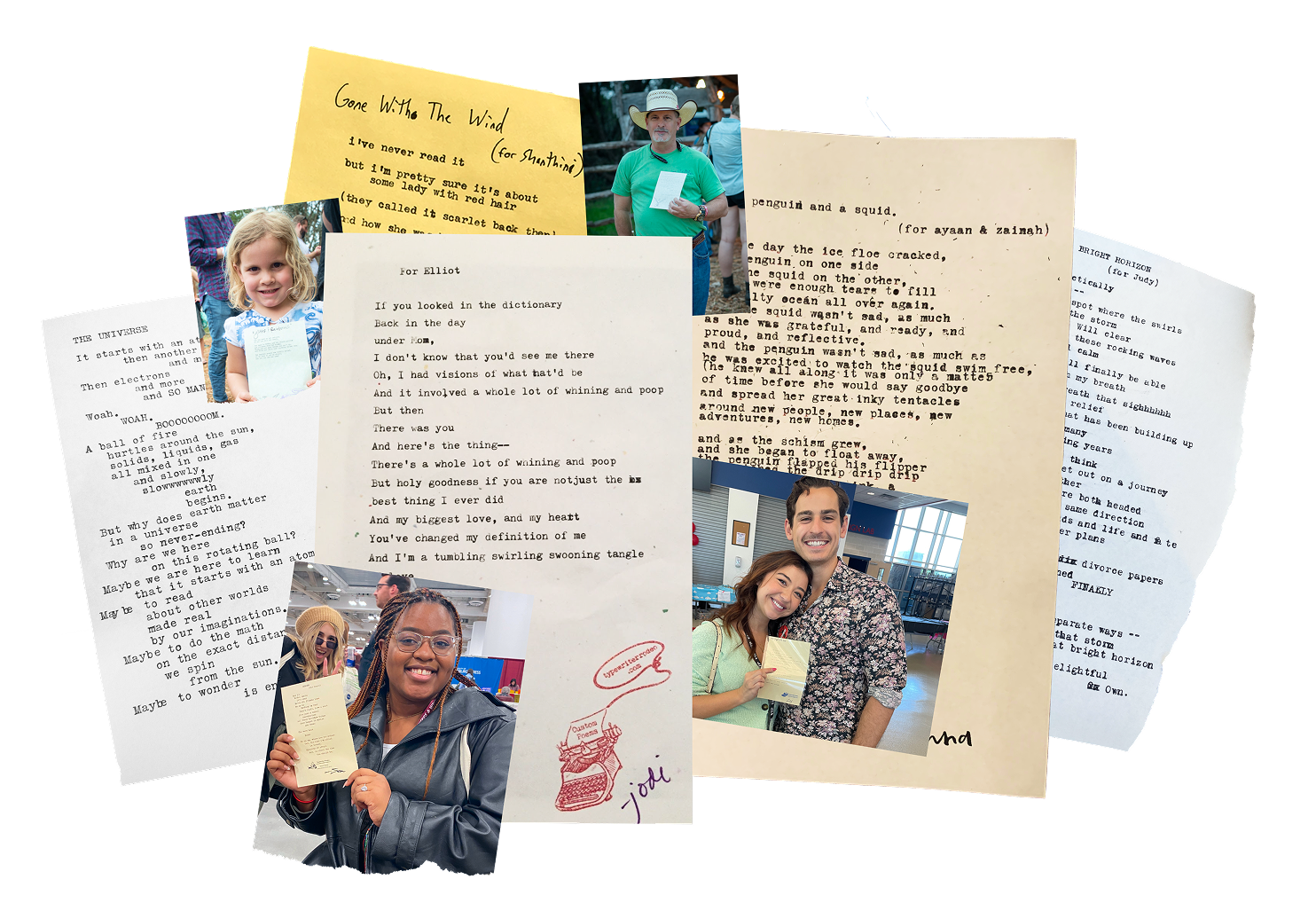
A middle-aged woman I’ve never met before walks up to me on the verge of tears. Over the din of the party swirling around us, she leans forward and tells me that her mother recently passed away, and that she has no idea how to live on this earth without her; she’s never experienced a world where her mom didn’t exist. She’s quiet, vulnerable, already grateful for the poem she’s requesting. I let her prop her phone up on my typewriter with an old photo of her mom on its screen, and I start to write.
Five-ish minutes later, I roll the paper off the typewriter’s rubber platen, sign the bottom corner, slide the poem into a plastic sleeve, and hand it back to her, a gift. She holds it to her heart, mouths a “thank you,” and walks away to read it alone.
Later that event, a mom asks me for a poem for her four year old son, to let him know it’s okay to mess up. A couple requests a poem about the inevitability of their love; a stepdad wants a gift for his stepkids; a girl who hasn’t been back to the mountains of Virginia since she was a little kid has been remembering what those summers felt like.
I type poem after poem, the words marching only forward in permanent ink, the same way time doesn’t allow for backspaces. My “O” key is aggressive, poking holes clear through the paper. From the back, each page looks like a severed constellation. Bits of some letters are colored red, when the ribbon lifts slightly on a key press. Most, but not all, of the spaces have appeared in their proper places. It adds up to ten minutes per poem from start to finish (give or take), and hundreds and hundreds of strangers who’ve shown me a tiny piece of themselves over the last two years.
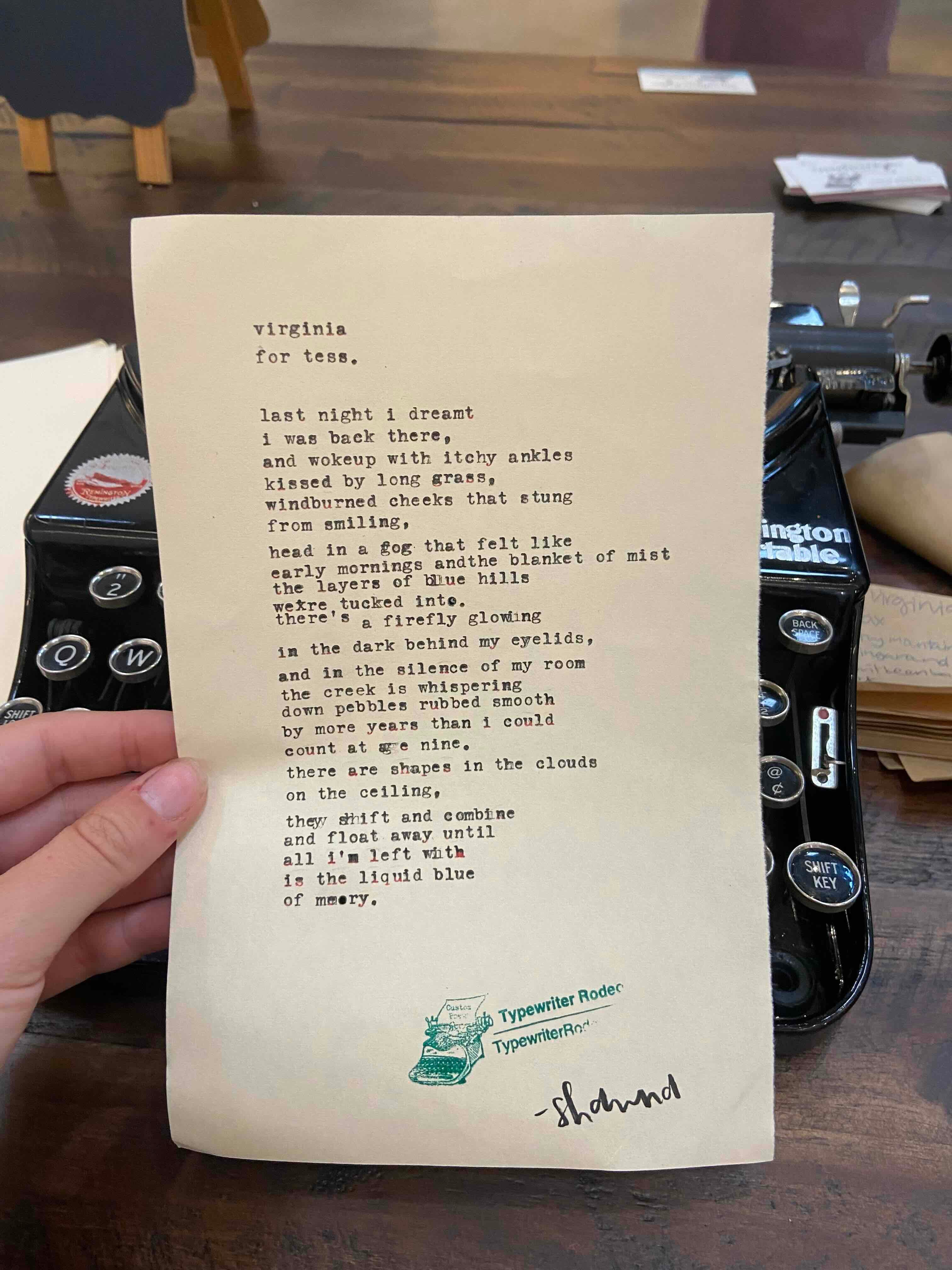
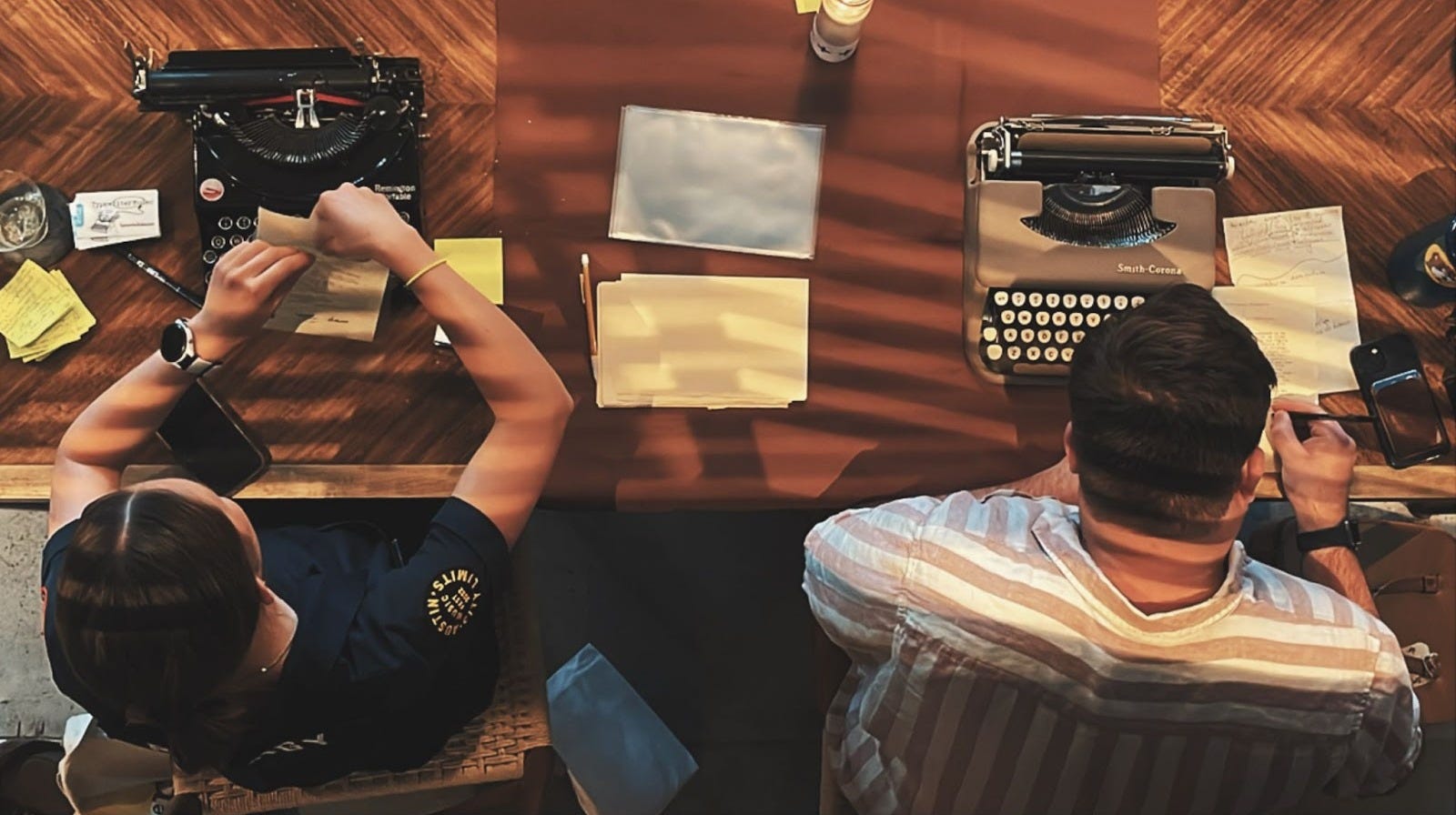
Typewriter Rodeo began in the early 2010s with the idea to create a spark of magic by writing spontaneous poems for strangers. It’s not actually magic, of course – we are just humans writing poems – but sometimes it feels that way.
In contrast to back when TR started, every single person that walks up to our table for a poem today could’ve instead opened up the phones in their pockets and (for free, within seconds), gotten any of a number of LLMs to write them an instant AI poem about whatever they wanted. But they don’t – they stand in line and wait their turn, racking their brains for the perfect topic request, letting their curiosity about who we are and what we’ll write for them eclipse their nerves or shyness.
Why?
Why does a custom poem typed by a human being still matter so much? What are we looking for from this experience that we can’t get from Claude or Gemini – what’s the difference?
Maybe they didn’t even realize a poem written just for them was something they wanted, something they could ask for, until they saw us there, offering. Maybe humans crave the intimacy of sharing pieces of ourselves with an absolute stranger and feeling visible. Or getting to watch a vintage typewriter at work – tech so old that it’s exciting again. The promise of something physical and tactile to take with you. An experience you haven’t seen anywhere else before. The thrill of setting a challenge for someone and being the judge of whether they succeed. Simply knowing that another human being shared this time and space with you? A combination of all of it?
And on the other side of all this, if we as poets can (in theory) use AI to write poems about any topic that someone else asks for, why do we still show up to write in analog?
It’s in part the connection with another person, the trust they have in us to create for them something so intimate, so personal, and then the act of surprising them with something that’s genuinely good, that they likely couldn’t have done themselves. Perhaps we also do it to experience the adrenaline rush of taking a risk. There is no risk in asking ChatGPT for a poem; there is inherently risk in asking the same of yourself, in an environment where success couldn’t be farther from a guarantee. It’s the challenge of taking another person’s request and fulfilling it on the spot, where there is no promise you’ll make anything good at all. Anything sure-er feels hollow, like cheating.
If I’m honest, it also feeds the ego: a whole line of people in awe of your “magic,” and the knowledge that you’re writing a poem for such a specific audience that it’s guaranteed to be read in a way that not all poets can take for granted. Every gig is a dopamine rush feeding on your innate and animal need for legacy, attention, belonging, creation, growth.
And maybe, above all, we crave the making itself: that deep, rich satisfaction in creating something (good) out of nothing.
In a recent conversation with Ross Golan on his “And the Writer Is” podcast, songwriter + producer Jon Bellion puts it simply: “At a certain point, we’re going to have to choose to work[…]because working feels good.” He makes an analogy that I’ve found useful lately, comparing the dilemma of creative AI use to a woodworker faced with the choice to produce millions of chairs in a factory and never touch a chair again, or to continue to physically make chairs because at his core he is a woodworker. When is it necessary to sacrifice productivity for the joy of doing the thing yourself? “We wonder why we're sad [— it’s] because we're not doing the thing, we're just having the thing brought to us. But doing the thing is the reward.”
The satisfaction lies in the process of creation, not in having the end product itself. And maybe that’s also what gives a product value to another person: not the product itself, but the knowledge of the effort and care that the maker has put into the experience you receive.
In a predictable segue, this all aligns with what I’ve begun to notice about the process of typing custom poems. Usually, the poem recipients light up before they’ve even read a word of their poem – what the words on the paper say don’t matter nearly as much as the fact that they were written. This realization is simple, but striking: the actual gift isn’t the poem itself, but is the experience on either side of the poem – the space to share, the dignity of a genuine question, the hug or hand clasp or silent tear. The gift is in the connection, the idea that someone has taken the time and attention to write a poem specifically for them, listening, curious, matching laughter or tears, hearing the parts they’re not quite saying out loud, adding a piece of one’s own DNA into the narrative – a fingerprint that acknowledges the existence of both poet and subject.
I’ve been thinking a lot about the concept of provenance lately. In the art world, an item’s provenance refers to the running log of who has owned that specific piece of art, including where and when it’s been sold or shown. It’s important because of the moral and ethical implications of where art has come from, and its cultural context. Is it an original? Was it stolen or looted? Who has had power/possession over it, and why? It can lead to a deeper appreciation for the piece, or restitution.
When abstracted and romanticized, the concept of provenance can extend to daydreaming about who else has read the library book you’re holding, or looked out your childhood bedroom window for the years before and after you did. I’m a bit enchanted by this idea of knowing where something has been and whose fingerprints have been on it. What other lives that library book has touched, a faint pencil underline or mosquito trapped and flattened between pages. The Sharpie self-portraits and “autographs” my brother and I scrawled on the briefly-exposed concrete floor of the home we grew up in as little kids, then preserved under new carpet for a future generation to discover. A bed and breakfast guestbook filled with doodles, names, dates, hometowns. Graffiti notes inside a bathroom stall to mark even the shortest of “ownership”s. As humans, we’ll latch onto anything that connects us to others.
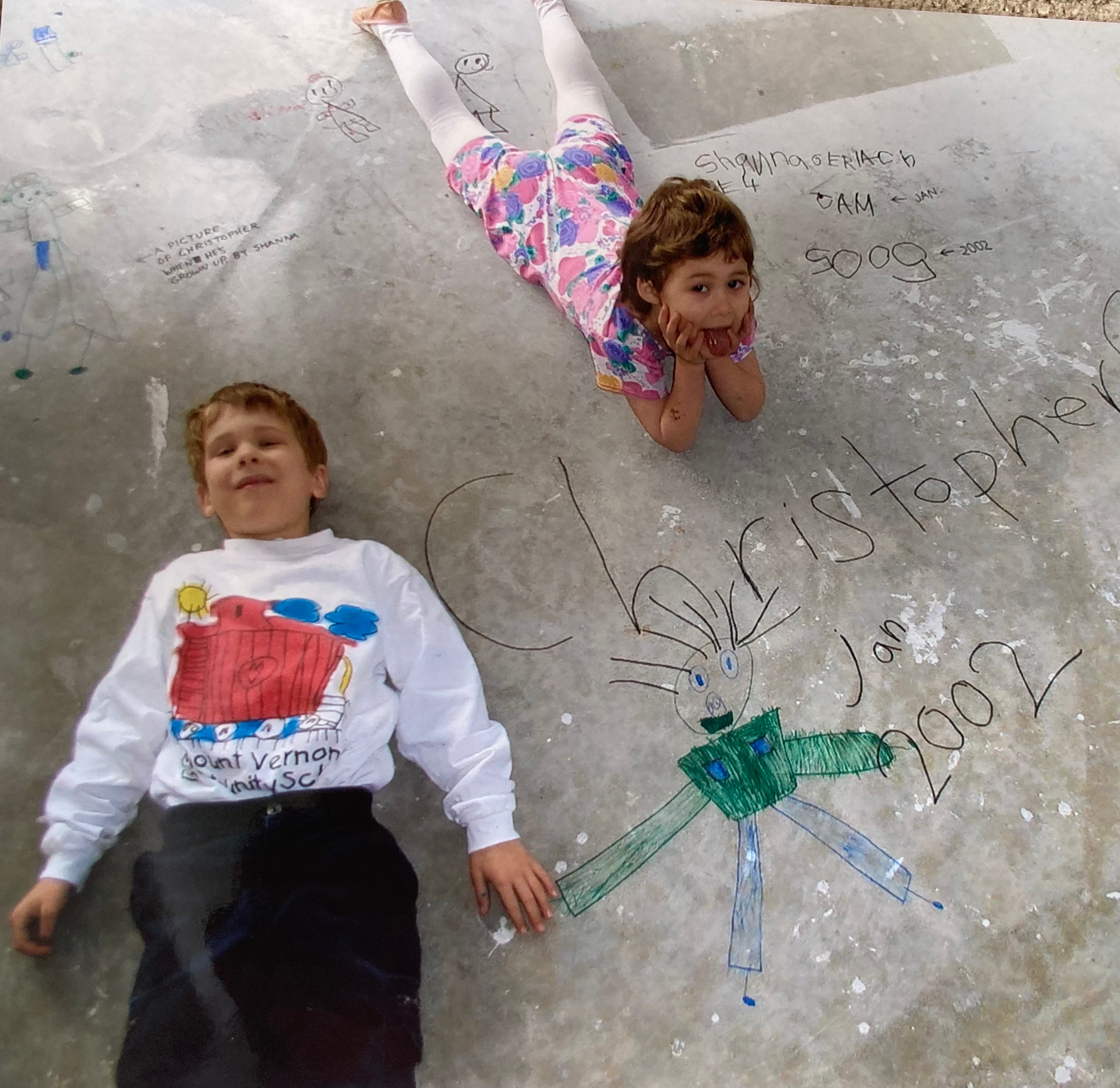
I’m moving into a new house this weekend, and passing my current one onto its next tenants, one of whom is a friend. I’ll admit there’s a little part of me that is soothed by imagining the walls carrying my four years of memories, laughter, roommate changes, parties, and the feeling of home into its next chapter. It’s a notion of the house as soup – more flavorful the longer it braises, the more ingredients it incorporates, its provenance becoming part of what makes it feel special to live there. Maybe this is why it feels important to me to physically hand a poem directly to the person I wrote it for – it’s the transfer of both a tangible and intangible item, a new entry for the poem’s provenance, that person’s story briefly merged with my own.
This joy of provenance, even in the smallest and briefest sense, can’t exist in an AI-written poem in the same way. My fingerprints, both literal and figurative, are all over that piece of inked paper. In a sense, the provenance of the piece even stretches back one more step, to the point in time when it was an idea inside the recipient’s head that they shared with me as the poet. I borrowed it, turning thoughts and feelings into written words, before transferring ownership back to the person who requested it. Some poems change hands again soon after – finding their intended audience as a birthday gift, engagement proposal, “just because” present, a future family heirloom. Everyone along the way has impacted the piece, added depth and humanity to its existence as a piece of art.
Because of this, the author emerges indirectly as a key character in the piece – the poem itself is inseparable from the fact that it exists because of the poet. The idea stands in direct opposition to Barthes’ postmodernism and “The Death of the Author.” While Barthes might assert that the “ultimate meaning” of a piece of writing lies with the reader, and the author is irrelevant, in Barthes’ world all writing was still invariably written by humans. That’s a luxury(?) that we no longer have, as a likely-larger-than-we-realize percentage of the writing we read now is AI-generated. The success of Barthes’ philosophy relies on human authors: I’d argue that they are what allows for a piece of writing to so fluently speak to multiple readers with a wide-range of interpretations.
With this, postmodernism has run its course to the most extreme conclusion – the author is dead, and has been replaced by AI, exposing the hollowness of the theory in the ultimate “be careful what you wish for.” While we stumble around in a time where nothing can be trusted to be fully real, a piece’s author, its provenance, has become more consequential than ever.
Knowing that a human being once thought deeply enough about something to string the words you’re reading together is part of what makes those words special, regardless of what meaning you personally interpret in them. Reading and writing are, by definition, activities we do in order to both understand and to feel understood. In a world where so much connection is online, or shallow, or tempered by artifice, it matters that another human listened to and then wrote a poem for you.
And maybe that’s why, over and over, people line up and wait to request a typewritten poem: this brief but invaluable opportunity to be seen and understood deeply enough to feel human again.
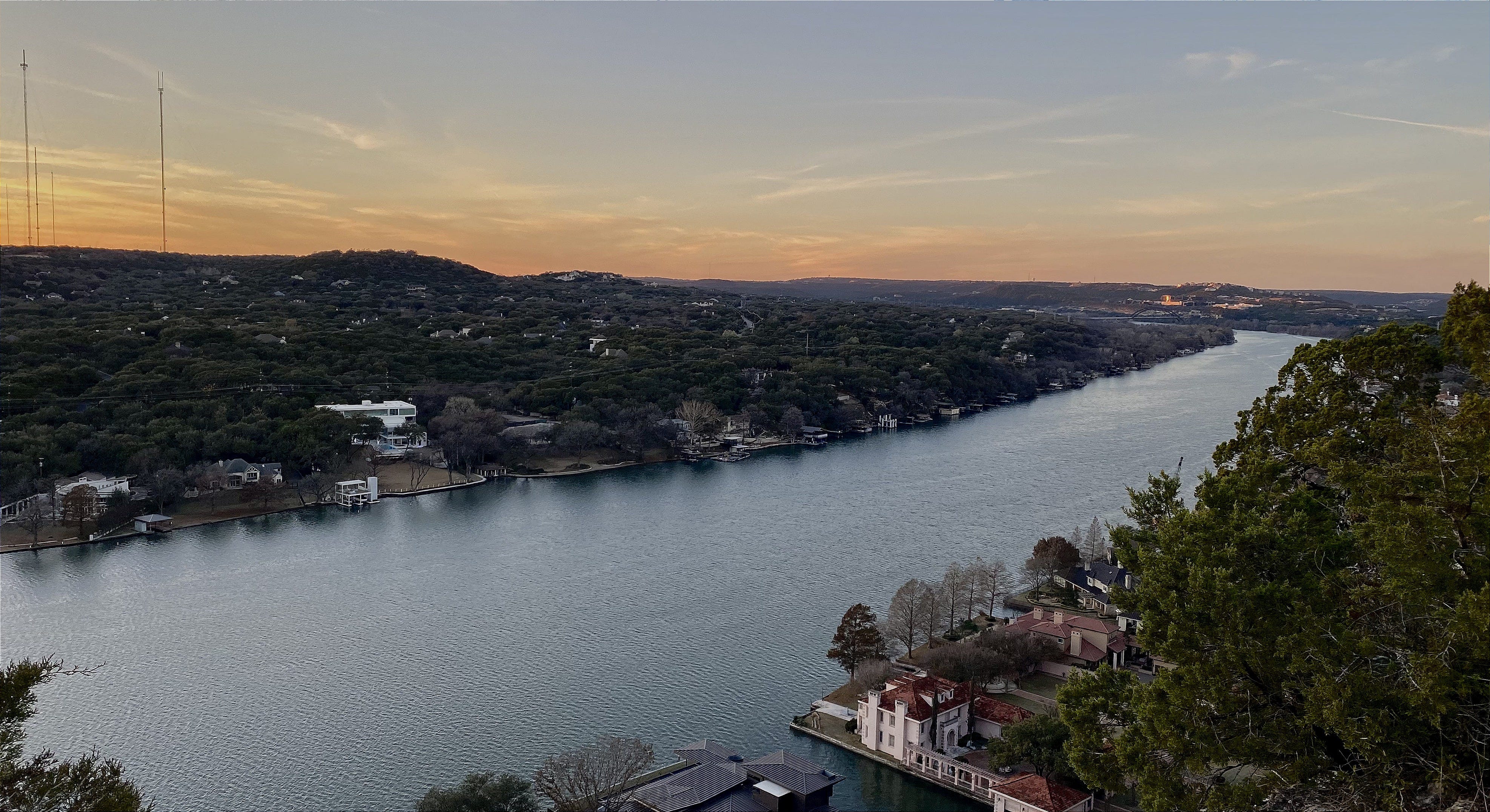
While the magic of Typewriter Rodeo is best experienced in person, you can get a taste of their spontaneous poetry every week on the Texas Standard on KUT, Austin’s NPR station. Here is Shanna pondering upon the small moments subtly charged with meaning atop Mount Bonnell, Austin’s iconic high point.
Everyone freaked out over the MIT study on the effects of using generative AI, but Anne-Laure Le Cunff has a more nuanced take on whether ChatGPT is really rotting our brains.
“The importance of imagination and inspiration is about experience,” writes Ben Holliday, arguing that great design requires a point of view and pushes how we see and understand the world.
Wired delves into the growing backlash against generative AI.
We love Abraham Burickson’s thoughts on AI and creativity in his Phase Zero newsletter: “And this is what I think we don’t talk about enough with this new technology: interiority. The things we make are as much about what the making does to us as they are about what is made.”
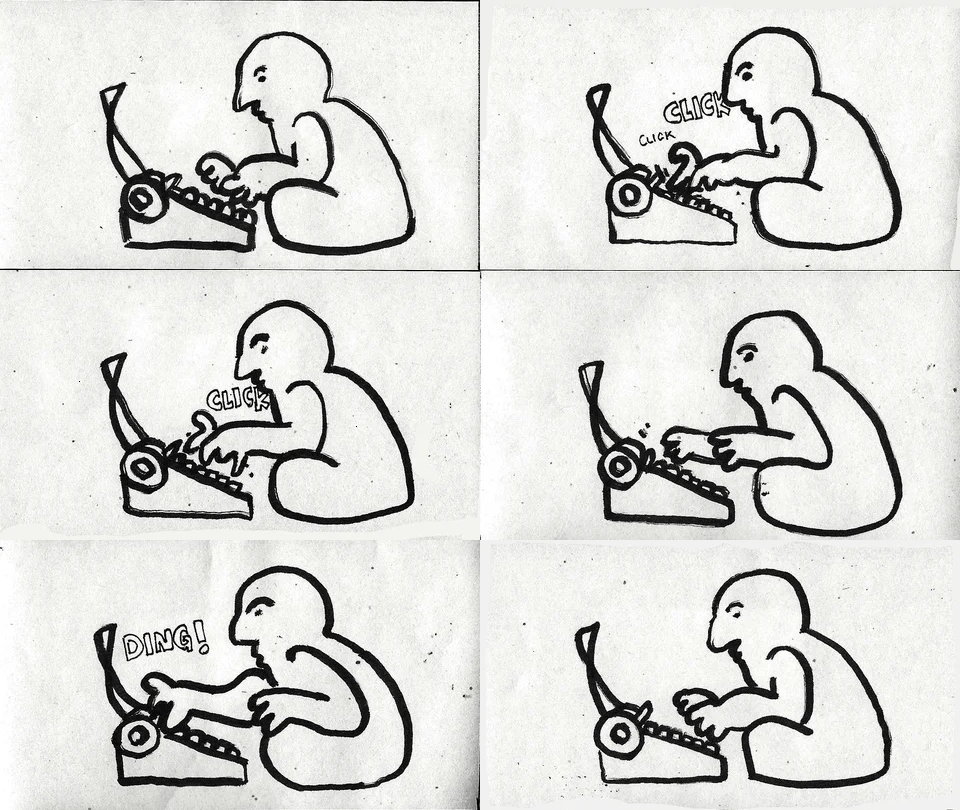
JDI has been busy building Sidetracks, our brand new Austin-based creative club of interesting and interested people. We gather regularly for experiences alternating between Detours (creative field trips) and Hands-On (workshops that center unique ways of “making”).
Our next Hands-On experience is this coming Monday, July 14th at the JDI offices. We’ll be playing around with typewriters with a workshop run by Typewriter Rodeo poets Sean and Shanna (from JDI and Superposition), completely free to attend. If you’re local to Austin, we’d love to see you there! More info and RSVP here.
Next time on Superposition: “Time and Attention may have become the chosen obsession of the web analytics gurus, but those online metrics are just the sad shadow of their IRL impact.”
Superposition is a production of JDI, designed and written by Shanna Gerlach and Doug Freeman
No posts
Comments
Nothing yet. Say the first thing.
Sign in to join the conversation.