
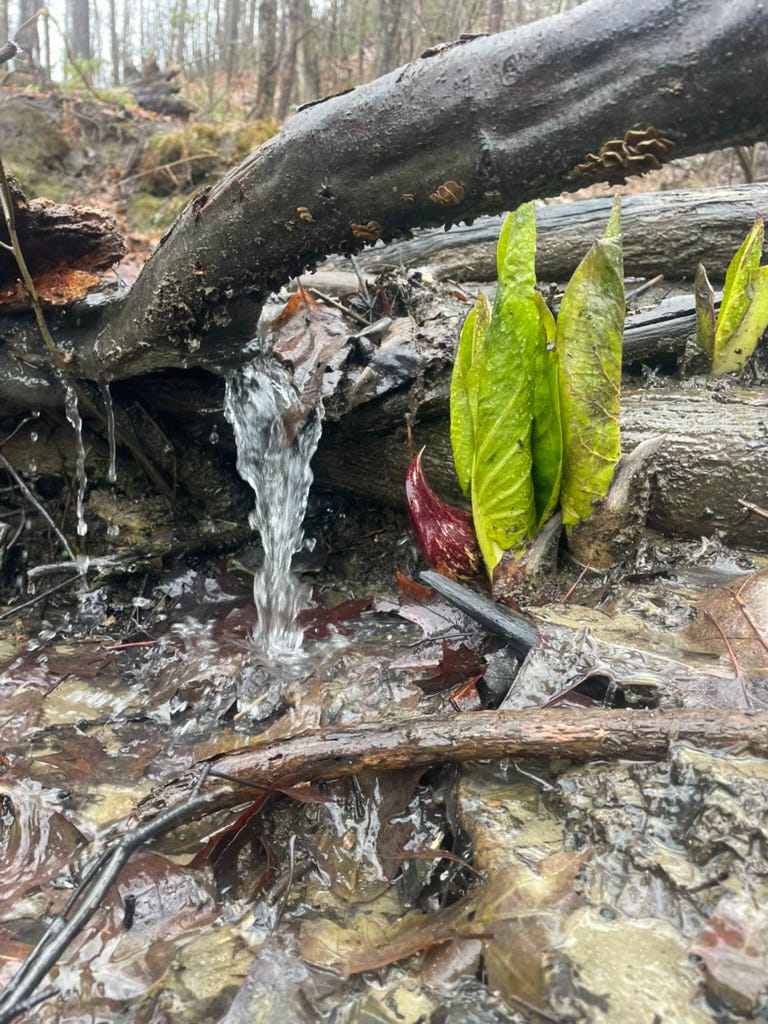
Skunk Cabbage is popping up all over eastern North America and looking absolutely delectable rising from the swamp. Despite the lush and inviting appearance, it’s generally not something you want to snack on. Skunk Cabbage is considered toxic because of its high concentration of calcium oxalate which is extremely irritating to the throat and mouth.
However, to our woodsy neighbors, the North American Black Bear, Skunk Cabbage is a crucial spring meal. When the bears emerge from their winter torpor/hibernation, they need something to jump start their digestive tracts: enter Skunk Cabbage. It helps them clear out their digestive system, which have been on pause all winter.
If dreams come true, I will witness a black bear feasting on Skunk Cabbage someday.
Maybe the most exciting thing about Skunk Cabbage, and I really buried this lead, is that it is one of the few plants that is capable of producing its own heat. The inside of the Skunk Cabbage spathe is up to 20 degrees F higher than the surrounding environment.
Two years ago I wrote all about the unique adaptation (thermogenesis) that allows Skunk Cabbage to grow before most other plants around it, thus allowing it to be there for the bears when they need it. I also got into the medical qualities of SC.
·
February 22, 2024
(Symplocarpus foetidus, Araceae): hottest plant in the swamp: a thermogenesis story. Skunk Cabbage is one of the very first plants to emerge from winter dormancy, coming to us weeks before most other plants are even beginning to stir. It is able to do this because of a curious mechanism: thermogenesis! Skunk cabbage generates heat via cyanide resistant cellular respiration - it is one of very few plants that can do this. The spadix (a spike borne on a fleshy stem) is the part of the plant responsible for this adaptation. It is sheathed in a spathe, which covers the spadix and traps in the heat, which allows the flower to develop weeks earlier than it otherwise would be able to. The inner chamber of a Skunk Cabbage plant during this early period of growth can be 20 degrees warmer than the surrounding environment.
While I am linking springtime posts of the yore, here is a missive all about Nettle:
Nettles for Springtime Power
·
March 22, 2024
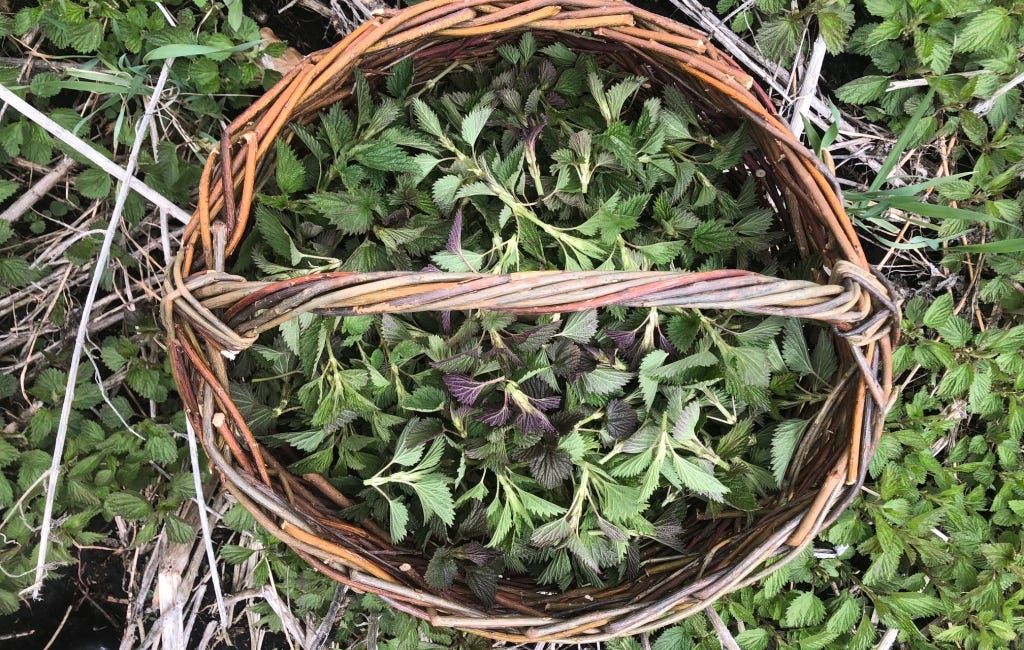
All about this ultra nutritious spring green (most likely peeking up above the soil in a field near you) in a moment. But first, an update:
We are approaching the first full moon of Spring and the seedlings filling up the greenhouse are appreciating the extra light. I hope you find some time to bask in it too.
Geraldine
p.s. if you read this far….click the little heart <3333
Comments
Nothing yet. Say the first thing.
Sign in to join the conversation.