

There is a moment in Special Ops: Lioness Season 3 premiere this week, when a character looks around the room at the carnage that has just happened with the expression of someone who has just witnessed something truly horrifying and you feel so relieved to see that someone else in this unreal situation can share your opinion.
When the scenes were over and the credits were about to roll, I exclaimed out loud, "What the fuck?" Because I have nothing else to ask but, "What the motherfuck just happened?"
That this is the reaction that Taylor Sheridan has elicited from this viewer with the opening episode of the third season is no less a feat than the series itself. Not only is it the best season the series had to offer, but it is also probably the best television action show this year. My god, I could watch that for hours! Having elevated the series to a new level, Sheridan has taken the show away from the Middle East and Mexico, where the first two seasons mostly took place, to the front lines of the Russian-Ukrainian war in Donetsk, exposing the audience to an entirely new environment for the characters of Lioness. And what the masterful Sheridan has managed to find in this new setting is the immediacy of the conflict, which is difficult to capture outside of a war context.
One character calls it World War I and Star Wars. I can agree. Also, the opening scene happened, and then we digressed six months, which, by the way, I hate when shows do. I cannot tell which faction that first scene is with, and I think we are going to get some intertwining storylines. I also had no clue we have private contractors in that war. Those motherfuckers are some serious humans. I am not sure how a person who does that work can maintain a normal life in American society. They must be so bored after they retire from the military.
Two years later, Joe is still running, but she has found a familiar rhythm in her life as the series picks up right where Season 2 left off. With the passage of two years, Joe McNamara (Piper Perabo), the eponymous Lioness, has been able to settle into a routine, working from home with her husband, Neal, and their two daughters. The daughters are smart, and the family dynamic is great. They did stump me on the capital of Maine. However, I did know Montpelier in Vermont. I probably could have figured out that equation if I had it on paper. I loved that interaction between them all. I also loved it when the girls went, "Eww," when they kissed.
The Lioness program, which has so far cost the team members dearly and affected everything in Joe’s life, had been scaled back, but it is far from over. As the season picks up, in its first mission since Season 2, Joe’s phone rings in the middle of the night, while she is on her way to work.
Joe is violently shoved off the road, knocked unconscious and kidnapped while on the call with Kaitlyn Meade (Nicole Kidman). This abrupt end to a seemingly safe morning is followed by the show’s first flashback. When the words Six Months Earlier’ appear onscreen, the pieces for Joe’s abduction start falling into place.
Kaitlyn and Byron Westfield (Michael Kelly), an experienced CIA operative with an ever-growing sense of menace, are tracking an elusive Russian unit, the SSD (Special Sabotage Division) also referred to as Putin’s Hammer.” The Russian military intelligence has been operating heavily on the European front, threatening NATO countries, which is why Westfield is in Ukraine’s capital. The head of the SSD is a Russian officer, Aleksi Yurimov, currently located in Donetsk.
Joe consults with an old informant in Georgetown, burning through a valuable asset called Honey Pot, while making connections to Yurimov.
She is tasked with extracting him from Donetsk, in an underground bunker, a mission that the CIA believes will be a sensitive operation requiring extreme caution and precision, with the use of the Lioness team.
The Battle for Donetsk: This Is What War Really Looks Like. Joe begins her mission by assembling her team of trusted operatives, including Bobby, Tucker, Cruz, and others from previous seasons, while also introducing the audience to a CIA spymaster, Amber Whelan (Dawn Olivieri), who has been embedded in the Ukrainian theater.
Waiting for Joe's team in an underground bunker with a Delta Force unit is Cody, a grizzled veteran operative whose reputation precedes him, played by Taylor Sheridan himself, foreshadowing the importance of this mission to him, this season, and the series as a whole. Not only is Taylor Sheridan a great creator in film and television, but he is also a phenomenal actor. I thought he stole the show, so to speak. I had to look him up to confirm it was him. I knew he was in this episode, but I had forgotten until i realized that guy was him.
The battle begins at 06:00, and the fog is so thick that the team cannot see beyond fifty yards. Cody sends in K9 units first, to clear the way for the Lioness team, using dogs to tear up the Russian ranks before any guns are fired, an authentic and brutal detail. But it is the next part of the battle that will keep viewers talking for the next several seasons. After engaging the enemy, and managing to take Yurimov out and cut the GPS tracker from his arm to cover his retreat, the team is nearly eliminated by a drone strike.
The footage of drones attacking the battlefield looks like something out of a science fiction movie, as hundreds of First Person View (FPV) drones rain down from the sky, attacking the target area like an infantry charge and eliminating everything within a range of a few hundred meters with software-driven precision. It is a surreal look at the war being fought today in 2025 and 2026 with cutting-edge military technology, juxtaposed against the authenticity of the 1916 battlefields.
When I heard we had drone technology at war, I thought maybe one would go out for reconnaissance. I had no clue they were essentially flying bombs, or whatever you would call them, but the visuals of hundreds or thousands in the sky were unreal.
The team’s farmhouse evacuation point is destroyed in the drone strike, and the only reason they survived was because they dove into the underground bunker as the farmhouse was leveled, but not before one of the K9 units was killed. The loss of the dog weighs heavily on the team, especially the handler, who has lost something precious in the line of duty.
What Is It That These People Lost? The question that haunts this episode and the beginning of Season 3 is the burden that these characters live with and the sacrifice that they have made for their country that will never be recognized by anyone in their daily life. It is the cost that the government has asked these operatives to pay in blood, but for what, it remains unclear. They are fighting in a war that has nothing to do with us.
Joe returns from her mission at night, and as she pulls up to her house, she notices that the lights are off. Sitting in her car, she contemplates her evening, trying to enjoy the calm before returning to her routine tomorrow. Instead, it is revealed in the next scene that two men have appeared at her front door, claiming to be state police. Joe knows immediately that something is wrong.
She kills two armed men in cold blood at her front door, and her husband Neal (Dave Annable) finds her there, standing over the men’s bodies.
The flash-forward that opened the episode of Joe being kidnapped mid-phone call with Kaitlyn has a new meaning now that Joe has returned home to find two men waiting for her at her front door. It is clear that someone has been following her, and if Joe thought that her mission in Donetsk was a one-time thing, she was mistaken since this breach of her safety could have been prevented had she not gone there in the first place. Someone wanted her dead, and they knew where to find her. The Lioness program has been compromised, and it appears that someone working there has revealed vital information.
Cast, the Show’s Scale, and What Season 3 Is Up To as the third season of Special Ops: Lioness continues to deliver high-octane action with a new mission for the Lioness team, as the series’ returning cast members, Zoe Saldaña, Nicole Kidman, Michael Kelly, Morgan Freeman (in a role that Season 3 appears to keep at a distance), Laysla De Oliveira, Dave Annable, Genesis Rodriguez, and others reunite to take on even more dangerous challenges.
In the interest of full transparency, Genesis Rodriguez is considered to be one of the loves of my life (I think I have or had like 4 or 5 loves of my life), which stems from her role in the great comedy action film Identity Thief. But anyway, writer and director Taylor Sheridan has taken over the reins for Season 3, scripting all of the episodes, as he has done for much of the rest of the Paramount+ catalog, including his other series, Yellowstone and Mayor of Kingstown.
The Wrap ‘s review of Season 3 was effusive, calling it the “ most thrilling season yet for fans of the series, as Sheridan resists the temptation to recycle Lioness , instead pushing the characters into darker, more mysterious directions. At the same time, the review wondered if this might be the final season for Lioness , noting that the series has reached the “ peak of its powers.”
Personally, I love learning new shit, and when I learn things from film or TV, it’s great. That is why I love the James Bond films, and I especially love the series Strike Back because of that. As for this episode of Lioness, I had no clue any of that went on in real life.
Season 2 received critical acclaim, with a 90% rotten tomato score, compared to Season 1’s only 54%. Meanwhile, the premiere episode for Season 3 has generated outstanding word of mouth, with critics and audiences hailing it as a potential series highlight. With eight episodes to come this fall, weekly installments through September 20, with the release of every episode on Sundays on Paramount+. Someone in the intelligence community has decided that Joe McNamara deserves to be eliminated from the equation, and the series has been showing us what sacrifices she is willing to make to protect her country. We may be seeing the lioness go out in spectacular fashion.
Special Ops: Lioness Season 3 continues to stream on Paramount+ with new episodes released every Sunday through September 20, 2026.

Few television show premises can boast of having turned the narrative on its head so brazenly as does the “Apple TV+ series Sugar, which has already released the first season. It initially made viewers believe that it was yet another noir LA detective series but gradually unveiled numerous surprising answers about the very nature of the case in which its protagonists were investigating. The series has been running its second season in 2025 and is one of the most intriguing programs today because it stars Colin Farrell and turns out to be just as remarkable in its second season as in the first. It has been growing in popularity since its 2024 debut as a moody drama, with its second season now delivering on promises of a detective, sci-fi series that gently explores loss and belonging. Read More!
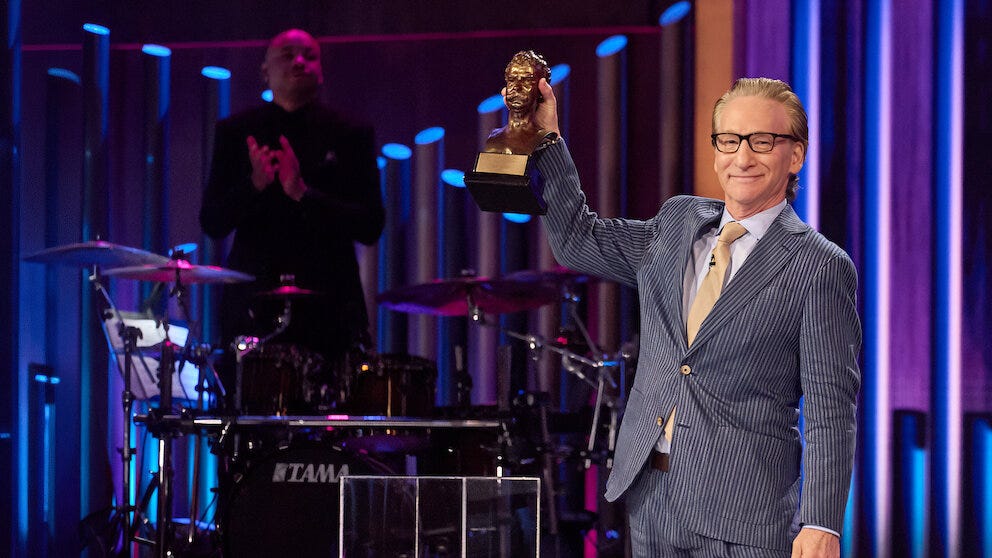
The building still has the tarp up.
That detail, uncovered in the Hollywood Reporter’s account of the June 28 ceremony, is virtually an essay in itself; it’s one of those observations too obvious to not have been made already, by you or me. The original John. F. Kennedy Memorial Center for the Performing Arts, meanwhile, was still covered with a billowing tarp over its entrance, as the renamed venue - the Donald J. Trump and John F. Kennedy Memorial Center for the Performing Arts - prepared for its new lease on life. And so on a recent Sunday night, Bill Maher arrived at the building for the 27th Annual Mark Twain Prize for American Humor (to be presented at the Kennedy Center, exclusively on Netflix), where he was joined by Louis C.K. and Whitney Cummings and Jay Leno and Woody Harrelson and John Mellencamp and Stephen A. Smith.
But the tarp is doing double duty as a metaphor. The evening, to its credit, was doing triple duty as television.
The Venue, the Context, and the Inherent Comedy of the Setting. There is no overstating how much irony there was in the room when the jokes hadn’t even started yet. Maher has spent the last two years doing pretty much the opposite of what his liberal viewers were hoping for, eating at the White House with the president and Kid Rock and Dana White, doing his best to praise the administration his fellow late-night talk-show hosts have uniformly condemned.
And then the Kennedy Center - named, lest we forget, after John F. Kennedy - gave him its highest honor.
His acceptance remarks, as quoted by the Kennedy Center’s official press release, were thus a masterstroke of ironic precision. “Thanks to the Mark Twain people,” he said. “I just had the award explained to me, and apparently, it’s like an Emmy, except I win.” He has 41 Emmy nominations. He has never, ever won one. He’s no doubt said this line dozens of times before, but there was something about hearing it in that room at that moment that made it seem particularly well-chosen.
The Cast: Who Was There and Why the Guest List Is Itself a Statement. The people who agreed to appear onstage for Bill Maher at his June 2026 tribute celebration at his tarp-draped namesake theater, during a ceremony that had provoked controversy precisely because it happened, speaks volumes about the state of American comedy.
Louis C.K.’s presence at the Mark Twain Prize ceremony became the story before the event even happened, and it kept being the story afterward, once Maher went on NPR’s “Newsmakers” to defend the decision. It’s a strange position for Maher to be in, honestly, since he’s built part of his public persona around defending redemption for fallen stars while never quite grappling with how messy that defense gets when the person in question is Louis C.K. specifically. Asked about it on NPR, not long after he’d also had Kevin Spacey on his “Club Random” podcast, Maher didn’t back off at all. “Either the law means something or it doesn’t,” he said. “And not every punishment should be forever. Have some grace.”
Louis C.K., for context, stepped away from multiple projects back in 2017 after several women came forward saying he’d asked to expose himself and masturbate in front of them, or did so over the phone, without meaningful consent. And look, once I actually got the facts straight, my theory about him accidentally getting caught went out the window. This wasn’t some unfortunate public mishap. He was reportedly ... asking. Which honestly might be worse, in a way, because at least an impulsive lapse in judgment is something people can somewhat understand. Flat out asking is a whole different level.
Here’s my take. When you’re a public figure, or honestly just a functioning adult, self-awareness and self-control aren’t optional extras. They’re the baseline. And whatever this was, I don’t buy that it was some uncontrollable urge. It reads more like a defense mechanism dressed up as spontaneity, or just, for lack of a better word, idiotic behavior from someone who figured he could get away with it. And can we talk about the actual sequence of events here? Whatever happened to the bases? There’s a whole progression that’s supposed to happen. First base, second base, third base, all of that comes way before anyone’s reaching for their belt. He has since apologized publicly, and in the years since, he’s quietly rebuilt a full standup career and is now selling out arenas again. Maher’s argument is basically that C.K. has done his time. The people who still object would say time served doesn’t erase what happened, and that “grace” is a strange word to reach for here.
Watching Louis on stage this night, honestly, at one moment in the beginning, it reminded me less of someone having a genuine reckoning and more of a best man giving a speech that’s technically correct but completely misses the point of the room but then it almost turned a corner where it continued on well I suppose.
Jay Leno, who became a star at the comedy club in the 1980s, alongside Maher. He provided the most politically charged material of the evening. Perhaps that was the problem with me and Louis C.K.’s speech because Leno did a standard stand-up comedy routine and did it pretty great. Louis C.K. was speaking whikle I think making jokes that would describe Bill’s assistance if there were any jokes. I can’t recall; I know people were laughing, but I can’t remember if he was telling jokes or stories and praising Bill for helping him when no one else would.
Leno also heckled the audience about Trump not being too happy about Bill’s latest honor. “You think the President is upset about Bill getting this honor? You should see his face when he finds out who gets the invite next year,” said Leno, leading into the “Bad Bunny” bit about the Puerto Rican singer, who the current president has accused of “destroying” his country, also set to receive the 2026 Kennedy Center Honors. The reason why this happens in the history of the Bill Maher speech is because it most demonstrably reveals the extent to which Maher’s comedy has been shaped by his feud with the president, which often serves as a framing device for his late-night monologues on the subject, as well as the reverse influence. Not least because the very venue in which all this happened was also a source of contention for the president.
Whitney Cummings ended her portion of the evening’s entertainment with what the DC Theater Arts critic referred to as the best line of the night, paying tribute to Maher as a “warrior for free speech,” before noting that he is also especially famous for “defending others’ free speech when he’s in the middle of a sentence,” a quip that received a good laugh from the audience. Her other stand-out material, which made the DC Theater Arts review, came in the form of a story about the Kid Rock-organized White House dinner she attended last year, where she saw Donald Trump, Dana White, and Kid Rock in the same room. “That’s when I realized there was no God,” said Cummings, to polite applause. A bit of blasphemy was apparently in order for Maher’s birthday, considering his reputation as an outspoken atheist.
Woody Harrelson had more personal comments about Maher, as the two are friends, having appeared on each other’s television shows in the past, and represent part of the group of contrarians that make up the attendees list for the Kennedy Center, having made their careers by fighting the establishment, only to become it themselves. Other recognizable faces in the crowd include Arianna Huffington, Stephen A. Smith, Matt Friend (who portrayed Trump for Maher’s Hollywood Walk of Fame speech and got to interrupt the man himself for comic effect, receiving the biggest applause of the night), and John Mellencamp, who performed a song for the occasion.
Another important name belongs to the one star who was notably absent from the list of attendees, Seth MacFarlane. He was the one person who had publicly expressed support for Maher when he was awarded the star on the Hollywood Walk of Fame back in 2010, and who once declared him the “ lone advocate for logic and reason” in the industry. Both men have since had a very public falling out, which had its roots in MacFarlane’s frustration with Maher’s “fake news” rhetoric, which he felt had conflated the discourse around difficult topics too often with the unhinged statements of the president. The Kennedy Center had opted to go with a mix of traditional comedy club regulars and insult comics for the event, which makes sense for both Maher’s legacy and for the type of crowd that was present for the occasion in 2026.
The Trump Impressionist, the Acceptance Speech, and the Moment That Summarizes Everything. The highlight of the ceremony, as detailed in several of the aforementioned articles, as well as in the NPR summary I mentioned, was the acceptance speech itself, in which Matt Friend appeared onstage in character, as a Trump impressionist, sparring with Maher, bandying choice insults from the president’s actual public volleys at Maher (“dummy,” “lightweight jerk,” etc.), and, in the most farcical gesture of all, attempting to claim the podium’s bronze bust of Mark Twain for himself, as a souvenir, perhaps? Or a prize? We aren’t exactly sure - but then, in a very real sense, neither is Maher, who is having very mixed feelings about the whole affair, as this clip shows (the whole speech itself, in fact).
This is, no doubt, a hilarious segment. One which, I think, captures the mixed message of this whole weird affair most succinctly. A comedian who has had the privilege of dining with the current president, and who has no doubt seen him up close, is being presented this award at a venue the president has all but renamed in his honor, while his impressionist colleague plays the man and attempts to appropriate the prize the very man just helped to name, on stage, and nobody is quite sure how to feel about it.
It’s certainly a befitting sendoff for the man himself.
The Reviews: What Critics Said and Why the Decider Take Is the Most Accurate. The reviews for the Netflix special, which premiered on July 21, were mixed, but mostly positive, if less effusive than usual for a Mark Twain ceremony. Entertainment Weekly nailed it when it said the issue was that compared to past recipients like Conan O’Brian, who drew uniformly adulatory crowds, the reaction to Maher, who has made a life’s work of being difficult to categorize, was simply more divided. Some nights, the hall was erupting; other times, it was downright tense. The EW critic captured the spirit of the matter when he noted that in many ways, that was the point. The very nature of the Mark Twain Prize is to honor a career spent defying categorization, and so the most fitting tribute to Maher’s uniquely thorny brand of comedy was a night of comedy that reflected that same spirit.
Decider’s review was the most honest about what the special actually lacked: a certain polish, in terms of both the archival footage of Maher’s 90s heyday on Politically Incorrect , which wasn’t always easy on the eyes, and in terms of pacing; the jokes were frequently interrupted by Maher reacting to the very critiques he was being mounted with. It’s right to the point when it says that the root of the issue was that Maher simply could not turn off his famously caustic persona for a night ostensibly dedicated to celebrating his accomplishments.
The Decider review had the best take on the weirdly unspoken issue with the whole affair, the fact that everyone in the room was essentially mocking Bill Maher for not caring about what people said about him while simultaneously lavishing him with praise for said indifference. Because at the end of the night, Maher most certainly cared, in fact, he seemed to revel in virtually every word that came out of every mouth, soaking up the kudos like a sponge.
The Mark Twain Prize always comes with the weight of the Kennedy Center’s institutional authority behind it, which has had its share of controversies when it comes to comedy. The award itself is a uniquely weird creature as a prestigious honor that can only be bestowed upon a comedian, but one that has frequently gone to individuals the very institution finds itself at odds with. To honor Maher at a time when the Kennedy Center finds itself in such open warfare with Comedy Central, at an awards show featuring Louis C.K. and a Trump impression, is the kind of statement only this particular moment in history could provide.
Maher certainly deserves the award, as does this specific version of the ceremony, which captures the strange zeitgeist of modern comedy.
Bill Maher: The Kennedy Center Mark Twain Prize for American Humor is available to stream on Netflix

Every so often a show comes along that exemplifies the growing disconnect between critics and audiences, and Will Ferrell’s new Netflix comedy, The Hawk, is proving to be the definitive example of the summer of 2026. The ten-episode golf farce, which debuted on July 16, has been a huge hit for the streaming service, garnering 4.8 million views in its first few days and climbing to number 2 on the U.S. Top 10 chart on Netflix, just behind some of the service’s most popular titles. It is, without a doubt, one of the most-watched shows each month, and it has also been one of the most disappointing comedic turns of the year, according to critics. Both statements are correct. Read More!
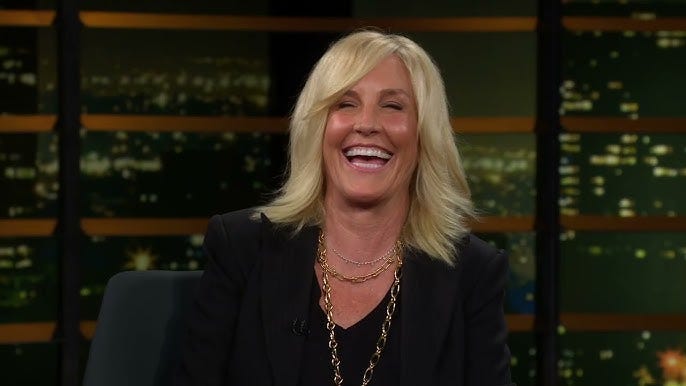
Erin Brockovich, who has spent her three-decade career scoring victories for the environment that no law firm could hope to match with a thousand hours of legwork, and Scott Galloway, NYU Stern professor and best-selling author whose stock-in-trade is making inconvenient truths simple enough for his Twitter followers to digest. Peter Hamby, Puck’s national correspondent, has a much more empirical grasp of the inner workings of presidential polling than most late-night talk show guests could hope to attain. The resulting mix of the trio, along with Bill Maher’s own well-worn takes on the state of the union, produced a strong return episode of Real Time this year.
The Solo Interview: Erin Brockovich Has Not Stopped Working. The Real Time episode of July 31st addressed a popular misconception about Erin Brockovich that, as she puts it, “has been perpetuated for the last 24 years.” The 2000 film starring Julia Roberts and scored an Oscar win for its star had cemented the image of Erin Brockovich as a determined but otherwise unremarkable Everywoman in the public consciousness. The film depicted her real-life work on the Pacific Gas and Electric case, in which PG&E had polluted the groundwater of Hinkley, California, with hexavalent chromium, getting away with it for years before Brockovich and her team secured a $333 million settlement in 1996, the largest environmental damage case in the country at the time. With Hollywood’s involvement and the settlement that made national headlines, it is easy to assume that Brockovich’s work on the notorious case concluded with the film’s release and the payment of the damages.
It did not. As Brockovich explains, after securing a win for the residents of Hinkley, she continued her work investigating environmental poisoning with the same determination, although her efforts no longer gained her nationwide fame. The cases she worked on, ranging from toxic waste to water pollution, were local affairs, often involving the residents of the polluted area and local authorities dealing with the damage. She recently launched The Brockovich Report, a newsletter on Substack, to share her findings with the public in order to facilitate action. Cases of groundwater contamination often involve a range of pollutants, from chromium to PFAS, “forever chemicals” whose effects on the environment and the human body are frightening, although the mechanisms of action for each is different. Water pollution from PFAS affects millions of Americans, as both the EPA and Erin Brockovich herself report, while microplastics are now found in the blood, placenta, and breast milk, with scientists debating the minimum safe exposure.
In the spring of 2026, Brockovich was investigating the boom in the AI industry, as companies in the race for dominance require vast amounts of water to cool their data centers. In 2000, when the film about her work on the PG&E case was released, water was less of a concern for the American public, and there was no social media for Brockovich to raise awareness on the issue through. The July 31st episode of Real Time , however, did not exclude those viewers who were not familiar with her newsletter, offering a comprehensive look at the issues she addresses in her reports.
Scott Galloway Thinks Ozempic Will Fix the Deficit Better than AI Will. I had no idea that when Scott Galloway appeared on the episode, the discussion would turn into a debate over whether a pharmaceutical company’s obesity drug could have a more profound impact on the U.S. economy than artificial intelligence or the commercialization of space. In fact, I didn’t even know who the participants were until the interview began. I just had no idea that was a fight Galloway was picking.
Galloway, an NYU Stern marketing professor, author of Notes on Being a Man, and co-host of Pivot, has built a reputation on Real Time as the resident "Devil's Advocate," the panelist who shows up specifically to disagree. This time, his target wasn't a politician or a tech CEO. It was obesity itself, and what he sees as America's failure to grasp how much it's actually costing us. I actually attended Stern for a year and a half myself, though he wasn't part of my curriculum, which was very new and geared toward a specific industry.
His starting point is that obesity drains roughly $173 billion a year from the U.S. economy, once you count both direct healthcare spending and the productivity lost when people are too unwell to work at full capacity. From there, his logic is pretty straightforward, even if the conclusion sounds like a stretch, if GLP-1 drugs like Wegovy and Ozempic actually deliver on their promise and meaningfully cut obesity rates, the savings on both fronts (healthcare costs avoided, productivity regained) would add up to something bigger than what AI or commercial spaceflight are likely to produce. As Galloway put it, “It would be a bigger boon than either AI or commercial space would be, if you had even a tenth of the impact on obesity I think you’re gonna see.”
Just like everything with Scott Galloway is point taken. He is generally correct if not awlays correct when he speaks, he is an excellent public speaker and an excellent guest on any show let alone Real Time.
Galloway wasn’t finished making his case in the main show, he kept going into Overtime, bringing up research that pointed to other potential upsides of GLP-1 drugs, like a possible drop in the rate of early cancers turning metastatic. Fine, interesting, I’ll give him that one. But then he took it further and said something like “we should all be on [a GLP-1 inhibitor] in 24 months,” and that’s where I think Maher was right to push back. Because that’s a huge leap. Assuming a pill fixes problems that go way deeper than biology feels like exactly the kind of overconfidence I’d expect from someone who spends his life thinking in terms of markets and scale, not individual people. In reality, if you worked out daily in any viable way, you would noty be over weight.
From Ozempic to the Midterms. Once the health economics stuff wrapped up, the panel, Galloway alongside Peter Hamby, Puck’s chief national correspondent and host of The Powers That Be, shifted gears entirely into money in politics, which honestly might have been the more important conversation of the night, even if it got less buzz.
Hamby opened it up by laying out where things actually stand heading into the 2026 midterms, and then the conversation moved toward something I think about a lot: how candidates are skipping traditional media almost entirely now and just going straight to voters through social platforms. From there it naturally turned into a gripe about campaign finance, and I was with Galloway and Maher on this one. It really doesn’t take much for political messaging to exploit an electorate that isn’t paying close attention, and that’s not a new problem, it’s just gotten easier to do.
There was also a separate one-on-one with Erin Brockovich, the longtime consumer advocate and environmental activist, and I don’t want to shortchange that segment because her work matters. But if you were anywhere near social media the next morning, you already know it was the Galloway-Hamby exchange, and that Ozempic line specifically, that had everyone talking.
Peter Hamby Breaks Down the 2026 Midterm Map. If you’ve watched Peter Hamby’s recent appearances on Real Time, you’ve probably noticed he brings something the show doesn’t always have, actual detachment. As Puck’s chief national correspondent, Hamby covers both sides of the aisle without much of the performative outrage that tends to define cable news, and that even-keeled approach was on full display when he sat down with Bill Maher on Friday night to talk through what’s shaping up to be a pretty consequential midterm cycle.
Maher opened the segment by laying out the broad strokes of why 2026 looks different from a normal midterm year. His read is the current administration is facing the kind of anti-incumbent headwinds that tend to show up when voters feel like their day-to-day finances have gotten worse. Inflation, new trade barriers that squeezed household purchasing power, and the longest government shutdown in U.S. history all fed into a climate of frustration, and that frustration is showing up in the numbers, with Democrats holding a six-to-eight-point lead on the generic congressional ballot across recent polling.
Here’s where Hamby’s analysis got interesting, though. A lead of that size sounds significant, but as he pointed out, it’s not automatically a landslide. Realistically, it’s probably enough to help Democrats flip a handful of competitive House and Senate seats, think Pennsylvania-type toss-ups, without guaranteeing sweeping control. What Hamby zeroed in on instead was turnout among independent voters, particularly in swing states across the Midwest and South. He noted that in 2024, Democratic-leaning independents in those regions turned out in higher numbers than most analysts had projected, and he expects that same bloc to be the deciding factor again in 2026, likely breaking hard against whichever party currently holds power.
Where this leaves things heading into the fall is genuinely uncertain. The same dynamics that fueled Democratic performance in 2024 appear to be resurfacing, but Hamby was careful to note that a lot can still shift between now and Election Day, especially with several unpredictable developments expected to play out in August. What’s clear is that how voters perceive the economy, and whether either party can offer something beyond just capitalizing on the other side’s unpopularity, will matter as much as the underlying data itself.
What Happened on Real Time’s Overtime After the July 31 Episode. If you’re a regular Real Time viewer, you already know Overtime is where the show actually gets interesting. It’s the part that airs after the cameras officially stop rolling on HBO, uploaded separately to the show’s YouTube channel, where the guests stick around and keep hashing out whatever didn’t get fully resolved during the broadcast. After the July 31 episode, that meant another round with Erin Brockovich, Scott Galloway, and Peter Hamby.
The conversation picked up right where the main show left off. Brockovich, drawing on her decades of work as a consumer and environmental advocate, went deeper into the technical side of removing PFAS, the so-called “forever chemicals”, from drinking water, along with her frustration at how slowly government officials have moved to address the problem. Galloway, meanwhile, used his Overtime time to make a case that had nothing to do with GLP-1 drugs this time: he argued that people would be better off spending less time doom-scrolling social media, a pretty familiar refrain for anyone who’s followed his podcast work.
What makes Overtime worth seeking out, honestly, is that it strips away some of the performance of the main broadcast. There’s no commercial break to cut to, no time constraints pushing guests toward soundbites, just eleven minutes or so of guests talking more freely than they usually get to on live TV. If you caught the HBO episode already, it fills in some gaps. If you missed it entirely, it’s a decent standalone way to get a sense of what the show’s about.
It’s worth stepping back for a second on why Real Time still matters after all these years. The show has picked up 41 Emmy nominations since it launched, which is a lot for a program that, by design, doesn’t really try to reinvent itself. Maher’s formula — booking guests who’ll actually disagree with each other and letting them go at it — hasn’t changed much in over a decade, and that consistency is arguably the point. Mediaite once called him one of the few genuinely independent voices left in media still managing to thrive, and the July 31 episode is a decent example of why that reputation sticks.
Real Time with Bill Maher airs Fridays at 10 p.m. ET on HBO, with the July 31 episode now streaming on Max. The Overtime segment from that same week is up on the show’s YouTube channel for anyone who wants the extended cut.

Pickleball has been steadily invading the American suburbian landscape over the last few years, and now the sport has the broad, dumb, middle-aged comedy it so desperately needs. Apple Original Films will debut The Dink this summer (Friday, July 24, 2026) on Apple TV+, a sports comedy about middle-aged tennis players who get into a pickleball war, as a way to honor the sport’s rise to popularity. The film was produced by Ben Stiller, who knows a thing or two about bringing a niche sport to mainstream popularity after Dodgeball, and features a star-studded comedic cast, and Apple clearly thinks quite highly of this concept, as they’ve invested a considerable amount of money to make it the heart-warming, uplifting film that we all want it to be. Read More!

There’s a moment in the first two episodes where Stassi Schroeder pauses mid-sentence and looks straight into the camera. Confessionals like that aren’t new for her, obviously, she’s built a career on them. But this one’s different. She’s not baring her soul or delivering some big emotional truth for the audience. She’s directing the scene. Right there, live, not stitched together later in an editing bay.
And that’s the thing that gets me about her. Stassi understands the machinery behind reality TV better than almost anyone currently working in this space. She knows exactly how the sausage gets made, down to the mechanics of it. But that same sharpness cuts both ways. It might be the reason she survives this format longer than most people ever do. Or it could just as easily be what takes her down.
That is, in essence, what makes this series so much more compelling than it has any reason to be.
The Return and What It Cost. Nastassia Bianca Schroeder Clark, aka Stassi, was on Vanderpump Rules for eight seasons, from 2013 until she and Kristen Doute were fired by Bravo in 2020. Honestly, it always threw me for a loop when she’d describe herself as “cancelled,” since the show itself was never cancelled, and even setting aside the new cast members from last season, she wasn’t simply passed over for future seasons either. She was let go. Is that what people mean now when they say “cancelled”? Because I always thought cancelled in entertainment meant something closer to blacklisted, and I’m not convinced that’s what happened here, since both she and Kristen landed new gigs fairly quickly. Stassi was also on Lis Vanderpump’s The Villa show which is great. It does make me wonder if they just had to lay low for a bit rather than actually being frozen out of the industry. Oh and also, Stassi did Stand-Up or a speaking gig at the Laugh Factory in Philly one year. I know she was on a decent sized tour and Philly at least, sold out.
In reality, what actually got her fired was a lot more serious than the word “cancelled” suggests. Now I remember what happened, I just looked it up. Back in 2018, Stassi and Kristen called the police on Faith Stowers, a former Black castmate, after seeing a tabloid photo of an unrelated woman accused of robbery and deciding, based on nothing but a vague resemblance, that it was Stowers. It wasn’t her. Stowers was never actually connected to the crime in any way, and the fallout once the story resurfaced publicly in 2020, amid the broader national reckoning over race that summer, was swift. Stassi lost her podcast, her book deals took a hit, her social media following dropped fast, and a lot of the goodwill she’d built up over eight seasons evaporated within weeks.
It’s that story that House of Stassi mostly revolves around, though not right away. Stassi recently married Beau Clark, and the two have two children together, Hartford and Messer. She re-launched her podcast in the wake of her initial departure from Vanderpump Rules, and appeared on Vanderpump Villa Season 2 and Season 3, as the Vanderpump family’s eyes and ears in the villa. This is a sort of rehab, of sorts, for her brand, though she’s not nearly as blatant about it. Her Hulu bio for the series is particularly telling, as it mentions that Vanderpump still keeps Stassi on speed dial.
She also has a much larger network of influence and power now than she did prior to Season 8 of Vanderpump Rules. House of Stassi is produced by Scout Productions, which is responsible for other unscripted reality shows like Summer House. This is a marked contrast to her prior work on Bravo, but Stassi has stated several times during the first two episodes of House of Stassi that she wants to be the next Kris Jenner, which is an interesting goal for a woman whose primary claim to fame is being a reality TV star.
The Cast: Who These People Are and What They Owe Each Other. The cast of people surrounding Stassi is fairly limited for the first couple of episodes of the series, and their dynamic with her is exactly what one would expect to see on any other reality TV show featuring someone who has been part of thirteen years of television production and understands the industry inside and out.
Beau Clark is her husband, and he’s the straight man in the early going. I got to know him on the Villa. He knows exactly what his return to television means for him and Stassi, and I am sensing that he’s not entirely happy with the prospect. One of the most interesting things about the first few episodes of House of Stassi is that the man most likely to speak out against Stassi and her behavior should things go sideways is Beau, rather than her inner circle. He’s not thrilled to have Katie Maloney return to his and Stassi’s social circle, either; it’s not a matter of him being protective of Stassi, it’s a question of what having Katie around will do to Stassi. This is exactly what the premiere episode is about, at least in part.
Katie Maloney is the wild card, the most surprising element of the entire production. The Laughing Place review of the series hits the nail on the head when saying that both Stassi and Katie feel that, throughout Vanderpump Rules’ run, the women were portrayed as crazy when the men had their moments, but were excused for it. They both feel that the other didn’t do enough to support them when they needed it most. This is what fuels their friendship, at least in part. Katie is also the woman who doesn’t operate on Stassi’s rules, at least not all the time, and it’s this position that gives Katie her edge within this particular subset of reality TV fans. Her and Stassi’s attempts at reconnecting are the most interesting elements of the premiere, if only because it’s rare to see women in this space be completely open and honest like this.
Georgianna Aubin, or Georgi, is Stassi’s sister, and her arc in the first two episodes plays out pretty much exactly how you’d expect based on everything I said in the opening of this article. She moves back into Stassi’s home after a falling out between them, and the whole situation unfolds about as predictably as you’d imagine given the circumstances of her return. It also started on that Villa show that I keep mentioning. Stassi also did not exactly paint the greatest of pictures reflecting that potential move.
And let’s be real, Stassi clearly wants credit for this so-called generosity, because Georgi’s getting a front-row seat into Stassi’s reality TV world at the exact moment Stassi’s relaunching her own show. If I’m being honest, the timing there feels less like sisterly kindness and more like convenient optics and rthe same goes with the Katie re introduction. If you set that aside, the whole arrangement seems to hinge entirely on trust, or maybe its loyalty, and also some help around the house so to speak.
That trust falls apart fast, though. By Episode 3, “The Ungrateful Wench,” which, Georgi’s already turned on Stassi, and honestly, I don’t think she should be. Unless there’s an actual legitimate grievance here, and from what’s shown, there isn’t one, this just reads as Georgi feeling inadequate the way people sometimes do when they’re handed something for free, in this case, a place to live in Los Angeles, which is genuinely not something to take for granted. But airing that resentment on national television this early into the season feels premature, to put it mildly. Let alone unwarranted.
Kristina Kelly is one of Stassi’s oldest friends, making her a “safe base” in the way described in the article. In fact, she was one of the most attractive characters on Vanderpump Rules in my opinion although I rarely saw her. However, she would participate in some event or gathering and for some reason, I believe she might have led one event that aired at some point. She was not a main cast member and again, in my opinion, she was hotter than anyone but of course, Lala. The only person who rarely talked badly about Stassi is also one of the few people Stassi can talk badly about in return. Kristina has been in the reality TV business for a while, and much of what she says in the first few episodes of House of Stassi is informed by her knowledge of the industry. The same cannot be said for Taylor Strecker, Rob Evors, and Taylor “Teddy” Donahue, so their story arcs will undoubtedly take longer to unfold.
The “Lisa Thing”: Does Stassi Have It? Okay, this is the question I keep coming back to. And I genuinely go back and forth on the answer.
Here’s what made Lisa Vanderpump untouchable on the original show. It wasn’t charisma, or not just charisma. It was money. Real, actual leverage. She wrote the checks. Every person on that cast worked for her in some capacity, whether at SUR or one of her other spots, and everyone knew she could end their spot on the show with one phone call. So when she’d get that “after everything I’ve done for you” tone, it wasn’t empty. She had the receipts to back it up, literally.
Stassi’s a different animal. She’s not signing paychecks. Nobody on House of Stassi answers to her in a corporate sense. But I keep noticing this thing she does that feels eerily familiar. She’s trading in a different currency, sure, exposure, an audience, a certain kind of clout, but the transaction underneath it is basically identical to what Lisa used to run. You get access to Stassi’s world, her platform, her built-in following, and in exchange, you’re kind of indebted to her the same way a SUR server used to be indebted to Lisa.
Don't get me wrong, the implication that Jax was saying it was "his show" or that he was "the face of it" seems like insane, cocaine-driven talk. At the same time, everyone knows who is in charge of that world and, at times, gets reminded of it in the way I am describing here. Kind of like how our POTUS is with the people around him.
Katie Maloney coming back into the fold? I don’t buy that as pure nostalgia. She knows what proximity to Stassi does for her right now. Georgi getting pulled into the show, same logic. Even the Vanderpump Villa thing fits the pattern once you notice it. It’s the exact same power move Lisa used to make her whole career on. Stassi’s just running it with different tools. As for Katie wanting to be a part of reality TV today could also be based on how the Stassi and beau involvement was great on the Villa. It helped make that show great. It is also implied that is why and how this all came about was from their successful appearances on the Villa. I get it, if you smell blood, go for it.
This is where the fourth wall breaking gets really interesting, because it serves as an admission of just how much power Stassi has over her own platform and those who utilize it. She knows she has power, and she has power because she recognizes it. She isn’t afraid to use that knowledge to manipulate the production in real-time in order to get across certain ideas more clearly, and Katie Maloney is the only other woman in this space who has the clout to stand up to her for doing so. Stassi is also still very much controlling conversations or in defense, it could have been editing that led to lead up gap just before the ‘I feel that way too’ came out which could have gone any way in the world of Stassi.
It is also the reason why the viewer is left wondering whether Stassi Schroeder controls House of Stassi, or if it controls her. That question is the reason why the first few episodes of the series are so compelling, regardless of where you stand on the subject matter.
How to Watch and What Is Coming: Episodes 1, 2 and 3 of House of Stassi premiered last week, on Sunset and are now available to stream on Hulu. The entire eight-episode season is available to binge on Hulu for those who don’t want to wait for the weekly episodes on cable. New episodes will continue to air on Sunset through September 9th, when the season finale, “Queen Mary’s Revenge” will air. Featuring the entire cast, including Queen Mary herself, this episode will center on a tense intervention, and the couple’s biggest fight yet, per the episode’s description.
The Get Real podcast, Hulu’s reality TV after-show, has already recapped the first two episodes of House of Stassi with Katie Maloney, Matt Rogers, and Amanda Hirsch. It’s a worthwhile listen if you’ve watched the first three episodes of the series and enjoyed the first two episodes of the podcast. The Laughing Place review of House of Stassi contains a wealth of information on the series’ first two episodes, including plenty of detail on Katie’s return to Stassi’s social circle.
I also just realized that I have seen Episode 4. If I transposed anything episode wise, I am sorry but I do not have the time to go back over this today. Thanks though and again, House of Stassi streams on Hulu, with episodes premiering weekly on Sunset on Wednesdays at 10 p.m. ET through September 9, 2026.

Standard disclaimer, as always. Everything you see below is from the live feeds as of today though I have not watched any of it today so as of last night, we are all caught up i am realizing now. Let’s return to Thursday for the live eviction. Everything below this paragraph is the literal state of the house heading into Week 4, where Toolshed is beginning to unravel, and why Drew Campbell is furniture on the block.
Taylor’s Veto Win Completely Shatters Haley’s Plans. Haley Thogmartin won HOH to start the week and nominated Taylor Brown, Melody Morris, and Drew Campbell. A lopsided split, to be sure, and one that could’ve ended poorly for the nominating alliance. Their plan to keep it simple, keep it safe, with Taylor and Melody as decoys, and Drew feeling secure in his position the whole week, would’ve worked, too. Unless Taylor won Veto, which nobody expected, least of all Taylor herself
Her reaction to winning was difficult to watch, not only for her alliance but for the feeds as well. She declared it her worst-case scenario and made no effort to sugarcoat it. Her backup nominee, as it turns out, was Lyric Medeiros, who Taylor is certain is the pick with the “least amount of blood on her hands.” As a statement, it’s entirely reasonable. If the house were to keep Lyric as their target, it would be healthier for Taylor’s alliance in the long run, as she and Kamu Kirk have both shown a surprising amount of loyalty to Lyric over the past two weeks. It’s also not a guarantee, not by a long shot, which is why Kamu spent twenty minutes convincing Haley to switch out Lyric for Mallory instead
His reasoning was that it would be healthier for the alliance in the long run, as Mallory has shown a surprising amount of loyalty to Lyric, too. It didn’t work, but it did provide an interesting look at an alliance member lying to another about their true intentions. Haley was not deceived by Kamu’s pitch, either, as she told him so in the meeting. His “pitch was wrong,” she said, “pitch was off.”
This is where Haley’s true intentions begin to show, however, because she knows that voting for Mallory would’ve wrecked her plans to keep Lyric as the outside nominee. She spent the week complaining to Angela Murray and Dee Valladares about Kamu’s “broken promise,” his “selfishness,” and whatever other shade she could think of in that moment. It didn’t stop until Chuk Anyanwu confirmed to Haley that the alliance’s “stance on Lyric was unanimous,” which was the push she needed to finally cave. It was also the push Kamu needed, perhaps, to realize that he might’ve been right all along. It’s also becoming increasingly apparent that he’s not the only one in the house with feelings for Lyric that go beyond friendship. I noticed that before Rome left even though its being blamed on game play. She also still yells out that she loves Rome for what its worth.
Barrett Goes Rogue and It’s Going to Cost Him. Kamu at least had the good sense to keep his intentions private, but Barrett Pfeiffer had no such restraint, going so far as to reveal everything the Toolshed HOH said in private to his alliance, including the fact that Drew is being kept in the dark about being the real target. I can understand why he did it, really, because Barrett is far more frightened of the game’s veterans than he is of Drew, and he sees himself as some sort of “mediator” who can control both sides of the conflict. Plus, this being on the bottom of the totum poll while being asked last to join the alliance has been on his mind the entire season. It’s the same kind of thinking that got him nominated in the first place, really, because it makes him stand out as his own entity rather than a pawn controlled by someone else. It’s the same reason why Dee Valladares, Devens Ayeni, and Angela Murray have as much power as they do, because it’s much harder to paint an outsider as the villain when they’re not standing alone, which is exactly what Barrett has done by revealing himself as his own man.
Barrett is the wild card for this eviction, and it’s not hard to see why. He has no intention of playing it safe, and he doesn’t seem to realize that the best way to ensure his survival is to keep his options open rather than pushing one agenda and sticking to it. That kind of thinking will get him evicted, unless he wants to control the outside forces threatening his position from the inside out, which is exactly what he’s doing by talking to his alliance. It’s a gamble that could pay off, but it’s also a gamble that could get him evicted right along with Drew, at least in theory. We’ll see how it all plays out in the end.
Drew Has No Idea He’s the Target. Out of everyone in the house, I think Drew Campbell has it the worst. Being put up in itself had to make him more aware. And, it’s easy to overlook the amount of suffering he’s been through while believing himself to be safe, but Haley has convinced him that he’s a pawn, and he’s bought it hook, line, and sinker. What sh doesn’t realize is that she, Angela, and the rest of Toolshed have already agreed to put Drew up this week, and he has no idea that Barrett has refused to defend him out of fear. He thinks he has no allies other than the ones he can create for himself, and his best attempt at doing so this week was telling Melody Morris a “secret,” that he’s related to Tucker Des Lauriers from Big Brother 26, which he hopes will keep her from turning on him. I am not sure how that is an asset and in the end, it is just an odd lie that will come out.
Drew is claiming that he has secretly acquired a power from the Time Capsule, but he is lying to the house. He is making a desperate gamble to turn the nomination tide in his favor by playing a high-stakes bluff. And he is doing it because he is on the nomination block, he is trying to make it seem as though he is dangerous to evict by feeding the others misinformation about having a secret weapon from the Time Capsule Why Drew is Making this Bluff Drew’s blust is a calculated ploy based on the paranoid nature of the game at this point The Bluff: Drew wants to lead the Toolshed alliance to think that if they vote him off on Thursday, he will use a secret power from the Time Capsule the weapon will destroy their game.
The Disguise: Drew is able to disguise his intentions because he had earlier access to the Time Capsule room Why His Bluff Won’t Work Unfortunately for Drew, his well- intentioned bluff is backfiring because of the following factors The Alliance Knows He’s LYING: The Toolshed alliance is not fooled, In fact, his actions have made his alliance want to evict him this week to uncover any hidden power he might have before it can be used again.
Dee Holds Real Power: The final dagger in Drew’s back is that Dee Valladares has actually received the hidden power (the BB Bribe) from the Time Capsule. As Drew is trying to cover his tracks and lead the alliance to believe he has the power; Dee is reveling in the fact that she has the real bribe and Drew is digging his grave.
One thing that almost nobody in the house seems to realize is that Dee Valladares has a secret of her own that she hasn't shared with anyone, not even Devens, who asked her point-blank about her status in the game. That bothered me, honestly, and so did the fact that she made no bones about not telling him. I'm always a firm believer in the one-person alliance, or really the two-person alliance, where you tell each other everything. And I'll say it for the 98th time in my life in writing and on the air, look at Will and Boogie. I don't know why people don't study that season to see how flawlessly it played out all the way to the final two. Meanwhile people are running nine-person alliances these days. It's insane. Do the math, it never works out that clean. You break alliances in three weeks. Thats not an alliance. That is a majority.
So for that reason alone, I wish Dee had been real with Devens about an actual alliance, and I bet America feels the same way. That is why she was voted to win this week. We all wanted them to go the distance together, Will and Boogie style. By the way, there was another season with a two-person alliance that also won it all.
Her intentions are simple, to keep everyone else in the dark about the second Time Capsule power she hasn’t used yet, including the possibility that she might use it to turn the tides of the game at a later date. She has no reason to do so yet, and as long as she’s smiling through the last few days of the game, she has no reason to change that. That could all change, of course, if someone else walks out the door first, and she decides to keep her options open by withholding information from the rest of the house.
Mallory Rose, has become consumed with proving that Dee Valladares is the one with the secret power. It’s not because she thinks it will help her, either, because she knows, rightly so, that it will only hurt her chances at winning. She tells Yash that she’s “almost certain” it belongs to Dee, admitting that it could be Devens, which is one of the few things she’s gotten right this week. Whatever it is she thinks she knows has convinced her that neither Dee nor Devens want her around, and she’s beginning to spiral as a result. Go figure.
Yash seems to be the only one who realizes that Mallory needs to stop chasing ghosts and accept that her theories are unfounded, but it’s unclear if he’ll be able to convince her before it’s too late.
They are my New Jersey people.
Drew’s eviction this week would be the first time Toolshed has turned on one of its own, and it will be interesting to see how his so-called allies react to it. It will also be interesting to see how the rest of the house reacts to his presence, as it will undoubtedly have an impact on the game moving forward. Whether or not he makes it through the week will be a deciding factor in the future of the alliance, as well as the future of the house itself
As for Dee, her secret power is still active, which means she can continue to manipulate the game in her favor without having to do anything more than smile at the right people at the right time. She also knows about Devens power which is also an advantage for her. She has no reason to use it this week, knowing that the others are already suspicious of her. Big Brother 28 airs Sundays, Wednesdays, and Thursdays at 8 PM ET on CBS. Episodes are available for free shortly after their linear broadcast on Paramount+ and Pluto TV, with limited availability on the official Big Brother YouTube channel in the days that follow.
Comments
Nothing yet. Say the first thing.
Sign in to join the conversation.