
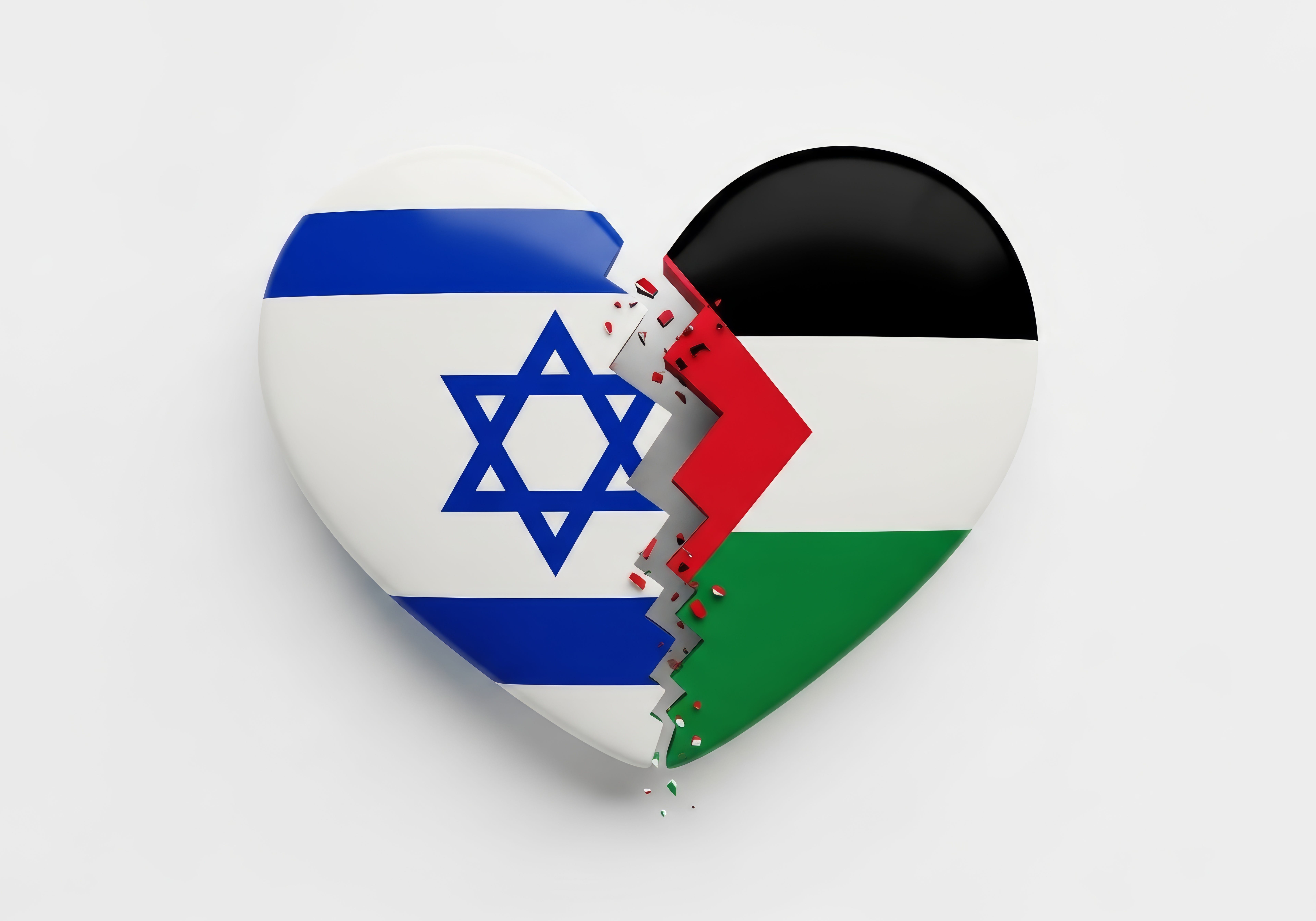
As moderator of the rescheduled Chester M. Pierce Award lecture on June 8, 2026, I received many questions via Zoom. We were not able to get to them all, so this post presents Dr. Mansoor Malik’s written answers in detail. They are part of an ongoing discussion on this complicated, painful episode and its analysis, and I encourage comments and more questions. See this post from yesterday for the full lecture
“You’ve called this a psychological autopsy—Shneidman’s method, which reconstructs one identified person’s mind from direct examination. Whom did you examine, and what is the instrument by which a clinician performs an autopsy on a nation?”
Thanks for reading Letters from a Psychiatrist: The Pacific Heart, Ravi Chandra! This post is public so feel free to share it.
Response:
Shneidman’s psychological autopsy is a distinct forensic method designed to reconstruct the mental state of a specific deceased individual through interviews, records, and collateral information, most commonly in cases of suicide or equivocal death, developed around 2007.
By contrast, my use of the term follows a broader tradition of psychological and psychiatric autopsy that long predates Shneidman’s formalized methodology and has long been employed by psychiatrists, psychologists, historians, and sociologists to examine collective phenomena rather than diagnose individuals. This tradition seeks to reconstruct the psychological, social, institutional, and ideological processes that contribute to catastrophic outcomes by analyzing publicly observable behavior, policies, rhetoric, historical records, and group dynamics.
Importantly, direct interviews are not always feasible, and their absence does not invalidate the analysis. For example, Robert Jay Lifton’s The Nazi Doctors (1986) examined the psychological mechanisms of genocide, including doubling, professional complicity, and psychic numbing, drawing not only on interviews but also extensively on public records and documentary evidence concerning the Nazi euthanasia (T4) program and the Holocaust. Lifton’s observations on the Armenian Genocide similarly relied on historical evidence rather than direct interviews.
Ervin Staub’s The Roots of Evil: The Origins of Genocide and Other Group Violence (1989) developed a comprehensive theory of genocide, dehumanization, and bystander behavior exclusively from historical and comparative analysis rather than original interviews with perpetrators or victims.
Vamik Volkan’s Bloodlines: From Ethnic Pride to Ethnic Terrorism (1997) and Killing in the Name of Identity (2006) examined large-group identity, chosen trauma, and transgenerational transmission of conflict through psychohistorical and societal analysis.
Kai Erikson’s Everything in Its Path (1976) analyzed collective trauma and community destruction following the Buffalo Creek disaster, while Jeffrey Alexander’s Cultural Trauma and Collective Identity (2004) explored how societies construct and transmit trauma narratives. Likewise, psychiatric and social scientific research on war, terrorism, displacement, colonial violence, and mass atrocities routinely draws upon public narratives, institutional behavior, historical evidence, and collective memory rather than individual clinical examinations.
In this sense, a “psychological autopsy of Gaza” does not attempt to diagnose a nation or infer the private mental state of individuals. Rather, it examines the psychological, social, institutional, and moral processes, including trauma, dehumanization, moral disengagement, collective narratives, and professional silence, that may help explain how mass suffering emerges, persists, and becomes normalized.

“Genocide turns on specific intent. You’ve concluded intent in officials and soldiers you’ve never examined. How is that not the exact thing the Goldwater principle forbids?”
Response:
The Goldwater Rule attempts to prohibit psychiatrists from offering a professional diagnosis of a public figure’s mental condition without examination and authorization. Genocidal intent, however, is not a psychiatric diagnosis but a legal and historical inference drawn from publicly observable evidence, including official statements, policies, patterns of conduct, and foreseeable consequences. Psychiatrists routinely infer intent without direct examination in many settings. Violence risk assessments, forensic evaluations of criminal responsibility, assessments of malingering, and determinations regarding dangerousness often rely heavily on records, witness accounts, documented behavior, planning, and circumstances rather than access to a person’s private thoughts. Similarly, scholars such as Robert Jay Lifton, Ervin Staub, and Vamik Volkan have analyzed mass violence, genocide, and collective behavior by examining public statements, institutional conduct, historical records, and social processes rather than clinically examining every participant.
Moreover, the Goldwater Rule is an ethical guideline of the APA, not a scientific principle or legal requirement, and it remains the subject of ongoing debate within psychiatry. Many psychiatrists have argued that there may be circumstances in which professionals have a “duty to warn” the public about concerning behavior displayed by public figures, particularly when such behavior may pose significant societal risks. Regardless of where one stands in that debate, my presentation did not purport to diagnose any individual leader or public figure. Rather, it examined publicly available evidence and collective processes to explore whether patterns of rhetoric, policy, conduct, dehumanization, and destruction raise concerns that are relevant to genocide studies, trauma studies, medical ethics, and public mental health. Ultimately, determinations regarding genocidal intent belong to courts and international legal bodies, not psychiatry alone.
“Use your own method on the other side: from conduct and stated aims, what is your reading of the intent behind October 7th?”
Response:
That is an important question because Hamas’s intent is frequently invoked to rebut claims of plausible genocide in Gaza. If one applies the same framework consistently, the October 7 attacks involved intentional killing of civilians, hostage-taking, and conduct that may reasonably support allegations of genocidal intent against Israelis. However, there is actually relatively little publicly available evidence regarding the specific intent of many individual perpetrators compared with the extensive public record available regarding Gaza, which includes thousands of official statements, military actions, policy decisions, documented patterns of destruction, and repeated international investigations.
More importantly, if one accepts that the October 7 attacks constitute genocide, it becomes impossible to dismiss genocide allegations in Gaza without applying a different standard. The death toll, destruction of civilian infrastructure, forced displacement, deprivation of food and medical care, and documented dehumanizing rhetoric in Gaza are vastly greater in scale and duration. One may reasonably conclude that neither event constitutes genocide, or that both require further legal determination, but it is analytically difficult to characterize October 7 as genocide while rejecting the possibility of genocide in Gaza outright. My position is not that psychiatry can adjudicate either question definitively, but that the same evidentiary and moral standards should be applied consistently to all parties.

“Iran, Hamas, and Hezbollah explicitly call for the destruction of Israel. Are they genocidal? Individuals in Israel make calls for the destruction of Palestinians but the government does not. How do these differences matter?”
Response:
Yes, those differences matter, but they do not resolve the question in the way suggested. Calls by Iran, Hamas, or Hezbollah for the destruction of Israel are morally and legally relevant and should be condemned. Hamas’s October 7 attacks on civilians, hostage-taking, and anti-Jewish rhetoric raise serious questions of genocidal or eliminatory intent. But that does not negate scrutiny of Israeli state conduct in Gaza.
The legal and moral question is not whether one can find extremist rhetoric on one side or another. The question is whether rhetoric, policy, command authority, and conduct converge. In the case of Israel, the concern is not simply that isolated individuals made extreme statements. The concern is that repeated statements by senior political and military officials have been accompanied by state action: siege, mass displacement, destruction of civilian infrastructure, obstruction of humanitarian aid, and large-scale civilian death. The ICJ found that Palestinian rights under the Genocide Convention were plausible and ordered Israel to prevent genocidal acts and incitement, which means the Court considered the evidence sufficient to require preventive measures, though not a final genocide ruling.
So the distinction is this: genocidal language by non-state actors such as Hamas matters and should be condemned; genocidal or dehumanizing language by state officials matters differently because it may describe or authorize state policy, especially when paired with military capacity and actual conduct. Both can be morally wrong. But when a state with overwhelming military power controls borders, aid, infrastructure, and life-sustaining conditions for a civilian population, its rhetoric and actions carry a distinct legal and ethical weight.
“Can you comment on how your thoughts on violence against a whole people impact settler violence in the West Bank and Israeli response, lack of response, and complicity?”
Response:
West Bank settler violence is highly relevant because it shows that the issue is not limited to Gaza or to Hamas. It reflects a broader structure of illegal occupation, impunity, displacement, and unequal protection. A UN inquiry reported in June 2026 that Israeli authorities facilitated settler violence through financial, military, and legal support, and that Israeli security forces often accompanied or protected settlers during attacks. It also reported that such incidents had increased significantly since 2023. From a psychiatric perspective, settler violence demonstrates how dehumanization becomes normalized through institutions. When violence is tolerated or protected, it communicates that the targeted population has lesser moral worth.

“To what extent do you think our desire to have good guys and bad guys interferes with space for moral reflection and action?”
Response:
I think it interferes profoundly. The human mind is naturally drawn to narratives of pure victims and pure perpetrators because they reduce complexity and protect our identities. Yet psychiatry teaches us that reality is rarely that simple. Groups can be traumatized and still inflict trauma on others. People can be victims in one context and perpetrators in another. When we divide the world into absolute good and absolute evil, we often lose the capacity for empathy, self-reflection, and moral accountability. The challenge is not to abandon moral judgment, but to maintain moral clarity without losing complexity. In the case of Gaza, recognizing Palestinian suffering does not require denying Israeli suffering, and acknowledging Israeli trauma does not justify indifference to Palestinian suffering. Moral reflection begins when we can hold both truths at the same time.
“Can you comment on the impact of the genocide on witnesses… who are otherwise not involved?”
Response:
Witnesses to mass suffering can experience moral injury, helplessness, rage, grief, dissociation, and institutional betrayal. When professional societies minimize or avoid discussion, the injury deepens because witnesses feel that reality itself is being denied. This is especially true for clinicians. Physicians are trained to respond to suffering. When hospitals are destroyed, children starve, and medical workers are killed, silence can feel like professional abandonment. The public health burden is not only among direct victims. It extends to diaspora communities, clinicians, trainees, journalists, aid workers, and morally engaged observers.
“The American Academy of Pediatrics issued a Policy Statement on the effects of war on all children… The APA and AACAP should follow the AAP’s lead.”
Response:
I agree. The American Academy of Pediatrics has appropriately focused on the effects of war and conflict on children regardless of nationality, religion, or politics. A similar approach by the APA and AACAP would be entirely consistent with medical ethics and our professional obligation to protect vulnerable populations. Psychiatrists may disagree about politics, history, or legal interpretations, but there should be little disagreement that children exposed to war, displacement, bereavement, starvation, destruction of healthcare systems, and chronic trauma face profound risks to their mental health and development. A child-centered approach allows us to focus on humanitarian principles and the protection of civilian life without requiring unanimity on broader political questions.

“Is there a difference between collateral damage in war vs. genocide?”
Response:
The collateral damage defense becomes increasingly difficult to sustain when civilian harm is massive, foreseeable, and prolonged. Gaza is one of the most densely populated places on earth, and the repeated use of 2,000-pound bombs in civilian areas makes large-scale destruction predictable rather than incidental. Moreover, if the law of occupation applies—as many international legal authorities maintain—then civilian protection is not merely a consideration; it is a legal obligation. An occupying power’s first responsibility is to protect the civilian population and ensure access to food, water, healthcare, and basic necessities. When most of the population is displaced, healthcare systems are devastated, and humanitarian agencies repeatedly warn of catastrophic conditions, simply calling the outcome “collateral damage” does not answer the ethical or legal question—it avoids it.
“Was the use of the A bomb on civilian populations in WW2 an act of Genocide?”
“Millions of women and children were killed during WW2, were these acts of genocide?”
“Was General Sherman’s march through the South during the Civil War Genocide?”
Response:
These historical events are heavily criticized to this day as examples of wartime cruelty, indiscriminate violence, and possible war crimes. They do not provide a moral or legal precedent for future violence. Indeed, if we accepted the logic that past atrocities justify present ones, then Hamas, Hezbollah, Iran, or any other adversary can also justify violence against Israelis. That is precisely why international humanitarian law developed after World War II—to establish limits on what states and armed groups may do regardless of the crimes committed against them.
The Gaza question is therefore not whether other atrocities occurred in history. It is whether the specific facts in Gaza raise concerns under contemporary international law. Unlike Hiroshima, Sherman’s March, or many wartime civilian casualties, the allegations regarding Gaza involve not only mass civilian death but also prolonged siege, restrictions on food, water, medicine, and humanitarian aid, repeated forced displacement, destruction of healthcare and civilian infrastructure, and statements by senior officials that courts have considered relevant to assessing intent. The issue is therefore not the existence of civilian casualties alone, but the combination of rhetoric, policy, conduct, and foreseeable consequences affecting a protected civilian population. That is why Gaza has become the subject of genocide proceedings and unprecedented scrutiny under international humanitarian law.
“It’s NOT occupied. Gaza is ruled by Hamas.”
Response:
The question of whether Gaza is occupied is not determined solely by whether Hamas exercises internal governance. Under international humanitarian law, the governing standard is effective control. Article 42 of the 1907 Hague Regulations states: “Territory is considered occupied when it is actually placed under the authority of the hostile army.” Modern international law has interpreted this to mean effective control rather than continuous physical presence. The test is whether a state exercises sufficient authority over territory and population to determine key aspects of life and governance.
In its July 2024 Opinion, the International Court of Justice reaffirmed that Gaza remains part of the Occupied Palestinian Territory and that Israel continues to exercise effective control through its authority over borders, airspace, territorial waters, population movement, population registry, imports and exports, and access to essential goods and services. The Court further concluded that Israel’s occupation is unlawful and found that Israel’s policies and practices in the Occupied Palestinian Territory violate the prohibition on racial segregation and apartheid.
This is consistent with longstanding interpretations by the International Committee of the Red Cross, the United Nations, and numerous international legal scholars, who have argued that effective control can be exercised remotely through siege, border control, airspace control, maritime control, and the ability to regulate the movement of people, food, water, fuel, medicine, and humanitarian assistance.
Therefore, from an international law perspective, the relevant question is not who collects trash or runs local ministries inside Gaza. The question is who ultimately controls the territory’s borders, airspace, sea access, economy, movement of people, and access to the necessities of life.
“Give me one peer-reviewed, longitudinal finding that microaggressions cause or predict mass violence.”
Response:
Please refer to the body of work by Dr. Chester M. Pierce. Pierce explicitly connected microaggressions and macroaggressions, arguing that everyday acts of racism should not be viewed as isolated interpersonal events but as manifestations of larger systems of oppression. For Pierce, microaggressions were the routine, often normalized expressions of racial hierarchy, while macroaggressions represented the more visible and destructive outcomes of the same underlying structure. This perspective closely aligns with Johan Galtung’s distinction concept of structural violence. Structural violence occurs when political, economic, and social arrangements systematically disadvantage a population, limiting access to security, health, mobility, resources, and human dignity. Direct violence often emerges from and is sustained by these preexisting structures.
Applied to Palestinians in Gaza, decades of dehumanizing rhetoric, unequal valuation of Palestinian lives, restrictions on movement, blockade and siege conditions, recurrent displacement, destruction of civilian infrastructure, and normalization of collective suffering contribute to a system of structural violence. Numerous human rights organizations have argued that policies of segregation, unequal rights, and domination in the occupied territories constitute forms of apartheid, while the prolonged siege of Gaza has created conditions of dependency, deprivation, and vulnerability affecting nearly every aspect of civilian life. From a Pierce-Galtung perspective, these conditions are important because they shape how suffering is perceived. When a population is repeatedly portrayed primarily as a security threat rather than as human beings with equal dignity and rights, large-scale civilian suffering becomes easier to justify, tolerate, or ignore.

“A real formulation names perpetuating and protective factors on every side. Where are the social and perpetuating factors for the mass violence—and where are the protective factors for anyone?”
Response:
That is an important question because a sound psychiatric formulation should identify both perpetuating and protective factors. My presentation focused primarily on mechanisms contributing to mass suffering in Gaza, but a fuller biopsychosocial formulation would include factors operating across multiple levels.
Perpetuating factors include historical trauma on both sides, including the Holocaust and repeated experiences of antisemitism for Jews, and the Nakba, occupation, displacement, blockade, and recurrent warfare for Palestinians. Additional perpetuating factors include fear, humiliation, collective victimhood narratives, dehumanizing rhetoric, political extremism, cycles of retaliation, institutional impunity, and failure of political solutions. Following October 7, profound Israeli fear and trauma became powerful drivers of public support for military action, while decades of Palestinian dispossession and siege have fueled despair, rage, and support for armed resistance among some segments of the population.
Protective factors also exist on both sides. These include Israeli hostage families advocating for ceasefire and diplomacy, Israeli and Jewish human rights organizations, Palestinian healthcare workers, educators, civil society organizations, and numerous individuals who continue to affirm the humanity of the other side despite immense pressure. International humanitarian law, medical ethics, human rights norms, independent journalism, and cross-community dialogue are additional protective factors because they resist dehumanization and preserve moral accountability.
However, the formulation must also account for asymmetries. Psychiatry does not require false equivalence. Two populations may both be traumatized, yet possess vastly different levels of military, political, and economic power. Recognizing Israeli trauma does not negate Palestinian suffering, and recognizing Palestinian suffering does not negate Israeli trauma. The task of psychiatric formulation is not to identify a “good side” and a “bad side,” but to understand how trauma, fear, identity, power, ideology, and social structures interact to sustain violence while also identifying the protective factors that may interrupt it.
In that sense, the most important protective factor for everyone may be the capacity to maintain recognition of equal humanity of all civilians, even when fear, anger, grief, and political polarization make that difficult.

“Lifton earned that authority by spending a decade interviewing perpetrators and survivors face to face—you examined no one. How is this consistent with Lifton’s method?”
Response:
This has already been addressed above. While Robert Jay Lifton conducted interviews with Nazi physicians, his broader formulation of genocide was not derived solely from those interviews. His interviews were confined to a relatively small number of Nazi doctors, associated with Auschwitz, yet his analysis of genocide relied heavily on historical records, official documents, institutional practices, ideology, and the evolution of programs such as the Nazi T4 euthanasia program, for which he did not conduct direct interviews with participants. Likewise, Lifton frequently used the Armenian Genocide as a comparative framework in understanding genocide, despite not conducting direct interviews with Armenian perpetrators or victims.
Similarly, Ervin Staub’s foundational theory of genocide and mass violence in The Roots of Evil was not constructed through direct interviews with perpetrators or victims. Rather, it emerged from comparative analysis of historical cases, social conditions, cultural narratives, institutional structures, political ideology, and patterns of dehumanization across societies. The validity of his framework rests not on direct examination of individuals but on its explanatory power in understanding how ordinary societies can move toward mass violence.
There is an obvious limitation in interviewing either perpetrators or victims of the genocide in Gaza. Perpetrators of mass atrocities rarely submit themselves for psychological examination while events are ongoing; historically, they tend to become accessible only after defeat, apprehension, prosecution, or the passage of time. Likewise, victims in Gaza are currently difficult or impossible to access systematically because of the ongoing siege, displacement, destruction of infrastructure, and restrictions on movement.
“Volkan’s ‘chosen trauma’ describes every large group. Why does your application run one direction only?”
Response: I do not believe my application of Volkan’s concept of chosen trauma runs in only one direction. In fact, the presentation explicitly discussed the Nakba as a foundational Palestinian collective trauma and repeatedly referenced the intergenerational effects of displacement, loss, occupation, and statelessness. Volkan’s central insight is that large groups can organize aspects of their identity around shared historical traumas that are transmitted across generations and continue to shape perceptions of threat, vulnerability, and collective memory. That concept clearly applies to Palestinians as well as Jews.

“What disagreement wouldn’t count? Name the response a reasonable critic could give that your framework would accept as legitimate rather than as a symptom.”
Response:
Many disagreements would count as legitimate rather than as symptoms of denial. For example, a reasonable critic could argue that the evidence supports war crimes or crimes against humanity but not genocide; that genocidal intent has not yet been sufficiently established; that particular casualty figures or sources are unreliable; or that Hamas’s actions materially alter the legal and moral analysis. Those are substantive disagreements about evidence, law, and interpretation. Denial becomes a concern not when people disagree, but when overwhelming evidence of civilian suffering is minimized, dismissed, rationalized, or when discussion shifts from the suffering itself to attacking those who are attempting to document or discuss it.
“Your proof of intent is rage-filled statements made days after a massacre. We’re trained never to mistake what someone says in acute affect for their stable intent. Why is that sound method for a nation when it would be malpractice with a patient?”
Response:
In the context of states, repeated and consistent statements by senior political and military leaders are one of the primary ways that governments communicate policy, objectives, and priorities. When such statements are made over months and years by multiple officials occupying positions of authority, are not repudiated, corrected, or disciplined by the state, and are accompanied by actions consistent with their content, they become relevant evidence of state intent. This is precisely why the International Court of Justice considered statements by Israeli officials in assessing the plausibility of the genocide claim and ordering provisional measures.
RC Note: See also this excellent essay:
Abarbanel A. Hannah Arendt Warned Us — How Israel Normalises Sadism in the Service of Its Settler Colonial Machine. Avigail Abarbanel’s Fully Human Essays, June 14, 2026
“Is there any statement a person could report as antisemitic that your framework would accept as accurate rather than as further evidence of the defense you describe?”
Response:
Absolutely. Genuine antisemitism exists, remains a serious problem, and should be identified and condemned without qualification. If someone blames all Jews for the criminal actions of Israel; denies or minimizes the Holocaust; targets Jewish individuals or institutions because they are Jewish; or advocates discrimination or violence against Jews, I would readily accept those statements and actions as antisemitic.
“You said the Nakba resulted from the Holocaust. Given that Zionist immigration and the Balfour Declaration predate it by decades, can you defend that causal claim?”
Response:
Please refer to Ilan Pappé’s The Ethnic Cleansing of Palestine for the full historical context. The immigration of peaceful European Jews to Palestine was largely accepted by Palestinians. However, Jewish paramilitary and terrorist organizations, including Irgun, Lehi, and the Stern Gang, employed violence against Palestinian communities and drew heavily upon military experience acquired in Europe. According to Pappé and other historians, these developments culminated in Plan Dalet, a military plan approved under David Ben-Gurion’s leadership in March 1948, which became the immediate precursor to the mass Nakba. Two thirds of Palestinian population was already brutally cleansed even before the creation of Israel.
Importantly, for Palestinians, the Nakba is not merely a historical event but an ongoing reality. Approximately 90 percent of Gaza’s current population consists of refugees or descendants of refugees displaced during the Nakba. Successive Israeli governments have refused to recognize a Palestinian right of return despite United Nations resolutions, the same resolutions that created the State of Israel in the first place.
“Why should the performance of those defenses count as a psychiatric finding, rather than as the thing psychiatry exists to recognize?”
Response:
The psychiatric finding is not the defense itself; it is the recurring role those defenses play in enabling or normalizing mass violence. Psychiatry does not merely recognize denial, dehumanization, splitting, and moral disengagement in individuals—it studies their consequences. Lifton, Staub, Cohen, and Bandura all examined how these mechanisms operate at societal levels to make atrocities psychologically possible. The question is therefore not whether these are defenses, but whether they are helping explain mass violence and plausible genocide in Gaza. I would argue that they are.

“What’s your recommendation to make this less painful for us to discuss such a massive suffering in Gaza?”
Response:
I would not try to make it painless. Some degree of discomfort is an appropriate human response to large-scale suffering. The goal is not to eliminate anxiety but to tolerate it long enough to think clearly about it. As psychiatrists, we do this every day with trauma, grief, suicide, racism, and abuse. We begin by grounding ourselves in the humanity of those affected, focusing on facts rather than identities, and creating space for complexity rather than forcing people into opposing camps. Most importantly, we should recognize that acknowledging the suffering of Palestinians does not diminish the suffering of Israelis, just as acknowledging the suffering of Israelis does not diminish the suffering of Palestinians. The path through denial is not less empathy, but more empathy—an ability to hold multiple truths while refusing to look away from human suffering.
“Is not pathologizing racism, hatred, and similar beliefs and behaviors as mental illness the opposite side of the coin of pathologizing and justifying the destruction of victims through these belief systems?”
Response:
Yes, I think there is a danger on both sides. Psychiatry should not pathologize racism, hatred, colonialism, or genocide by treating them simply as mental illnesses, because doing so can diminish moral agency and responsibility. Most perpetrators of mass violence are not psychotic; they are often ordinary individuals acting within social, political, and ideological systems that normalize harm. At the same time, refusing to examine the psychological mechanisms that sustain racism, dehumanization, and hatred leaves psychiatry with little to contribute to understanding how such systems function. The goal is not to excuse perpetrators by diagnosing them, nor to pathologize entire groups, but to understand processes such as moral disengagement, dehumanization, obedience, denial, projection, and group conformity that repeatedly appear in situations of mass violence. In that sense, psychiatry’s role is not to medicalize evil, but to help explain how ordinary human psychology can become enlisted in its service
“For trainees who want to be thoughtful advocates for marginalized populations, how do you recommend we educate ourselves on these issues, and what are some meaningful ways to turn that knowledge into action during medical training?”
Response:
I would start by remembering that advocacy begins with listening, humility, and a commitment to evidence. Educate yourself broadly, read history, international humanitarian law, trauma literature, human rights reports, and perspectives from multiple communities, especially those most directly affected. Be willing to examine your own assumptions and tolerate complexity without losing sight of basic ethical principles. During training, meaningful action can be surprisingly simple: bear witness to suffering, amplify marginalized voices, support equitable access to care, challenge dehumanizing language, participate in community partnerships, and engage respectfully in difficult conversations. Most importantly, anchor your advocacy in the core principles of medicine: human dignity, justice, nonmaleficence, and concern for the vulnerable. Advocacy is most effective when it is guided not by ideology, but by a consistent commitment to the equal worth of every human life.
“If Dr. Malik is aware of the lecture aired yesterday on the Dangers of Antizionism, could he comment on the conclusions presented?”
Response: Yes, thank you. I attended the lecture by Dr. Lekht and found it interesting, but several questions remain. The fundamental question is: how does one define Zionism? If it means the idea of persecuted Jews finding refuge in Palestine, it is a humane idea and one that is entirely consistent with medical ethics and basic principles of human dignity. If, however, it is defined as a race-based ideology that grants a “birthright” to some individuals based on a supposed historical connection to the land while denying similar rights to the indigenous population, then it begins to resemble a form of settler colonialism.
In any case, the ethical question is separate from the definitional one. Regardless of how Zionism is defined, it cannot justify the large-scale killing, displacement, or deprivation of civilians. Medical ethics requires that we evaluate human suffering based on universal principles rather than political ideologies.
“How exactly did you respond to the postponement of your lecture at APA?”
Response:
I responded by asking that the lecture be restored, that the academic title and content not be altered for political reasons, and that APA preserve open professional dialogue on humanitarian suffering. I also communicated with colleagues, shared slides with attendees, and emphasized that disagreement should be handled through discussion, not suppression.
The broader issue is institutional: professional organizations should not cancel or dilute humanitarian discussion because it is politically uncomfortable. They should provide structure, moderation, and space for disagreement.
“Will the APA make a recording of this lecture available to members/conference attendees?”
Response:
This is reasonable but the APA refused to record it. A Chester M. Pierce Award lecture is an educational activity. Recording and making it available would promote transparency, scholarly review, and accurate representation of what was actually said. If there are concerns about controversy, that is a reason to preserve the record, not suppress it.
(However, technology being what it is, and it was not explicitly forbidden, RC did screen-record the event, and it is available on YouTube.
From Microaggressions to Mass Violence: A Psychological Autopsy of the Genocide in Gaza: Video and Text of Dr. Mansoor Malik’s 2026 Chester M. Pierce Award Lecture
“A psychiatrist should not be a party to any type of policy that excludes, segregates, or demeans the dignity of any patient…”
Response:
Thamk you! This correctly brings the discussion back to medical ethics. Physicians do not need to resolve every historical dispute before affirming that civilians deserve food, water, shelter, medical care, and protection from dehumanization. AMA Code of Ethics Section 9’s support for access to medical care is directly relevant when hospitals are destroyed, medications are blocked, health workers are killed, and civilian populations are deprived of basic necessities. The ethical foundation is simple: Medical care is not contingent on nationality, religion, ethnicity, political usefulness, or military context.
Becoming a paid or founding subscriber allows me dedicated writing and research time. You can also now tip me at Ko-Fi.com/sunmoonlight, or donate to my compassion non-profit SF Love Dojo via PayPal. Thanks, though, to all my readers, free and paid! I very much appreciate the Substack Nation we are forming!
Ravi Chandra is a psychiatrist, writer, compassion educator, and civilizational health shaman in San Francisco, and a Distinguished Fellow of the American Psychiatric Association. He is the recipient of the 2025 Kun-Po Soo Award for Achievement in Asian American Psychiatry from the APA and APA Foundation. Here’s his linktree. Please sign up for updates via Substack where you can also support his educational and creative mission by becoming a free, paid or founding subscriber. For fourteen years, he was lucky to have his MOSF posts published by the Center for Asian American Media, and is now at work broadening and building a diverse creative community and coalition through reflecting on culture and psychology for East Wind eZine.See all the East Wind posts here. He writes from the metaphorical intersection of The Fillmore and Japantown in San Francisco, where Black and Asian communities have mingled since the end of the incarceration of Japanese Americans during World War II. He literally works there, between two Indian restaurants, go figure. His debut documentary was named Best Film (Festival Director’s Award) at the 2021 Cannes Independent Film Festival. The Bandaged Place: From AIDS to COVID and Racial Justice is available on-demand. His nonfiction debut, Facebuddha: Transcendence in the Age of Social Networks, won the 2017 Nautilus Silver Award for Religion/Spirituality of Eastern Thought. You can find him on Psychology Today, Medium, Twitter, Threads, Facebook, Instagram, YouTube, TikTok, SoundCloud, or better yet, in the IRL.
Comments
Nothing yet. Say the first thing.
Sign in to join the conversation.