

Abstract - A letter from the founder, AJ Addae
In today’s issue, we’re covering how testing completely changes the trajectory of your products, and how they’re perceived by industry veterans and consumers alike.
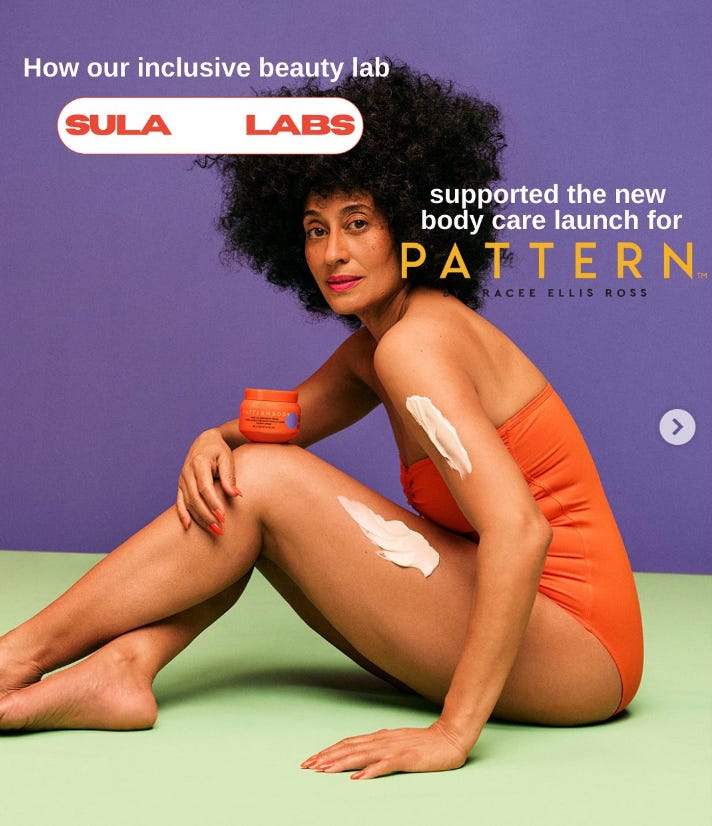
But speaking of testing, not one, but five products we clinically tested recently launched: the PATTERN Beauty body care line! Check out how we clinically tested Tracee Ellis Ross’ new venture into body care, available at Ulta, PATTERN’s website, and Sephora. We’re highly proud of this one. Like all of our studies, we tested with at least 50% of participants with melanin-rich skin, which is a huge testament to our mission of closing inclusivity gaps in beauty.
Recently, I was on a judging panel for a set of beauty awards (since last year, I’ve been in my judging era across the industry, which has been a lot of fun!). In one instance, we came down between two brands, and what really seemed to sway my fellow judges was the evidence that the product worked. Brands had the option to send their products for us to feel and experience (and the judges were broadly from across the industry, from product developers to brand founders to CPG investors). It was interesting to witness that even in the absence of physical products, the evidence drove the product story home for many judges, or gave products an edge towards a win. While sufficient evidence sometimes came in the form of organic product reviews, it became clear that the most valued evidence came from clinical or consumer studies.
For context, a clinical study is one where a doctor or physician is involved in supervising the study. These require ethical approval through an institutional review board (IRB), and very careful tracking/reporting to remain within compliance. Usually, “clinical” studies are those which use instrumentation that can quantitatively read how hydrated or moisturized or hyperpigmented (or whatever benefit you’re evaluating) the skin is, before and after applying a product for a specified amount of time.
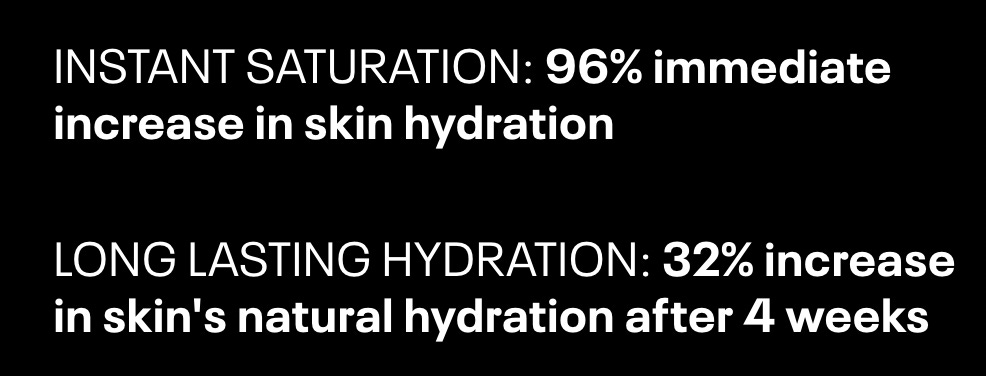
Example: Clinical testing claims from Experiment’s Super Saturated Serum.
To get a little bit more complex an SPF test is an example of a clinical test which must be performed in the presence of a physician or doctor. A consumer study doesn’t require the presence of a physician or doctor. They are typically more focused on evaluating the user experience of a product, in addition to a product’s benefits. Consumer studies provide data that tells you something like “97% of users felt that their skin was more plump after usage” - the keyword here is “felt”, which is a qualitative indicator of improvement.
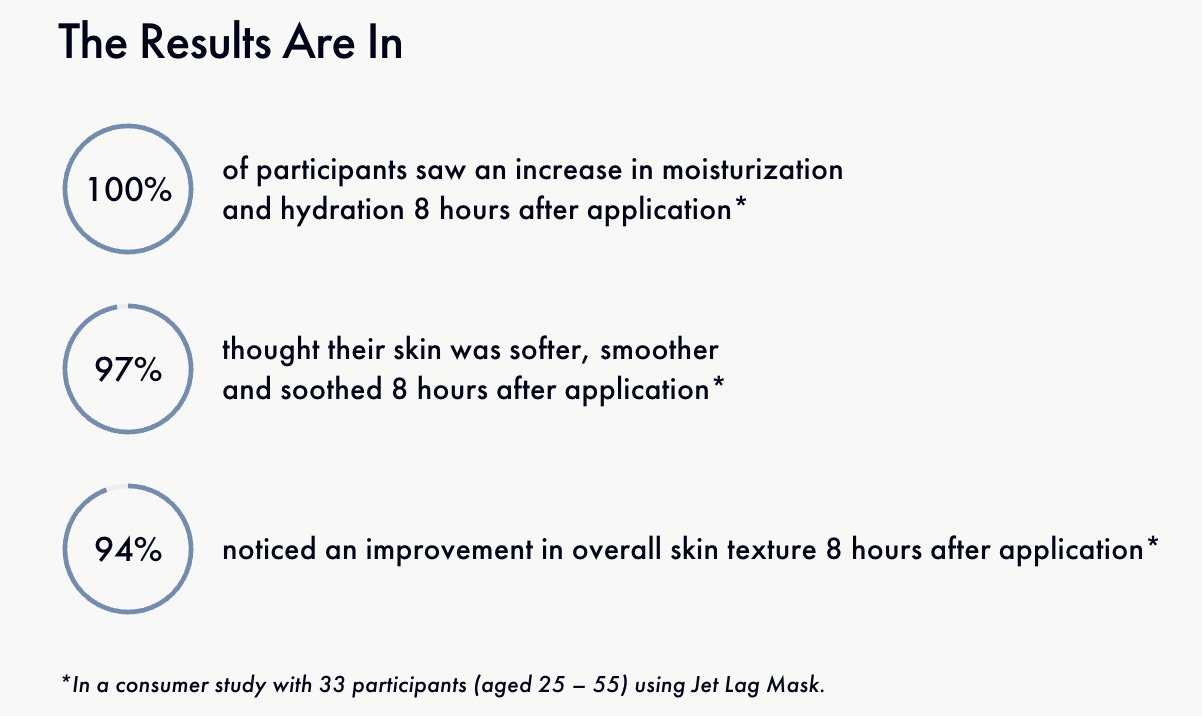
Example: Claims from Summer Fridays’ Jet Lag Mask.
I think when the average indie brand founder or product development team thinks about clinicals or consumer studies, they can seem like lofty, super advanced, unattainable measures that are reserved for the likes of K18, Rare Beauty, or LaRoche Posay. But clinicals and consumer studies come in all shapes and sizes, cost more with increasing size and complexity, and serve one point - to provide evidence that your products work like how they claim to. Because really, anyone can hire a copywriter to write perfect product copy, or aestheticize the products perfectly - but only quantifiable data can really sell the story. That’s why we perform all kinds of testing in-house, from analytical stability testing of products, to tress testing on natural hair strands, to quantitative white cast testing of sunscreens, to edge gel hold testing on different curl patterns, to inclusivity of makeup shade ranges.
I think the reason why we’ve come to considerably bake consumer and clinical studies into our product development DNA at SULA LABS is two fold:
I’ve found that you’re more likely to build more inclusive, effective products when you can obtain as much evidence as possible during the product dev process.
I believe data matters best when collected with the target audience.
And in my years of experience as a clinical researcher (i.e., I’ve spent some time conducting and even publishing literature on the very studies that bring juicy evidence-based claims to cosmetic products), I’ve found that there are two types of studies.
The Fundamental Studies Cover All the Bases
These are the kinds that basically say: the product worked the way we intended. In this kind of study, a product has claims that were intended as the experience while it was being formulated, and the goal is communicating the evidence. For example, we conducted a clinical study for Saint Jane Beauty’s sunscreen, which was on the market already for a while. The sunscreen was formulated to be pore-reducing, and mattifying while remaining hydrating - so we put these claims to the test with a clinical study that quantitatively measured hydration on day one and after a few weeks of usage, and included a survey that measure subjects’ experience with the products (questions evaluating white cast since it was a mineral sunscreen, pore reducing qualities, and overall experience). We also included before/after photography because we recommend photography for products that could confidently demonstrate perceptible moderate to drastic improvement, such as fading of wrinkles in the eye area, fading dark spots, or in this case, pore size reduction.
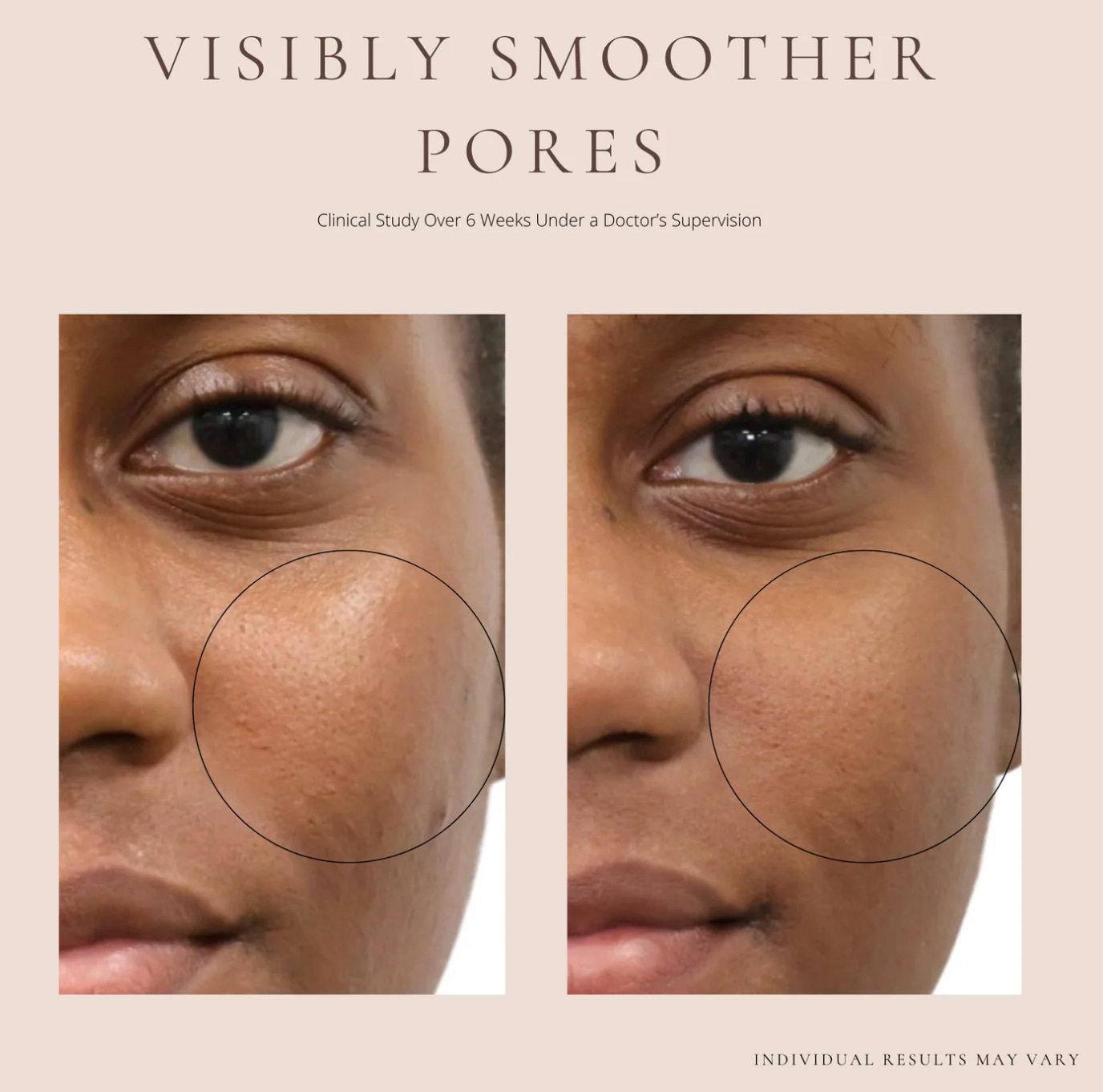
Example: Before/after photography from Saint Jane’s Sun Ritual Mineral SPF 30.
Now you may be asking: Could it have been a consumer study and conveyed its purpose? It could have definitely been a consumer study and served its purpose with before/after photography and a consumer survey. However, the brand also desired hydration claims which came from instrumentation measurements. Therefore, that shifted the categorization into a clinical study, because a physician is required to perform instrumentation measurements. Overall, this is what I would consider a “fundamental study” - one that swiftly and sharply shows evidence that the product is doing exactly what it says it does by covering the fundamental bases.
The Complex Studies Add More Security
A highly thorough way to determine whether a product works is by comparing it to another product during the study. That’s how we tested Karite’s flagship Crème Corps Shea Butter Body Creme - we clinically tested it in comparison to a test moisturizer that we formulated based off the product’s INCI (but removing the product’s star ingredients), and used hydration and moisturization instruments to quantitatively measure improvement in moisturization for 24 hours. It’s a little bit more complex than the average study, but testing the product against a “backup moisturizer” gave the brand confidence that their product was working better due to the hero ingredients mentioned on the product. Even better, the subjects didn’t know which was the brand’s product or the backup moisturizer, so their survey responses were even more credible, and left less room for bias.
With that said, here are some pointers from us on how to spice up how you collect evidence for your products:
If you’re running consumer studies, we recommend strengthening qualitative claims by adding before & after photos, or adding a comparison product to test against. Get creative! At SULA LABS, we even develop similar test products (see the Karite example above) that you can test alongside. With these added measures to consumer studies, you make up for less “clinical”/bioinstrumentation claims with added scientific rigor, which helps further convince the consumers of the product’s abilities.
If you’re running consumer studies, you can also strengthen your claims with some regulated claims, which are usually special clinical studies with flat-fee costs. Regulated claims are words like "hypoallergenic” or “sensitive skin friendly” or “water resistant”. These are regulated because they carry protocols that must be performed under the supervision of a physician (making them clinical studies), they’re done at testing facilities usually for a much lower cost than a custom clinical study (!!!!!), and they are usually pass/fail. For example, you could do a consumer study for product claims, and a sensitive skin test for a sensitive skin friendly claim, and potentially save more money than doing one full-on complex clinical study. Again, get creative!
If you’re running a clinical study, get really clear on your target audience and try and test on your target audience ,but don’t get too specific to where the testing site can’t recruit your audience. To let you in on a semi-unknown secret, many testing sites charge extra for recruiting studies with a richly diverse range of skin tones, and even more if you’re recruiting those with majority darker skin tones. That’s because hyper-specific study recruitment usually requires a higher study incentive ($) to the participants. But at SULA LABS, we build in population diversity in our studies at no extra charge to you. For example, all of our skin studies are done with at least 50% of subjects that have melanin-rich skin, and all of our hair studies are done with at least 50% of subjects that have texture-rich hair.
Lastly, for our paid subscriber community, check out a list below of various smaller-scale clinical studies that help bolster your claims, are usually flat-rate, pass/fail, and cost less than a full on complex clinical study:
Comments
Nothing yet. Say the first thing.
Sign in to join the conversation.