
Every seed saver faces this dilemma: pick it now or wait longer.
Are those pods finished developing? Is the bolted lettuce head developed enough that if I cut it now, those seeds will finish maturing? Should I risk taking this before the rain or wait and hope it’s not too soggy to dry properly?
Sooner or later, every seed saver stands before their plants and wonders . . .
Is it the right time?
Harvest too early and you’ve likely wasted your time and effort—those seeds won’t germinate well next season. Wait too long and mother nature will take matters into her own hands and scatter those seeds for you.
Seed saving sounds so simple until you realize that every vegetable has its own definition of “ready”. This is where the art of gardening meets the science of plant development.
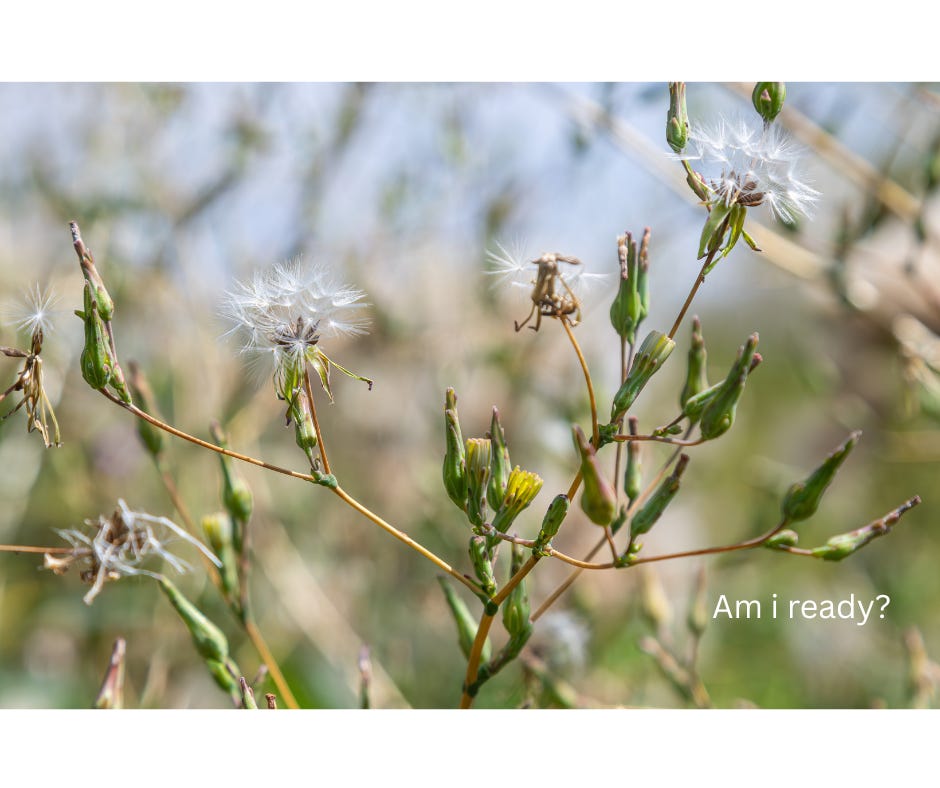
One of the biggest surprises when I began saving my own seeds was discovering that what was ripe enough to eat rarely coincides with seeds mature enough to save. That’s because as gardeners we conflate “ripe” and “maturity”. We say things like the tomatoes are ripe; the tomato crop has matured.
But a ripe tomato for the table rarely has seeds mature enough to collect and germinate later. And table-ready cucumbers aren’t even close to giving you seeds that can grow.
Some plants want to dry out. Some need to soften. Others need to actually rot before the seeds are ready.
Knowing these differences is where seed saving stops being about collecting seeds, and becomes a body of knowledge that builds next year’s garden (for free).
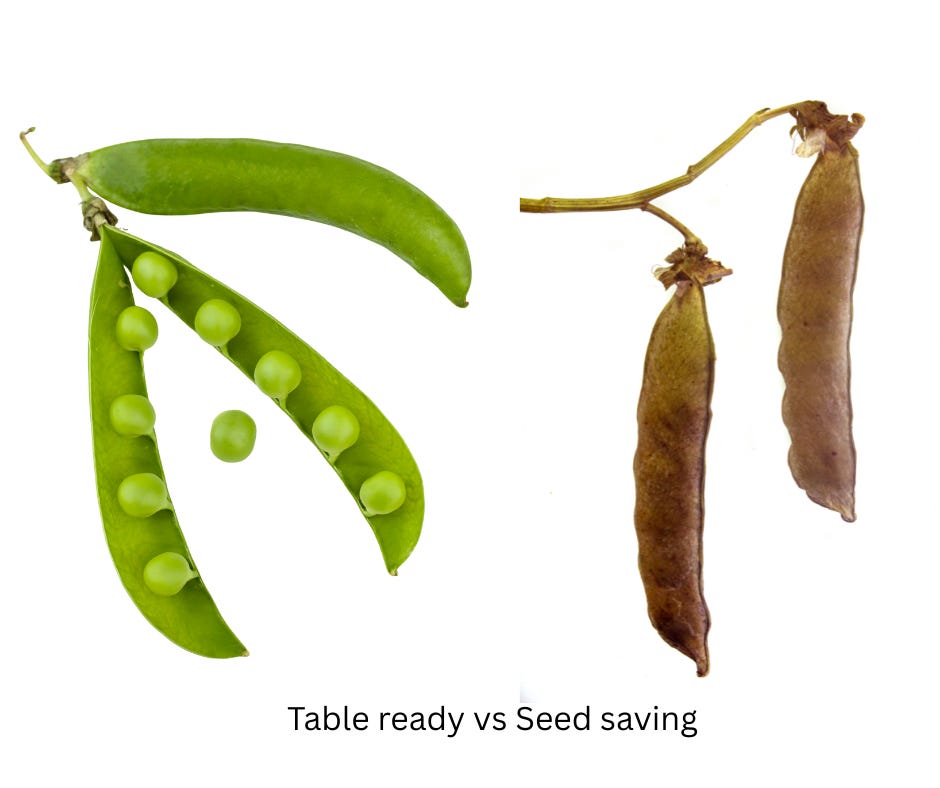
I used to collect seeds. Now I am harvesting the future.
Every mature seed represents a future season, garden, and harvest.
It’s another chance to grow and learn. It’s another meal for your future self.
Saving seeds year after year from your best plants, your largest producers, the best tasting, the sweetest, the most colorful allows you to create your own seed catalogue of plants adapted to your area. That’s what makes harvesting seeds different from merely “collecting” them.
Harvesting vegetables feeds us today.
Harvesting seeds feeds us on some future tomorrow.
Recognizing seed maturity is one of the most important—and least intuitive—skills in seed saving. It’s also far too detailed to cover well in a short newsletter.
A couple of years ago I put together one of the most comprehensive articles I’ve written on recognizing seed maturity across dozens of common garden vegetables. It walks through the different clues each crop gives, from dry seed pods to fleshy fruits, and the different techniques each requires for collecting viable seed.
But seed saving isn’t one lesson. It’s a skillset that unfolds across the entire garden season, and gets refined year after year with the lessons learned, the triumphs and the defeats.
The challenge with creating these in-depth learning opportunities inside a weekly newsletter is finding the post you need when the time comes to refresh yourself on the steps.
That is the friction that lead me to create the seed saving field guide.
The Naturalized Human Seed Saving Field Guide
A seasonally organized collection of every seed-saving article I’ve written, arranged in the order you’ll actually need them as the gardening year unfolds.
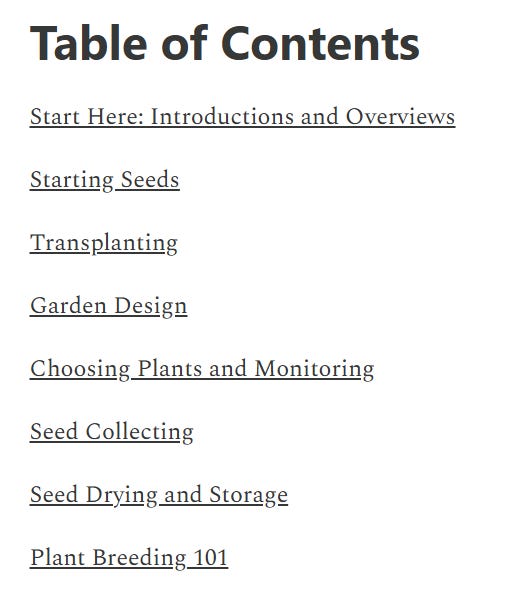
I continue to expand this guide as my understanding of seed saving evolves, and as I develop materials to answer the questions readers have. Whether you are saving your first lettuce seeds, handful of beans, or stepping up to the bigger challenges like tomatoes and cucumbers, I hope this Field Guide becomes something you return to season after season.
Happy harvesting!
Every harvest asks two questions:
What will nourish me today?
What will I carry into tomorrow?
The first one fills our baskets and our plates. It fills the pantry to its peak.
The second question is quieter and more thoughtful. It asks us to look beyond today’s abundance and notice the future hidden inside it.
Every mature seed is more than just another plant in the future. It carries adaptation, observation, patience and possibility. It represents another year of learning your place, your climate and your garden a little more deeply. It carries momentum that has both the power of stability and the flexibility of change.
Most importantly, everyone can seed save. There is no garden size limit to achieve in order to save seeds. It is available to everyone who takes the time to observe, and who is willing to forgo today’s harvest in favor of a future one.
Perhaps that’s why seed saving feels so hopeful.
It reminds us that the richest harvests aren’t always the ones we eat.
Sometimes the most important harvest is the one we get to plant again.
This week in your garden, think about which foods will nourish you today, and which ones will provide your future harvests.
If harvesting the future resonates with you then consider subscribing to The Naturalized Human today. Paid subscribers gain access to the TNH Seed Saving Field Guide and other exclusive content.
Comments
Nothing yet. Say the first thing.
Sign in to join the conversation.