
Every gardener I know has fallen for this trap at one time or another in their food growing journey. The cabbages are transplanted into their bed. The Romas and San Marzanos are making their way up the trellis. The corn is seeded. And you kick back and think, yup - see you in September. This job is done.
You’ve already got the list running in your head. The numbers of canning jars or freezer bags, sessions in the dehydrator or the freeze dryer. Your harvest or Farmer’s Market or the local farm, but one way or another you are going to be busy in the late summer and fall stocking up. This is gardening. This is creating food security.
Or is it?
Food security doesn’t start with the preservation of food. It starts when you learn to eat what you have grown - today. It starts with the food that doesn’t need to be stored, frozen, canned or dried. It starts with walking through the garden and finding out what’s for dinner.
But most of us don’t actually eat this way.
Ever find yourself waiting for a recipe? When the broccoli heads up, then I will make a stir-fry. When the romaine lettuce is nice and big we’ll have Caesars.
And inevitably life gets in the way. While you are waiting there was a crisis with kids, or a work report that became urgent, or weekend plans turned into a holiday away.
You step back into the garden and that perfect window - that recipe you planned for - isn’t going to happen. The broccoli is flowering. The romaine bolted instead of headed.
If we have a plan for every harvest, inevitably we miss the mark. Great food gets wasted all the time waiting for the ingredients list to be ready all at once.
We’ve been well trained to shop for food. You find the recipe and go to the store to pick up whatever isn’t currently in the cupboards.
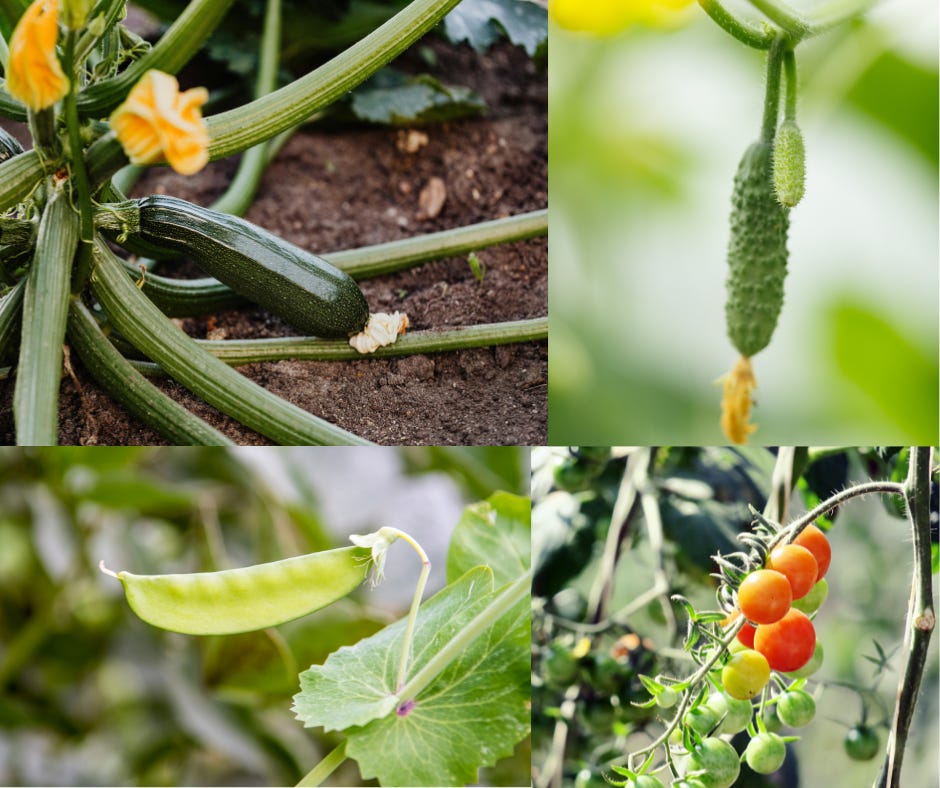
But gardening is different. The garden doesn’t actually care what you are craving. Instead the garden will tell you what’s ready tonight . . . . and that’s what’s for dinner. A handful of peas and some baby zucchini don’t need a recipe - they need to be on the plate today.
The joy of creating a grazing garden and breaking free from garden rows to a more complex and diverse planting system is that dinner is out there. Instead of heading to the garden with an ingredient list to acquire, a garden stroll becomes the idea generator for planning.
Because let’s face it, even the best laid out garden doesn’t grow by the rules on the seed package or the assigned days to maturity in the seed catalogue. Plants grow with the season you are in, and dinner needs to follow that same flow. Otherwise you end up wasting more than you harvest.
Last night I picked the first ripe raspberries in my garden. They didn’t make it to the house - yum! The best part of this time of year is discovering what the garden has ready and then creating a meal out of whatever you find.
My favorite go-to breakfast is - fill in the blank (ready this morning in the garden) and eggs. In the winter that usually drops to onions and mushrooms, but right now it might include arugula and Pac choi to chop and wilt with eggs, or the first beet tops, or a handful of peas, or a snip of broccoli leaves and some chive flowers.
Here is a basic framework:
Salad + protein
Sauteed summer vegetables + rice
Baby veggies with eggs
Raw slaw
Meal toppers from the garden
The meal is a success because the garden gave you the parts needed to create it. It might not be an Instagram moment. But few things are more satisfying than sitting down to eat the food you’ve grown.
For most of human history, people ate what they could hunt or gather. Our bodies evolved with feast and famine. We developed the physical characteristics of omnivores with a diet breadth unmatched by any other living animal. We are “super-generalists” that can survive on plants, fungi and animals, with human communities living everywhere from the Arctic to the desert.
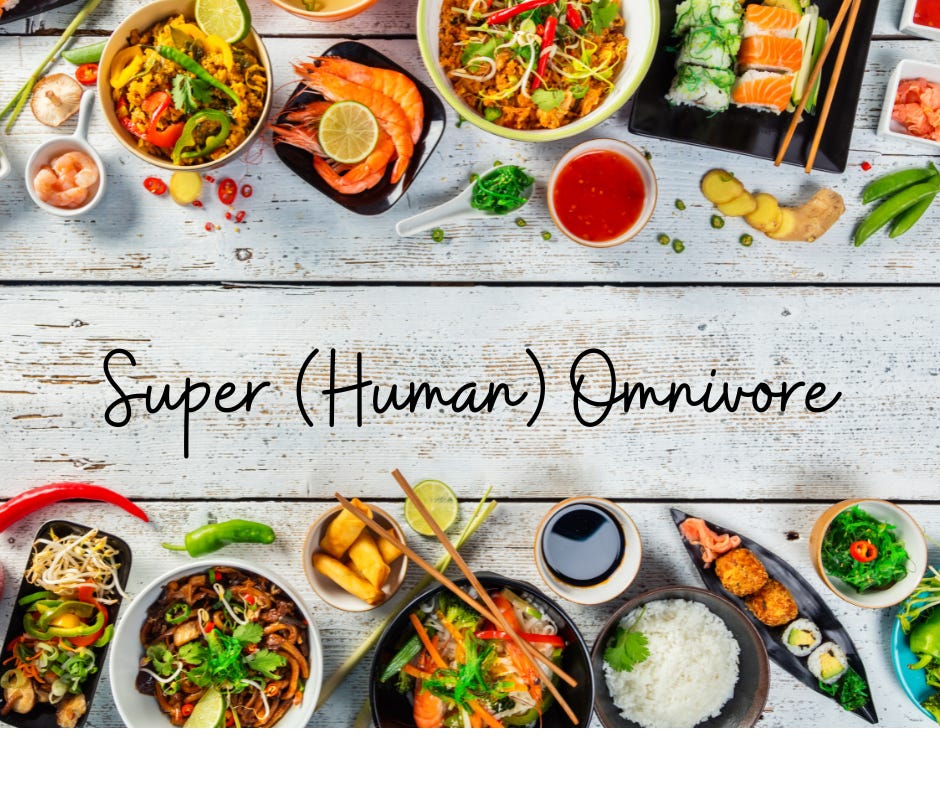
In each of the areas where people have lived, their diet was centered on the seasonal food supply. Now grocery stores put a world of food at our finger tips. . .. but our bodies still remember seasonal eating, feast and famine.
Gardening gives us back that connection to seasonal foods, growing where we live, in real time. It fills a deep generational need to be in tune with the food available around us. It changes the way we perceive risk, which can help reduce anxiety and depression. The garden triggers all of our senses to create better mental health while providing fresh food that feeds our bodies.
Stores offer availability. Gardens offer seasonality.
Food security discussions focus on stock piling, preservation and emergency supplies. The intent is to make sure you never go hungry again.
That intent builds on today’s theme: What I eat today.
The daily habit of eating what is seasonally available is a food security skill. It broadens your diet. It reshapes how you eat and cook. It teaches you to start first with reducing food waste as a primary step in creating long term food abundance. . . . . what you don’t eat today is preserved for the future.
Every meal you create from your garden builds your resilience, your food creativity, and your connection to the place you live.
So often we measure harvests in terms of kilos (pounds) of what we have produced or packed into storage. And don’t get me wrong - I do this too. I think about how much food I need to eat well over the winter and where that food is going to come from. I’ve even spent time calculating that out.
And yet there is something much deeper going on than just the mechanics of picking, using and storing vegetables and fruits.
We hone our powers of observation. We more accurately anticipate the peak of readiness, while minimizing the overshoot. We master the art of flexibility and the whimsy of substitutions. We develop confidence in our skills. And perhaps most importantly, we re-teach our bodies what real, fresh, nutrient-dense food tastes like.
No matter how big or small your garden is, whether it feeds dozens of people or just you sometimes, the power of the garden to transform you is legend. I believe in the future, when corporate control of food has been defeated in favor of the right to food for everyone, gardening will be the prescription that heals and unites us in our common humanity.
Daily seasonal harvests change us, one lettuce leaf, one strawberry, one pea at a time.
Taking ideas out into your real world. . . .
The first harvests of summer rarely arrive all at once. They appear a handful at a time—a few peas, a bowl of lettuce, a sprig of mint, a small basket of strawberries.
On their own they don’t seem significant.
Yet these small harvests invite us into something many people have lost: the habit of eating with the season.
Perhaps resilience begins this way—not with abundance, but with attention. Not with full pantries, but with learning to notice what is ready today.
One small harvest. One simple meal. One season at a time.
This week, let’s shift focus. Don’t start with a recipe. Start with what is ready. Walk through your garden or the Farmer’s Market and build one meal entirely from what you can find today.
Your garden is already changing how you eat. The question is whether you’re eating from a plan—or from what is ready.
If this way of thinking about food, seasons, and daily use resonates with you, subscribe and join me each week as we explore how growing food changes not just what we grow… but how we live with it.
Comments
Nothing yet. Say the first thing.
Sign in to join the conversation.